Mistakes to Avoid for Your Skin: The Complete Nopal Life Guide
Taking care of your skin starts with understanding what it goes through. This guide dedicated to Mistakes to Avoid for Your Skin provides clear benchmarks and concrete actions, in the spirit of NOPAL LIFE: natural, precise, without exaggerated promises.
Understanding Your Skin to Avoid Skincare Mistakes: Essential Benchmarks
Skin is a living organ that naturally renews itself according to each individual's cycles. Yet, most beauty routines overlook these fundamental benchmarks and accumulate mistakes that, in the long term, weaken skin comfort. With age, the skin's natural renewal tends to slow down: each additional aggression then takes longer to visibly fade. Understanding these major dynamics is the first step to stop fighting your skin and start working with it. Skincare mistakes are not a lack of willpower: they are ingrained habits, often inherited from marketing advice or fleeting trends, which deserve to be deconstructed in light of common sense and skin comfort.
Over-cleansing: The Number One Mistake for Skin Balance
Cleansing your skin twice a day with a strong foaming cleanser, adding an exfoliant three times a week, then finishing with an alcohol-based toner: this routine seems rigorous but methodically weakens the hydrolipidic film. This film, composed of sebum, sweat, and lipids, constitutes the skin's first line of comfort. When it is removed too frequently, the skin may appear shinier at times, then more uncomfortable, creating a vicious cycle of excess and then a feeling of tightness. The skin's natural balance — this ecosystem that contributes to its comfort — can also be disturbed by excessive cleansing. An imbalance in this ecosystem is often associated with the appearance of discomfort and visible redness. The golden rule: a gentle cleanser only in the evening, or at most morning and evening with a product with a pH between 4.5 and 5.5, respecting the skin's natural acid mantle.
Accumulation of Incompatible Products: The Counterproductive Cocktail
The beauty market offers hundreds of promising active ingredients. The temptation is strong to combine them all to maximize results. But some combinations are not only useless, they can be frankly uncomfortable for the skin. Vitamin C in the form of ascorbic acid is unstable and degrades on contact with light and air; combining it with high-concentration niacinamide can promote the appearance of redness and reduce the benefit of both ingredients. AHAs and BHAs, used in the morning, make the skin more sensitive to UVs in a way that even an SPF 50 does not fully compensate for. Retinol combined with exfoliating acids can cause visible discomfort without providing additional benefit. The basic rule: never use more than two concentrated active ingredients simultaneously, rather alternate morning-evening or day-week, and always start with only one new ingredient at a time to identify any potential skin reactions.
The 10 Mistakes to Absolutely Avoid in Your Skincare Routine
Here are the ten mistakes most often mentioned by skin professionals and cosmetology specialists, ranked by order of impact on long-term skin balance:
1. Not using SPF daily: Sun exposure is one of the main factors associated with the appearance of prematurely aged skin. Even on cloudy days, UVA rays penetrate windows and can alter the appearance of the skin over time. A minimum SPF 30 every morning is non-negotiable.
2. Over-exfoliating the skin: More than one to two exfoliations per week weakens the protective stratum corneum and can lead to discomfort and visible redness.
3. Applying products in the wrong order: The light-to-rich texture rule always applies: aqueous serum, then emulsion, then oil, then cream. The reverse traps water-soluble active ingredients under an occlusive film and limits their surface action.
4. Neglecting the eye and neck area: These areas, thinner and more fragile, often show signs of aging faster and deserve specific attention with products adapted to their delicacy.
5. Changing routines too frequently: An active ingredient generally takes several weeks before visible results appear. Changing products every month is counterproductive and prevents any real assessment.
6. Ignoring pH compatibility: Exfoliating acids work at an acidic pH (3.5 to 4). Applying them after an alkaline toner completely negates their benefit.
7. Using bath towels on the face: Textile fibers accumulate microorganisms. Use a clean cloth for each use or, better, dedicated washable fabric wipes.
8. Touching your face: Hands constantly carry microorganisms and residues that disturb the face's balance and can promote the appearance of imperfections and discomfort.
9. Ignoring your actual skin type: Skin type evolves with seasons, age, stress, and diet. What worked at 25 may be unsuitable at 40.
10. Skipping evening care: Night is the preferred time for the skin's natural renewal. Omitting evening care deprives the skin of its most favorable recovery time.
Sun Protection: The Most Cost-Effective Visible Glow and Firmness Gesture
If only one change were to be retained from this article, it would be the adoption of daily SPF. On this subject, the consensus is absolutely clear. Sun exposure is one of the main factors associated with the appearance of prematurely marked skin. This concerns not only wrinkles and visible loss of firmness, but also the appearance of spots, loss of radiance, and apparent thickening of the epidermis. UVA rays, responsible for photo-aging, are not blocked by windows and reach the skin even indoors, even on gray days. A mineral sunscreen based on zinc oxide or titanium dioxide offers broad-spectrum protection without the controversies of chemical filters. Integrating SPF as the last step of morning care, before makeup, is the gesture that most lastingly transforms the appearance of the skin after 30 years.
The Nopal Life Approach: Correcting Mistakes Without Harming the Skin
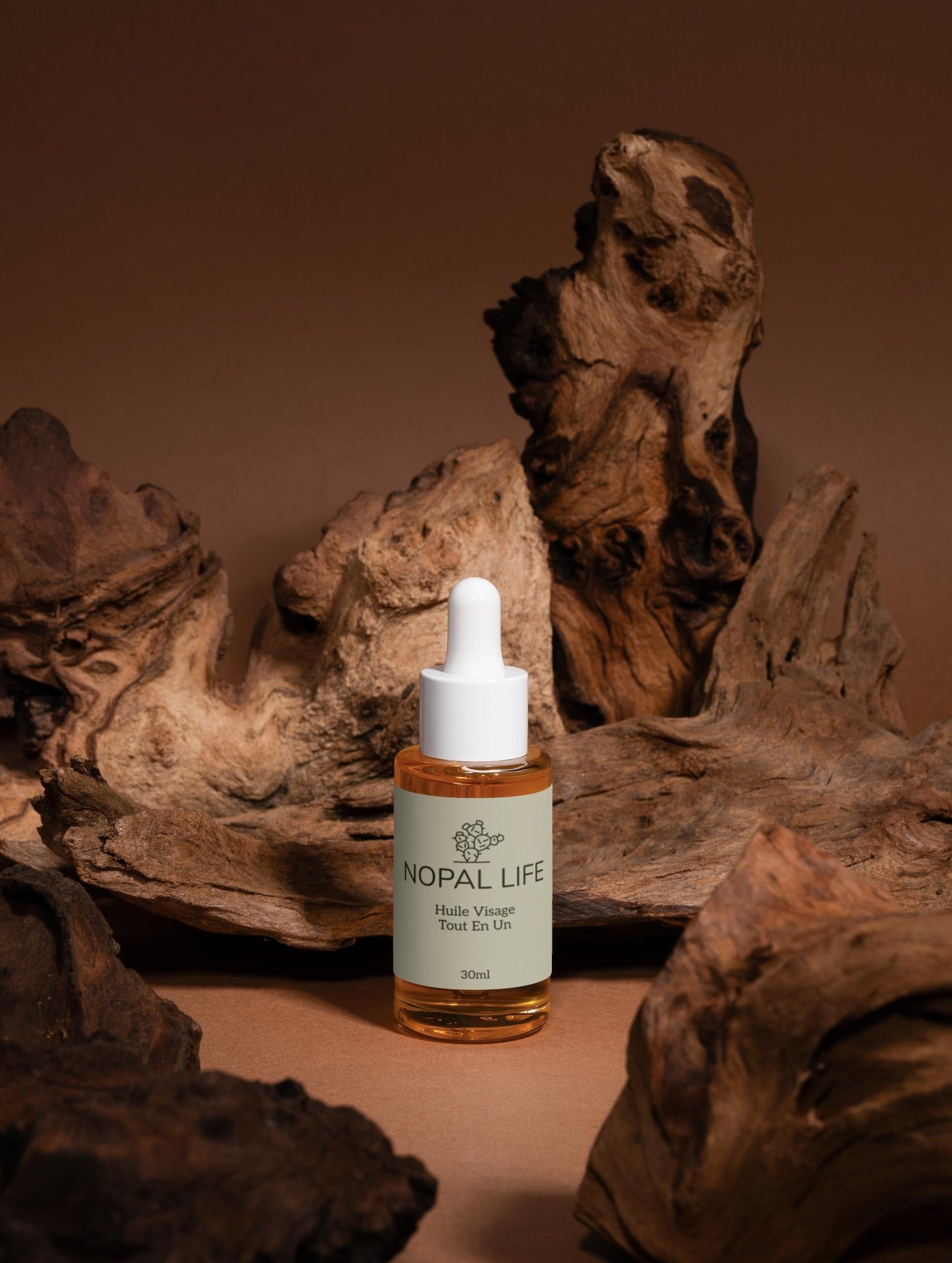
At Nopal Life, we have developed a skincare philosophy based on respecting the skin's natural balances rather than circumventing them. Pure prickly pear seed oil, at the heart of our range, perfectly illustrates this approach: rich in essential fatty acids (linoleic, oleic), vitamin E, and plant sterols, it nourishes without occlusion, helps preserve hydration and comfort, and provides antioxidants that help protect the appearance of the skin without harming it. It naturally integrates as the last step of a minimalist and effective routine, before SPF in the morning, or as a comforting night care. Our Skin Intelligence™ tool analyzes your skin in two minutes and precisely identifies what mistakes you are currently making and what active ingredients would truly be beneficial for your unique skin profile.
Frequently Asked Questions
Q: How many products do you really need in an effective skincare routine?
A: An effective basic routine requires only 4 products: a gentle cleanser, a targeted serum, a moisturizer, and an SPF in the morning. The addition of extra products should be gradual and justified by an identified real need. Fewer products mean fewer risks of interactions and better skin tolerance.
Q: Can retinol be used from age 25?
A: Yes, in the form of a gentle ester (retinyl palmitate or retinaldehyde) at a low concentration for prevention. Pure retinol at concentrations above 0.5% is more indicated after 35 years for more targeted use. In all cases, a very gradual introduction is essential, once or twice a week at most initially.
Q: Should you really change your routine according to the seasons?
A: Absolutely. In winter, cold and indoor heating drastically reduce ambient humidity and call for richer textures and reinforced film-forming active ingredients. In summer, light, non-comedogenic formulas and reinforced SPF are priorities. Adapting your routine to climatic variations helps prevent seasonal skin imbalance.
Q: How do I know if a product is truly suitable for my skin?
A: The tolerance test consists of applying the product to the wrist for 48 hours before using it on the face. On the face, a well-suited product causes no tightness, redness, or excess shine within 24 hours of application. Any persistent discomfort is a signal of incompatibility that should be taken seriously.
Q: Can vegetable oils replace a moisturizer?
A: Vegetable oils are emollients and occlusives that help seal in moisture already present in the skin, but they do not provide water. For very dry skin, they are preferably used on slightly damp skin or after a hydrating serum with hyaluronic acid. For oily skin, dry, non-comedogenic oils such as prickly pear seed oil are preferable.
Q: Is micellar water enough to cleanse the skin in the evening?
A: Not for skin that wears makeup or lives in the city. Micellar water is a first cleanse that dissolves makeup and pollution particles on the surface, but it does not replace an emulsifying cleanser that removes oily residues, sebum, and the micelles themselves if they are not rinsed. The double cleansing method — makeup remover followed by a gentle cleanser — is the most effective.
Q: Is SPF aging the skin a myth?
A: Yes, it's entirely a myth. No serious source supports this claim. On the other hand, daily sun protection is widely recognized for helping to preserve the youthful appearance and radiance of the skin. Modern mineral formulas are light, non-comedogenic, and compatible with all skin types, including acne-prone and sensitive skin.
Q: What is the difference between dehydrated skin and dry skin?
A: Dry skin is a genetic skin type characterized by naturally moderate sebum production. Dehydration is a temporary state of lack of water that can affect all skin types, including oily skin. Dehydrated skin feels tight, shows fine dehydration lines, and reacts immediately to the application of hyaluronic acid. These two situations call for different solutions: emollients and lipids for dry skin, humectants and occlusives for dehydration.
Read more
Information provided for cosmetic and educational purposes; it does not constitute medical advice.
Our anti-aging treatments