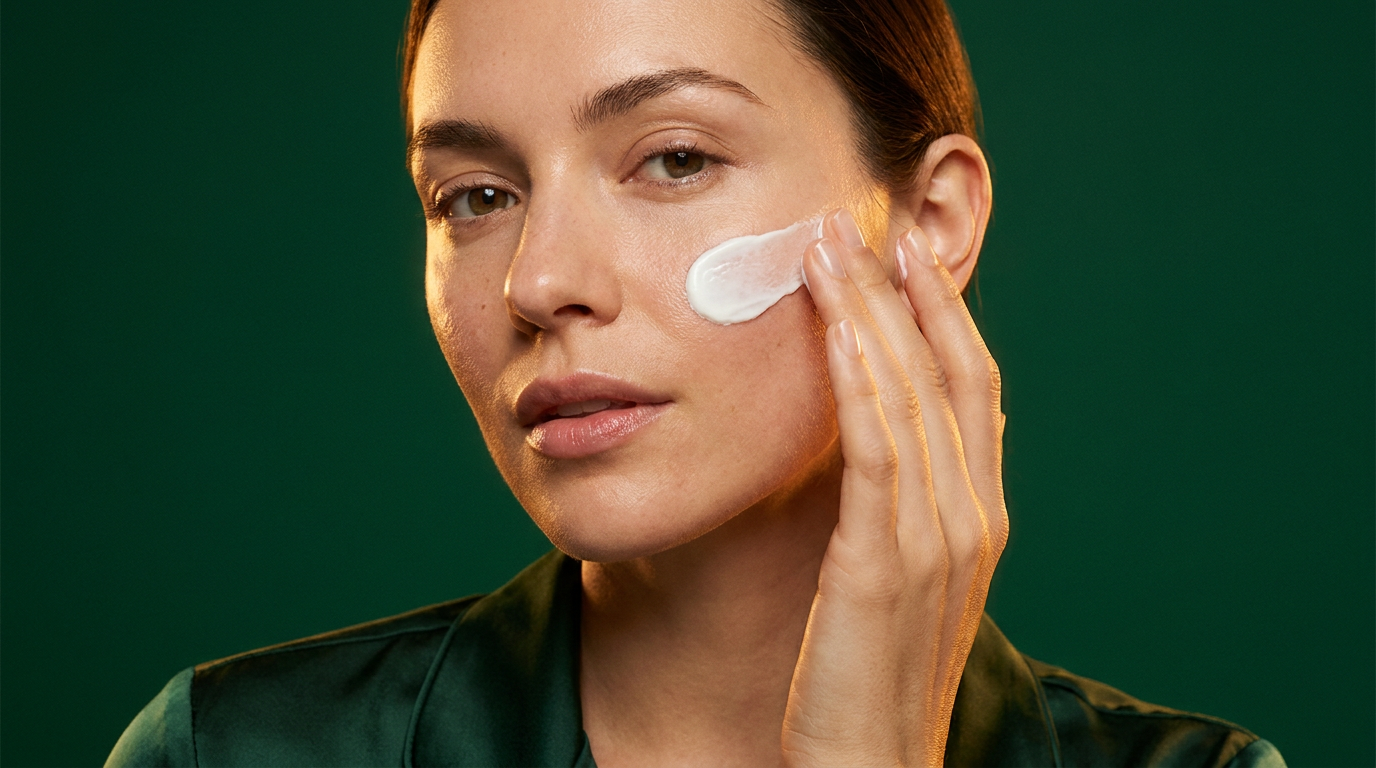
SPF 50 face mist: useful for touch-ups?
An SPF 50 sun mist is primarily a convenient reapplication tool, but it is difficult to dose as precisely as a cream applied in the morning. The main risk is spraying too little or losing some of the product in the air. For the face, it is better to avoid inhaling the aerosol and apply the product with your hands when the instructions allow.
Why a mist is appealing during the day
The format allows for quick touch-ups after an outdoor lunch, a walk, or a long commute. It seems compatible with makeup and avoids the need to carry a heavier cream. This simplicity sometimes improves compliance, which is a real advantage.
However, the impression of ease can lead to applying too little. A few light sprays do not guarantee a uniform layer. The advertised protection is only achieved with the quantity used in product tests.
The real problem: knowing how much you've applied
With a cream, you can see a dose on your fingers. With a spray, some of the product remains in the air, in the hair, or on clothing. Wind further accentuates this loss and makes coverage uneven.
For a classic sun spray, dermatologists recommend generous application until the skin glistens, then even spreading. For the face, spraying into the hands before applying limits inhalation and improves dose control.
Over makeup: useful but imperfect
A mist touch-up may be preferable to no reapplication at all, but it does not always recreate as even a layer as the initial application. Powders, sebum, and facial movements make the film harder to standardize.
If your makeup allows, gently press the product with clean hands or a dedicated sponge. For strong sun exposure, a proper reapplication with a classic sunscreen texture remains more reliable. Mist is better suited for intermediate touch-ups than for the first layer in the morning.
Aerosol, pump, or liquid spray
| Format | Advantage | Limitation | Useful gesture |
| Aerosol | Fine diffusion | Inhalation and losses | Spray into hands for face |
| Pump spray | More controllable dose | More visible droplets | Spread after application |
| Non-pressurized mist | Less dispersion | Sometimes uneven film | Apply several layers |
| Fluid cream | Measurable dose | Less practical for touch-ups | Reference for first application |
Reapply at the right time rather than mechanically
A touch-up becomes relevant after two hours of continuous exposure, after significant sweating, or after wiping the face. A person who stays indoors all day does not have the same need as a person who eats lunch outdoors and then walks for forty minutes.
The strategy must therefore follow the exposure. A mist in your bag can secure an unplanned day, but it should not become an excuse to apply a minimal amount in the morning. The first layer remains the most important.
Areas easily forgotten
Spraying often hits the center of the face but less effectively the temples, ears, hairline, and jawline. Run your hands over these areas after application. The eyelids and immediate eye contour require a tolerated formula and very controlled application.
For lips, use a suitable stick with a clearly indicated SPF. A mist sprayed near the mouth is less precise. Accessories like glasses and hats complement protection without depending on cosmetic dosage.
Does a mist protect as much as a cream?
The indicated indices are measured in laboratories, on a standardized dose spread uniformly. A product sprayed at arm's length, outdoors, with a bit of wind, does not replicate these conditions. The protection obtained in practice is therefore generally lower than the number on the bottle.
This does not make the format useless, but gives it another role: that of reapplication, not that of the first layer. In the morning, a hand-applied texture remains more reliable for covering the entire surface.
If you only have this format, apply multiple layers and bring the bottle closer to your face, with eyes closed and breath held during application.
Times when touch-ups really matter
After swimming, even with a water-resistant formula, towel rubbing removes as much product as the water itself. This is where the gesture is most useful.
An early afternoon terrace, a long walk, a journey by the window: all real exposures that are neglected because they don't resemble a beach day. UVA radiation passes through glass.
Conversely, spraying every hour in an office without direct light provides nothing. The rhythm is based on actual exposure, not a fixed rule.
What "SPF 50" means on a mist bottle
The index measures protection against UVB rays, which cause sunburn. It says nothing about UVA radiation, which penetrates deeper and is involved in skin aging and dark spots. On a mist as on a cream, the mention "broad spectrum" or the encircled UVA logo indicates high protection on both fronts.
A mist that offers high protection on paper can therefore remain unbalanced. Checking this point before purchase avoids paying for a spectacular index for partial coverage.
The word "invisible," very common on these products, describes a finish without white marks. It provides no information on the actual index obtained with use, nor on the distribution of the product.
The index measures protection obtained in the laboratory with a standardized amount of product. A mist applied from a distance deposits much less, and the actual sun protection is therefore below what the number indicates.
Look at the list of filters rather than the index alone. Broad-spectrum filters – bis-ethylhexyloxyphenol methoxyphenyl triazine, diethylamino hydroxybenzoyl hexyl benzoate, diethylhexyl butamido triazone – cover a wider range than older filters, and their presence is more informative than a large SPF50 print.
Sensitive skin: a format with advantages
Not having to spread with fingers limits rubbing, which is beneficial for reactive skin or after exposure. The format also avoids touching a made-up face, thus displacing already applied products.
On the other hand, pressurized formulas contain volatile solvents that can sting irritated skin, and the fragrance is often more noticeable than in a cream. A test on a small area remains the only way to know.
Close your eyes during application, and never spray directly onto a child's face: these two precautions apply to all spray formats, regardless of the formula's quality.
What an SPF 50 mist does not guarantee
A mist does not guarantee SPF 50 protection if the amount applied is too small or if coverage has gaps. It does not exempt you from spreading the product when recommended. Nor should it be intentionally inhaled.
Its best role is that of a convenient touch-up tool. For the initial layer, a cream or fluid whose dose can be controlled remains easier to use correctly. During the day, the mist can complement this base, especially when classic reapplication would otherwise be abandoned.
On very oily skin, first dab away excess sebum with blotting paper before touching up. Spraying on a very oily layer can make the film less homogeneous. However, avoid rubbing the face before reapplying.A transparent mist provides few visual cues. Make several cross passes rather than a single quick cloud. When the instructions require massage, follow this step instead of letting the droplets dry on their own.
How to touch up without turning your face into a cloud
Start by finding a spot away from the wind. If the product is designed for spraying onto hands, dispense enough into your palm, then press onto your forehead, cheeks, nose, and chin. This method allows you to see where the product has actually been applied.
If the formula is designed for direct spraying, close your eyes and mouth, hold your breath for a few seconds, and strictly maintain the distance indicated by the manufacturer. A very fine mist should never be intentionally inhaled. After application, check the contours of your face with your fingers.
On light makeup, several thin successive layers are often easier to distribute than a single massive spray. Between passes, allow a few seconds for the product to settle. The goal is a continuous layer, not a temporary damp sensation.
For days with high sun exposure, keep the mist as a backup solution and plan for a proper reapplication at the most convenient time. This hierarchy avoids demanding the same precision from a touch-up format as from a measured initial layer.
>A touch-up that counts is still a layer
A mist doesn't allow you to know what you've applied, and that's precisely what's missing from a midday touch-up. Keeping the mist for emergencies and applying a tinted SPF30 sunscreen at the most convenient time provides a measurable layer.


Go further than this article
Get our skincare guides by email — and start with your free skin diagnostic: 2 minutes, advice tailored to your skin. We ship to the US, UK, Canada, Australia and 27 European countries; somewhere else? Sign up and you will be the first to know when we deliver to your country.
By signing up, you agree to our privacy policy. Unsubscribe in one click.