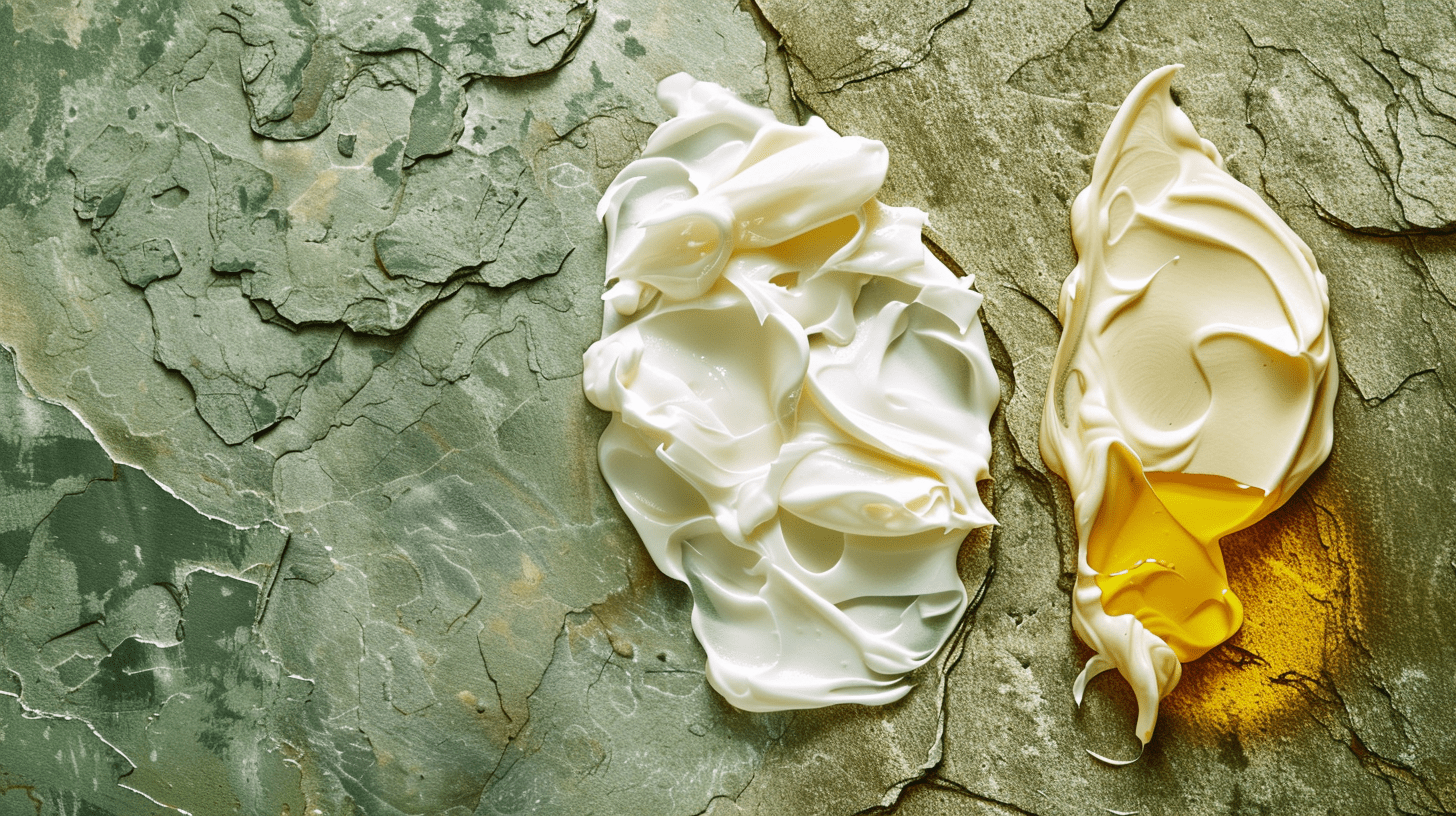
Face cream: which one to choose, and when to prefer oil
When it comes to establishing your routine, one question repeatedly arises: should you use a cream or an oil? Both promise comfort and suppleness, but they achieve this in different ways. Through this Beauty Lab guide, NOPAL LIFE helps you distinguish between these two textures, choose the one that suits your skin, and understand why, sometimes, combining them is the most effective solution — with the dedication and botanical nourishment that are dear to us.
Two textures, two approaches
A face cream is an emulsion: a carefully balanced mixture of water and fatty substances, stabilized by agents that bind the two phases. This is precisely its strength: it provides both water (via its aqueous phase and humectants) and some lipids (via its fatty phase). In a single step, it hydrates and provides a veil of comfort. Its melting and easy-to-spread texture makes it the versatile care par excellence.
A face oil, conversely, contains no water: it is an entirely lipid-based product. Rich in fatty acids and vitamin E, it nourishes, softens, and seals in existing hydration by limiting its evaporation. It doesn't add water but helps the skin retain the water it has. It is a nourishing and finishing treatment, not a hydrating one per se.
The key distinction lies there: the first provides water and some fat in one step, the second provides fat and retains existing water. Understanding this difference is knowing when one is sufficient and when the other becomes invaluable.
This contrast is often summarized as follows: an emulsion is a "complete" treatment that combines both phases, while a fatty substance is a "concentrated" treatment that only acts on the lipid dimension. The former can therefore be sufficient on many skin types; the latter, however, achieves its full potential when an aqueous source has preceded it. This logic guides all routine choices.
Comparison table: cream vs. face oil
| Criterion | Face cream | Face oil |
|---|---|---|
| Composition | Water + fat emulsion | 100% lipidic, no water |
| Main role | Hydrate and provide comfort | Nourish and seal in hydration |
| Texture | Melting, easy to spread | Fluid, satin finish |
| Water contribution | Yes, via the aqueous phase | No, retains existing water |
| Application time | Routine hydrating care | As a final step, over other products |
| Most suitable skin types | All types, depending on richness | Dry, mature, seeking comfort |
| Versatility | Very versatile, standalone | Complement or targeted nourishing care |
| Key advantage | Balanced all-in-one | Concentrated nourishment |
This table shows: the emulsion is the standalone and balanced treatment, the fatty substance is a nutritional boost. The choice depends on the richness your skin needs and your preference for textures.
Which care for which skin type?
Here's how to guide your choice based on your skin profile and usage cases.
Dry skin. It lacks lipids and comfort. A rich cream is an excellent base; adding a few nourishing drops on top, especially in winter, enhances the result. The duo of aqueous care followed by a lipidic finish is ideal here to reduce tightness.
Oily or combination skin. A light, fluid, or gel-cream texture is often sufficient. Fatty substances are not forbidden, but they should be used sparingly, in very small quantities, or locally on drier areas like the cheeks.
Dehydrated skin. It primarily lacks water. A hydrating emulsion rich in humectants directly addresses this need. A thin finishing layer can seal in this contribution to extend comfort over time.
Mature skin. Seeking suppleness and a plump appearance, it benefits from nourishing care supplemented with a vitamin E-rich finish, which brings comfort and radiance to skin that renews more slowly.
Sensitive skin. Simplicity is key: a minimalist soothing cream is often enough. A gentle touch can be added if the skin demands more comfort, limiting the number of ingredients to avoid overloading it.
Free Skin Diagnosis
Curious to know what your skin truly needs?
Take my 2-minute diagnosis →
Can they be combined? The order that changes everything
Yes, and it's often the smartest move for skin seeking comfort. The principle of layering applies: you go from the most fluid and aqueous to the richest and most lipidic. The aqueous texture, which contains water, is therefore applied before the lipidic finish, which seals everything in.
In practice, on clean skin, first spread the hydrating care and let it penetrate for a few moments. Then warm two to three drops of nourishing finish between your palms and gently press them onto your face, without rubbing. This layer of comfort traps the hydration applied just before and limits evaporation.
The reverse — fatty substance then emulsion — works less well: the lipidic film would hinder the penetration of the aqueous texture. The order makes all the difference. An intermediate tip for those in a hurry: mix a single drop into your dab of emulsion, in the hollow of your palm, to occasionally enrich a slightly light texture. To build your routine, explore the Nopal Life Creams & Face Care collection and the Face Oils collection, designed to complement each other.
Prickly pear oil, the nourishing finish
When looking for an oil to combine with your moisturizer, cold-pressed prickly pear seed oil is an exceptional choice. Its natural richness in antioxidant vitamin E and essential fatty acids makes it a remarkable nourishing treatment, with a fine texture that penetrates without heaviness.
Applied as a final step, over a cream, it seals in hydration and leaves the skin visibly softer, more supple, with a healthy glow. Dry and mature skin types find it a valuable nutritional supplement, particularly appreciated when winter cold tests the skin. To delve deeper into the art of complementary textures, the Hydration & Comfort collection brings together products designed to be layered.
If your skin shows persistent redness, significant itching, or discomfort that sets in, it is no longer a question of texture: then seek the advice of a health professional.
Frequently Asked Questions
Q: Can an oil replace my day cream?
A: Not entirely, because oil does not provide water. It nourishes and seals, but does not replace the hydration of a cream. On very dry skin, some use it occasionally, but most skin types benefit from keeping an aqueous product underneath.
Q: In what order should I apply cream and oil?
A: Cream first, then oil. Always go from the most fluid and aqueous to the richest and most lipidic. The oil applied last seals in the hydration provided by the cream and limits its evaporation.
Q: Is oil more effective than cream?
A: Neither more nor less: they do different things. Cream hydrates and provides comfort in one step; oil nourishes and retains water. Effectiveness depends on your skin's needs, not on one being superior to the other.
Q: Does oily skin need an oil?
A: Not necessarily. A light cream is often enough. If the skin has drier areas, a fine oil in small quantities, applied locally, can be suitable without making the whole area heavy.
Q: Can I mix a drop of oil into my cream?
A: Yes, this is a practical trick to occasionally enrich a slightly light cream. A drop of oil in the dab of cream, mixed in the palm, provides extra comfort without changing the entire routine.
Q: Cream in the morning, oil in the evening: is this a good idea?
A: This is a very common approach. Cream, being more versatile, accompanies the day under sun protection; nourishing oil is well suited for the evening, when the skin rests and fully benefits from nourishment.
Q: How do I know if my skin needs more nourishment?
A: Tightness, roughness, dull complexion often signal a need for lipids. To distinguish between lack of water and lack of fat, the Skin Intelligence™ diagnosis guides you towards the most suitable texture.
RECOMMENDED TREATMENT
Cold-pressed organic prickly pear seed oil
DISCOVER THIS TREATMENT →
PERSONALIZED ROUTINE
Nopal Life Skin Intelligence™ · Free diagnosis · 2 minutes
DISCOVER MY ROUTINE →
Choosing between face cream and oil means understanding their logic: one hydrates and provides comfort in one step, the other nourishes and retains existing water. Depending on your skin type, one may be sufficient, or both can be layered in the correct order to combine hydration and nourishment. The right texture, applied at the right time, makes all the difference in comfort and radiance.
Read more
Information provided for cosmetic and educational purposes; it does not constitute medical advice.


Go further than this article
Get our skincare guides by email — and start with your free skin diagnostic: 2 minutes, advice tailored to your skin. We ship to the US, UK, Canada, Australia and 27 European countries; somewhere else? Sign up and you will be the first to know when we deliver to your country.
By signing up, you agree to our privacy policy. Unsubscribe in one click.