Prickly pear oil or vitamin E: which to choose?
The question deserves to be rephrased, as one contains the other. Prickly pear seed oil is naturally rich in vitamin E, in the form of tocopherols. Choosing between the two often comes down to choosing between a complete vegetable oil and an isolated active ingredient.
What to understand first
| Criterion | Prickly Pear Seed Oil | Isolated Vitamin E |
|---|---|---|
| Nature | complete vegetable oil | unique, fat-soluble active ingredient |
| Contains Vitamin E | yes, naturally | by definition |
| Also provides | essential fatty acids, sterols | nothing else |
| Usage | complete care, last step | formula ingredient |
| Skin type | mature skin, dry skin | all, as a supplement |
Vitamin E in prickly pear seed oil
Prickly pear seed oil is one of the vegetable oils best supplied with tocopherols, the family of compounds to which vitamin E belongs. This content plays two roles at once.
On the skin, these antioxidants limit the action of free radicals in the fatty phase — the one that is first attacked by radiation and pollution. In the bottle, they slow down the rancidity of the oil itself.
This is why there is no real opposition between the two. Using prickly pear seed oil means already using vitamin E, with the added bonus of essential fatty acids.
What the oil provides in addition
Its profile is dominated by linoleic acid, often over 60%. This omega-6 is directly incorporated into the composition of the lipids of the skin barrier, which an isolated active ingredient does not do.
It also contains sterols and pigments, these minor compounds that distinguish a virgin oil from a refined oil. None of this is present in synthetic vitamin E.
When isolated vitamin E makes sense
In a formula, as a preservative for the fatty phase or as a complementary active ingredient. On very oily skin, a light cream with tocopherol will advantageously replace a vegetable oil.
However, there is little point in adding pure vitamin E to a routine that already includes a virgin vegetable oil. The contribution would be redundant.
Where prickly pear seed oil comes from
It is extracted from the seeds of the fruit of Opuntia ficus indica, a cactus from arid lands. At NOPAL LIFE, the prickly pears come from family farms in the arid highlands of eastern Algeria and Kabylia, where the plant grows without irrigation.
Extraction is done by first cold pressing, the only process that preserves tocopherols. Refining would remove them, and the oil would lose precisely what is the subject of this comparison.
Using prickly pear seed oil daily
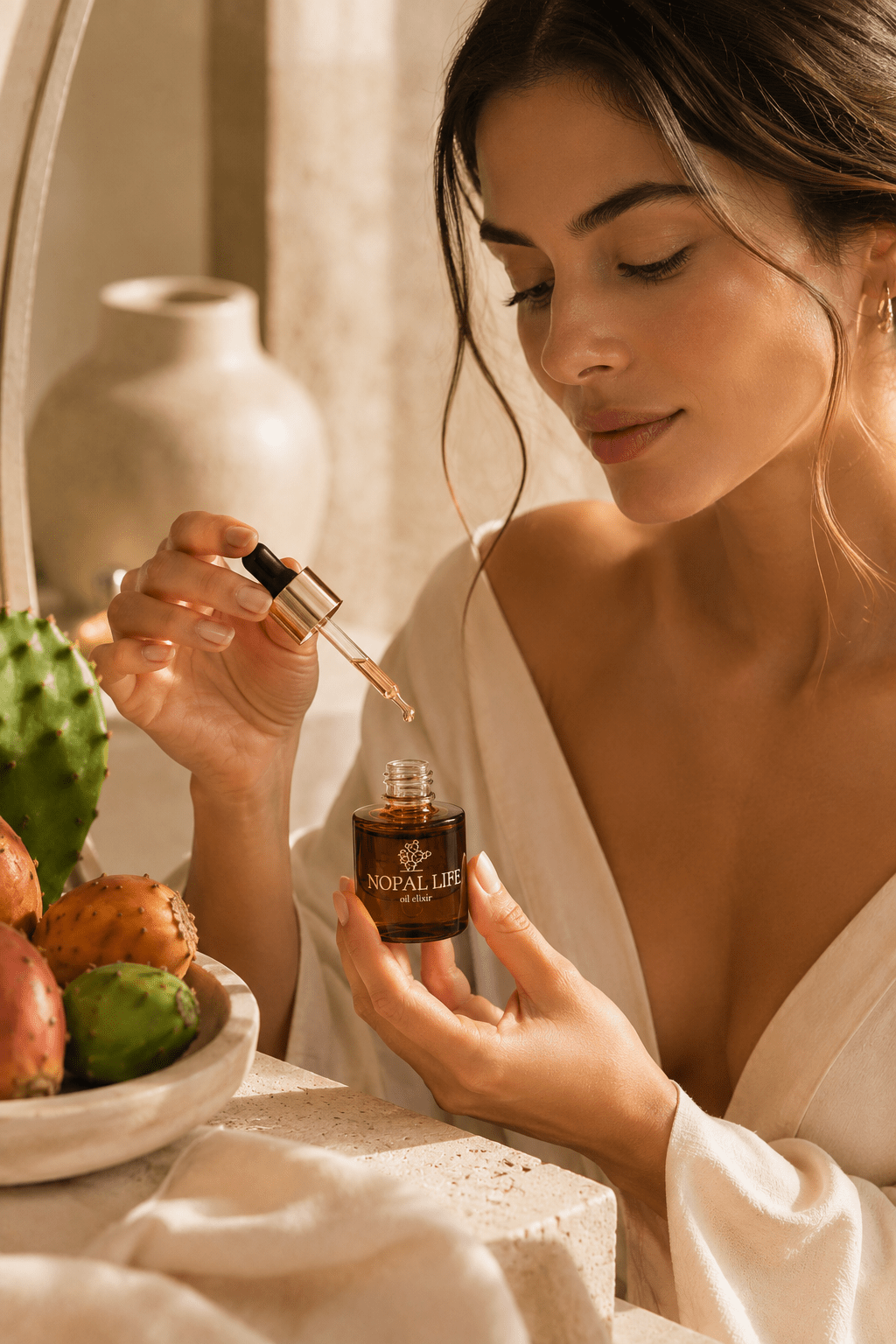
Two to three drops as the last step, on still slightly damp skin, warmed between the palms then applied with presses. A single drop on the eye contour, dabbed with the tip of the ring finger.
In the morning, one drop is enough under makeup, and finish with sun protection. In the evening, you can be a little more generous.
Anti-aging care: what to expect
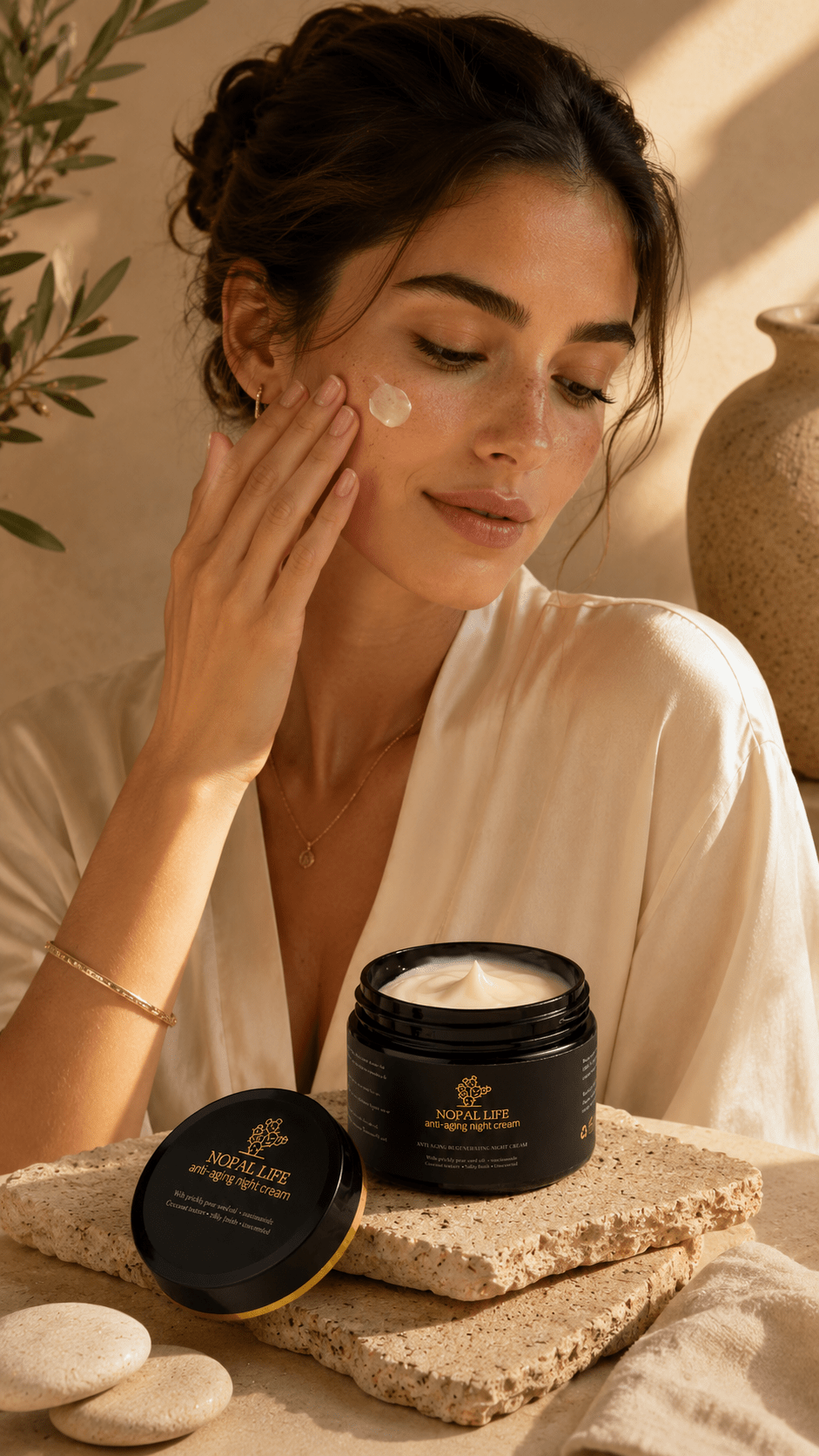
On mature skin, prickly pear seed oil improves suppleness and skin texture regularity, and reduces fine lines related to lack of water. These effects appear in three to four weeks.
It does not erase an established wrinkle and does not restore lost elasticity. No vegetable oil does, regardless of its richness or price.
How to recognize a quality oil
Three signs: a mention of first cold pressing, a tinted glass bottle, a frank and non-rancid vegetable odor. An odorless prickly pear seed oil has probably been refined.
Price is a fourth clue. At nearly a ton of fruit per liter, a very cheap oil deserves a question.
Limitations
These are cosmetic treatments. Their action focuses on skin comfort, suppleness and appearance, without medical aims. In case of persistent discomfort, consult a dermatologist.
Our anti-aging treatments