Hyaluronic acid storage: shelf life and signs of oxidation
Six to twelve months after opening, depending on packaging. Hyaluronic acid itself is a stable molecule — it’s the rest of the formula that ages, and storage conditions determine its actual lifespan. There are four factors, and the last one is almost always overlooked.
Light
Direct sunlight is the primary degradation factor. It doesn't directly attack hyaluronic acid, but it degrades preservatives and associated active ingredients, which opens the door to the rest.
A serum stored on a windowsill or an exposed bathroom shelf will lose in a few weeks what it would have retained for a year in a cupboard.
Amber glass bottles or opaque plastic containers are designed for this. A clear bottle requires storage in the dark, without exception.
Air
Each opening exposes the formula to air and environmental microorganisms. This is the factor that most clearly distinguishes between packaging types.
An airless pump bottle provides excellent protection: the product never comes into contact with air again. A dropper offers moderate protection — the pipette re-enters the bottle with each use. An open jar provides poor protection.
For the same serum, the difference in shelf life between an airless pump and a jar far exceeds six months. Packaging is not just a presentation detail.
Heat
A stable temperature, around twenty degrees Celsius, is perfectly suitable. What damages the product are variations rather than heat itself.
The bathroom is the worst possible place, and it's the one everyone uses: the temperature rises by fifteen degrees with each shower, then drops again. These cycles wear out the formula much more than a bedroom cupboard at a constant twenty-two degrees.
Refrigeration is not necessary for a commercial serum, which contains preservatives. It becomes useful for preservative-free preparations, where it significantly extends the shelf life.
Storing hyaluronic acid requires a stable rather than cold temperature. A bathroom that goes from 18 to 30 degrees twice a day will degrade the product more surely than a temperate cupboard.
Generally, allow six months after opening for a serum, and twelve for an anhydrous formula. After this time, the hydrating power decreases without any visible signs: the texture remains identical, but subsequent applications no longer maintain the same comfort.
Humidity — the one we forget
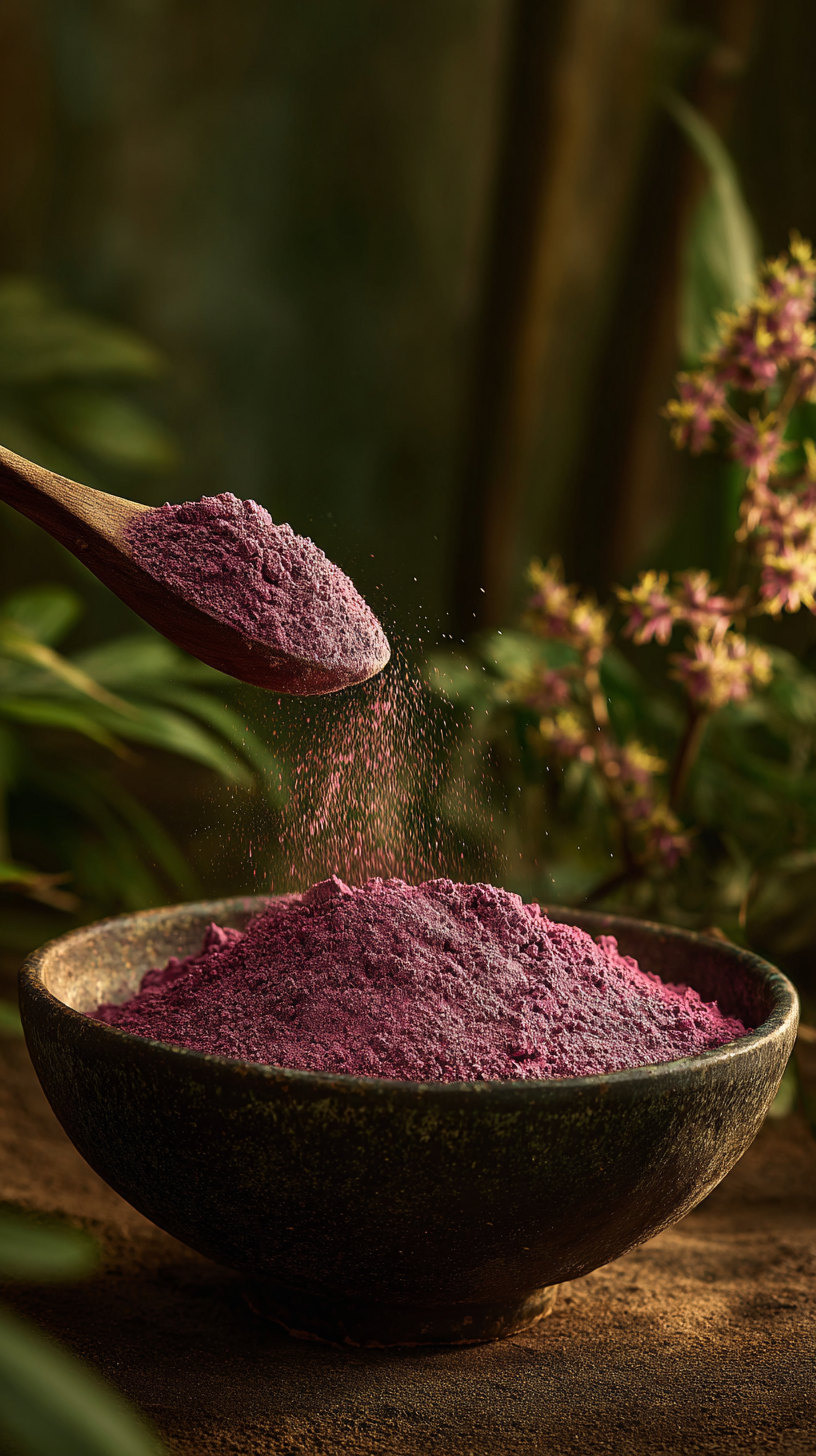
Powdered hyaluronic acid is extremely hygroscopic: it absorbs moisture from the air. Powder left open will clump together in a few hours and become unusable.
For serums, humidity acts indirectly but significantly: it promotes microbial growth as soon as a preservative weakens. A humid bathroom combines this factor with temperature variations.
Products should therefore be stored in a dry place. This is the simplest recommendation to follow and the least followed: a bedroom drawer is better than a shower shelf.
Signs that it's time to discard
First, a change in color. A serum that turns yellow or brown has undergone oxidation — often that of another active ingredient in the formula, especially vitamin C.
Next, a change in texture. A hyaluronic acid serum should remain fluid and homogeneous; if it becomes watery or, conversely, stringy, the molecule has degraded.
An odor that appears or changes. A well-preserved serum has almost no smell; a sour odor indicates contamination.
Finally, cloudiness or sediment. At this stage, there's no question about it.
What the packaging labels say
The minimum durability date refers to the unopened product. It says nothing about what happens after opening.
The open jar symbol, with a number followed by the letter M, indicates the recommended period after opening: 6M, 12M, sometimes 24M. This is the indication you should read.
These durations assume correct storage conditions. A product advertised for twelve months and left in the sun will not last six months.
In practice
Note the opening date on the bottle with a marker. This is the most effective action on this page, and it takes three seconds.
Store it in a bedroom drawer rather than in the bathroom, close it carefully, and never use a product whose color or smell has changed. These three habits ensure that you use an intact formula for its entire duration.
A well-preserved hyaluronic acid serum retains its properties until the end of the bottle. Poorly preserved, it loses its effectiveness halfway through without any clear signs.
Humidity, the one we forget
A bottle stored in the bathroom is exposed to steam with every shower, and it is humidity that most often shortens the life of an aqueous formula. A hydrating gel with hyaluronic acid in a closed bottle limits exchanges with the air; the storage location does the rest.
The "Properly Store Your Skincare" Series
Each ingredient degrades in its own way. These guides provide the actual duration and the signs that betray it.
- Niacinamide Storage: Duration and Signs of Oxidation
- Rosehip Oil Storage: Duration and Signs of Oxidation
- Squalane Storage: Duration and Signs of Oxidation
- Bakuchiol Storage: Duration and Signs of Oxidation
- Rose Water Storage: Duration and Signs of Alteration
- Shea Butter Storage: Duration and Signs of Alteration


Go further than this article
Get our skincare guides by email — and start with your free skin diagnostic: 2 minutes, advice tailored to your skin. We ship to the US, UK, Canada, Australia and 27 European countries; somewhere else? Sign up and you will be the first to know when we deliver to your country.
By signing up, you agree to our privacy policy. Unsubscribe in one click.