Collagen: Skin Benefits, Fact vs. Fiction
The apparent firmness of the face, the suppleness of the epidermis, its ability to bounce back when touched: all this points to a structural protein invisible to the naked eye, collagen. It is also one of the most used — and most misused — words in the beauty vocabulary. It can be found on bottles, in powders, in drinks, on food supplement labels, often accompanied by promises that neither European regulations nor available publications allow to be made.
This guide takes the problem from the opposite direction. Rather than announcing results, it provides you with the means to judge for yourself what the real benefits of collagen are: what this protein is, what types exist in the skin, what the European Union allows to be said about it, what published trials on powders and capsules report, what a cosmetic formula actually does when applied topically — and a 56-day observation protocol to measure at home, without equipment, what your routine truly changes.
At Nopal Life, our work is based on prickly pear (Opuntia ficus-indica) and a simple belief: it is better to honestly explain what a treatment does than to promise what no treatment can do.
Key takeaways
- In the skin, two types of collagen dominate the dermis: type I (approximately 80 to 85% of the dermal network) and type III (approximately 10 to 15%).
- No health claim for ingested collagen is authorized in the European Union. The only authorized claim that mentions it concerns vitamin C (Regulation (EU) No 432/2012).
- Applied to the skin, native collagen does not cross the stratum corneum: a topical formula works on hydration, comfort, and surface appearance, not on the deep structure.
- Published trials on hydrolyzed collagen powders most often use doses of 2.5 to 10 g per day for 8 to 12 weeks.
- Our home observation method: 56 days, 3 photos (Day 1, Day 28, Day 56), a grid of 5 criteria rated from 0 to 3.
Collagen: an architecture, not a miracle ingredient
Collagen is the most abundant protein in the human body: according to classic estimates, it represents approximately 30% of total protein mass. It is found in bones, tendons, vessels, cartilage, and of course in the skin, where it constitutes the bulk of the dermal matrix.
Its particularity lies in its form. Three chains wrap around each other to form a triple helix of remarkable stability. The whole is based on a repeated motif where glycine occupies one out of three positions, largely accompanied by proline and hydroxyproline. It is this motif, described in detail by Shoulders and Raines in Annual Review of Biochemistry (2009), that explains the mechanical resistance of connective tissues.
These helices then assemble into fibrils, then fibers, then a network. It is this mesh — often compared to a scaffold, or the weave of a mattress — to which the visible firmness of the face, its apparent density, and its bounce are associated. Around it circulate other constituents, including hyaluronic acid, which retains water, and elastin, which gives the tissue its ability to return to its original shape.
The five most common types of collagen
We speak of collagen in the singular for convenience, but nearly thirty types have been identified. Five are enough to decipher the labels you see on shelves.
| Type of collagen | Where it is found | Proportion in the dermis | What it means for you |
|---|---|---|---|
| Type I | Skin, bones, tendons | ≈ 80-85% | This is what "beauty" powders of marine or bovine origin target. |
| Type III | Young skin, vessels, hollow organs | ≈ 10-15% | More flexible; its relative proportion decreases with age. |
| Type II | Cartilage | Absent | This is for products focused on joint comfort, not the face. Don't look for it in a skincare product. |
| Type IV | Dermal-epidermal junction | Traces | It forms the basement membrane, the interface between the two layers of the skin. |
| Type V | Skin, placenta, hair | Traces | It participates in the organization of type I fibers. |
Most importantly, remember this: when a label announces "type I and III collagen," it describes a raw material, not a result. And when it announces "type II," it's talking about a completely different subject than facial beauty.
Collagen and age: why skin appearance changes
The renewal of the dermal matrix slows with age. The work of Varani and his team, published in The American Journal of Pathology in 2006, describes a decrease in collagen production in aged skin, associated with altered fibroblast function and reduced mechanical stimulation of the tissue. The visible result: the face appears less dense, its contours are less distinct, and fine lines appear more easily.
In addition to this underlying trend, there are external factors, many of which are under your direct control. The table below compares them with a concrete lever.
| Factor | What is observed | Concrete lever |
|---|---|---|
| UV radiation | Primary factor in visible facial aging, even on cloudy days. | Daily sunscreen, useful amount: the "two-finger rule," approximately 1.2 ml for face and neck. |
| Smoking | Duller complexion, more pronounced perioral fine lines. | The only truly effective lever is quitting; everything else is about catching up. |
| Excess sugar | Glycation modifies structural fibers in the long term. | Limit added sugars and heavily caramelized cooking, without dogmatism. |
| Menopause | Hormonal change often associated with a more rapid loss of apparent density. | Increase the lipid content of skincare and regularity, rather than using multiple products. |
| Insufficient vitamin C intake | Essential cofactor for enzymes that hydroxylate proline. | Nutritional reference in France: 110 mg per day for adults (ANSES). |
| Short sleep and stress | Dull complexion upon waking, deeper dark circles, less comfortable epidermis. | Regular bedtime, more decisive than total duration. |
No skincare product cancels these factors. However, a regular routine creates favorable surface conditions: a well-nourished skin barrier, sustained hydration, and defense against surface oxidative stress. The goal is modest, but it is real and visible.
Benefits of collagen: what can be claimed — and what cannot
This is the point most articles avoid, and yet it's the most useful when you're hesitating between two boxes on the shelf.
The European framework, clearly
In the European Union, a health claim on a food or supplement can only be used if it is listed in the register established by Regulation (EC) No 1924/2006 and its implementing list, Regulation (EU) No 432/2012.
No claims regarding ingested collagen are listed there. Not for the face, not for joint comfort, not for hair or nails.
The only authorized claim that mentions it concerns a micronutrient: "Vitamin C contributes to normal collagen formation for the normal function of skin." This is not a semantic detail: it means that a product can legally claim a role via its ascorbic acid content, never via its collagen content of animal origin.
On the cosmetic side, the logic differs but remains just as regulated: a product applied to the face falls under cosmetic regulation and acts on the surface. It cannot claim an action on the internal functioning of a tissue. This is why we speak of appearance, comfort, suppleness, and hydration — and never anything else.
ANSES also reminds, in its opinions on food supplements, that these products do not replace a varied diet or a balanced lifestyle, and that they require particular vigilance for pregnant women, people under treatment, and children. The advice of a doctor or pharmacist remains the right reflex before any prolonged intake.
Collagen powder and capsules: which origin for which profile
The range has expanded considerably in ten years: marine, bovine, porcine, eggshell membrane, chicken cartilage, and a confusing marketing category, "vegetal." Here's how to compare based on measurable criteria rather than packaging.
| Origin | Dominant types | Usual form | Typical trial dose | Dietary profile | Points of vigilance |
|---|---|---|---|---|---|
| Marine (fish skin and scales) | I | Enzymatic fragments, often 2 to 5 kDa | 2.5 to 10 g/day, 8 to 12 weeks | Pescetarian | Fish allergen; check species and fishing area |
| Bovine (skin, bones) | I and III | Enzymatic fragments, 2 to 5 kDa | 2.5 to 10 g/day | Omnivore | Traceability of origin; incompatible with halal or kosher without certification |
| Porcine (skin) | I and III | Enzymatic fragments | 2.5 to 10 g/day | Omnivore | Excluded for many religious diets |
| Eggshell membrane | I, V, X | Native powder, unfractionated | Approx. 300 to 500 mg/day | Ovo-vegetarian | Egg allergen; dosages not comparable to fragmented powders |
| Chicken cartilage | II | Undenatured | Approx. 40 mg/day | Omnivore | Aimed at joint comfort; irrelevant for face objective |
| "Plant-based" | None | Precursors: vitamin C, silicon, amino acids | Varies by formula | Vegan | Misleading name: plants do not produce collagen |
Reading a collagen label in thirty seconds
Four pieces of information are enough to decide. If one of them is missing, that's already an answer.
- The dose per serving, in grams — not the dose "per 3 capsules" in small print. A 500 mg capsule requires swallowing five to twenty to reach the amounts used in published trials. Powder, in this regard, is more honest than capsules.
- The mention "hydrolyzed" and the molecular weight — the raw material is then cut into shorter chains, usually expressed in kilodaltons. Below 5 kDa, the information is usually displayed; above, it is often absent.
- Origin and type — "marine collagen, type I" or "bovine collagen, types I and III" are verifiable information. "Premium formula" is not.
- The full list — flavorings, sweeteners, acidifiers, and fillers sometimes take up more space than the advertised active ingredient.
What published trials on collagen report — and their limitations
Several randomized, double-blind, placebo-controlled trials have been conducted on hydrolyzed collagen powders, of marine or bovine origin. Proksch and his co-authors, in Skin Pharmacology and Physiology (2014), reported skin elasticity measurements after eight weeks of daily intake; other teams have published measurements of hydration and ultrasonic dermal density over twelve weeks.
These works exist, they are consultable, and they should be read for what they are: modest-sized trials, often funded by the manufacturers who produce the tested raw material, focusing on specific collagen peptides at specific doses. Their conclusions do not automatically apply to just any product on the market. And, as we have seen, they have not led to the authorization of a European claim.
Our position is therefore as follows: taking powdered collagen is a personal, informed choice, discussed with a professional if you are undergoing treatment. It is not part of our range, and we do not sell it. Our work begins where the product is applied to the face.
Topical collagen: what a formula can actually do
A question that comes up constantly is: does a cream "with collagen" actually make it penetrate the skin? No. Native collagen weighs about 300 kDa. The stratum corneum, in practice, allows molecules of a much smaller order of magnitude to pass through – the empirical limit often retained in cosmetology is around 500 daltons. The difference is by hundreds of times.
This does not make these formulas useless, provided you know what you're asking of them. A moisturizing film on the surface reduces transepidermal water loss; better hydrated epidermis immediately appears more supple; and a supple surface reflects light better. The benefits are real; they relate to appearance and comfort, not to the deep structure.
| Leverage | What it acts on | Realistic observation period | How to verify it at home |
|---|---|---|---|
| Topical care | Surface hydration, comfort, radiance, appearance of dehydration fine lines | 3 to 14 days for comfort, two months for appearance | Feeling of tightness upon waking, noted every morning |
| Sunscreen | The main factor of visible aging | Cumulative effect, over years | Compare an exposed area and a covered area, on the forearm |
| Diet | Intake of vitamin C, zinc, amino acids, essential fatty acids | Several weeks | 3-day record of fruits and vegetables actually consumed |
| Sleep and tobacco | Skin radiance, appearance of dark circles | A few days for skin tone | Morning photo, same light, two weeks apart |
The natural active ingredients we prioritize
Natural cosmetics are no less effective than synthetic cosmetics – provided you choose the right active ingredients, in the right vehicles, at the right dosages. Here are the ones Nopal Life has chosen, and why.
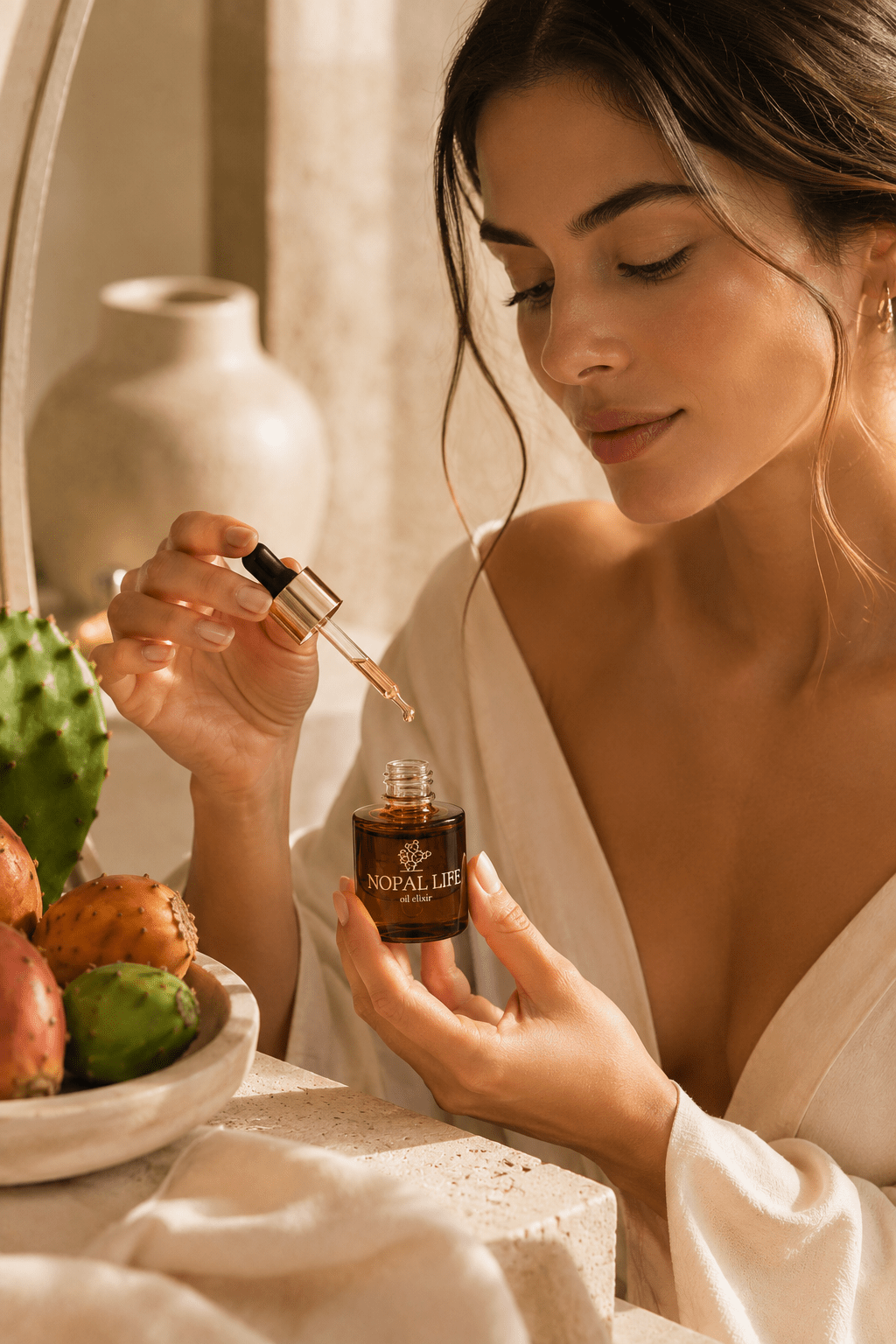
Prickly pear seed oil
Cold-pressed from the seeds of Opuntia ficus-indica, it takes about a ton of fruit to produce one liter of oil – which explains its price and justifies using it sparingly rather than by the ladleful. Its lipid composition is remarkable: 60 to 65% linoleic acid, an essential fatty acid associated with the comfort of the skin barrier, supplemented by oleic acid and palmitic acid.
Its richness in tocopherols, the natural form of vitamin E, is among the highest of cosmetic vegetable oils; it is an antioxidant appreciated for helping to protect the face from surface oxidative stress. It also provides beta-sitosterol and phenolic compounds, recognized in cosmetics for their soothing properties. Its fine texture, finally, gives it excellent affinity with the epidermis, without a greasy finish or occlusive effect. We detail its complete profile in our article dedicated to prickly pear and its exceptional anti-aging properties.
Vitamin C
It is the only micronutrient whose link with collagen is officially recognized at the European level, making it a particularly strong choice. In terms of diet, the French reference for adults is 110 mg per day. Topically, ascorbic acid is appreciated for its antioxidant role and for helping to unify skin tone; stabilized forms, such as ascorbyl glucoside or sodium ascorbyl phosphate, are preferred for their tolerability.
Nopal mucilage
The pads of Opuntia ficus-indica contain polysaccharides with a high water retention capacity. Applied to the face, they form a biomimetic moisturizing film that helps retain water in the superficial layers of the epidermis. A properly hydrated surface immediately appears more supple and plump: this is the fastest and most visible effect of the entire routine.
Hyaluronic acid
Naturally present in the dermis, it retains a considerable volume of water relative to its mass. In formulas, high molecular weights remain on the surface and smooth the skin's texture; lower ones distribute throughout the superficial layers. A good skincare product often combines several to achieve both immediate effect and lasting comfort.
Carotenoids and zinc
The carotenoids in prickly pear extracts constitute a natural source of vitamin A precursors, appreciated for supporting the natural renewal of the epidermis and maintaining an even skin texture. As for zinc, an often-overlooked trace element, it usefully complements the dietary approach: legumes, pumpkin seeds, seafood.
The Nopal Life 56-day protocol
Here's the method we recommend for honestly evaluating a routine – yours, ours, or another. It costs nothing, requires no equipment, and prevents you from changing bottles every three weeks based on an impression.
Daily routine
| Time | Step | Quantity and Duration |
|---|---|---|
| Morning | Gentle cleansing, soap-free | 30 seconds, lukewarm water, pat dry |
| Serum, on still slightly damp skin | 3 drops, press from center to temples, pause for 60 seconds | |
| Sunscreen | Two-finger rule, approx. 1.2 ml for face and neck | |
| Evening | Makeup removal then cleansing | 60 seconds of dry massage, then rinse |
| Prickly pear seed oil | 4 drops warmed between palms, applied with pressing motions | |
| Night cream, face, neck, and décolleté | A pea-sized amount, approx. 1 ml |
The four appointments
- Day 1 — Reference photo: natural light, same window, bare face, no makeup, in the morning before the routine. Note the date on the file, then fill in the grid below.
- Day 14 — First review, no photo. This is the comfort stage: has the tightness upon waking decreased? Does the face still feel tight after cleansing? If tolerance is an issue, this is when you adjust, not after three days.
- Day 28 — Second photo, strictly identical conditions. Second pass through the grid.
- Day 56 — Third photo and assessment. Only at this stage does the comparison make sense: the epidermis renews slowly, and a judgment after fifteen days only measures your current mood.
The five-criterion grid
Rate each line from 0 (never) to 3 (systematically), on days 1, 28, and 56. The total ranges from 0 to 15; what matters is not the absolute value, but its evolution.
| Observed criterion | Exact question to ask yourself | Day 1 | Day 28 | Day 56 |
|---|---|---|---|---|
| Comfort upon waking | Does it feel tight upon waking? | ___ | ___ | ___ |
| Comfort after cleansing | Do I need to apply a product within a minute? | ___ | ___ | ___ |
| Skin radiance | Does my complexion look dull in the morning photo? | ___ | ___ | ___ |
| Dehydration fine lines | Are they visible under the eyes at the end of the day? | ___ | ___ | ___ |
| Tolerance | Redness, tingling, or discomfort after application? | ___ | ___ | ___ |
One simple rule to conclude: if your comfort score hasn't changed by a single point between day 1 and day 56, the routine isn't working for you—change the formula, not your patience. If the "tolerance" line goes up, stop and return to a minimal routine.
Adjusting the Protocol Throughout the Year
A rigid protocol struggles to adapt to seasonal changes: heating, air conditioning, wind, and altitude alter the rate at which water evaporates from the surface. The adjustments below do not change the steps or their order—only the quantities and texture. This is precisely why they do not skew the grid's reading: you are always measuring the same routine.
| Period | Surface Changes | Adjustment | Area of Vigilance |
|---|---|---|---|
| Winter | Dry indoor air, repeated thermal shocks, more frequent feeling of tightness. | Increase from 4 to 5 drops in the evening; keep 3 drops in the morning. | Do not increase exfoliation frequency to "smooth" rough areas. |
| Spring | Sun exposure increases well before the first heat waves. | Return to systematic daily protection, including in the city. | This is the season when one relaxes the most, and when the UV index climbs the fastest. |
| Summer | Sweating, heat, rich textures less well tolerated. | Reduce to 2 drops in the morning; maintain the evening dose. | Reapply sunscreen every two hours during direct exposure. |
| Autumn | Return of heating, complexion often more irregular after summer. | Best window to start the 56 days: stable conditions for two months. | Let summer marks fade before photographing day 1. |
| Long-haul flight | Very low cabin humidity, often below 20%. | 2 drops before takeoff, 2 drops halfway, on makeup-free face. | Note the flight in your log: it skews the next day's reading. |
Adapting the Routine to Your Skin Profile
Genetic inheritance, sebum content, and epidermal barrier reactivity determine how signs of aging manifest, and thus how to respond to them.
Dry Epidermis and Mature Face
A thinner lipid barrier offers less protection against external aggressions. After the age of fifty, the combination of reduced sebaceous secretion and less toned tissue apparently promotes visible sagging: fine lines appear faster, contours are less clearly defined, and the complexion lacks clarity. Priority should be given to the evening oil phase, rich textures, and an unfailing rhythm. This is the profile for which the 56-day protocol shows the most significant differences in the "comfort upon waking" line.
Combination or Oily Epidermis
These profiles often show fewer signs of aging on the surface: sebum acts as a natural lubricant. The classic mistake is to deduce that there is nothing to do before the age of forty. Fluid textures and gel-creams help maintain suppleness without overloading the skin, and the sun protection step remains non-negotiable. Our article on the age at which to start a natural anti-aging routine elaborates on this point.
Dull, Lifeless Complexion
A gray or tired complexion rarely stems from a lack of expensive care: it more often indicates a poorly hydrated surface, excessive exfoliation, or irregular sleep. Start by removing rather than adding, and allow three weeks before drawing conclusions.
Collagen and Diet: The Numbers That Really Matter
Facial beauty is also built from within. Since vitamin C is the only micronutrient officially linked to normal collagen formation, it's worth knowing where to find it. The values below are approximate for 100g of raw food, based on the ANSES Ciqual composition table.
| Food (100g, raw) | Content, approximate | Share of the 110 mg/day reference |
|---|---|---|
| Blackcurrant | ≈ 180 mg | over 150% |
| Fresh parsley | ≈ 130 mg | ≈ 120% |
| Red bell pepper | ≈ 120 mg | ≈ 110% |
| Kiwi | ≈ 90 mg | ≈ 80% |
| Broccoli | ≈ 90 mg | ≈ 80% |
| Strawberry | ≈ 60 mg | ≈ 55% |
| Orange | ≈ 50 mg | ≈ 45% |
Two useful clarifications. Vitamin C is sensitive to heat and cooking water: boiled broccoli loses a significant portion, steamed broccoli much less. And intake is better distributed throughout the day than in a single dose, as absorption saturates.
The rest of the plate:
- Bone broth, gelatinous meats, whole fish — sources of glycine, proline, and hydroxyproline, the amino acids characteristic of connective tissues.
- Fatty fish, walnuts, flaxseeds — omega-3 and omega-6 fatty acids, for skin comfort.
- Dark green vegetables, pumpkin seeds, seafood — zinc, silicon, and various antioxidants.
- Berries, pomegranate, green tea — polyphenols valued for their antioxidant action.
What to moderate: excessive added sugars, alcohol, tobacco, and ultra-processed foods, which are poor in micronutrients and unbalanced in fatty acids.
Six Mistakes That Undo Your Efforts
Skipping Sunscreen Ten Months Out of Twelve
It's not just a summer product. Without it, much of the benefit of a careful routine goes up in smoke—even behind an office window.
Applying Skincare in the Wrong Order
From thinnest to richest, from most watery to most oily. Serum before cream, which seals it in. The reverse creates a physical barrier that hinders the distribution of textures. Our good daily anti-aging habits detail this sequence.
Over-exfoliating
Gentle exfoliation once or twice a week is sufficient for the vast majority of skin types. Beyond that, the epidermal barrier is weakened, and the opposite of the desired effect is achieved.
Confusing Ingestible Collagen with Topical Collagen
A supplement and a cream do not work in the same place, are not subject to the same regulations, and do not produce the same effects. Expecting immediate smoothing from a drink like a topical treatment, or expecting a cream to act on the entire body, leads to guaranteed disappointment.
Changing Products Every Three Weeks
The skin's renewal cycle and the establishment of comfort require time. This is precisely why we set the protocol at 56 days rather than fifteen.
Waiting for the First Signs to Act
Maintaining is better than catching up. A simple routine, followed since your thirties, yields more—and costs far less—than an arsenal started at fifty.
RECOMMENDED TREATMENT
Pure Prickly Pear Seed Oil
Natural formula · Origin Algeria
DISCOVER THIS TREATMENT →The Nopal Life Range to Support Facial Appearance
Each product is designed to complement the previous one, so that each step of the routine amplifies the next.
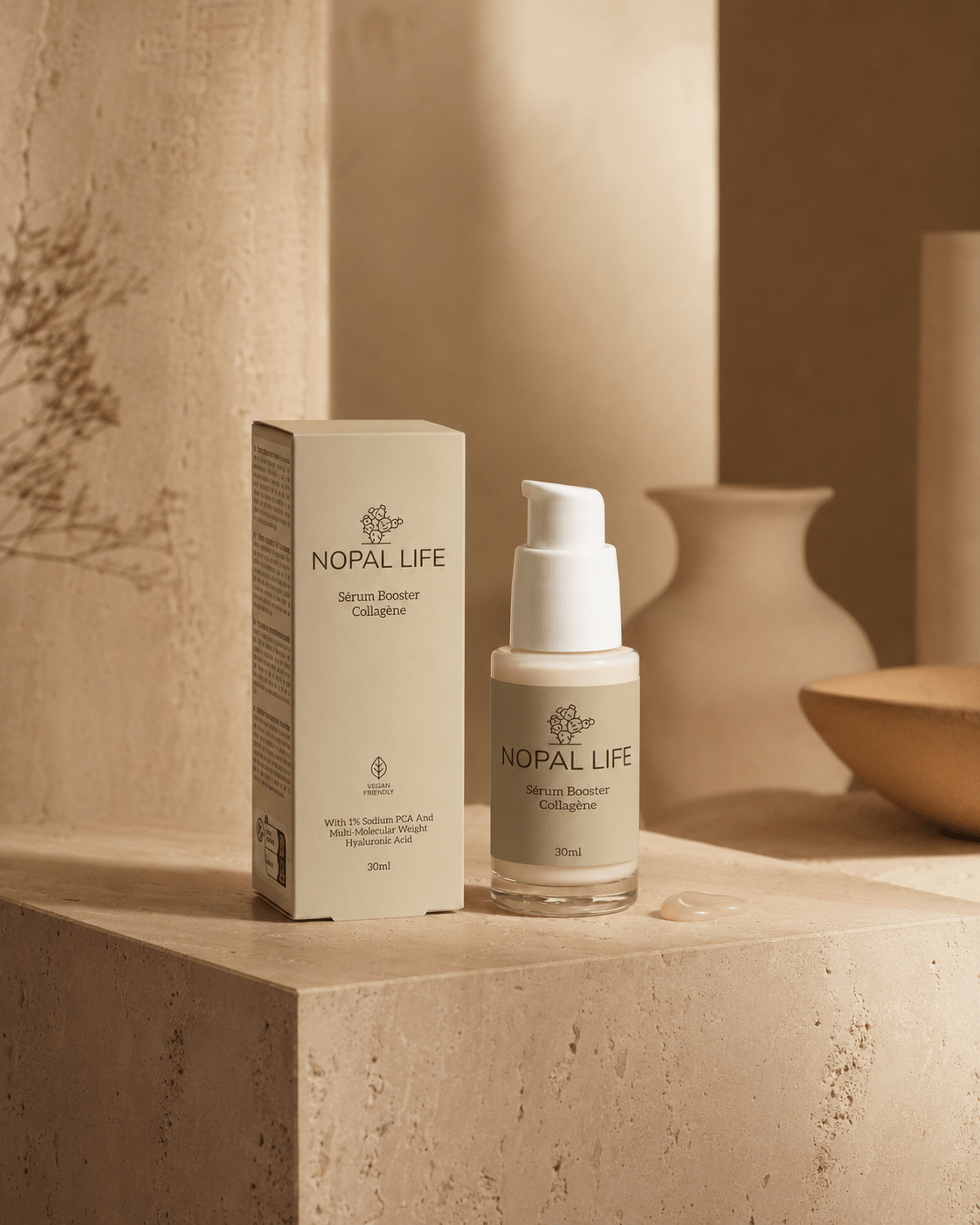
- Collagen Hydration & Skin Bounce Serum — the concentrated day treatment with a smoothing finish, formulated with prickly pear seed oil and film-forming active ingredients that maintain hydration comfort throughout the day. 3 drops are sufficient.
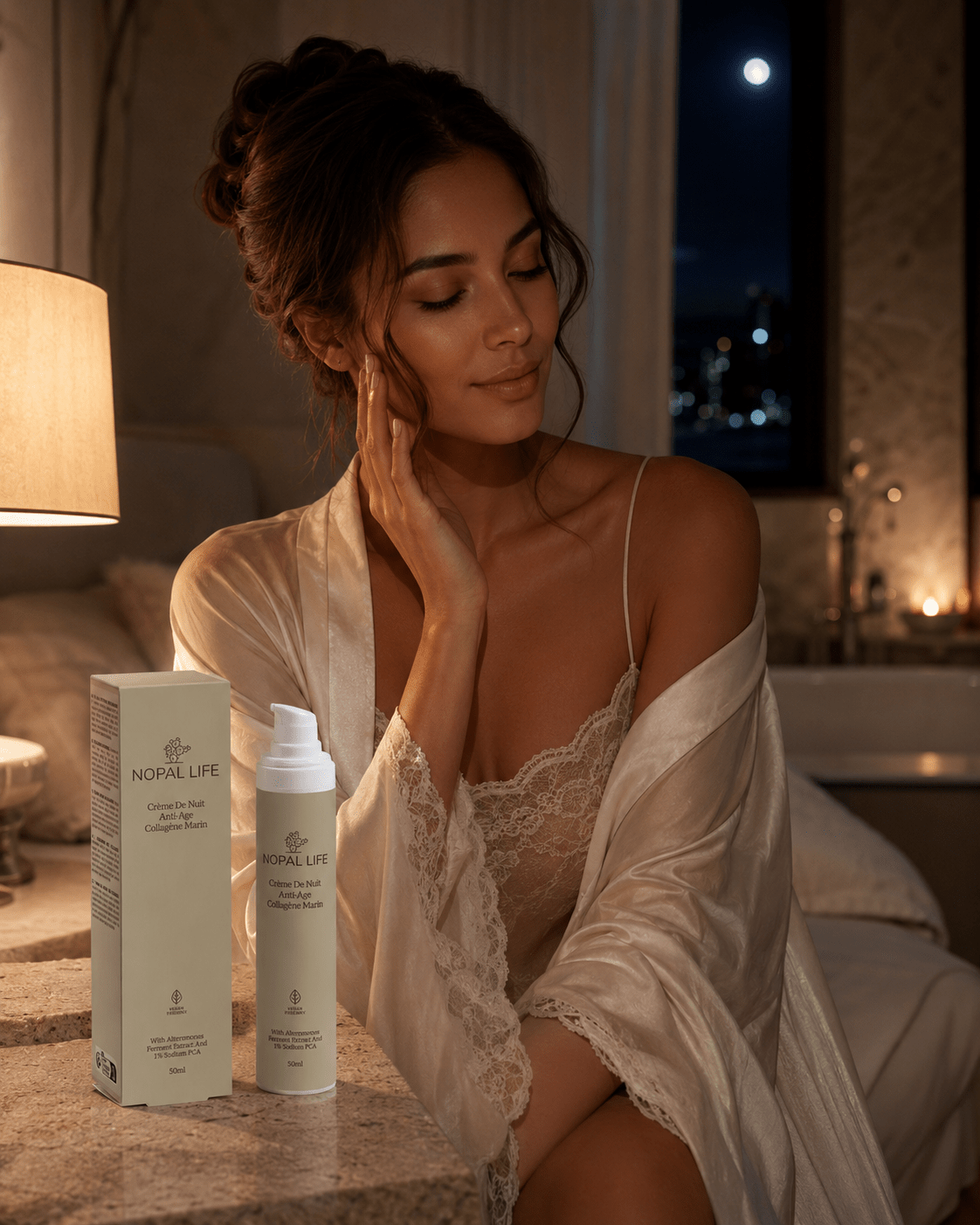
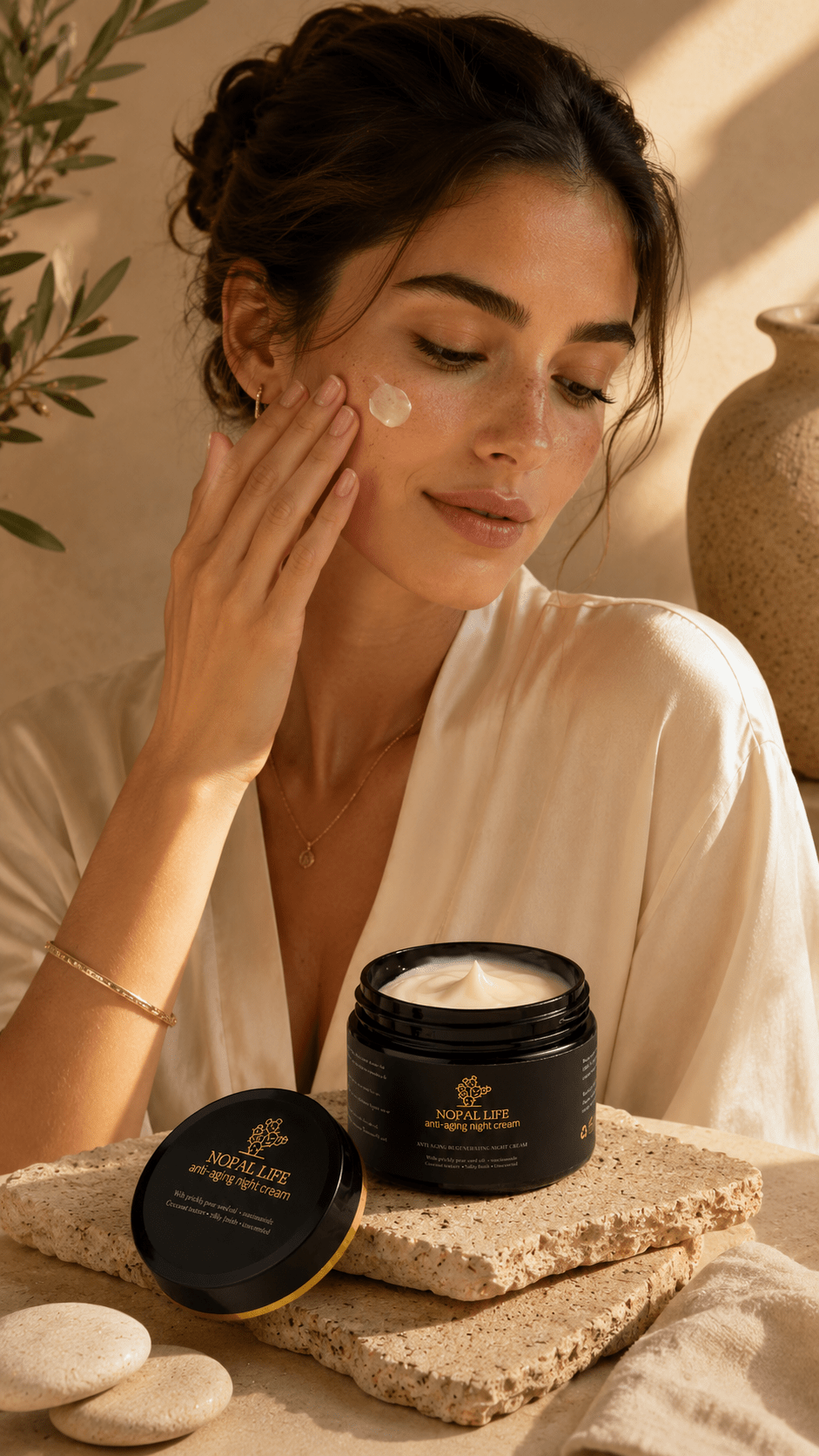
- Anti-Aging Firmness & Wrinkle Night Cream — the evening treatment, rich in nourishing active ingredients, which helps preserve suppleness and apparent density during resting hours. A pea-sized amount for the face, neck, and décolleté.
- Pure Prickly Pear Seed Oil — the anchor of the range, to be used alone or as the last layer in the evening on areas lacking suppleness.
- Anti-Aging Collection — all treatments built around Opuntia ficus-indica, for a comfortable face and a brighter complexion.
Frequently Asked Questions
Does a collagen cream truly make collagen penetrate the skin?
No. Native collagen weighs approximately 300 kDa, far beyond the roughly 500 daltons that the stratum corneum practically allows to pass. What a formula actually provides is hydration, a protective film, antioxidants, and a smoothed surface appearance. This is precisely what we claim, no more, no less.
Is marine collagen superior to bovine collagen?
Marine collagen, derived from fish skin and scales, primarily provides type I and most often comes in the form of low molecular weight peptides, often 2 to 5 kDa. Bovine collagen provides types I and III. No regulatory data allows for ranking them: the choice is based on diet, traceability, and allergens. Caution should be exercised in cases of fish allergy.
What quantity of collagen is used in published trials?
Most often 2.5 to 10 g per day, for 8 to 12 weeks. A 500 mg capsule therefore contains between one-fifth and one-twentieth of a studied daily dose: always read the quantity per serving, never the number of capsules per box.
Does vegetable collagen exist?
No. Plants do not produce collagen. What is sold under this name includes precursors—vitamin C, silicon, certain amino acids. This is a coherent option for a vegan diet, but the name is misleading and should read "precursor complex."
What about collagen for joint comfort?
Cartilage involves type II, a distinct subject from facial collagen, with its own research and raw materials. Here too, no claims are authorized in the European Union. We make no promises in this area, which is not ours.
Why does vitamin C systematically come up whenever collagen is discussed?
Because it is the cofactor for the enzymes that hydroxylate proline, an essential step for the stability of the triple helix. It is also the only micronutrient whose link with normal collagen formation is recognized by European regulations. Regular daily intake is more important than a one-time course.
At what age does the appearance of firmness begin to change?
The first changes are generally observed from the mid-twenties, become more noticeable around forty, and accentuate in women after menopause. Hence the benefit of a preventive routine from 25-30 years old, even without visible signs.
How long before seeing results?
Comfort and hydration are felt within 3 to 14 days. Skin texture and suppleness require two months of regularity—this is the duration of our protocol. Established wrinkles, however, are worked on over several months and do not disappear: their appearance can soften, that is the honest formulation.
Can a collagen supplement be combined with a topical routine?
There's nothing to prevent it, and the two are not mutually exclusive as they don't act in the same place. If you are undergoing treatment, or if you are pregnant or breastfeeding, seek advice from a professional before any prolonged use: this is the constant recommendation of ANSES regarding food supplements.

Ingredient Reference
Collagen
Types, origins, regulatory framework — the Nopal Life reference sheet.
Discover the sheet →One last word. The subject is saturated with promises; it is much less saturated with verifiable information. If you only remember one thing: demand the dose in grams, the origin, the type — and give it 56 days before judging. To find out where to start based on your profile, starting my free diagnosis takes less than five minutes.
Read more
- Prickly pear: the green gold of the desert with exceptional anti-aging properties
- How to adopt the right daily anti-aging habits
- At what age to start a natural anti-aging routine?
Sources
- Shoulders MD, Raines RT. Collagen structure and stability. Annual Review of Biochemistry, 2009;78:929-958. — pubmed.ncbi.nlm.nih.gov/19344236/
- Varani J, Dame MK, Rittie L, et al. Decreased collagen production in chronologically aged skin. The American Journal of Pathology, 2006;168(6):1861-1868.
- Proksch E, Segger D, Degwert J, et al. Oral supplementation of specific collagen peptides has beneficial effects on human skin physiology: a double-blind, placebo-controlled study. Skin Pharmacology and Physiology, 2014;27(1):47-55.
- Regulation (EC) n° 1924/2006 and Regulation (EU) n° 432/2012 — European register of nutrition and health claims.
- ANSES — nutritional reference values for the population and Ciqual nutritional composition table.
Information provided for cosmetic and educational purposes; it does not constitute medical advice.
Our anti-aging treatments