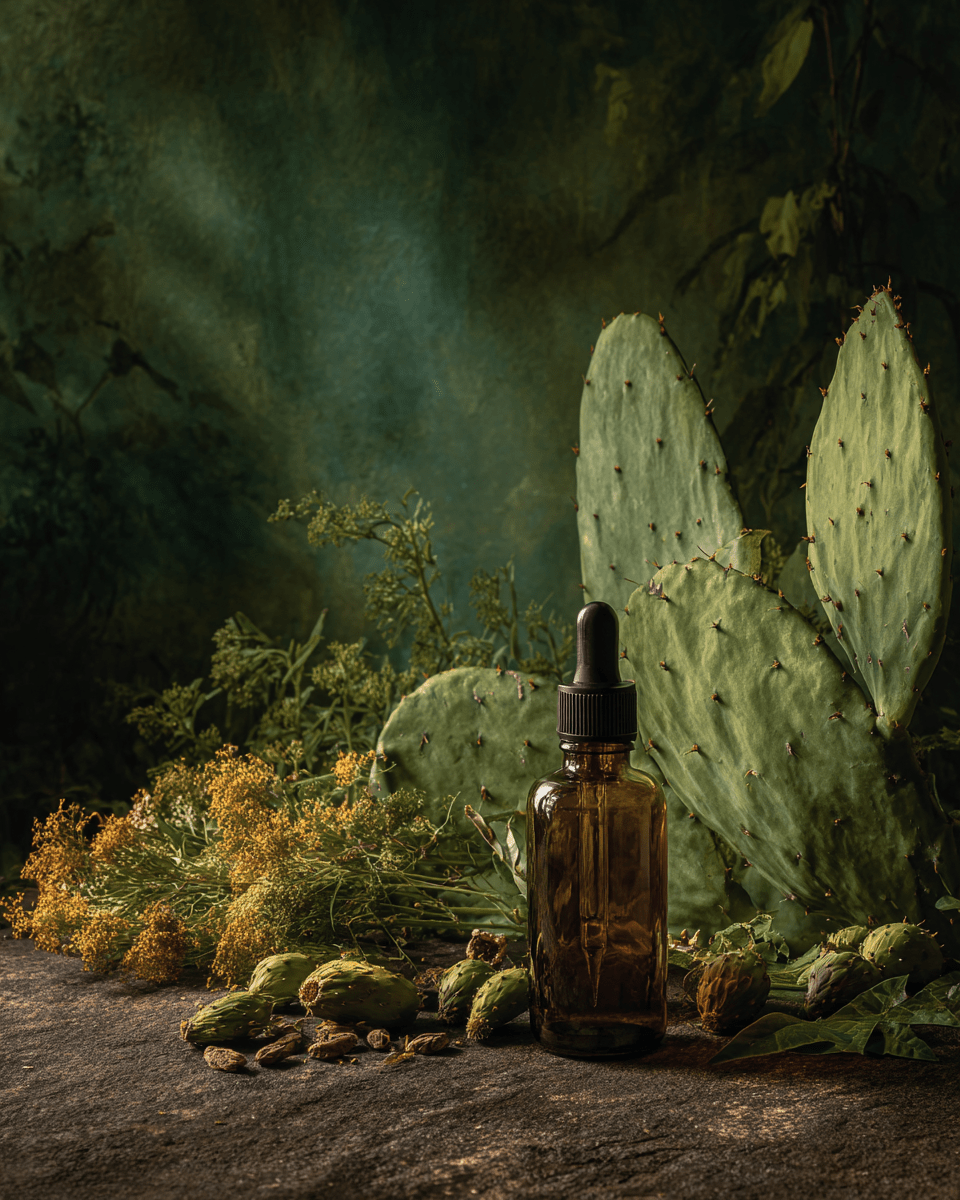
Vegetable Carbon: The Complete Nopal Life Guide
Activated charcoal: a subject that deserves more than preconceptions. Here is a comprehensive guide to making the right choices, step-by-step, with advice from NOPAL LIFE experts.
Activated charcoal: definition and origin of this purifying active ingredient
Activated charcoal is a cosmetic active ingredient derived from the carbonization of plant materials—bamboo wood, coconut shells, beech wood—heated to very high temperatures in an oxygen-poor atmosphere, then activated by steam or an oxidizing gas. This double thermal treatment gives charcoal an exceptional microporous structure: its specific surface area can reach 1,500 m² per gram, a fact that explains the interest of this ingredient in cosmetics. A distinction is made between ordinary charcoal, used in food, and cosmetic activated charcoal, whose porosity is deliberately multiplied to maximize adsorption capacity. This term—adsorption, not absorption—refers to the physical binding of molecules to the surface of micropores rather than their integration into the bulk of the material. On the skin, this property translates into a real magnetic attraction for impurities, excess sebum, atmospheric pollution residues, and particles lodged in visibly enlarged pores. Present in facial care products since the 2010s, activated charcoal is now one of the most popular purifying active ingredients in modern cosmetology. Its very dark appearance—it is intensely black—is sometimes disorienting, but this natural pigment leaves no trace on the skin after rinsing. Its ultra-fine powder texture makes it compatible with many galenic forms: clay masks, foaming gels, scrubs, enzymatic exfoliants.
The properties of activated charcoal in cosmetics
The strength of activated charcoal lies in a simple yet remarkably effective principle: broad-spectrum adsorption. In cosmetology, this capacity translates into the capture of surface lipids (dull-looking sebum that causes blackheads), fine PM2.5 and PM10 particles from urban pollution, and also greasy makeup residues that resist conventional makeup removers. Activated charcoal can bind a significant amount of molecules to its surface, making it a popular purifying active ingredient for its raw capacity. This absence of chemical action is a significant distinction: unlike acids or peroxides, activated charcoal is gentle on skin pH, respects the hydrolipidic film, and does not expose the skin to imbalance. UV rays are among the environmental factors that stress the skin most daily; in this context, an active ingredient capable of binding pollutants to the skin's surface contributes, superficially, to skin comfort against environmental stress. Activated charcoal therefore positions itself not only as a purifier but also as a surface shield against daily environmental aggressions. Finally, through its purifying effect on pore appearance, it prepares the skin to better receive moisturizing active ingredients applied in the second step of the routine.
The benefits of charcoal for facial skin
A true impurity magnet, activated charcoal is one of the most popular purifying active ingredients in cosmetics. Its benefits are primarily aimed at combination to oily skin, but it adapts to different skin types depending on the frequency of use. Here's what it brings to a beauty routine.
Eliminate surface impurities. Thanks to its microporous structure, charcoal helps rid the skin of excess sebum, pollution residues, and impurities lodged in the pores. It is found in facial cleansers, masks, and gentle scrubs, where it helps to deep cleanse the skin and refine its texture for a clearer complexion.
Towards clearer, more radiant skin. By ridding the skin's surface of what dulls it, charcoal helps to reveal brighter, more radiant-looking skin. Used once or twice a week as a mask, it helps maintain the skin's clear appearance and reduce the look of imperfections, without drying it out if you remember to rehydrate afterwards.
Some beauty tips to enjoy its benefits: reserve charcoal for targeted treatments (mask, cleanser), avoid applying it to already irritated skin, and always follow up with good hydration. Versatile, it is also found in some hair and oily scalp treatments.
How to incorporate charcoal into your skincare routine
Activated charcoal is mainly used as a targeted purifying treatment, at a rate of one to two applications per week for normal to combination skin, and two to three times a week for oily skin or skin prone to imperfections. Daily use is not recommended because, despite its relative gentleness, too frequent adsorption can gradually deplete the natural surface film that contributes to skin comfort. The mask form is the most common and popular: applied to clean, slightly damp skin, the activated charcoal mask should be left on for 10 to 15 minutes, which is sufficient time for the active ingredient's porosity to work on the surface without irritating the epidermis. Rinsing with lukewarm water should be thorough but without excessive rubbing. As part of an evening routine, charcoal finds its place as a purifying step before applying hydrating serum and night cream. It can be combined with kaolin or bentonite clay to enhance the mattifying effect on shiny areas, or combined with aloe vera to temper dryness on combination areas. For combination skin, a double application technique (mask on the T-zone only) helps avoid any irritation on dry cheeks. Consult the Nopal Life Skin Intelligence™ to accurately identify your skin type and obtain a protocol adapted to your profile. On periocular areas, its use is also not recommended due to the thinness of the skin and the risk of mechanical irritation during rinsing.
Mistakes to avoid with activated charcoal
The first—and most common—mistake is to let the mask dry completely until it cracks on the skin. Unlike some clays that require partial drying time, an activated charcoal mask should be removed before it is completely dry: once dry, it adheres to the epidermis, and removing it can cause micro-tears and redness. The rule is simple: as soon as the texture goes from fresh to tight without being rigid, it's time to rinse. A second common mistake: using it on dehydrated or very dry skin. Charcoal is designed for oily-looking skin; on skin lacking water or lipids, it risks accentuating dryness and discomfort. A third mistake: combining activated charcoal with gentle exfoliating active ingredients like retinol or AHAs on the same evening. This combination overloads the epidermis and can promote increased sensitivity. A practical rule: on charcoal nights, no acids or vitamin A. A fourth mistake not to be overlooked: buying cheap formulas that mix activated charcoal and abrasive polyethylene particles. These microplastics, banned in rinse-off products since 2023 in Europe, sometimes persist in non-EU products imported online. Always check the INCI list. Finally, a fifth mistake: forgetting to moisturize intensely after the mask. Charcoal, even well-formulated, can leave a localized feeling of tightness that must be addressed within 3 to 5 minutes after rinsing, otherwise, you'll experience uncomfortable skin—the exact opposite of the desired effect. Immediately apply prickly pear seed oil or a non-comedogenic hydrating serum to preserve the comfort of the skin barrier.
Activated charcoal and sensitive or mature skin
Mature skin naturally appears less oily with age. For this skin category, the use of activated charcoal must be moderate and strategic: no more than one application per week, as a light mask for a short duration (8 to 10 minutes maximum), always followed by an intensive nourishing treatment. The interest of charcoal on mature skin lies less in managing oiliness than in eliminating pollution residues that accumulate on the surface and dull the complexion. Fine PM2.5 particles are among the factors that most affect skin radiance daily; activated charcoal, by binding these particles to the surface, helps maintain the skin's clear appearance. For sensitive, reactive skin—redness, tightness, hypersensitivity to temperature changes—caution is advised. First, test on a small area of the forearm for 48 hours. If no reaction appears, a 5-minute application is sufficient to benefit from the purifying effects without overloading an already fragile barrier. Find advice tailored to your skin type in the comprehensive Nopal Life skin guide.
Activated charcoal at Nopal Life—the active ingredient in the formula
At Nopal Life, activated charcoal is selected in the form of micronized powder of plant origin (carbonized bamboo wood), certified heavy metal-free and with a controlled specific surface area greater than 1,200 m²/g—a standard that contributes to regular purifying action while maintaining sensory softness on the skin. In our formulas, it is combined with prickly pear seed oil (Opuntia ficus-indica), which provides fatty acids and plant sterols to support the comfort of the surface film after charcoal use. This charcoal + prickly pear oil synergy is at the heart of our approach: purify without depleting, rebalance without aggressing. Skin tends to be more sensitive to environmental stress over the years, which reinforces the interest of combining a pollutant-fixing active ingredient on the surface (charcoal) with an active ingredient rich in natural tocopherols (prickly pear seed oil), to support skin comfort against environmental aggressions. Our skincare products using activated charcoal are formulated without parabens, PEGs, synthetic fragrance, and petrochemical-derived dyes, in accordance with our clean beauty charter. Discover all our Nopal Life facial care products formulated with excellent natural active ingredients for combination, oily, or blemish-prone skin that deserves care as effective as it is respectful of its natural balance.
Frequently Asked Questions
Q: Is activated charcoal suitable for oily, blemish-prone skin?
A: Yes, it is one of the skin types for which it is most indicated. Its ability to bind surface sebum and impurities helps reduce the appearance of blackheads and whiteheads. However, it should be used in conjunction with a complete protocol (suitable cleanser, non-comedogenic hydration, sun protection), and not as the sole treatment for imperfections.
Q: Can I use food-grade activated charcoal on my skin?
A: No. Food-grade and cosmetic-grade activated charcoal differ in their specific surface area, particle size, and purity. Food-grade charcoal may contain impurities and particles that are too coarse to be applied to the epidermis without risk of irritation. Use exclusively formulas designed for topical use and dermatologically tested.
Q: Does activated charcoal clog pores instead of cleansing them?
A: This is a persistent misconception. On the contrary, activated charcoal helps clear pores by binding oily deposits and impurities that enlarge and obstruct them. Its microporous structure does not remain in the pore; thoroughly rinsed, it leaves no residue in the follicles.
Q: How often should I use an activated charcoal mask?
A: For combination to oily skin, once or twice a week is optimal. For normal skin with a slightly shiny T-zone, once a week is sufficient. Avoid daily use, which would deplete the protective surface film and could leave a feeling of discomfort.
Q: How can I tell if my product contains real quality activated charcoal?
A: Check the INCI name: Activated Charcoal or Charcoal Powder among the first ingredients listed. Be wary of formulas where charcoal appears at the end of the list (marketing effect without real efficacy) or cheap products that use industrial carbon black (Carbon Black), a controversial substance in a cosmetic context.
Q: Can activated charcoal and prickly pear seed oil be combined in the same routine?
A: Yes, and it's even the ideal combination. Charcoal purifies and clears the appearance of pores at the beginning of the routine; prickly pear seed oil, applied as a finish, provides comfort to the surface film, fatty acids, and supports hydration. This purification then nourishment sequence is at the heart of the Nopal Life approach.
RECOMMENDED CARE
Pure Prickly Pear Seed Oil
Natural formula · Origin Algeria
DISCOVER THIS PRODUCT →PERSONALIZED ROUTINE
Nopal Life Skin Intelligence™
Free diagnostic · 2 minutes
DISCOVER MY ROUTINE →
Ingredient Reference
Activated Charcoal
Surface purification, skin radiance & impurity absorption.
Discover the sheet →Read more
Information provided for cosmetic and educational purposes; it does not constitute medical advice.


Go further than this article
Get our skincare guides by email — and start with your free skin diagnostic: 2 minutes, advice tailored to your skin. We ship to the US, UK, Canada, Australia and 27 European countries; somewhere else? Sign up and you will be the first to know when we deliver to your country.
By signing up, you agree to our privacy policy. Unsubscribe in one click.