Activated Charcoal: Natural Skincare Benefits and Routine P1
Activated charcoal: a topic that deserves more than preconceived notions. Here's a comprehensive guide to making the right choices, step by step, with advice from NOPAL LIFE experts.
Activated charcoal: origin, manufacturing, and skin action
Activated charcoal used in cosmetics is produced by the pyrolysis of organic plant materials (wood, coconut shells, bamboo) at temperatures between 700 °C and 1,000 °C, followed by activation with water vapor or carbon dioxide. This process creates a microporous structure with a considerable specific surface area: between 500 and 1,500 m² per gram of activated charcoal, equivalent to several tennis courts in the contact surface of a teaspoon of powder. This extreme porosity is the origin of charcoal's key property: adsorption (not absorption). Adsorption refers to the fixation of undesirable molecules—oxidized sebum, pollution residues, particles—on the surface of the charcoal's pores. Charcoal thus acts like a molecular magnet. Applied to the skin, it helps to attract and capture impurities present in the pores and on the surface of the epidermis, which it carries away when rinsed. PM2.5 pollution residues and PAHs (polycyclic aromatic hydrocarbons) deposited on the skin can dull the complexion, especially after urban exposure. Activated charcoal is a first step in surface cleansing in urban environments.
The charcoal used in cosmetics most often comes from coconut shells, calcined then activated with steam. This activation multiplies the available surface area: it is what gives activated charcoal its adsorption capacity.
Adsorption is not absorption. Impurities attach to the surface of the particles; they are not swallowed by them—and this is why a charcoal mask rinses off without leaving anything behind.
Purifying action on enlarged pores and visible surface sebum
Enlarged and congested pores are one of the most common aesthetic concerns for combination to oily skin types. A pore appears enlarged when the follicular canal is clogged by a mixture of sebum, desquamated cells, and cosmetic residues. This blockage forms a plug—the blackhead—which visually marks the pore over time. Activated charcoal works on two levels: on the one hand, its adsorptive capacity helps to capture surface sebum and oily cosmetic residues in the pores, helping to reduce the appearance of blackheads; on the other hand, its gradual cleansing action helps to clear the appearance of pores without causing the discomfort or sensations associated with abrasive mechanical exfoliants. In rinse-off formulas (masks, cleansers, soaps), the usual concentration of activated charcoal is between 0.5% and 5%. Beyond 5%, the risk of skin discomfort increases without additional benefit to the appearance of pores. Intense black-tinted gel formulas are often the most concentrated and preferred for a one-shot 10 to 15-minute mask treatment. For combination skin, localized application to the T-zone (forehead, nose, chin) optimizes the surface purifying effect without drying the cheeks.
Charcoal and sebum: mattifying without unbalancing skin comfort
Activated charcoal helps to mattify the appearance of shiny areas by simply removing excess sebum already present on the skin's surface. Its purely mechanical action (adsorption) relies on the removal of surface sebum: the skin is not abruptly deprived of its lipids, thus avoiding the feeling of tightness sometimes experienced with overly stripping products like alcohol or certain acids. By gradually removing excess from the surface, charcoal helps preserve the skin's comfort and balanced appearance. It can be combined in a routine with niacinamide and soothing active ingredients to build a purifying treatment that respects the comfort of the skin's ecosystem.
Mistakes to avoid with activated charcoal in your beauty routine
Despite its favorable profile, several mistakes can limit or negate the benefits of activated charcoal. The first mistake is daily use of a charcoal mask: the intense adsorbing effect, applied every day, removes not only surface sebum but also some natural lipids, which can alter the skin's comfort over time. The recommended frequency is once to twice a week maximum, depending on skin type. The second mistake is letting the mask dry completely until it cracks: charcoal masks with film-forming agents can create an unpleasant tension on the skin if they dry too much. They should be removed slightly before complete drying, always with lukewarm water and gentle circular motions. Thirdly, confusing activated charcoal with ordinary charcoal: non-activated charcoal does not have the microporous surface necessary for skin adsorption and is ineffective in cosmetics. Fourthly, using charcoal on uncomfortable or sensitized skin areas: its adsorbing effect can extend to beneficial treatments (hydrating serum, comfort treatments) that it may capture if applied to fragile skin. Fifthly, not moisturizing after a charcoal mask: a moisturizing treatment is essential after each application to compensate for the slight feeling of dryness.
Integrating activated charcoal into a weekly purifying routine
Activated charcoal is integrated into a weekly skincare routine as a complementary "detox" treatment rather than a daily active ingredient. A typical purifying routine is structured as follows: gentle face cleansing with lukewarm water, application of the charcoal mask to the T-zone or entire face for 10 to 12 minutes (no more than 15), gentle rinsing with small circular motions, an alcohol-free soothing toner, hydrating serum or niacinamide, light cream. For a daily routine, a charcoal cleansing wash (1 to 2% concentration) can replace the usual cleansing gel for combination to oily skin, with careful rinsing. By helping to remove deposited pollution residues from the surface, activated charcoal helps preserve the skin's radiance and visible clarity throughout the seasons. For a complete purifying strategy, charcoal can be alternated weekly with a green clay mask (deeper cleansing) or white clay (gentler, for combination to sensitive skin). The combination of charcoal + salicylic acid in a targeted serum for blackheads is a highly appreciated targeted approach for blemish-prone skin, without globally exfoliating the skin.
The Nopal Life approach: purification and natural skin balance
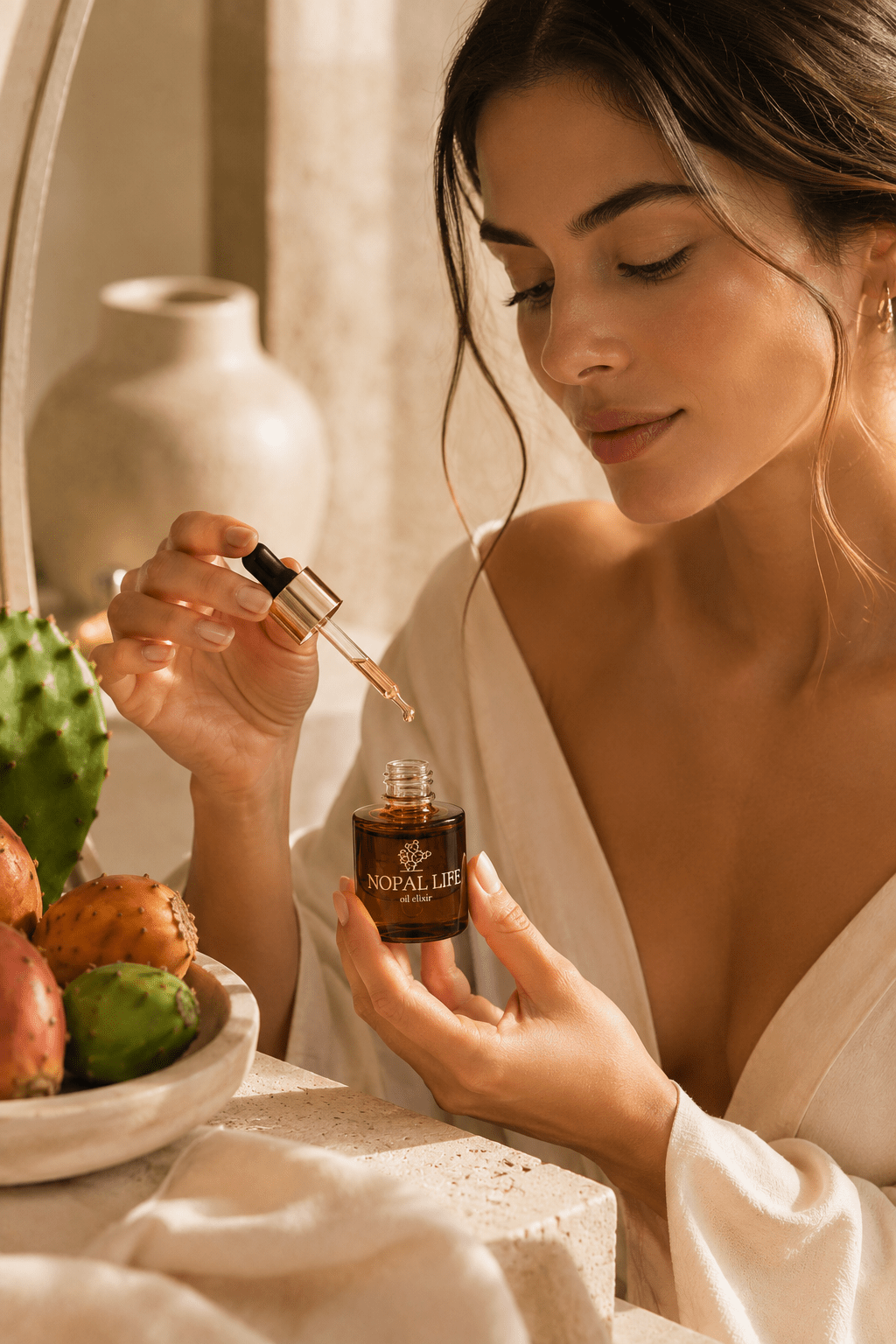
At Nopal Life, skin purification does not mean attacking or unbalancing the skin's ecosystem. Our philosophy is to combine natural purifying active ingredients like activated charcoal with protective and nourishing active ingredients like prickly pear seed oil, so that the purifying treatment does not leave the skin vulnerable after each use. Prickly pear seed oil, with its omega-6 and vitamin E, is the ideal complement to a charcoal routine: where charcoal removes excess, prickly pear seed oil nourishes, soothes, and helps strengthen skin comfort. For combination to oily skin types that are wary of vegetable oils, prickly pear seed oil is a notable exception: its lightness, rapid absorption, and biomimetic lipid profile make it a "dry" oil that is particularly well tolerated even by blemish-prone skin. Our Skin Intelligence diagnostic helps you determine the appropriate frequency of activated charcoal use for your skin profile, the amount of oil to incorporate into your routine, and complementary active ingredients for optimal results on your skin type.
Frequently Asked Questions
Q: Can activated charcoal be used on dry skin?
A: With caution and at low frequency (once every 15 days maximum). Dry skin already has a lipid deficiency that charcoal can exacerbate. Always combine with an intense moisturizing treatment after application.
Q: Does charcoal stain the skin black?
A: No. The black color of activated charcoal is due to its carbon structure, but the particles do not penetrate the cells and rinse off completely with water. There is no risk of residual skin staining with careful rinsing.
Q: Can charcoal be used on irritated blemish-prone skin?
A: Charcoal is primarily indicated for the appearance of blackheads. On sensitized or uncomfortable skin, it is better to abstain and favor comfort-oriented treatments.
Q: Is activated charcoal certifiable organic?
A: Yes, under certain conditions. Active vegetable charcoals derived from certified organic materials (organic bamboo, organic coconut) can be integrated into Ecocert/COSMOS certified formulas. Check the label of the complete formula.
Q: Does activated charcoal absorb beneficial active ingredients from the subsequent treatment?
A: Not if it is well rinsed off. Charcoal's adsorption acts on molecules in direct contact. Once rinsed, no active charcoal particles remain on the skin that could capture subsequent treatments.
Q: What is the difference between a charcoal mask and a peel-off patch for blackheads?
A: A charcoal mask helps to capture impurities and surface sebum through adsorption (micropores). Peel-off patches mechanically extract blackheads by pulling them out. A charcoal mask is gentler and less traumatic for the appearance of pores.
Q: Is vegetable charcoal in toothpastes effective?
A: The effectiveness of charcoal toothpastes on the appearance of teeth is controversial. Moreover, its highly abrasive nature poses a risk to tooth enamel with daily use.
Our star oil
Nopal Life pure prickly pear seed oil: rich in omega-6 and vitamin E for soothed and luminous skin.
Discover the oilFree diagnostic
Find the personalized routine adapted to your skin type in less than 3 minutes.
Take the diagnosticRECOMMENDED TREATMENT
Pure prickly pear seed oil
Natural formula · Origin Algeria
DISCOVER THIS TREATMENT →Read more
Information provided for cosmetic and educational purposes; it does not constitute medical advice.
To delve deeper into this specific point, see our guide Charcoal face mask.
Our anti-aging treatments