Retinol or collagen: which one for your skin?
Retinol acts on the production of collagen; applied collagen remains on the surface. This is the key difference, and it is decisive when choosing.
What sets them apart
| Criterion | Retinol | Applied collagen |
|---|---|---|
| Nature | Vitamin A derivative | Large protein |
| Action | Supports production | Retains water on the surface |
| Timeline | 3 to 6 months | Immediate, temporary |
| Documentation | Extensive | Limited in external use |
| Tolerance | Irritating at first | Excellent |
What retinol does
Retinol is a vitamin A derivative and the active ingredient with the most documented action on the signs of aging. It accelerates the renewal of surface cells and supports the skin's own collagen production.
Its results focus on established wrinkles, texture, and pore appearance. Allow three to six months of regular application before judging.
What applied collagen does
Collagen is a large protein. When applied to the skin, it remains on the surface: its molecule is too voluminous to penetrate the stratum corneum.
There, it acts as a humectant and film-forming agent — it retains water, making the skin appear smoother and plumper. The effect is real and immediate, but it affects appearance and disappears upon cleansing.
This collagen does not join or integrate with the collagen in your dermis. Formulations sometimes mention hydrolyzed fragments, which are smaller, but their benefit remains debated.
Where collagen production goes
The skin's collagen production steadily decreases with age. Exposure to radiation significantly accelerates this process — this is a factor that can be acted upon.
Retinol intervenes in this internal mechanism. This justifies its place in an anti-aging routine, something applied collagen does not do.
Cell renewal and fiber production are two distinct mechanisms, often confused. The first concerns the epidermis and is measured in weeks; the second occurs in the dermis and is measured in months.
An active ingredient that accelerates cell renewal acts on skin texture and fine lines on the surface. The first visible effects appear around eight to twelve weeks, with application every two or three days initially.
For firmer skin, expectations should remain moderate. What is seen is due to a better-maintained and better-hydrated surface, not a reconstruction — and stating this helps prevent giving up in the third month believing nothing is working.
Which one to choose
Goal for wrinkles and firmness: retinol, without hesitation.
Immediate effect, skin lacking comfort: a collagen treatment, knowing what you are buying.
Very reactive skin: collagen, which has excellent tolerance.
Limited budget: retinol, which has a much better price-to-documented-result ratio.
Dietary supplements
This is a different question, and it falls outside the scope of this page. Data on ingested collagen exists but remains debated, and here we are talking about applied treatment.
If you are interested in this topic, it requires medical or dietary advice, not cosmetic advice.
Using them together
There is no objection to this. A collagen treatment applied after retinol provides immediate comfort while the active ingredient works deep down.
The order: retinol first, on perfectly dry skin, then the collagen treatment, then a cream if necessary.
What matters more than this choice
Daily sun protection. For firmness and wrinkles, it produces more effect than any active ingredient on this page, and its level of evidence is the highest of all.
A routine built around a retinoid without protection amounts to damaging on one side what is being built on the other.
Introducing retinol
The first month involves two weekly applications, on dry skin. Switch to every other night when flaking has stopped, then increase in two-week increments.
A small pea-sized amount is enough for the entire face. Applying more does not speed up anything and increases redness.
What to remember
These products are cosmetics and act on the appearance of the skin without treating any condition. If you are pregnant or breastfeeding, remove retinol from your routine until a healthcare professional tells you otherwise.
Two time scales
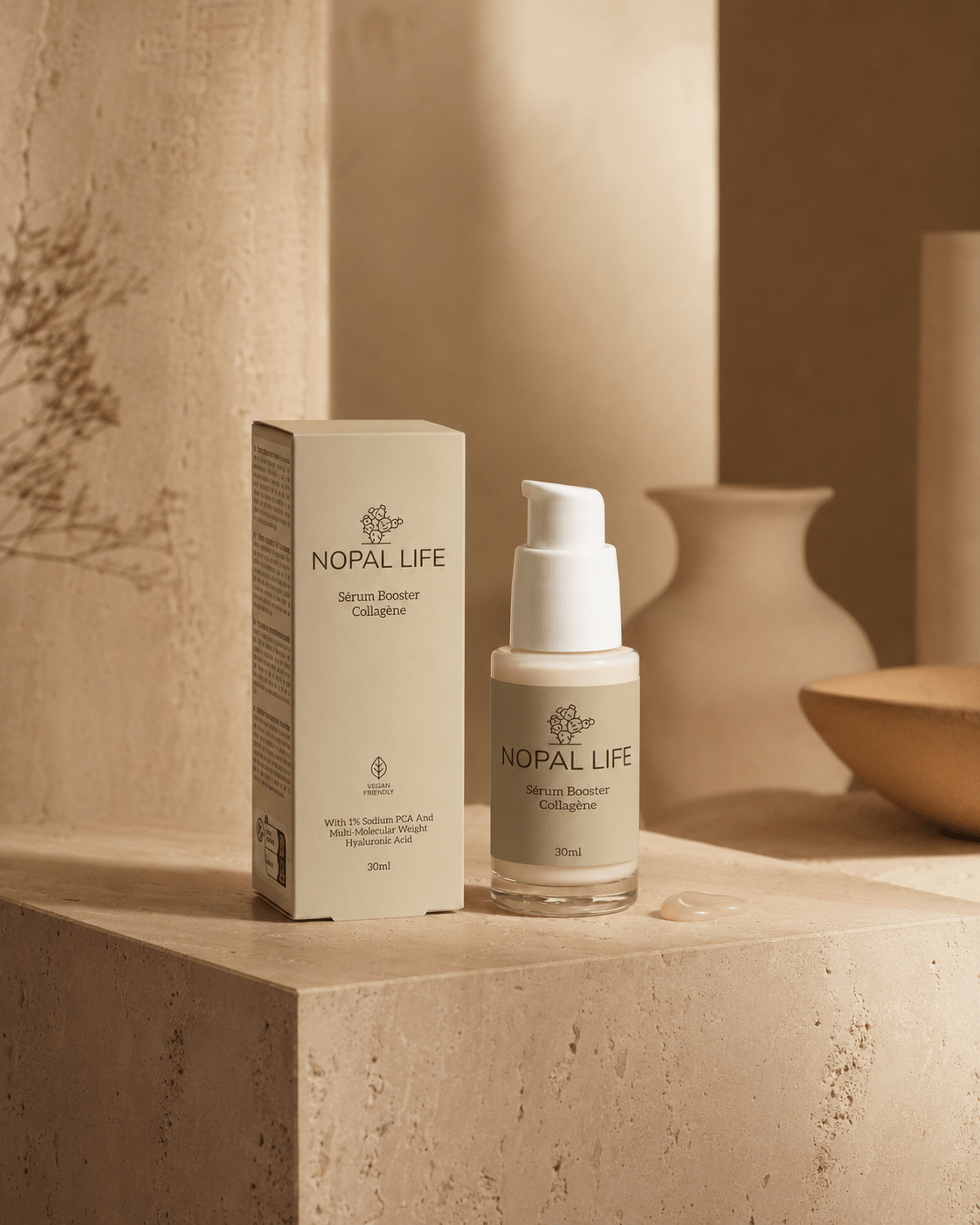
Retinol acts on surface renewal; applied collagen acts on comfort and the appearance of plumpness immediately. They are not competitors but two temporalities: a collagen serum provides an immediate visible effect, whereas a renewal active is judged over months.
Our anti-aging treatments