Vitamin C or rosehip oil: which one to choose?
They often aim for the same goal via two opposing paths. Vitamin C is a water-soluble antioxidant that works on complexion uniformity; rosehip oil is a fatty substance rich in essential fatty acids, traditionally used for skin texture and old scars. One is used at the beginning of the routine, the other at the end.
What separates them
| Criterion | Vitamin C | Rosehip oil |
|---|---|---|
| Family | water-soluble antioxidant | vegetable oil, extracted from seeds |
| Placement | beginning of routine | end of routine |
| Focus | radiance, uniformity, spots | skin texture, marks, old scars |
| Composition | isolated molecule | essential fatty acids, natural antioxidants |
| Stability | fragile, oxidizes quickly | also oxidizes, store away from light |
| Time | preferably in the morning | preferably in the evening |
What vitamin C does
It is very rich in antioxidant properties: it helps neutralize free radicals produced by exposure and pollution. It also acts as a cofactor in collagen synthesis, which explains its presence in treatments for skin losing firmness.
Its preferred area remains complexion radiance and uniformity, over six to twelve weeks. Used alone, without sun protection, its effectiveness on spots is greatly reduced.
What rosehip oil does
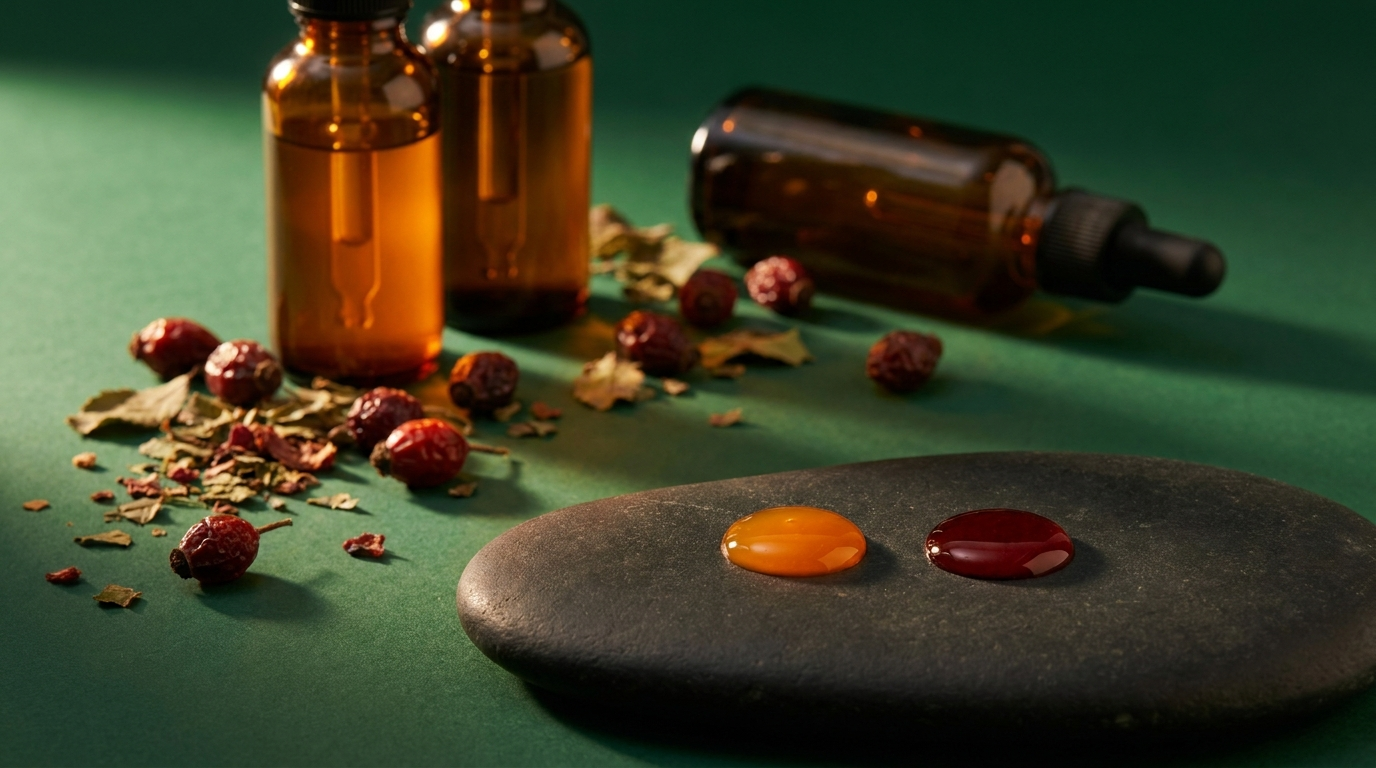
Extracted from rosehip seeds, it is naturally rich in essential fatty acids and antioxidants. This composition explains its traditional use for old scars, stretch marks, and irregular skin texture.
It is also highly appreciated by dry skin, where it nourishes and limits evaporation. Its texture is fine but noticeable: two to three drops are enough for the entire face.
Which for which need
Dull complexion, spots, lack of radiance: vitamin C. It addresses exactly these concerns, provided daily sun protection is used.
Rough skin, old marks, irregular texture: rosehip oil. Its action is slower but focuses on texture rather than color.
Oily skin: vitamin C is more comfortable. The oil, if you insist, should be limited to one drop in the evening on dry areas.
Layering them
It's possible and often desirable. The order is dictated by physics: aqueous before oil.
1. Vitamin C serum on clean skin.
2. Wait one minute.
3. Two to three drops of rosehip oil, pressed onto the skin.
The oil here acts as the final layer and seals in the serum's work. In the morning, reduce to one drop, or reserve the oil for the evening.
Storage, a point they share
Both are sensitive to air and light. A vitamin C serum that has turned orange has lost some of its value; rosehip oil with a rancid smell should no longer be applied to the face. Opaque bottle, well-sealed cap, away from heat.
Limitations
Neither replaces sunscreen. These are cosmetics: their action concerns the appearance and comfort of the skin, without curative intent. A recent scar or an evolving spot requires medical advice.
Frequently asked questions
Can both be used on the same day?
Yes. Vitamin C in the morning, rosehip oil in the evening is the simplest arrangement. Or both in the evening, serum first, then oil.
Does rosehip oil contain vitamin C?
In negligible amounts for cosmetic use. Its richness lies in essential fatty acids and antioxidants of a different family.
Which acts on scars?Rosehip oil is traditionally used for old marks and skin texture. A recent scar requires medical advice, not a cosmetic.
How long before seeing results?Six to twelve weeks for vitamin C on complexion, several weeks also for oil on texture. Neither acts in a few days.
Two types of radiance with different origins
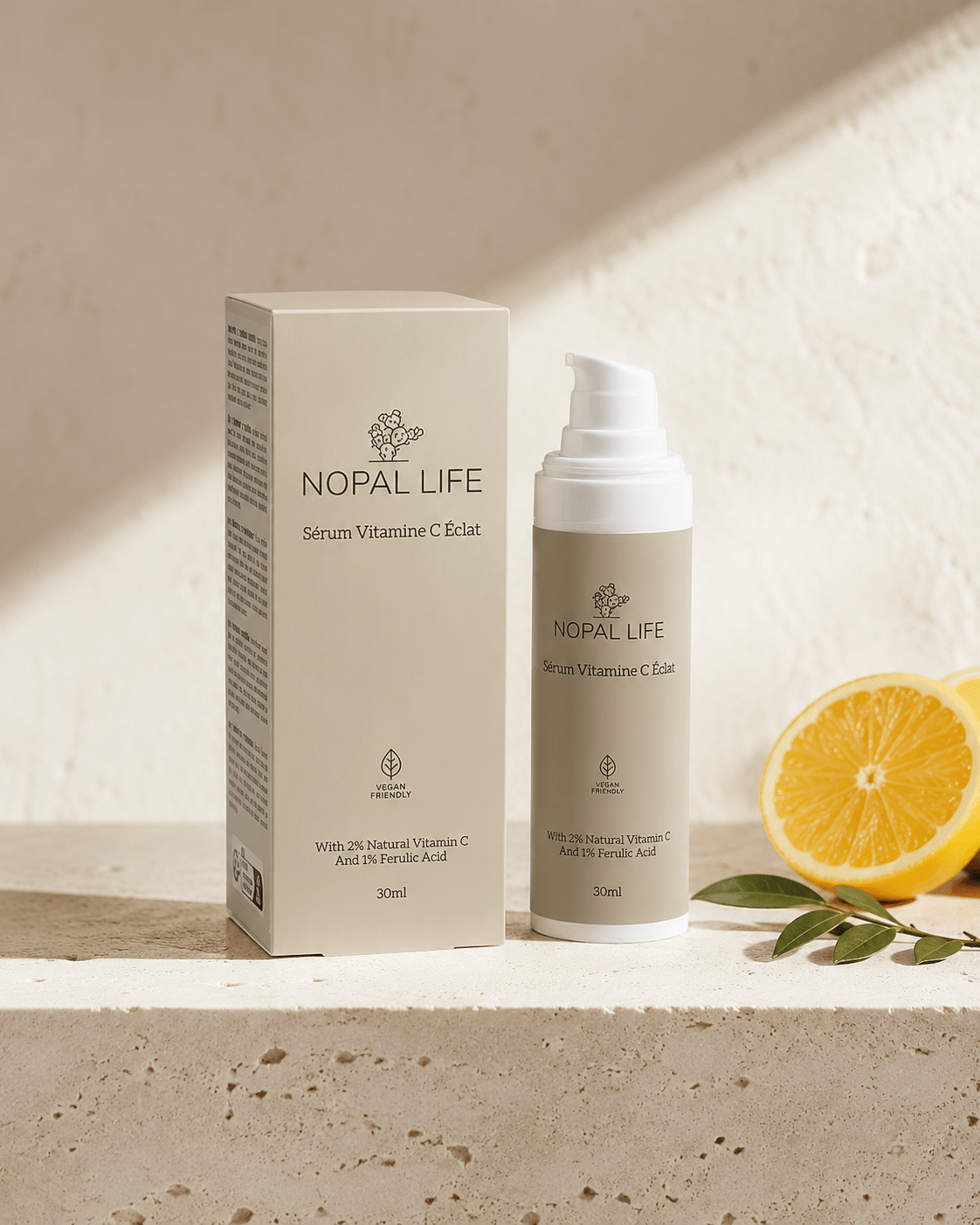
Rosehip oil provides radiance by nourishing the surface; vitamin C works on uniformity itself. If your concern is spots and an irregular complexion, a radiance serum concentrated with vitamin C is what you need in the morning. If it's dryness, the oil is sufficient.
Our anti-aging treatments