Sea buckthorn: myth or real effect on the skin
The myth: a superfood that directly benefits the skin. Sea buckthorn berry is indeed one of the richest plant sources of vitamin C. The oil applied to the skin, however, contains virtually none.
Where the reputation comes from
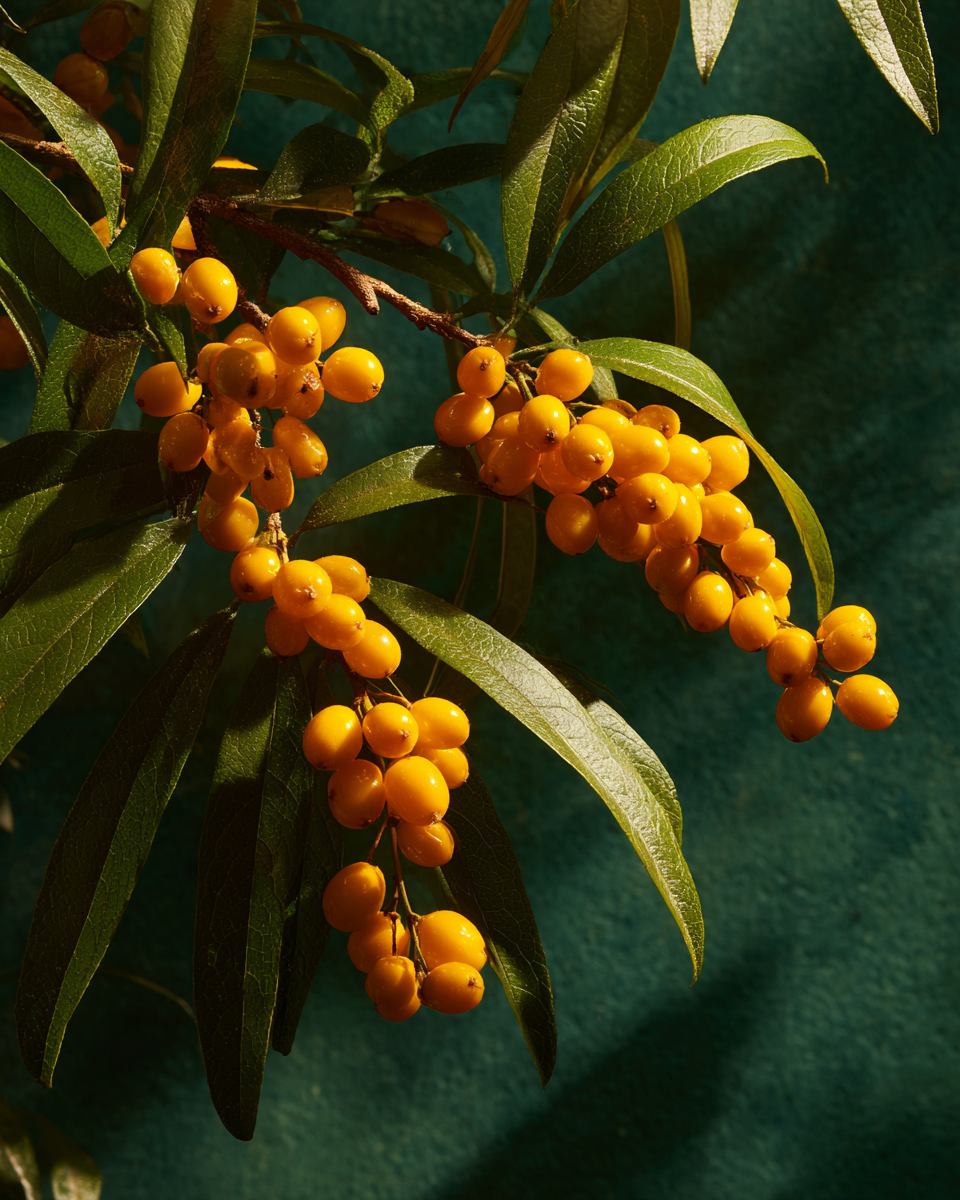
The orange berries of Hippophae rhamnoides contain twenty to thirty times more vitamin C than oranges by weight, plus carotenoids, flavonoids, and vitamin E. This is verifiable, documented, and applies to the fruit when consumed — a dietary topic.
The shift happens when these figures are transferred to a bottle of oil. Vitamin C is water-soluble; an oil is lipophilic. It doesn't contain vitamin C. What the oil does carry are fat-soluble compounds: carotenoids, tocopherols, fatty acids.
What the oil actually provides
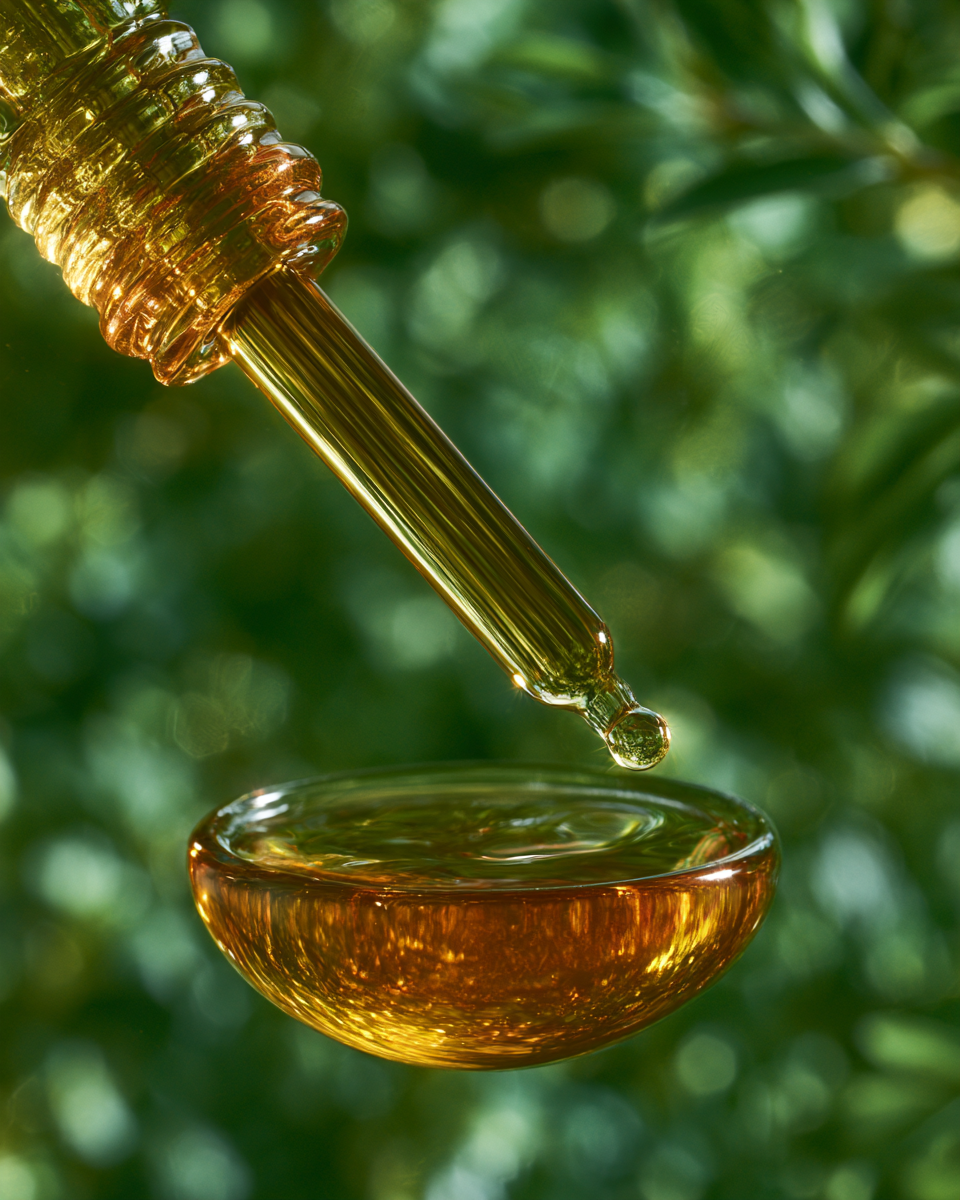
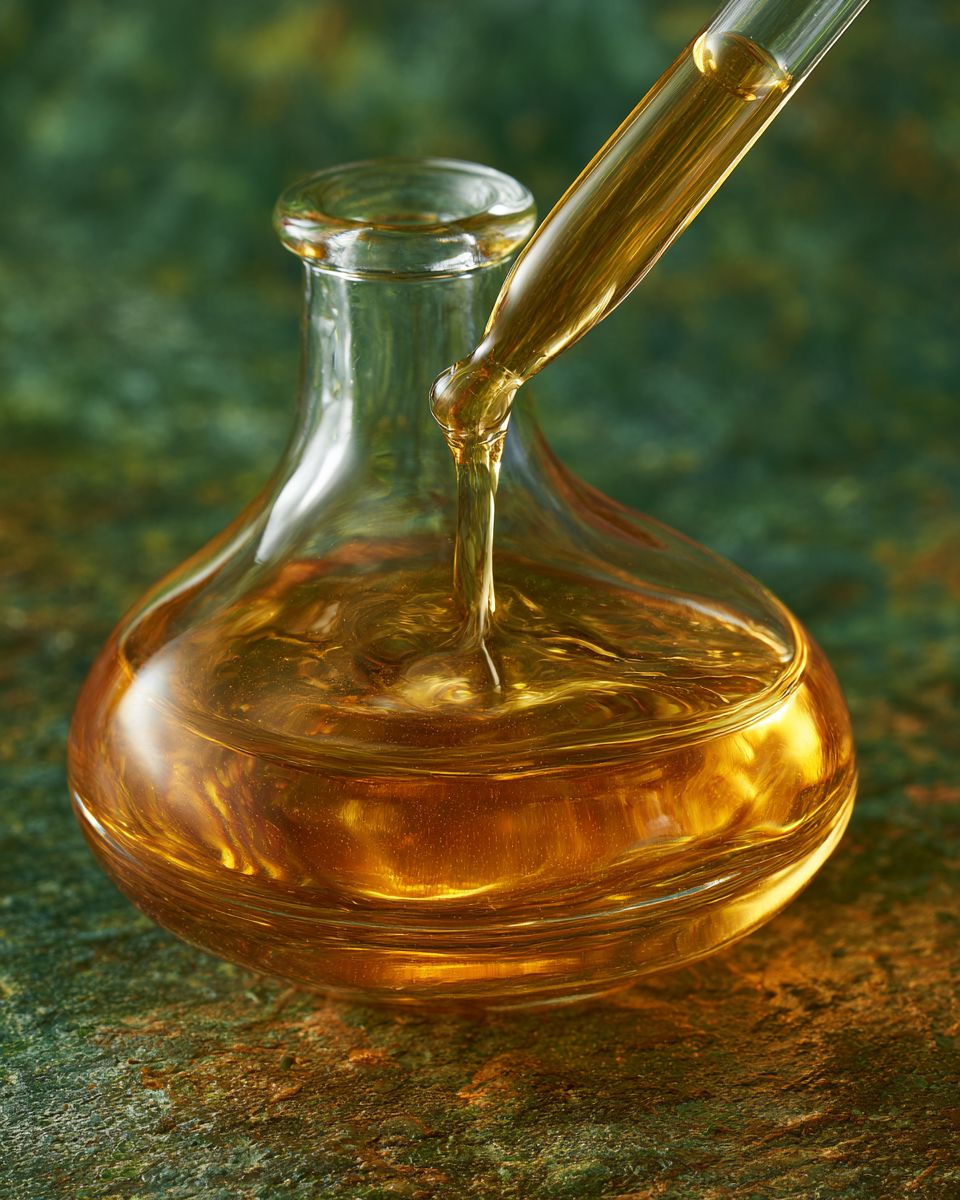
Pulp oil is one of the rare plant sources of palmitoleic acid — omega-7 — present in human sebum and whose production decreases with age. It is also very rich in carotenoids, which gives it its deep orange color.
Seed oil has a different profile: essential fatty acids in balanced proportions, and more tocopherols. Labels don't always distinguish between the two, and only the mention "pulp" or "seed" clarifies.
The riskiest myth
It is sometimes claimed that sea buckthorn carotenoids protect against the sun. This is false and can be costly. An applied carotenoid does not filter UV rays; it limits damage downstream, like any antioxidant, and in no way replaces sun protection.
This confusion applies to all colored vegetable oils. None of them constitute a filter, regardless of the SPF attributed to them. Our sun protection page provides the actual dosages.
What is solid
Rich nutrition, a rare omega-7 intake in the plant kingdom, and a measurable "healthy glow" effect due to pigments. For dry or mature skin, in very small quantities, pulp oil is a good finishing product.
What it doesn't do: act on established wrinkles, on spots, or replace water intake. It's a rich fatty substance, with the qualities and limitations of its category.
The dosage, and why it's non-negotiable
One to three drops diluted in a neutral oil or in a cream, never pure on the face. Beyond that, the coloration becomes visible for several hours and permanently stains clothing. This is the practical drawback of this ingredient, and the only one no one talks about before purchase.
Six to twelve months after opening, kept cool and away from light: its richness in unsaturates makes it sensitive to oxidation. A small bottle is objectively more cost-effective than a large one.
So, myth or real effect
Real effect on nutrition and radiance, myth on everything that stems from the vitamin C content of the berry — which does not pass into the oil. The distinction between what is ingested and what is applied is the only thing to remember about this ingredient.
Our sea buckthorn fact sheet details the composition of both oils, and the nourishing multi-purpose face oil offers a neutral base for dilution.
Sea buckthorn juice, another topic
Sea buckthorn juice is consumed for its vitamin C and antioxidant content. This is a dietary use, with its own guidelines, and it requires competent advice if taken regularly. What is ingested and what is applied are not interchangeable — this is the core of the misunderstanding surrounding this plant.
Its very acidic taste explains why it is rarely consumed pure. It is found in mixtures, jellies, or supplements, and it is there that most of the figures on its properties have been measured.
Against free radicals
The carotenoids and tocopherols in sea buckthorn oil donate an electron to unstable molecules before they reach surface lipids. This is the antioxidant mechanism, and it helps limit the visible effects of aging related to exposure.
This action is real and modest, as with all applied antioxidants. It comes as a second line of defense to sun protection, never in its place.
Its fatty acids, in detail
Pulp oil contains twenty to thirty percent palmitoleic acid — a rare omega-7. Seed oil provides essential omega-3 and omega-6 fatty acids in balanced proportions, around thirty percent each. No other common vegetable oil has this profile.
Hippophae rhamnoides is a thorny shrub found in coastal and mountainous regions of Europe and Asia, whose use dates back to traditional Tibetan medicine. This antiquity explains its reputation; it does not exempt us from verifying what translates into a bottle of oil.
Use: what sea buckthorn oil can do
For dry or mature skin, one diluted drop in the evening, two to three times a week. For combination skin, only on dry areas. For blemish-prone skin, its richness makes it particularly delicate — it's best to abstain.
Its nourishing properties are real and can be felt in two to three weeks on comfort. These are the only ones we can attribute to it unreservedly, and they are enough to justify its place in a winter routine.
Aging, and what affects it
It combines a chronological cause and an external cause — sun, pollution, tobacco. The latter produces most of what is visible. An antioxidant-rich oil limits damage downstream; it prevents nothing upstream.
This is why sea buckthorn, like all applied antioxidants, makes sense alongside daily sun protection, never in its place. The free radicals it neutralizes are those that have already been produced.
Recognizing quality oil
The Latin name Hippophae rhamnoides on the label, mention of the extracted part, cold-pressed, an opaque bottle. A pale sea buckthorn oil is either a seed oil or a refined pulp oil — one is legitimate, the other impoverished.
Its use depends entirely on this distinction, and it's the first thing to check before the price.
Sea buckthorn and skin: what makes the plant unique
Hippophae rhamnoides fixes nitrogen and grows on soils that nothing else colonizes. This hardiness explains its composition: the plant produces antioxidants in quantity to protect itself from UV rays and cold, and it is this stock that extraction recovers.
Its properties therefore come from adaptation, not cosmetic selection. This is true for many remarkable oils — rosehip grows at high altitudes, argan in semi-deserts. The harshness of the environment makes the fruit rich.
Forms of use, summarized
Pulp oil: deep orange, omega-7, healthy glow effect, stains. Seed oil: pale yellow, essential fatty acids, does not stain. Diluted macerate: the simplest form for the face. Juice and puree: food, competent advice for regular intake.
Four forms, four uses, one name on the arguments. This is the main source of confusion surrounding this ingredient, and it explains most disappointed expectations.
What to remember
A remarkable nourishing oil, rich in a rare fatty acid, with a real effect on complexion radiance and a practical drawback: coloration. Nothing concerning the vitamin C of the berry translates to the bottle.
Used diluted, in the evening, in small quantities, it is a good product. Presented as a vitamin C concentrate for the skin, it is a promise that its composition does not keep.
The "Myth or Real Effect" series
What each ingredient truly does, what it is mistakenly attributed, and what the data allows us to say.
The Nopal Life signature treatment


Mature skin · Dry skin

Go further than this article
Get our skincare guides by email — and start with your free skin diagnostic: 2 minutes, advice tailored to your skin. We ship to the US, UK, Canada, Australia and 27 European countries; somewhere else? Sign up and you will be the first to know when we deliver to your country.
By signing up, you agree to our privacy policy. Unsubscribe in one click.