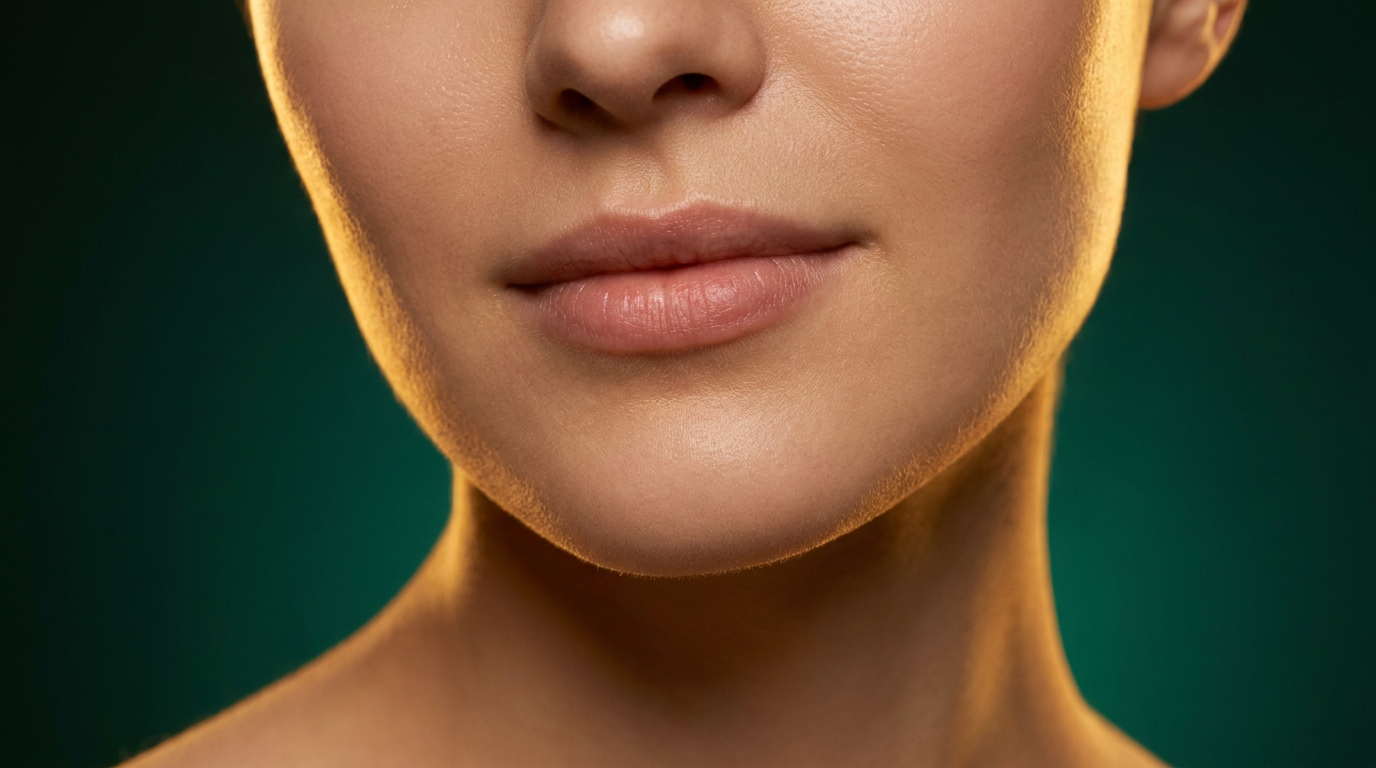
Wrinkles around the mouth: causes and useful tips
Wrinkles around the mouth encompass several different phenomena: movement creases, vertical fine lines, loss of lip support, and superficial dehydration. The orbicularis muscles contract thousands of times a day, while the dermis gradually loses collagen, elastin, and hyaluronic acid. A useful routine therefore focuses on sun protection, hydration, well-tolerated active ingredients, and actions that avoid accentuating creases.
Recognizing the four types of perioral folds
Vertical fine lines above the lip should not be confused with nasolabial folds, which extend from the nose to the corners of the mouth. Marionette lines run from the corners of the mouth down to the chin, while the red lip can lose volume and its contour can become less defined. This mapping helps avoid expecting a cream to have the same effect on different anatomical structures.
Observe the face at rest and then when pronouncing the vowels "oo" and "ee". A fold present only during movement is primarily dynamic; a furrow visible at rest also indicates structural changes. Photograph the area from fifty centimeters away, with the same lighting, as side lighting strongly accentuates shadows.
Why this area shows signs of aging faster than the cheeks
The skin around the lips is thin and subject to repeated contractions of the orbicularis muscle. With age, fibroblasts synthesize less extracellular matrix, and existing fibers fragment due to UV exposure and oxidative stress. Tobacco adds oxidative exposure and frequent pursing movements.
The stratum corneum is also disrupted by saliva, food, tissues, and the removal of long-wearing lipsticks. A less comfortable barrier makes micro-creases more visible without creating a deep wrinkle on its own. The page on wrinkles around the mouth further elaborates on this anatomical distinction.
Morning: Protect before seeking to smooth
Apply two to three drops of a humectant serum, then a pea-sized amount of cream to the lower face. Finish with an SPF 50+ sunscreen, covering the white lip and the corners of the mouth, without encroaching on the mucous membrane. The reference quantity in the lab is 2 mg per cm², which requires a more generous layer than a few scattered dots.
Reapply protection after a long meal, repeated wiping, or two hours of direct exposure. A stick can facilitate touch-ups around the mouth, but it requires several regular applications. The sun protection guide details UVA, UVB, and the amount to apply.
Evening: Hydrate, support, then seal
Cleanse with a milk or balm, rinse, then pat dry without rubbing. Apply three drops of a serum containing glycerin, panthenol, or hyaluronic acid on slightly damp skin. Within a minute, cover with a rich cream containing ceramides, squalane, or shea butter to limit water loss.
A cosmetic retinoid can improve the appearance of fine lines over several months, but it should be introduced gradually and not applied to the red lip. Start every four nights, then increase only if the area remains comfortable. Retinoids are not recommended during pregnancy; consult a doctor before introducing any active ingredient in this situation.
Two-minute massage without stretching the skin
Apply a drop of jojoba oil to each side of the mouth. Place your index and middle fingers flat, then perform ten very light strokes from the corners of the mouth towards the ears. Finish with five fixed pressures of three seconds on the nasolabial fold, without pinching or pulling.
Massage primarily improves immediate suppleness and the feeling of comfort. It does not mechanically lift sagging tissue and should not leave any persistent redness. The facial massage guide provides guidelines for pressure and duration.
The different types of wrinkles around the mouth
Distinguishing between types of wrinkles prevents expecting a treatment to deliver what it cannot: each has its own cause and a very different margin for improvement.
Upper lip fine lines — the vertical folds, sometimes called smoker's lines even though they are observed in non-smokers — result from the repeated contraction of the orbicularis muscle, combined with the thinness of the skin and the absence of sebaceous glands in this area. This type responds best to hydration and retinoids, because part of their visibility is due to surface dehydration.
Nasolabial folds, from the nose to the corners of the mouth, are not primarily wrinkles but an anatomical fold. They deepen with the descent of fatty volumes and the loss of dermal firmness. No topical treatment erases them, and claiming otherwise would be dishonest.
Marionette lines, which descend from the corners of the mouth to the chin, are due to the same volumetric mechanism, accentuated by the pull of the depressor muscle.
Commissure wrinkles, which are finer, form at the junction and worsen with local dryness and repeated chewing on the same side.
The resulting rule: the first two types are amenable to treatments, the next two are structural. Expecting a cream to fill a nasolabial fold leads to changing products every two months without ever achieving anything.
What accelerates aging in this area
A significant portion of what is attributed to natural aging is actually preventable.
Sun exposure is by far the leading cause. Photoaging degrades collagen and elastin in the dermis, and the perioral area is doubly exposed: it is prominent, thus directly hit, and it is the area most often forgotten when applying sunscreen — because we go around the mouth to avoid the taste.
Daily protection, including the lip contour, does more to reduce wrinkles in the long term than any corrective treatment. This is the least spectacular and best-established advice.
Tobacco acts in two ways: repeated lip puckering with each puff, and alteration of microcirculation, which deprives the dermis of what it needs.
Loss of bone density in the maxilla, which is progressive after the age of forty, changes the support of the entire area. This is a structural evolution that cosmetics cannot address.
Finally, the skin dryness specific to this area: without sebaceous glands, the lip contour does not have the hydrolipidic film that protects the rest of the face. A fatty substance applied every evening compensates for this lack and visibly improves the appearance in a few weeks.
Useful active ingredients and realistic timelines
| Active Ingredient | Typical Dose | Frequency | Evaluation Timeframe |
| Glycerin | 3 to 10 % | 1 to 2 times/day | Immediate |
| Hyaluronic Acid | 0.1 to 1 % | 1 to 2 times/day | 1 to 4 weeks |
| Niacinamide | 2 to 5 % | 1 time/day | 8 to 12 weeks |
| Retinol | 0.1 to 0.3 % | 2 to 4 evenings/week | 3 to 6 months |
Concentration alone is not enough: the vehicle, pH, packaging, and regularity also determine tolerance. A moderate formula used for four months is more relevant than a highly concentrated product abandoned after three applications. Add only one new active ingredient at a time to identify the cause of any potential discomfort.
Habits that accentuate visible creases
- Smoking or vaping with repeated lip puckering
- Systematically drinking through a rigid straw
- Exposing the area without SPF
- Rubbing off stubborn lipstick
- Licking the lips and their contours
- Always sleeping with the face pressed against the pillow
No single habit creates all wrinkles around the mouth, but their accumulation can accentuate movements, dryness, or UV exposure. First, correct repetitive actions that are easy to modify. A sustainable strategy relies more on consistency than on intensive facial exercises.
Chewing, speaking, and expressions mobilize the perioral area, and it is not desirable to suppress them. Exercises that involve repeated grimacing add contractions without solid proof of lasting smoothing. A gentle practice prioritizes jaw relaxation and the absence of tension at rest.
Matte lipsticks often contain powders and film-forming agents that visually accentuate lines. First, apply a thin balm, wait five minutes, then remove the excess before applying color. A satin finish reflects more light and makes lines less contrasting.
Collagen proteins applied topically are too large to directly replace dermal collagen. They can form a humectant film and improve the feeling of softness. The label should therefore be read as a surface promise, not as a structural contribution.
A balanced diet provides proteins, vitamin C, copper, and zinc necessary for normal tissue function. However, no food directs its nutrients to a specific wrinkle. Ingested supplements fall under a different framework and do not replace SPF.
To monitor wrinkles around the mouth, take a photo every twenty-eight days, at rest and then with a slight smile. Maintain the same distance and disable automatic filters. Daily comparison amplifies hydration variations and gives a misleading impression.
The lip contour does not tolerate frequent exfoliation well. A gentle PHA or lactic acid can be used once a week, away from the corners of the mouth, if the skin is tolerant. The next day, reinforce cream and sun protection.
A very wrinkled pillowcase can leave temporary lines after sleep. They fade within a few hours as the skin regains its hydration. This phenomenon should not be confused with a permanent furrow visible all day long.
What treatments don't change around the lips
Wrinkles around the mouth do not disappear completely with an oil, mask, or massage. A cosmetic improves hydration, radiance, and surface appearance; it does not replace lost volume or move tissues. Deep furrows warrant discussion with a qualified professional if their appearance becomes a significant concern.
Beware of photos taken from a different angle or after a very shiny balm. Light reflection can temporarily mask lines without altering their depth. Instead, measure comfort, flaking, and the visibility of fine lines under identical conditions.
In the evening, between hydrating and sealing
The perioral area does not tolerate strong active ingredients well: this is the intermediate evening step, between hydration and the occlusive fatty substance, which can accommodate one. A bakuchiol oil-serum finds its place here with a tolerance that matters on such thin skin, provided comfort is prioritized over appearance.


Go further than this article
Get our skincare guides by email — and start with your free skin diagnostic: 2 minutes, advice tailored to your skin. We ship to the US, UK, Canada, Australia and 27 European countries; somewhere else? Sign up and you will be the first to know when we deliver to your country.
By signing up, you agree to our privacy policy. Unsubscribe in one click.