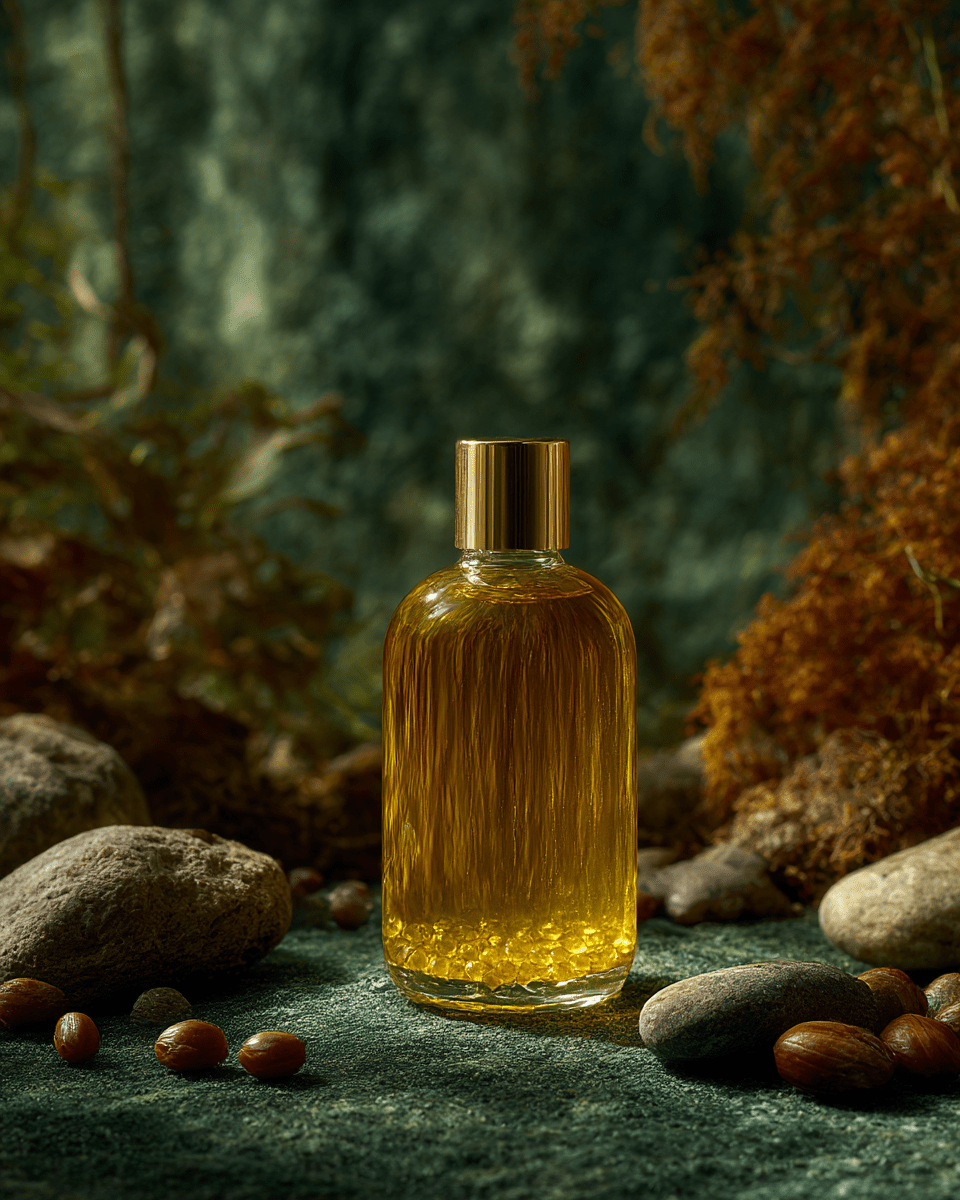
Daily protection for dehydrated sensitive skin: inside-out strategy, protective film, and barrier
Every day, your dehydrated and sensitive skin suffers invisible but cumulative aggressions: temperature variations, hard tap water, detergent residues, urban pollution, air conditioning. The result is always the same — a weakened skin barrier that no longer fulfills its protective role. However, effectively protecting sensitive dehydrated skin is not a matter of luck or an unlimited cosmetic budget. It's a coherent strategy, built around a dual approach that dermatologists call inside-out & outside-in: nourishing the skin from within while actively protecting it from without.
This practical guide provides you with the concrete keys to this strategy — from diet to daily topical gestures — with, at the heart of the system, pure prickly pear seed oil, the most well-documented natural active ingredient for restoring the protective film of sensitive and dehydrated skin.
Understanding the dehydrated skin barrier: why it is vulnerable
The skin barrier is not just a passive membrane. It is an active system composed of ceramides, free fatty acids, cholesterol, and a surface hydrolipidic film. In dehydrated and sensitive skin, this system systematically shows flaws: ceramide deficiency, altered surface pH, increased permeability to irritants.
The consequences are well documented by dermatological research. A study published in the Journal of Investigative Dermatology shows that an altered skin barrier generates transepidermal water loss (TEWL) up to three times higher than normal, creating a vicious circle: the skin loses water, the barrier degrades further, the skin loses even more water. Without targeted intervention, this circle perpetuates itself indefinitely.
The inside-out & outside-in strategy aims precisely to break this circle through two simultaneous entry points: reducing TEWL through topical protection and providing the skin with the nutritional substrates necessary for self-restoration of its barrier.
The inside-out approach: nourishing the barrier from within
The skin cannot restore its lipid barrier without adequate precursors. Skin hydration and comfort therefore begin long before the bathroom.
Internal hydration: beyond 1.5 L of water per day. The standard recommendation to drink 1.5 L of water daily is necessary but insufficient for chronically dehydrated skin. The concept of structured water — water rich in bioavailable minerals (magnesium, silica) — is studied for its impact on cellular hydration. In practice: prioritize mineral waters rich in silica (>20 mg/L), incorporate vegetable broths that combine water and minerals, and maintain fractional hydration throughout the day rather than in large, occasional volumes.
Dietary omega-3s: the building blocks of the barrier. Polyunsaturated omega-3 fatty acids (EPA, DHA, and ALA) are essential structural components of skin cell membranes. A meta-analysis from NCBI/PubMed (2021) confirms that omega-3 supplementation significantly reduces TEWL and improves skin elasticity in 12 weeks. Optimal dietary sources: sardines, mackerel, walnuts, chia seeds, flaxseed oil. The practical goal: 2 to 3 servings of fatty fish per week or 1 tablespoon of flaxseed oil per day.
Vitamin D and polyphenols. Vitamin D regulates the expression of genes involved in ceramide synthesis — key structural lipids of the barrier. Polyphenols (green tea, berries, turmeric), on the other hand, modulate the skin's inflammatory response, particularly useful for sensitive skin prone to reactive redness.
The outside-in approach: the topical protective film and prickly pear seed oil
Pure prickly pear seed oil is today the scientific reference for topical protection for dehydrated and sensitive skin. Its unique lipid composition distinguishes it from all other vegetable oils available on the cosmetic market.
Its exceptional richness in linoleic acid (omega-6, 55-65%) is the first key factor. Linoleic acid is the direct precursor of type 1 ceramides — the ceramides most deficient in skin with an altered barrier. Applying pure prickly pear seed oil is equivalent to providing the skin with the building materials it no longer synthesizes efficiently enough.
Its content of vitamin E (tocopherols, up to 900 mg/kg) — the highest of all vegetable oils according to published HPLC analyses — ensures lasting antioxidant protection against free radicals generated by pollution and UV rays. This natural vitamin E also acts as a light film-forming agent, strengthening the cohesion of the surface hydrolipidic film.
Its profile in plant sterols (β-sitosterol, campesterol) completes the picture: these compounds modulate the skin's inflammatory response and promote the repair of inter-cellular tight junctions, i.e., the microscopic "joints" that guarantee the barrier's impermeability.
In daily application, 2 to 4 drops of pure prickly pear seed oil are enough to form a non-occlusive protective film on the face. Its dry, non-greasy texture — linked to its richness in unsaturated acids — allows it to penetrate quickly without leaving residue. It integrates perfectly as the last step in a morning routine (under SPF) or as a repairing night treatment.
Daily actions to minimize aggressions
Protecting the skin barrier is not just a matter of applied active ingredients — it's also a discipline of daily actions. Here are the most impactful practices, validated by dermatological literature:
Adjust the washing water temperature. Hot water (>40°C) dissolves intercellular lipids and directly alters the barrier. The rule is simple: lukewarm water for the face (30-35°C), never hot. In the shower, sensitive skin benefits from slightly cooler water on the face at the end of the shower, which tightens pores and reduces post-wash water loss.
Eliminate SLS/SLES detergents from the cleansing routine. Sodium lauryl sulfate (SLS) and its derivatives are foaming agents that increase TEWL by up to 47% after a single use (Contact Dermatitis study, 2020). For sensitive dehydrated skin, it is essential to check the INCI of each cleansing product and opt for syndets (mild surfactants) or cleansing oils.
The 30-second post-wash rule. After cleansing, the skin enters a state of transient vulnerability: the hydrolipidic film is partially removed, and TEWL increases. Applying the moisturizing treatment (serum, cream, or protective oil) within 30 seconds of washing reduces this water loss and optimizes the penetration of active ingredients on slightly damp skin.
Physical protection in aggressive environments. Air conditioning, airplanes, cold wind, intense sun: these environments amplify skin dehydration. A thermal water mist in your bag, applying an additional layer of protective oil before exposure, and wearing mineral sunscreen (which creates a physical barrier) are among the reflexes to adopt.
Building a consistent daily protection routine
An effective protection routine for sensitive dehydrated skin relies on consistency, not complexity. Here's the two-step protocol:
Morning (active protection): Gentle cleansing with lukewarm water or SLS-free micellar water → Hydrating serum based on hyaluronic acid or aloe vera → 2-3 drops of pure prickly pear seed oil (protective film) → Mineral SPF 30+. This sequence creates multi-layer protection: cellular hydration, repairing lipid film, physical UV screen.
Evening (night repair): Gentle double cleansing (vegetable oil then syndet) → Targeted calming active ingredient depending on the product used → 3-4 drops of pure prickly pear seed oil as a night treatment. Night is the privileged moment for skin regeneration — prickly pear seed oil then acts without competition from UV or pollution.
To precisely identify your skin's specific needs and adapt your routine, use our personalized skin diagnostic. In just a few minutes, you'll receive a tailor-made protocol based on your actual skin profile.
Mistakes to absolutely avoid
Over-hydrating without protecting. Applying an aqueous serum without sealing it with a lipid active ingredient is counterproductive: water evaporates quickly and carries hydrophilic active ingredients with it. Prickly pear seed oil at the end of the routine plays exactly this role of "sealing" agent that locks in hydration.
Multiplying exfoliants. Mechanical scrubs and acids (AHA, BHA) on skin with an altered barrier worsen permeability. If exfoliation is necessary, limit it to once a week maximum and choose gentle enzymes (papain, bromelain) rather than acids.
Changing your routine too frequently. The skin barrier takes 4 to 6 weeks to adapt to a new active ingredient. Testing a new product every 10 days provides no useful information and weakens the skin through accumulated aggressions.
Confusing "oil" and "occlusive." Prickly pear seed oil is not an occlusive oil in the strict sense. Its dry texture and richness in unsaturated acids give it rapid penetration without blocking pores — this is precisely what differentiates it from heavier oils like petroleum jelly or shea butter.
Neglecting internal protection. Topical care alone cannot correct a chronic nutritional deficiency in essential fatty acids or water. The inside-out strategy is not optional: without it, the effectiveness of external care is limited to 50-60% of its potential.
Using eaux de toilette or perfumes directly on dehydrated sensitive skin. Alcohol and potential allergens in fragrances are among the primary triggers for skin intolerance reactions. Applying perfume to clothes rather than skin is a simple but often ignored rule.
FAQ — Daily protection for dehydrated skin and skin barrier
Q: How many drops of prickly pear seed oil should I use per application?
A: 2 to 4 drops are enough to cover the entire face. The exact amount depends on the face size and the degree of dryness. For very dehydrated skin, 4 drops can form a thicker film. Start with 2 drops and adjust according to the feeling of comfort.
Q: Is prickly pear seed oil suitable for oily, acne-prone skin?
A: Yes. Its richness in linoleic acid makes it one of the rare oils recommended for oily skin with enlarged pores — a deficiency in linoleic acid is precisely associated with the formation of comedones. Its non-comedogenic texture (index 0-1) makes it a versatile active ingredient suitable for all skin types.
Q: Can prickly pear seed oil be applied under makeup?
A: Yes, provided you allow 5 to 10 minutes for absorption before applying foundation. Its rapid absorption prevents the "slippery" effect that could destabilize makeup.
Q: What is the difference between dehydrated skin and dry skin?
A: Dry skin is a genetic skin type (few sebaceous glands, lack of lipids). Dehydrated skin is a temporary or chronic condition (lack of water in the epidermis) that can affect all skin types, even oily skin. The solutions are complementary: aqueous moisturizers for dehydration, lipid active ingredients for dryness.
Q: How long does it take to see an improvement in the skin barrier?
A: The first signs of comfort (reduced tightness, less reactive skin) generally appear in 1 to 2 weeks. Measurable restoration of the barrier (reduced TEWL) takes 4 to 8 weeks of regular routine. Patience is key: the skin barrier rebuilds at its own pace.
Q: Should oil be applied before or after moisturizer?
A: The order depends on the objective. In a protective routine (morning), moisturizer first, then oil as a final "sealant." For intensive night repair, the oil can be applied alone or mixed with the cream. The general rule: aqueous textures before oily textures.
Q: Are omega-3 capsules as effective as dietary sources?
A: The bioavailability of dietary omega-3s (fatty fish) is slightly higher than that of capsules due to the food matrix. However, for people who do not consume fish, quality supplementation (800-1000 mg EPA+DHA/day) is an effective alternative validated by scientific literature.
Q: Is sunscreen really essential for dehydrated skin?
A: Yes, even more so than for normal skin. UV rays degrade the intercellular lipids of the barrier and generate oxidative stress that exacerbates chronic dehydration. A mineral SPF 30+ also creates a physical barrier against pollution. This is the non-negotiable final step of any daily protection routine.
Nopal Life pure prickly pear seed oil — your daily barrier shield
Cold-pressed, unrefined, 100% natural certified. The highest concentration of linoleic acid and vitamin E available in facial care. Visible results in 2 weeks on sensitive dehydrated skin.
Conclusion
Protecting dehydrated and sensitive skin requires a comprehensive strategy, both from the inside and the outside. Hydration, barrier care, and a protective film strengthen its defenses. A healthy lifestyle complements skin care. Skin protected on all fronts remains strong, comfortable, and radiant.
Why choose Nopal Life for deep and lasting hydration
Skin hydration is not limited to applying water to the skin: it requires film-forming active ingredients that retain water in the deep layers of the epidermis. Nopal Life formulates each product around clinically validated humectants (hyaluronic acid, aloe vera, prebiotics) combined with prickly pear seed oil, an exceptional natural emollient that seals in hydration and restores the lipid film.
Result: plump, supple, and comfortable skin for more than 24 hours. Each formulation is dermatologically tested and adapted to your skin type. Take our free diagnostic to identify the ideal hydration routine for you.
RECOMMENDED CARE
Pure prickly pear seed oil
Natural formula · Origin Algeria
DISCOVER THIS PRODUCT →PERSONALIZED ROUTINE
Nopal Life Skin Intelligence™
Free diagnostic · 2 minutes
DISCOVER MY ROUTINE →Information provided for cosmetic and educational purposes only; it does not constitute medical advice.


Go further than this article
Get our skincare guides by email — and start with your free skin diagnostic: 2 minutes, advice tailored to your skin. We ship to the US, UK, Canada, Australia and 27 European countries; somewhere else? Sign up and you will be the first to know when we deliver to your country.
By signing up, you agree to our privacy policy. Unsubscribe in one click.