Prickly pear polyphenols: antioxidant shield and radiant glow
Every day, free radicals attack the lipids that make up the skin barrier and our cell membranes: this is lipid peroxidation, one of the silent causes of dehydration, loss of radiance, and premature aging. The polyphenols of prickly pear (Opuntia ficus-indica) form a true antioxidant shield that helps protect these lipids and preserve skin vitality.
Tight, dull, or easily marked skin: behind these signs often lies a little-known mechanism, the oxidation of skin lipids. Prickly pear, an antioxidant born of the desert, is one of the best botanical answers to this phenomenon.
Lipid peroxidation, the "rust" of the skin
The skin barrier is essentially made of lipids: ceramides, fatty acids, cholesterol. Our cell membranes are also made of lipids. However, these lipids are prime targets for these unstable molecules, generated by UV rays, pollution, or stress.
When one of these molecules attacks a lipid, it triggers a chain reaction, much like rust spreading over metal or oil turning rancid:
— the skin barrier weakens and allows water to evaporate, leading to a feeling of discomfort and tightness;
— the complexion loses its radiance, the skin appears duller and more sensitive;
— in the long term, oxidation accelerates visible skin aging.
Limiting this peroxidation therefore preserves both the comfort, radiance, and youthfulness of the skin — and this is precisely the playground of antioxidants.
Why prickly pear polyphenols?
Prickly pear grows in extreme conditions: scorching sun, drought, high heat. To survive this permanent oxidative stress, it concentrates a remarkable antioxidant arsenal:
— flavonoids, its major phytochemical class;
— phenolic acids, particularly eucomic and piscidic acids;
— betalain pigments (betanin, indicaxanthin), colored antioxidants.
These molecules act as "firewalls": they intercept these unstable molecules before they attack skin lipids.
"Electron donor" antioxidants
A study published in the Journal of Agricultural and Food Chemistry (2002) measured the redox potential of betanin and indicaxanthin from prickly pear: both pigments easily donate their electrons, allowing them to neutralize free radicals and interrupt the chain reaction of peroxidation.
The prickly pear has solved a problem that most plants avoid: living on arid land without ever escaping the light. Its pads store water, its thick skin limits evaporation, and its stomata only open at night, when the air is less dry. The cactus works in reverse to other plants.
This strategy comes at a cost. Remaining exposed to the sun all day without being able to transpire forces the plant to neutralize on site what the light produces in its tissues. Its chemical composition is therefore not an ornament: it is the survival equipment of an organism that can neither seek shade nor close shop during the summer. The properties attributed to it in cosmetics are borrowed from this economy.
What studies show
The benefit of prickly pear on the oxidation of skin lipids is illuminated by a particularly precise study.
— Direct protection of skin lipids. Researchers (Petruk et al., Bioorganic & Medicinal Chemistry Letters, 2017) pre-treated human keratinocytes with an aqueous extract of Opuntia ficus-indica pads, then exposed them to UVA. Result: the extract inhibited the production of reactive species, lipid peroxidation and the drop in glutathione (the cells' natural antioxidant), while protecting cells from programmed death. Eucomic and piscidic acids were identified as the responsible compounds.
In other words, prior to the aggression, the prickly pear extract helped cells better resist the oxidation of their lipids. These in vitro works shed light on the mechanism of action and guide cosmetic formulation; they do not constitute a therapeutic promise.
How to strengthen your antioxidant shield
To maximize your chances:
— apply an antioxidant in the morning, when the skin faces the day's exposome;
— do not neglect sun protection, because the antioxidant complements the UV filter, it does not replace it;
— cleanse the skin in the evening to remove pollution particles deposited during the day;
— maintain a healthy skin barrier with nourishing lipid-rich skincare.
To find out if your skin shows these signs of oxidation, the NOPAL skin diagnosis evaluates the signs in a few minutes. The prickly pear oil, rich in vitamin E, extends the antioxidant shield of polyphenols while nourishing the barrier.
Mature skin presents a particular difficulty. With age, the production of lipids by the sebaceous glands decreases significantly, and the skin barrier retains water less effectively than it did at thirty. A moisturizing texture alone is then no longer sufficient: it brings water to a system that can no longer retain it.
Hence the interest in combining the two registers rather than choosing. Water first, then the fatty substance to retain it. This is the principle of any serious anti-aging approach, and it applies well before the appearance of the first marks: the earlier the barrier is maintained, the less needs to be done later. The benefit plays out over years, which explains why it is rarely measured in short trials.
What form of prickly pear to strengthen your shield?
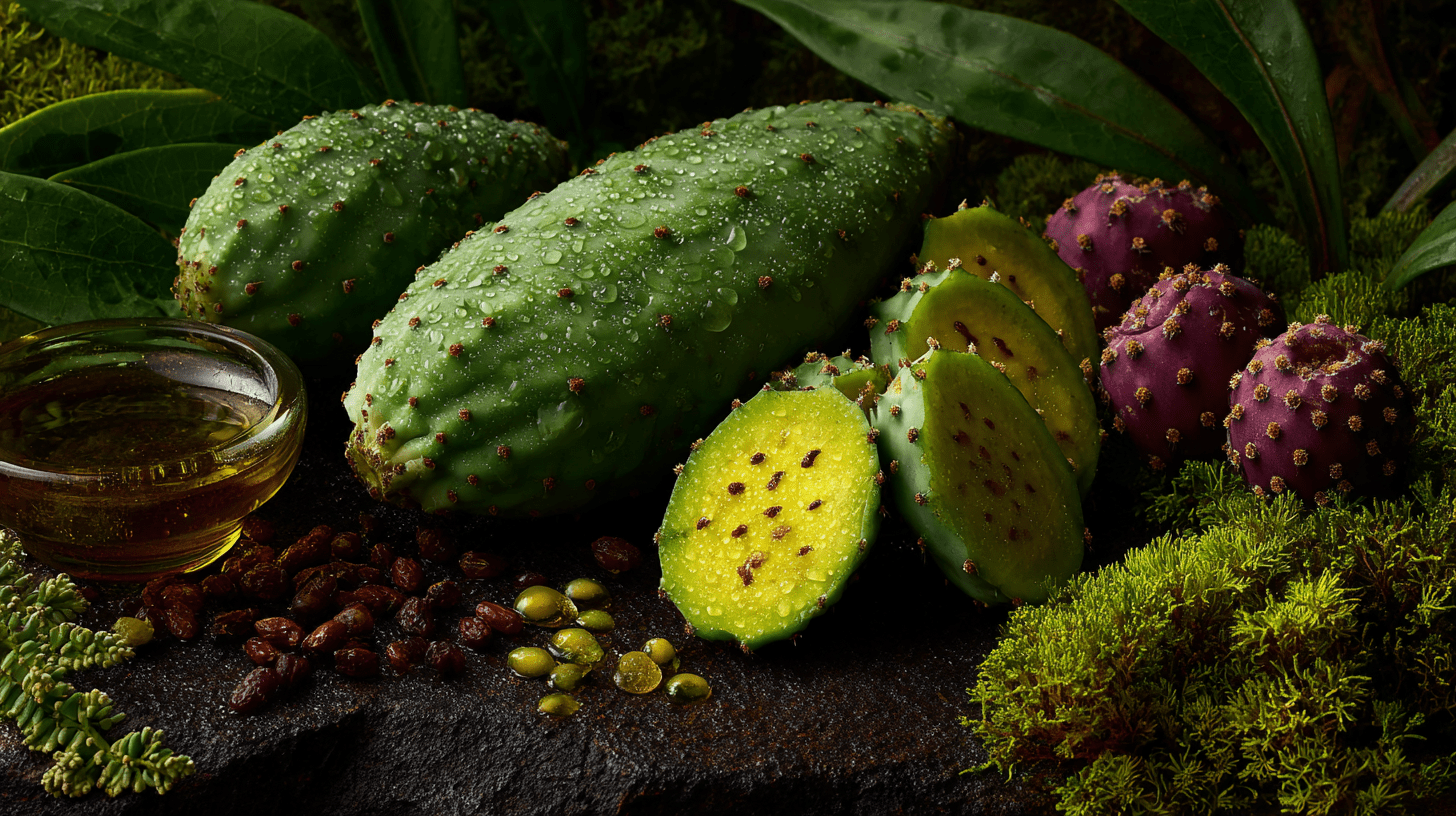
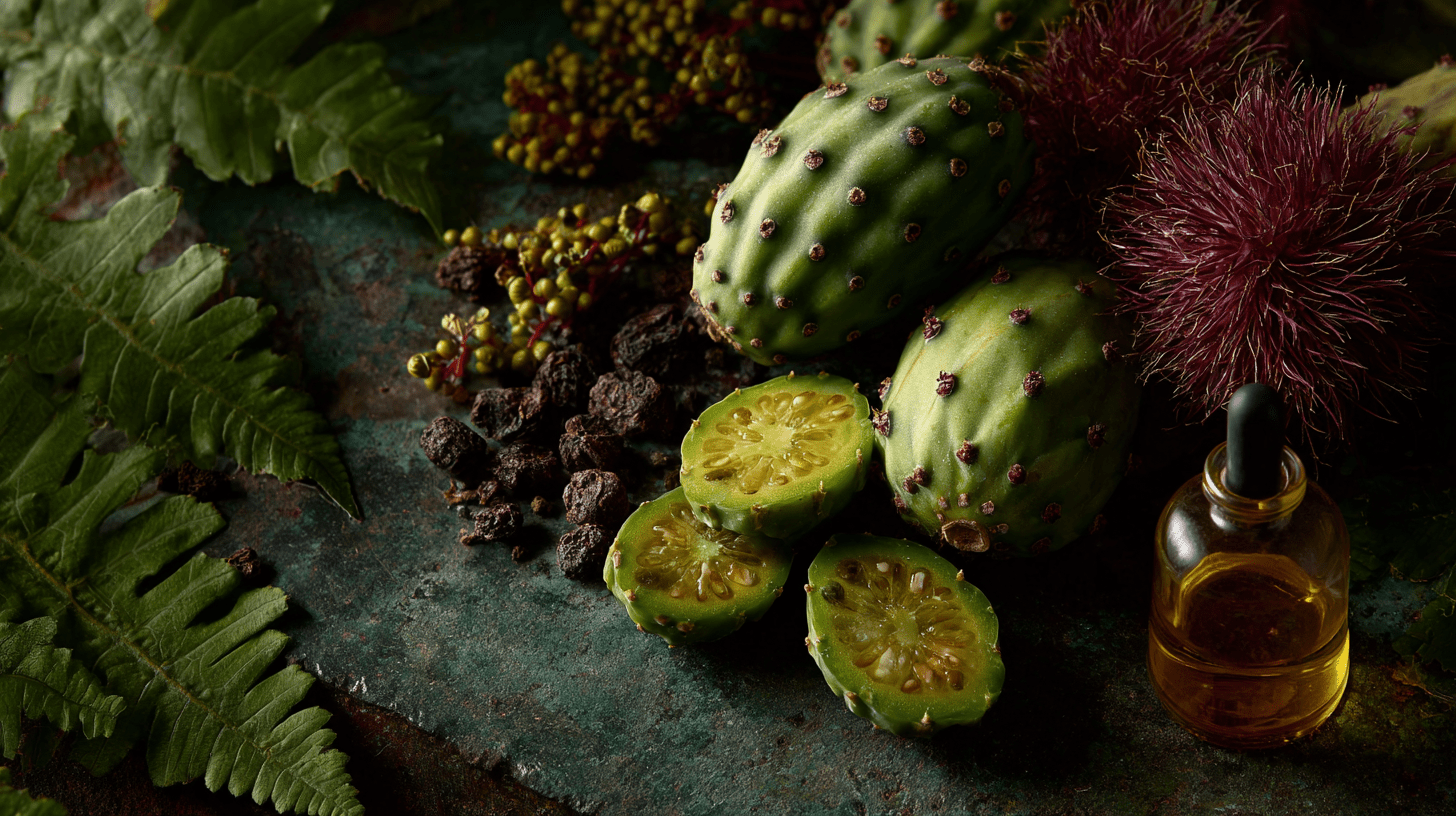
Prickly pear comes in complementary skincare. Prickly pear oil, extracted from the seeds and preferably organic, is a vegetable oil rich in vitamin E that nourishes the skin barrier and helps protect skin lipids; the polyphenols and betalains of the Opuntia ficus-indica fruit add their antioxidant action. For the face, the ideal is to combine a seed oil and an antioxidant treatment, morning and evening: the first results — more comfortable and luminous skin — are observed after a few weeks of regular use.
To learn more:
- Prickly pear polyphenols: preventing signs of aging
- Prickly pear polyphenols: radiance and refined skin texture
- The Skin Intelligence skin diagnosis
- Discover pure prickly pear oil
A single plant yields three distinct raw materials, and confusing them leads to disappointment. The seeds provide an oil rich in essential fatty acids, reserved for nourishing care. The fruit pulp yields a juice or extract, very different as it contains practically no fat. The pads, on the other hand, are ground and used elsewhere.
The proportion of each in a formula can be read on the INCI list, where the Latin name is followed by the part used — seed oil for seeds, fruit extract for pulp, stem extract for pads. A product that announces the plant without specifying the part deserves a closer look: these are three ingredients with very unequal prices and interests, and the difference between them far exceeds that between two brands.
Frequently Asked Questions
What is lipid peroxidation, simply?
It is the oxidation of skin fats (skin barrier, cell membranes) by free radicals. Like rancid oil, this process weakens the barrier, promotes discomfort and loss of radiance.
Do polyphenols replace sunscreen?
No, under no circumstances. An antioxidant complements sun protection by neutralizing these unstable molecules, but it does not filter UV rays. The two actions are complementary and essential.
When should they be applied during the day?
In the morning preferably, to arm the skin against the aggressions of the day. Nothing prevents using them in the evening as well, in addition to a restorative routine.
Are they suitable for sensitive and dehydrated skin?
Yes, these are generally well-tolerated plant-based antioxidants. By strengthening the barrier's protection, they are even particularly interesting for skin that feels tight and lacks radiance.
Information provided for cosmetic and educational purposes; it does not constitute medical advice.
Is there a harvest season? Yes, a short one: the fruit ripens between July and September depending on the altitude, and it does not keep. All annual production takes place in a few weeks, which explains the regular stock shortages among small producers.
Is the fruit also consumed? It is eaten fresh throughout the Mediterranean basin, where it holds a real place in the summer diet. However, what relates to health through diet falls outside the scope of this article, which talks about what is applied to the skin.
Is an oil sufficient in winter? Rarely alone on the face. Cold and heating dry out the air on both sides of the day; it is better to apply a water-based base underneath than to increase the dose of fatty substance, which does not compensate for the lack of water.
This ingredient in our range


Mature skin · Dry skin

Go further than this article
Get our skincare guides by email — and start with your free skin diagnostic: 2 minutes, advice tailored to your skin. We ship to the US, UK, Canada, Australia and 27 European countries; somewhere else? Sign up and you will be the first to know when we deliver to your country.
By signing up, you agree to our privacy policy. Unsubscribe in one click.