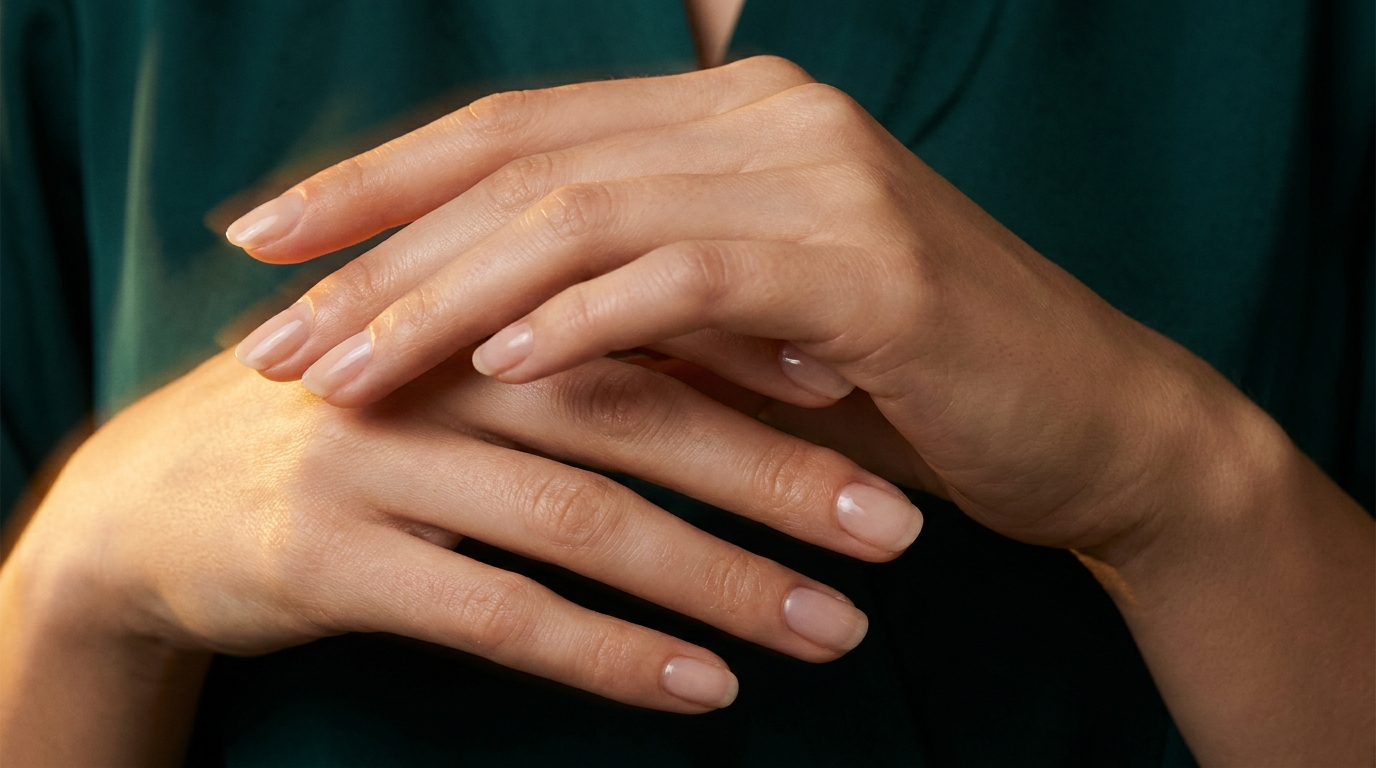
Dry skin on hands: washing, gloves, and cream
Dry hands are often caused by frequent washing, hydroalcoholic gels, cold weather, and repeated contact with water or household products. The back of the hands has few sebaceous glands and quickly loses its protective lipids. The most effective strategy is to reduce aggressions, wear appropriate gloves, and apply a cream after each wash.
Why the back of the hands dries out quickly
The back of the hands is thin and less rich in sebum than other areas. The palms have a thick stratum corneum but no sebaceous glands. This anatomy explains the frequent association of tightness on the back, roughness on the fingers, and cracks around the joints.
Dry hand skin becomes more vulnerable as water evaporates after each wash. Without cream, the humidification-drying cycle repeats dozens of times a day. Intercellular lipids become scarce and micro-cracks become visible.
Hand washing without stripping the skin
Use lukewarm water and a mild liquid soap, fragrance-free if your skin reacts easily. Rub as needed for hygiene, rinse thoroughly, then dry between the fingers. Very hot water does not improve cleaning and increases dryness.
After each wash, apply a dab of cream to the back of your hands, palms, and around your nails. Massage for thirty seconds until the white film disappears. A pump placed near the sink increases regularity.
Moisturizing cream, balm, or ointment
| Texture | Time | Useful ingredients | Sensation |
| Cream | Day | Glycerin, panthenol | Fast |
| Balm | Evening | Shea, squalane | Rich |
| Ointment | Night | Petrolatum or wax | Very occlusive |
Shea butter, squalane, and ceramides reduce evaporation. 5% urea improves hydration on rough skin, but can sting on a crack. The shea butter sheet helps read formulas.
Gloves for water, housework, and cold
Wear nitrile gloves for washing dishes or household products, with cotton gloves underneath if sweat macerates the skin. Remove them as soon as the task is finished and dry your hands. A damp glove kept on for too long can itself become irritating.
Outdoors, insulating gloves reduce contact with cold air and wind. Apply cream ten minutes before going out. This mechanical protection is as important as the choice of product.
Ten-minute nightly ritual
In the evening, wash gently, dry, then apply a generous layer of balm containing glycerin and shea butter. Add a thin occlusive layer on very dry joints. Put on clean cotton gloves for thirty to sixty minutes or all night if it remains comfortable.
- 1 pea-sized amount per hand
- Insist around the nails
- Clean cotton gloves
- Repeat 3 evenings
- Stop if maceration occurs
Wet work and professional products
Healthcare, hairdressing, cooking, cleaning, or construction professions expose hands to water, detergents, and gloves. Alternate tasks when possible and use equipment provided by the employer. A barrier cream does not replace a protective glove.
The skin barrier guide explains water loss. For a complete routine, see dry skin.
What makes hand skin different from facial skin
Treating hands like the face explains a good part of failures: their structure is not the same.
The back of the hand has a thin stratum corneum and very few sebaceous glands — much less than the forehead or nose. Therefore, it has almost no hydrolipidic film that naturally protects the face. The palm, on the other hand, presents the opposite: a very thick stratum corneum, no sebaceous glands, and abundant perspiration.
This skin also undergoes stresses that no other area experiences. Hands are washed several times a day, constantly exposed to cold, wind, and sun, plunged into hot water, and brought into contact with detergents. No other part of the body accumulates so many daily aggressions.
Added to this is mobility: the skin of the joints is constantly stretched and folded. An impoverished stratum corneum loses its flexibility and eventually cracks — hence the fissures that first appear on the knuckles and around the nails.
Finally, with age, the thin subcutaneous fatty layer on the back of the hand thins, which accentuates both dryness and the visibility of veins. This is a structural evolution, not a lack of maintenance.
Natural solutions, and their limits
Several simple fats work well here, provided you understand what each contributes.
Olive oil, sweet almond oil, and coconut oil are good emollients, easy to find. They soften and limit evaporation, but they do not provide any water: applied to already dehydrated skin, they trap dryness instead of correcting it.
The resulting rule applies to all: apply to slightly damp skin, just after washing, without drying completely. It is this gesture, more than the choice of product, that makes the difference.
Honey is a real humectant, useful as a ten-minute mask once or twice a week — with the usual caveat, it is a recognized contact allergen.
Beeswax and lanolin form a significantly more effective occlusive film than oils alone for the night. Lanolin, however, remains a known sensitizer, to be tested before regular use.
What no homemade preparation can replace, however: a formula containing urea, glycerin, or ceramides at a controlled concentration. For very damaged hands, the difference is clear, and persisting with oil alone wastes weeks.
Signs beyond ordinary dryness
Deep cracks, oozing, pain, vesicles, or persistent spreading require professional advice. A contact allergy or another skin condition can resemble simple dry hands. Photograph the areas and note the products handled.
Dry hand skin should not be rubbed with lemon, baking soda, or an abrasive stone. These actions remove even more lipids. Lasting improvement relies on repeated gentle actions.
Dry cuticles benefit from a drop of jojoba oil pressed around each nail. Apply it after the cream, once in the evening, without cutting live skin. This action reduces small snags and limits the urge to pick them.
Hydroalcoholic gel may be better tolerated than an additional wash when hands are not visibly dirty, according to applicable hygiene guidelines. Let it dry completely, then apply a cream. A formula containing humectants is often more comfortable.
Rings retain water, soap, and residue under the metal. Remove them before prolonged washing, dry the area, then put them back on. Irritation limited to the location of jewelry should lead to suspending its wear and seeking advice if it persists.
For gardening, choose gloves that are long enough and dry inside. Plants, wet soil, and repeated friction can worsen cracks. Then wash with little soap and apply a balm to the joints.
A day cream should allow you to grasp an object without slipping. Reserve very occlusive formulas for the evening and use a lighter emulsion at work. Two complementary textures are often more practical than a single product poorly suited to both times.
At night, the room temperature and contact with sheets influence the sensation of tightness. A balm applied twenty minutes before bed penetrates better than a layer applied just before turning off the light. Leave your hands exposed to the air if cotton gloves cause excessive sweating.
What hand cream cannot do
A cream does not compensate for daily unprotected contact with concentrated detergents. Nor does it replace professional advice when cracks bleed or discomfort prevents work.
The realistic goal is to reduce water loss and improve comfort between exposures. Regularity after each wash is more important than a very thick application once a week. Dry hand skin therefore requires repeated protection throughout the day. The term "dry hand skin" here refers to dryness related to daily exposures and not a medical conclusion.
Frequency takes precedence over thickness
Reapplying a little after each wash is better than a thick layer in the evening: it's repetition that compensates for exposure. Unrefined prickly pear seed oil is suitable for this rhythm because it penetrates quickly and leaves no greasy film on the fingers.
Our anti-aging treatments