Anti-aging face mask: hydration and proper techniques
An anti-aging face mask primarily works on stratum corneum hydration, immediate suppleness, and radiance, not on the skin's biological age. A useful formula combines humectants, emollients, and antioxidants, with a measured application time and reasonable frequency. The right question is therefore not "which mask rejuvenates," but "which combination temporarily improves appearance without irritating mature skin."
What a mask can change in fifteen minutes
Glycerin, hyaluronic acid, and beta-glucan attract water into the stratum corneum. A temporary increase in hydration makes dehydration fine lines less visible and the surface more supple. This effect lasts for a few hours, then depends on the cream applied after rinsing.
Vegetable oils, squalane, and shea butter limit evaporation. Antioxidants like vitamin E or green tea extract complete the formula, but their presence in a rinse-off mask does not replace a serum left on the skin.
| Family | Example | Dose or benchmark | Expected cosmetic effect |
| Humectant | Glycerin | 3 to 10% | Comfort and surface water |
| Emollient | Squalane | 2 to 8% | Suppleness |
| Antioxidant | Vitamin E | 0.2 to 1% | Formula protection |
| Soft powder | Colloidal oatmeal | 1 to 5% | Soothing touch |
An anti-aging mask works on surface hydration and nothing else in such a short time. What is observed—a more even complexion, less visible fine lines—is due to the fact that plumped skin reflects light better.
For dry skin, the cream format also allows for nourishment: the fatty substances it deposits remain after rinsing, which no gel does. Established signs of aging, however, require a daily routine and slow regeneration that nothing accelerates.
Oat cream recipe for dry mature skin
Pour one tablespoon of very fine oat powder into a bowl. Add one tablespoon of plain yogurt and half a teaspoon of jojoba oil. Mix until a lump-free cream is obtained.
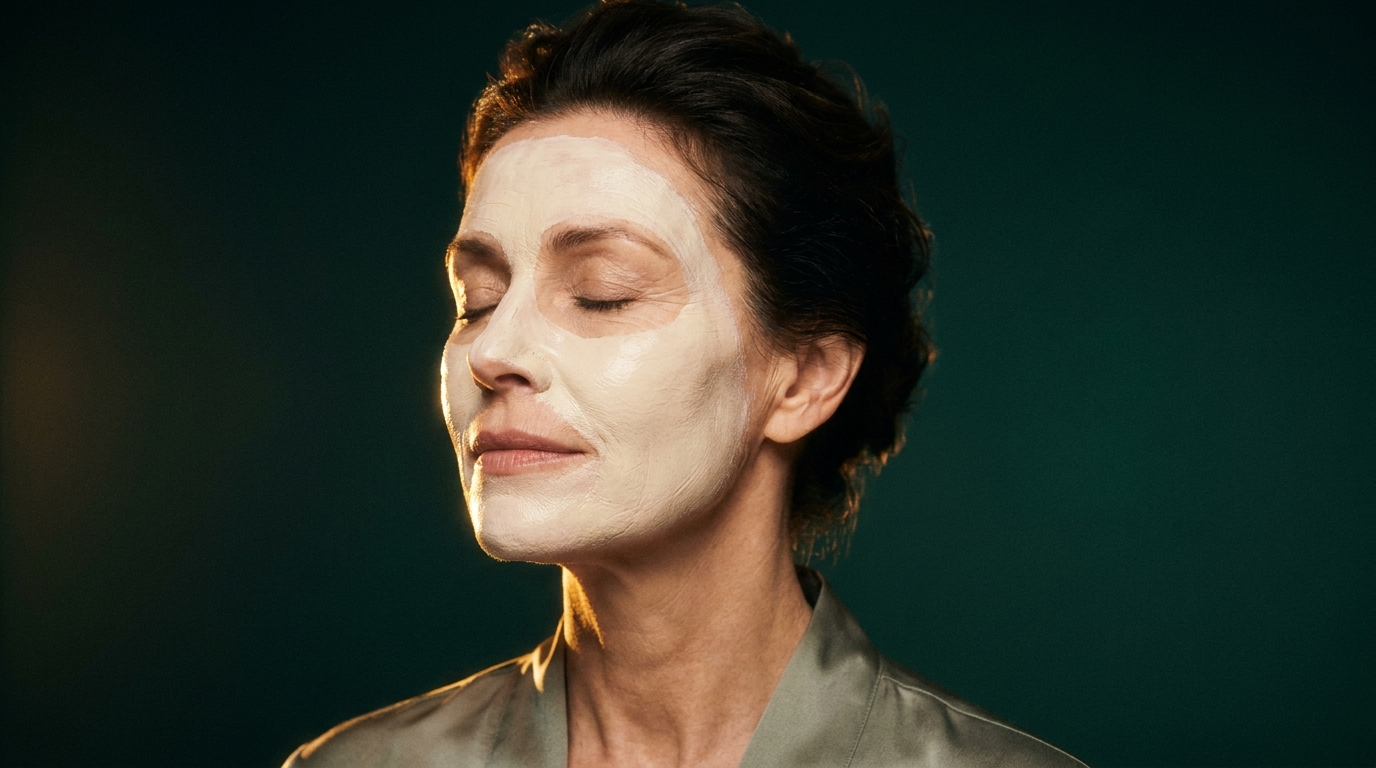
Spread on the face, avoiding the eyelids. Leave on for ten minutes without letting it dry completely. Moisten with fingers, massage for five seconds, then rinse with lukewarm water. Then apply a dab of rich cream.
- Prepare just before use.
- Use a clean spoon.
- Discard the rest.
- Repeat once a week.
Gel version for dehydrated mature skin
Mix one tablespoon of cosmetic aloe vera gel with half a teaspoon of glycerin and three drops of squalane. Work the preparation for thirty seconds to disperse the oil.
Apply a thin layer for eight minutes. If the gel tightens, spray a little thermal water rather than waiting for it to crack. Remove with a damp cloth then rinse briefly.
For a complete routine, the mature skin routine page places the mask among morning and evening steps.
Sheet mask, hydrogel, or cream: choosing the right format
The sheet mask limits evaporation and increases the serum's contact with the surface. Hydrogel adheres better to contours but often contains more polymers. The cream mask provides more lipids and is better suited for dry cheeks.
| Format | Duration | Suitable skin type | Common mistake |
| Sheet | 10 to 15 min | Dehydrated | Leaving it on for 30 min |
| Hydrogel | 15 to 20 min | Combination mature | Layering several serums |
| Cream | 8 to 12 min | Dry | Applying too thick a layer |
| Powder | 5 to 10 min | According to recipe | Allowing it to harden |
Sheet masks are suitable for dry skin seeking intense hydration: the mask keeps the formula in contact and limits evaporation. Hydrogel, which is cooler, is suitable for skin that blushes.
The cream texture remains the most useful for nourishing: it is the only one that provides enough fatty substances to impact the comfort of mature skin. A gel hydrating mask does not replace this work, and signs of aging cannot be treated in fifteen minutes—but the complexion immediately gains regularity.
Three face zones, three quantities
On the forehead, use a very thin layer, about a quarter of a teaspoon. On the cheeks, slightly double the amount if they feel tight. Around the mouth, avoid acidic preparations and prefer a flexible texture.
The neck receives the rest of the product, without friction. Thinner skin tolerates perfumes, essential oils, and prolonged application times less well.
Evening sequence after rinsing
Pat the face dry with a clean towel. On still slightly damp skin, apply two drops of a humectant serum, then a pea-sized amount of cream. Wait one minute before adding a drop of oil to the cheeks if necessary.
The module on the skin barrier explains why this final layer limits water loss.
Frequency and signs of excess
Once a week is enough for a homemade recipe. A simple cream mask can be used twice a week if the skin remains comfortable. Persistent tingling, diffuse redness, or a feeling of tight skin indicate that you should stop and simplify your routine.
Do not use an enzymatic mask, retinol, and scrub on the same evening. Multiplying steps increases the irritation load without adding a proportional benefit.
The expression anti-aging face mask is used here in its precise sense, without broadening it to another subject.
A photograph taken before application and two hours after can show a change in luminosity, but it must be taken with the same light. The visual effect of a mask depends heavily on ambient humidity and the amount of cream applied afterwards.
Sensitive mature skin often prefers a short list: water, glycerin, panthenol, squalane, and ceramides. Fragrance, volatile alcohol, and essential oils add unnecessary variables in a product intended to remain under occlusion for ten minutes.
To compare two masks, note the comfort at fifteen minutes, the tightness at two hours, and the suppleness the next morning. Change only one product at a time for two weeks.
The skin barrier module specifies the role of the stratum corneum.
What an anti-aging face mask doesn't do
An anti-aging face mask does not rebuild the dermis, lift the oval of the face, or erase an established wrinkle. It mainly improves surface appearance through water, lipids, and the film left after application.
It does not replace sunscreen, a regular routine, or professional advice when redness or a lesion persists.


Go further than this article
Get our skincare guides by email — and start with your free skin diagnostic: 2 minutes, advice tailored to your skin. We ship to the US, UK, Canada, Australia and 27 European countries; somewhere else? Sign up and you will be the first to know when we deliver to your country.
By signing up, you agree to our privacy policy. Unsubscribe in one click.