



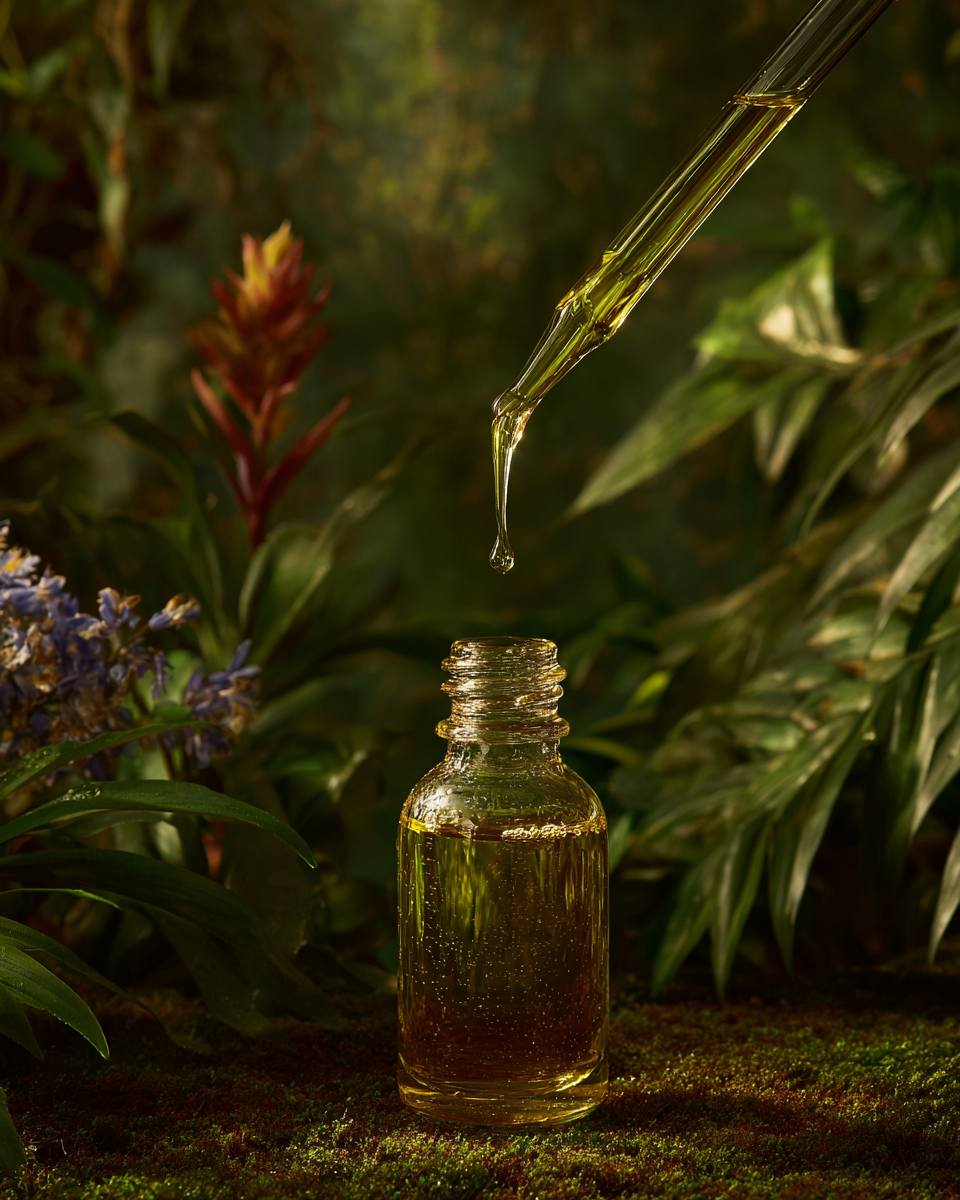
Prickly pear oil or salicylic acid: which to choose?
These two treatments are not really comparable: they do not target the same problem. Prickly pear oil nourishes and limits water loss. Salicylic acid exfoliates, penetrates pores, and removes dead skin cells. One adds, the other removes.
Two Opposing Logics
| Criterion | Prickly Pear Oil | Salicylic Acid |
|---|---|---|
| Action | nourishes, adds substance | exfoliates, unclogs |
| Skin Type | dry skin, mature skin | oily skin, blackheads |
| Frequency | daily | 2 to 3 times a week |
| Placement | last step | after cleansing, before everything else |
| Sun | no effect | increases sensitivity |
What Salicylic Acid Does
It is a liposoluble beta-hydroxy acid, which allows it to enter the pores rather than remaining on the surface. There, it loosens dead cells and excess sebum, hence its benefit for blackheads and clogged pores.
Its downside is real: if used too frequently, it dries out and weakens the skin barrier. Two to three uses per week are sufficient for most oily skin types.
What Prickly Pear Oil Does
Prickly pear oil provides linoleic acid — often more than 60% of its profile — and tocopherols. The former is a component of barrier lipids; the latter limits the action of free radicals on the oily phase.
Its perceived effect is softer, more comfortable skin with a more even texture. This is the exact opposite of what an exfoliant does, which is why the two complement each other better than they compete.
A Rare Vegetable Oil
It takes nearly a ton of prickly pears to obtain a liter of oil: the seeds represent only an infinitesimal fraction of the fruit. At NOPAL LIFE, they come from family plantations in the arid high plateaus of eastern Algeria and Kabylia, and the extraction is done by first cold pressing.
Which One to Choose
Oily skin, blackheads, prominent pores: salicylic acid. Prickly pear oil will not resolve a blockage.
Dry, rough, tight skin: the oil. An exfoliant on already dry skin would worsen the situation.
Combination skin: both, on different areas and at different times.
Using Them Together, Without Contradiction
This is possible and often wise, provided they are not applied directly one over the other.
Safest method: the exfoliant on the evenings you use it, prickly pear oil every other evening.
On the same evening: salicylic acid on clean skin, wait ten minutes, then a cream and the oil as the final layer. The oil applied afterward restores comfort without canceling the exfoliation, which has already taken place.
Never reverse the order: a fatty substance applied beforehand would form a barrier that would prevent the exfoliant from reaching the pores.
Using Oil After an Exfoliant
This is one of its best uses. Exfoliation costs water and some lipids on the surface; prickly pear oil restores exactly what the process removed.
Two drops are enough on the evening of exfoliation. Warm them between your palms and apply by pressing, without rubbing skin that has just been treated.
Sun, a Point Not to Be Overlooked
Salicylic acid increases sensitivity to ultraviolet rays. Daily sun protection is part of the protocol, especially on the days following exfoliation. Prickly pear oil, however, has no effect on photosensitivity.
Skin Aging: What Each Provides
The exfoliant improves skin clarity through surface renewal. The oil works on suppleness and provides antioxidants against free radicals.
Neither one nor the other erases an established wrinkle. In this area, protection against radiation remains the only action whose effect is solidly established.
An Oil Rich in Essential Fatty Acids
What makes prickly pear oil interesting is its content of essential fatty acids — lipids that the body does not synthesize and must be supplied. Linoleic acid constitutes the dominant part, often over 60% of the profile.
This vegetable oil is also rich in vitamin E, in the form of tocopherols. These antioxidants neutralize some of the free radicals responsible for skin aging, particularly in the oily phase where the attack begins.
Opuntia ficus indica: The Plant and Its Fruit
Opuntia ficus indica is a cactus of arid zones, whose fruit — the prickly pear — contains numerous small seeds. It is from these seeds, and not the pulp, that the oil is extracted.
An organic prickly pear oil guarantees the absence of inputs in cultivation, which is easy to maintain for a plant that grows naturally without irrigation. The truly determining factor remains the extraction method: without heating, tocopherols are preserved.
Can It Be Used on Blemish-Prone Skin?
Yes, and it's more common than one might think. Its fine texture and rapid penetration distinguish it from thick oils that such skin types do not tolerate. Its profile, dominated by an omega-6 rather than saturated acids, also contributes to this.
Start with one drop in the evening, on tight areas, and observe for a week. This is more reliable than any general rule about skin types.
A Moisturizing Action and a Fast Effect
One must be precise about the word. An oil is not strictly moisturizing: it does not provide water. What it does is retain existing water, which gives a perceived and rapid moisturizing effect — from the very first application.
For a more lasting result, apply it to still-damp skin, or over a watery serum. On perfectly dry skin, you seal a surface that has nothing to retain.
Strengthening the Barrier After a Period of Exfoliation
After several weeks of exfoliant use, a break often does more good than intensification. Ten days without acid, with a barrier-strengthening treatment morning and evening, are usually enough to restore comfort.
This is a use where prickly pear oil is particularly well-suited: it provides substance where the skin has just lost it.
Limitations
These products are cosmetics: they act on the appearance and comfort of the skin, without treating any condition. Established or inflammatory acne requires dermatological advice.


Go further than this article
Get our skincare guides by email — and start with your free skin diagnostic: 2 minutes, advice tailored to your skin. We ship to the US, UK, Canada, Australia and 27 European countries; somewhere else? Sign up and you will be the first to know when we deliver to your country.
By signing up, you agree to our privacy policy. Unsubscribe in one click.

