Elasticity: Nopal Life complete guide
Skin that bounces back, that returns to its original shape after light pressure, that remains supple and dense over the years – this quality known as skin elasticity is one of the most telling markers of balanced-looking skin. Yet, it seems to fade silently, often before we even notice: a less luminous complexion, a texture that appears slightly looser, contours that seem to lose definition. These signals are not inevitable. They call for a precise, reasoned response, rooted in knowledge of the skin.
At Nopal Life, we have built our approach around an exceptional ingredient: prickly pear seed oil (Opuntia ficus-indica), one of the natural active ingredients richest in tocopherol and essential fatty acids documented to date. This pillar page is your complete reference for skin elasticity: skin appearance, skin types, adapted routine, key active ingredients, mistakes to avoid, and answers to your most frequently asked questions. Each section guides you to the in-depth resources in our Skin Guide to go further according to your skin profile.
Whether you're looking to understand why your skin seems to have lost its firmness, to build a truly adapted routine, or to identify natural active ingredients that sustainably support the bouncy appearance of your skin, you will find here a structured, carefully documented, and concretely actionable guide.
Understanding Skin Elasticity: Skin Appearance and Factors of Visible Degradation
Skin elasticity is associated with structural proteins located in the dermis, the middle layer of the skin. Two proteins are often mentioned: collagen and elastin. Collagen is associated with the density and support of skin tissue, while elastin is associated with the skin's ability to deform and then return to its original shape – it is precisely this quality of appearance that we call elasticity.
These fibers are naturally present in the skin and particularly abundant between 20 and 35 years of age. With time, the firm and dense appearance of the skin naturally tends to evolve from the age of thirty, progressively. Elastin, on the other hand, has the peculiarity of very little renewal after puberty: the fibers present in the adult dermis are largely those already present during childhood and adolescence. Their appearance therefore directly depends on the external aggressions they undergo over time.
The factors that accelerate the appearance of lost skin elasticity are numerous and often cumulative:
- Chronological aging: the skin appears thinner and contours seem to lose definition over the years.
- Photoaging: UV rays are one of the main factors associated with the appearance of skin that slackens and loses its bounce. Unprotected sun exposure is considered responsible for a major part of the visible signs of skin aging.
- Chronic dehydration: a stratum corneum depleted of water appears less supple and less able to deform harmoniously. The transition zone between epidermis and dermis, important for the toned appearance of the skin, is directly concerned.
- Repeated weight fluctuations: these subject the skin to repeated stretching which can eventually mark its appearance.
- Smoking and pollution: the free radicals generated are associated with a dull complexion and skin that appears tired, by disturbing the comfort and radiance of the skin.
- Essential fatty acid deficiency: the lipid barrier of the epidermis plays an important role in maintaining the comfort and supple appearance of the skin, a necessary condition for its toned appearance.
It is precisely this preventive and cosmetic dimension that the Nopal Life protocol addresses.
Elasticity According to Your Skin Type: Different Responses, a Personalized Approach
Elasticity is not a universal phenomenon that manifests in the same way on all skin types. Depending on your skin type, the appearance of the skin evolves differently, warning signs differ, and solutions must be precisely adapted.
Dehydrated Skin or Sensitive Skin with a Weakened Barrier
This is the profile for which the appearance of lost elasticity is often the earliest and most visible. When the skin barrier appears altered — insufficient lipid film, lack of comfort, uncomfortable skin — water evaporates more easily and the skin appears less supple. A dermis that appears under-hydrated loses its toned appearance, and the skin appears tight, dull, with initial signs of sagging appearing earlier than expected.
If you recognize this profile, our dedicated guide provides specific answers. Start by exploring how to strengthen the appearance of elasticity on dehydrated skin and a weakened barrier, an essential read to understand the links between epidermal comfort and visible skin bounce.
Combination or Oily Skin
Paradoxically, oily skin is not necessarily skin with high apparent elasticity. Excess shine can mask dehydration and a lack of essential fatty acids — particularly linoleic acid, an omega-6 fatty acid often associated with the comfort of the skin barrier. Combination skin often has areas with varying appearances depending on the regions of the face.
Mature Skin
After 45-50 years of age, the firm and dense appearance of the skin tends to evolve more significantly. The skin appears thinner, and the appearance of the contours of the face, neck, and décolleté visibly changes. The loss of elasticity becomes perceptible to the naked eye, which calls for an adapted and regular routine.
To precisely identify your profile and receive a personalized routine recommendation, our Skin Intelligence™ diagnosis analyzes 8 skin dimensions and guides you to the most relevant care for your skin.
You can also deepen your understanding with our article dedicated to skin elasticity for dehydrated and sensitive skin, which details the signals to monitor and the routines adapted to this skin type.
Recommended Routine: The Nopal Life Protocol to Support Elasticity
An adapted routine for the appearance of skin elasticity is based on three pillars: hydration, nourishing active ingredients, and comfort of the skin barrier. Here is the Nopal Life protocol, designed to be simple to integrate, carefully ordered, and adapted to skin that needs to regain its apparent bounce.
In the morning: prepare and protect
- Gentle cleansing — Opt for a non-stripping, pH-balanced (5.5) cleanser that preserves the hydrolipidic film. Avoid any harsh foaming products in the morning.
- Nourishing serum — This is the key step of your morning. Our Collagen Hydration Skin Bounce Serum provides moisturizing and nourishing active ingredients to the first skin layers on the surface. Apply to slightly damp skin, patting with fingertips from the center outwards of the face.
- Prickly pear seed oil — A few drops of pure oil occluded over the still fresh serum. This step helps preserve surface hydration and provides essential fatty acids for skin comfort.
- SPF 50+ sun protection — Recommended every morning, 365 days a year. Photoaging is the primary factor associated with the appearance of lost skin elasticity.
In the evening: nourish and comfort
- Double cleansing — Vegetable oil as a first pass to dissolve excess sebum, sunscreen, and impurities, followed by a gentle cleansing gel.
- Serum (if needed) — The serum can be reapplied in the evening for very dehydrated or mature skin.
- Nourishing and firming night cream — Our Anti-Aging Firming & Wrinkle Night Cream is formulated to support skin comfort during the night. At night, the skin is more receptive to treatments. Apply it with upward circular massages for a moment of relaxation and comfort.
Frequency and seasonal adjustments
In winter, dry air and heating can make the skin more uncomfortable: strengthen the oil step and consider adding a hydrating mask once or twice a week. In summer, lighten the texture of your night cream if the heat makes application uncomfortable, without eliminating the oil step — which remains fundamental for skin comfort regardless of the season.
For a more complete overview of the correct gestures according to your specific skin profile, consult our detailed article on the elasticity routine adapted to sensitive skin.
Essential Natural Active Ingredients to Support Skin Elasticity
The cosmetic market abounds with active ingredients presented as allies for visible firmness or "tensioners". Not all are equal, and not all are compatible with a clean and natural formulation. Here are the active ingredients that, according to available cosmetological data, support the firm and bouncy appearance of the skin.
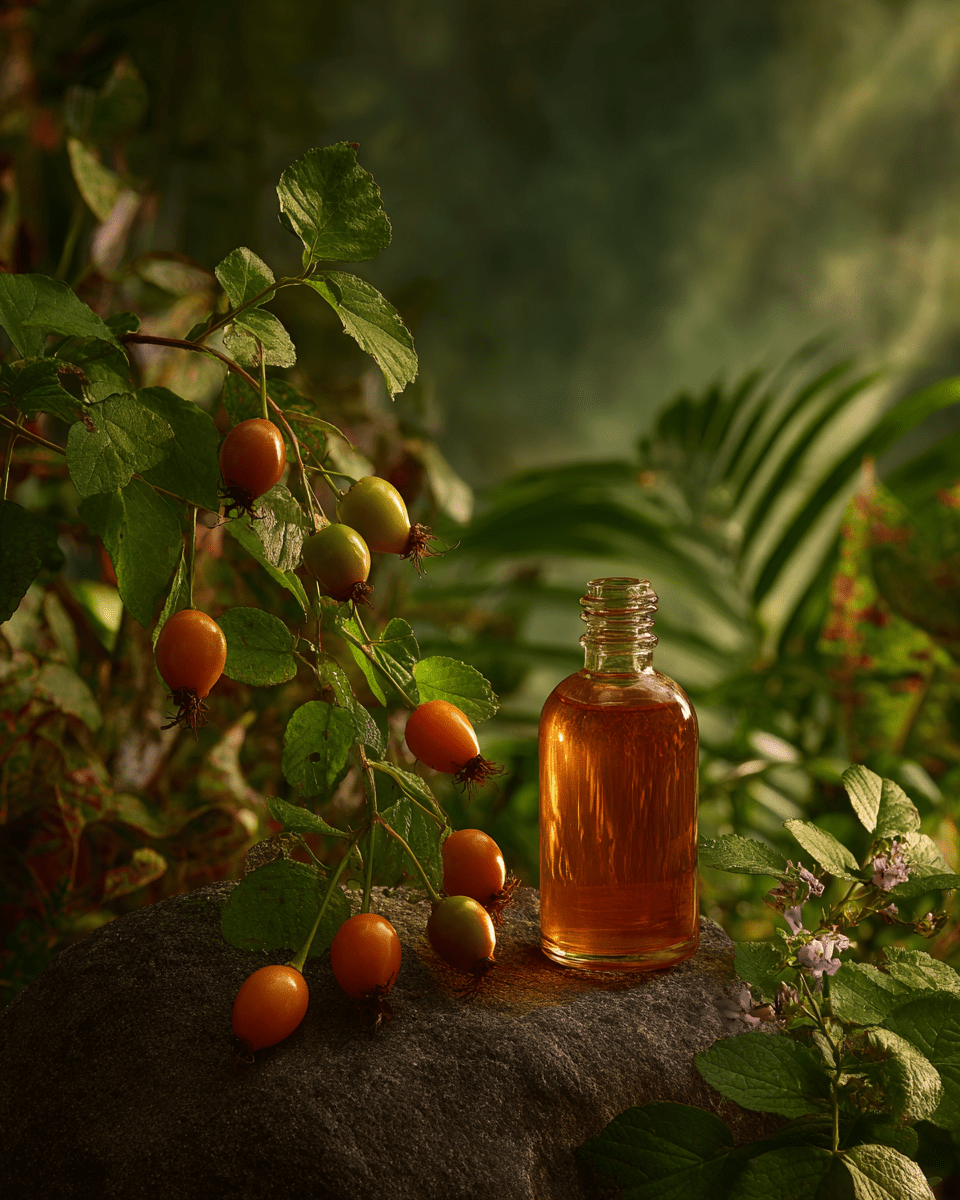
Prickly Pear Seed Oil (Opuntia ficus-indica) — The Nopal Life Star Ingredient
This is the founding active ingredient of Nopal Life, and its reputation in high-end natural cosmetics is well-deserved. Prickly pear seed oil has an exceptional lipid profile:
- Linoleic acid (omega-6): up to 60-65% — the most abundant fatty acid, valued for skin barrier comfort and the supple appearance of the skin. A supply of linoleic acid is often associated with skin comfort and its supple appearance.
- Oleic acid (omega-9): 20-25% — provides a nourishing and comforting sensation to the superficial layers of the skin.
- Tocopherol (vitamin E): among the highest documented content — a fat-soluble antioxidant valued for helping to preserve skin radiance and comfort against external aggressions.
- Plant sterols (beta-sitosterol, campesterol) — contribute to skin comfort and soothe the sensation of skin discomfort.
- Vitamin K — provides comforting care that contributes to the fresh and rested appearance of the skin.
Prickly pear seed oil is renowned for having one of the highest tocopherol contents among cosmetic vegetable oils. This richness in antioxidants makes it a choice active ingredient to support the skin against photoaging, the primary factor associated with the appearance of lost elasticity.
Plant Collagen and Related Active Ingredients
The term "collagen" in cosmetics deserves clarification. Animal or marine collagen applied topically remains on the surface due to the size of its molecules. However, certain cosmetic active ingredients are valued for supporting the firm and bouncy appearance of the skin. These include: peptides, certain plant extracts rich in polyphenols, and complexes formulated with amino acids.
Multi-molecular weight hyaluronic acid
Hyaluronic acid is naturally present in the skin where it is associated with a feeling of bounce and water retention. High molecular weight hyaluronic acid forms a moisturizing film on the surface, while low molecular weight hyaluronic acid provides a sensation of comfort. Multi-molecular weight formulations combine both for a visible appearance result from the first few weeks of use.
Plant antioxidants: tocopherol, resveratrol, polyphenols
Free radicals generated by exposure to UV, pollution and oxidative stress are associated with a dull complexion and tired-looking skin. Plant antioxidants are valued for helping to preserve skin radiance and comfort. Prickly pear seed oil, naturally rich in tocopherol, fits perfectly into this cosmetic logic.
To understand how these active ingredients specifically address the issue of the skin barrier and the apparent elasticity of dehydrated skin, consult our in-depth article on elasticity and the skin barrier.
Frequently Asked Questions about Skin Elasticity
Why does skin lose its elasticity?
Elastin and collagen, naturally present in the skin, renew less and less quickly with age — an evolution accentuated by UV, sugar, and tobacco. The good news: prevention works.
Can you really regain elasticity?
You can significantly improve its appearance: strict sun protection, suitable cosmetic active ingredients (peptides, vitamin C, bakuchiol) and regular massage can restore a bouncy appearance in a few months of consistency.
What natural active ingredients support elasticity?
Vitamin C, peptides, centella asiatica, and the antioxidants in prickly pear, which help preserve the skin's radiance and comfort against oxidative stress.
Does massage improve elasticity?
Yes: it provides a moment of relaxation and contributes to the toned and rested appearance of the skin. Five minutes of daily oil massage is a true ritual of comfort.
Does diet affect firmness?
A lot: sufficient protein, vitamin C, omega-3, and moderation with sugar, excess of which is often associated with a less supple skin appearance.
At what age should you worry about it?
The firm appearance of the skin begins to evolve silently from 25-30 years old. Prevention (SPF + antioxidants) starts then; firming cosmetic care takes over around 40 years old.
Read more
Information provided for cosmetic and educational purposes; it does not constitute medical advice.


Go further than this article
Get our skincare guides by email — and start with your free skin diagnostic: 2 minutes, advice tailored to your skin. We ship to the US, UK, Canada, Australia and 27 European countries; somewhere else? Sign up and you will be the first to know when we deliver to your country.
By signing up, you agree to our privacy policy. Unsubscribe in one click.