Ectoine: soothing and protection for reactive skin
Born in the planet's most hostile environments, Ectoine has become one of the most sought-after active ingredients for soothing and protecting reactive skin. This extraordinary molecule, produced by microorganisms that survive in salt deserts, offers sensitive skin a shield of comfort against daily aggressions. Let's take a closer look at an exceptional ingredient, perfectly in line with the NOPAL LIFE spirit.
What is Ectoine?
Ectoine is a natural molecule derived from microorganisms living in extreme environments — salt lakes, hot springs, deserts. To survive these conditions, these organisms produce Ectoine, which protects their cells from dehydration and aggression. In cosmetics, this molecule is reproduced through biotechnology, respecting the environment.
On the epidermis, this active ingredient acts like a true moisturizing coat. It surrounds itself with water molecules, forming a protective film that helps the epidermis retain its hydration and defend itself against external aggressors. This unique ability makes it a choice ingredient for sensitive and reactive skin.
It is an amino acid derivative, produced by bacteria living in extreme environments — salt lakes, deserts, hot springs. These organisms accumulate it to survive salt concentrations that would kill any other cell.
The described mechanism is physical rather than chemical. The molecule organizes a layer of water around itself that protects cellular structures from dehydration. This is called a stabilizing effect, and it is what attracted cosmetic formulation interest starting in the 1990s.
The Benefits of Ectoine for the Skin
This molecule stands out for its soothing, moisturizing, and protective action — a precious trio for skin that reacts at the drop of a hat.
Immediate soothing. It helps calm feelings of discomfort in reactive skin: tightness, temporary redness, sensations of overheating. It provides lasting comfort, particularly appreciated after exposure to external aggressors (cold, wind, pollution).
Long-lasting hydration. By retaining water on the surface of the epidermis, it maintains comfortable hydration throughout the day. The complexion remains supple, smooth, and rested, without any sensation of tightness.
Reinforcement of the skin barrier. It helps restore and protect the skin barrier, a natural shield often weakened in sensitive skin. A strengthened barrier means skin that is better equipped to face aggressions and less prone to reactions.
A useful vocabulary point. It is often read that this molecule hydrates; this is inaccurate in the strict sense. It does not provide water and does not retain any more than a classic humectant: it organizes the water that is already there, around the structures it protects.
The difference is seen in the duration. A humectant acts as long as it is present and stops upon rinsing. Here, the reported benefit comes from improved surface resistance to stress, which is appreciated over days rather than hours.
From a formulation perspective, this stability makes it an easy ingredient to integrate: wide pH range, compatible with most systems, no coloring or odor. These are prosaic qualities, and they explain its rapid diffusion in soothing ranges.
Ectoine and Reactive Skin: A Solution to Skin Stress
Reactive skin is skin that defends itself poorly: its barrier is weakened, and the slightest external factor can trigger redness and discomfort. Urban life, pollution, temperature variations, and daily stress put this skin to the test.
This ingredient offers a gentle and effective solution. By strengthening the skin's natural defenses and maintaining its hydration, it helps it better cope with these aggressions. It is a fundamental active ingredient to be integrated into a daily soothing routine, morning and evening. NOPAL LIFE cares designed for sensitive skin prioritize this approach: protect and soothe rather than aggress.
Ectoine and Urban Life: Protecting Your Skin Daily
City life puts skin to the test. Pollution, fine particles, temperature differences between outside and air-conditioned spaces, screen light: all factors that weaken the skin barrier and promote redness and discomfort. Sensitive and reactive skin is particularly exposed to this.
This is precisely where this active ingredient reveals its full potential. By forming a protective film and maintaining hydration, it helps calm the complexion and limit the impact of these external aggressions. Its light, pleasant texture, morning and evening, makes it an easy treatment to integrate: a few drops of serum or a dab of soothing cream are enough. For dry skin as well as reactive combination skin, these products provide immediate comfort without feeling heavy.
Combined with good sun protection in the morning and treatments adapted to each profile, ectoine is part of a global protection routine. The objective: to help the skin better cope with urban life, by strengthening its natural defenses rather than multiplying aggressive active ingredients. A gentle and protective approach, true to the spirit of NOPAL LIFE skincare for sensitive skin.
The concentrations used in cosmetics are most often between 0.5 and 2%. Beyond that, the data do not show a proportional improvement, and the cost of the raw material makes excessive increases hardly justifiable.
The topical application of ectoine is part of a logic of protection against daily oxidative stress rather than correction. For skin subjected to pollution and temperature differences, the interest lies in this regularity: it accompanies, it does not repair.
A word on scope: for atopic conditions, only a doctor is qualified to judge what is appropriate. Cosmetics complement comfort, never replace it.
For Which Skin Types?
Ectoine is particularly suitable:
— for sensitive and reactive skin, prone to redness and discomfort;
— for skin exposed to external aggressors (pollution, cold, air conditioning);
— for dehydrated skin, seeking lasting comfort;
— for skin weakened by powerful active ingredients (acids, retinol), which it helps to soothe.
It is found in soothing creams, serums, and facial moisturizers, often combined with other comfort-enhancing active ingredients.
Three profiles benefit the most. Reactive skin, whose tolerance threshold has decreased. Skin exposed to a demanding environment — city, airplane, air-conditioned office. And skin in the process of incorporating a strong active ingredient, where the barrier is temporarily more permeable.
For others, the interest exists but remains marginal. Skin that is doing well does not need to be stabilized: it already is. It is an ingredient for specific circumstances rather than a fundamental one, and recognizing this avoids paying for a benefit that will not be perceived.
A Molecule Born from Extremes
The story of this active ingredient begins in places where almost nothing survives: salt marshes, geothermal springs, arid desert expanses. Microorganisms called halophiles thrive there despite salt, heat, and dehydration. Their secret? A molecular survival strategy of remarkable elegance, which biotechnology research has been able to observe and then reproduce identically.
This singular origin now attracts responsible cosmetics. Rather than harvesting a rare natural resource, these microorganisms are cultivated in the laboratory under controlled and sustainable conditions. The result is a pure, traceable, and environmentally friendly ingredient — values that resonate with NOPAL LIFE's commitment to demanding yet conscious beauty. From the resilience of life comes a precious treatment, true to the idea that nature offers the best solutions, provided we observe it with humility.
It was first described in 1985, in a bacterium sampled from a soda lake in the Egyptian desert. Its name comes from Ectothiorhodospira halochloris, the organism from which it was isolated. Three decades separated this discovery from its arrival in formulations.
Its industrial production today relies on a curious process: bacteria are cultivated in a very salty environment, they produce the molecule to protect themselves, then the salinity is lowered and they release it. It is harvested, the salt is increased again, and the cycle restarts.
This method explains the cost of the raw material. It also explains its purity: the product obtained does not require a chemical synthesis step, which is of interest to formulators looking for short lists.
How to Incorporate Ectoine into Your Soothing Routine
Here are some tips to enjoy its benefits:
Step 1 — Gentle Cleansing. A gentle, soap-free cleanser that respects the skin barrier.
Step 2 — Soothing Serum. Apply an ectoine serum to clean skin, morning and evening, focusing on reactive areas.
Step 3 — Moisturizing Cream. Seal in hydration with a soothing cream adapted to your skin type.
Step 4 — Morning Protection. Finish with sun protection, essential for sensitive skin.
For maximum comforting effect, ectoine ideally combines with hyaluronic acid (hydration), centella asiatica, or colloidal oatmeal (soothing).
Its place in the routine poses no difficulty: aqueous phase, after cleansing, before any oily substance. The molecule is perfectly soluble in water and combines without known incompatibility with common active ingredients.
Two applications per day are better than a double dose once. Regularity matters more than quantity, as with most ingredients whose action is physical rather than biological.
For skin that has been uncomfortable for months, do not expect a complete turnaround. What is observed is a gradual gain in tolerance, measurable by the ability to tolerate again what was bothering it — cold, wind, a slightly more active cleanser.
Ectoine and NOPAL LIFE Philosophy
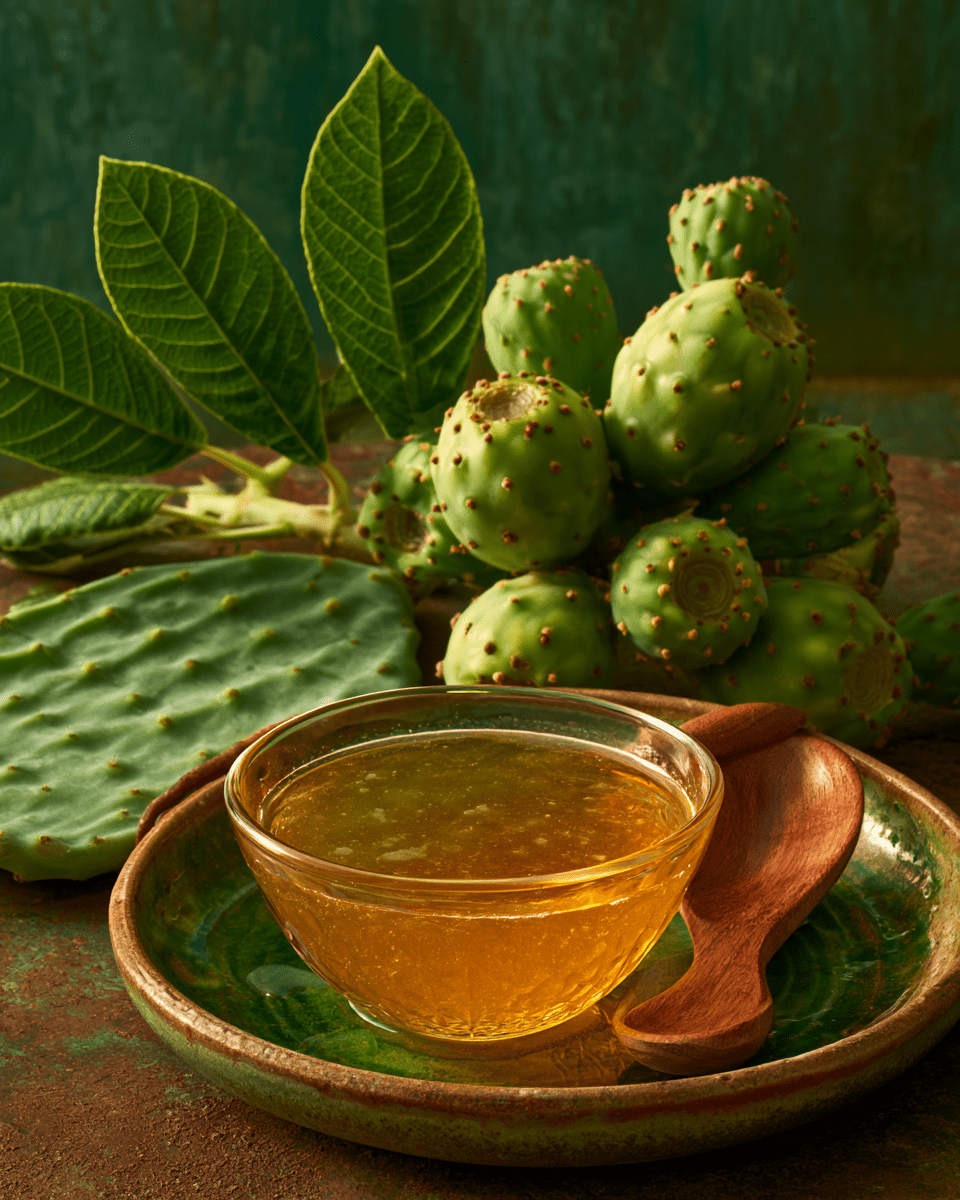
This ingredient embodies an idea dear to NOPAL LIFE: the most precious ingredients often emerge from the most extreme conditions. Like the prickly pear, this desert cactus that transforms aridity into richness for the skin, ectoine draws its strength from resilience. Cosmetics inspired by nature, designed to comfort the most sensitive skin.
The comparison with the prickly pear is not fortuitous. In both cases, it is an organism that has solved a survival problem in a hostile environment, and whose solution is borrowed. The cactus stores and conserves; the bacterium stabilizes and resists salt.
This logic of living under constraint provides raw materials whose interest is not based on a marketing promise but on a biological necessity. It is a selection criterion like any other, and it has the advantage of being verifiable.
Frequently Asked Questions about Ectoine
Is ectoine suitable for very sensitive skin?
Yes, that's one of its strengths. Its gentleness and soothing action make it a choice active ingredient for reactive skin, even the most delicate.
Can it be used every day?
Absolutely. Ectoine is well-tolerated and can be integrated into a daily routine, morning and evening, to maintain skin comfort.
Is ectoine of natural origin?
It reproduces a natural molecule produced by microorganisms. In cosmetics, it is obtained through biotechnology, an environmentally friendly method.
What active ingredients can ectoine be combined with?
Hyaluronic acid for hydration, centella asiatica, colloidal oatmeal, or beta-glucan for soothing: all allies for reactive skin.
Can it be combined with retinol? Yes, and it is even one of its most relevant uses. Applied beforehand, it supports the initial phase where the skin is most sensitive. Simply separate the two layers by one minute.
Is it suitable during pregnancy? No contraindications are documented for external use, but the question should be posed to a healthcare professional rather than a advice page.
How long before judging? Four to six weeks. The gain relates to tolerance, which is measured by what one becomes capable of tolerating again — cold, wind, a slightly more active cleanser — and this is not seen from one week to the next.
In Summary
Ectoine is an exceptional soothing and protective active ingredient for sensitive and reactive skin. By strengthening the skin barrier and maintaining hydration, it helps the epidermis better resist daily aggressions. A resilient ingredient, reflecting the nature that inspires NOPAL LIFE.
To learn more:
- Aloe vera: hydration & soothing
- Colloidal oatmeal: comfort for sensitive skin
- Beta-glucan: soothing & deep hydration
- Centella asiatica: barrier & reactive skin
- Chamomile: softness & soothing
- Calendula: soothing for delicate skin
- Take my free skin diagnostic (Skin Intelligence™)
Information provided for cosmetic and educational purposes; it does not constitute medical advice.
One last remark about the price. This raw material is among the most expensive in the soothing category, which explains why it is rarely found above 2% and never in the first lines of a list of inexpensive ingredients. A formula that announces it prominently deserves further investigation.
That said, the necessary quantity is small, and the cost per application remains modest. This is one of those cases where the price of the bottle provides poor information about the price of use.


Go further than this article
Get our skincare guides by email — and start with your free skin diagnostic: 2 minutes, advice tailored to your skin. We ship to the US, UK, Canada, Australia and 27 European countries; somewhere else? Sign up and you will be the first to know when we deliver to your country.
By signing up, you agree to our privacy policy. Unsubscribe in one click.