Chamomile: complete guide Nopal Life
Behind every beautiful ingredient, there's a botanical story and precise uses. This guide dedicated to Chamomile gives you the essentials: what it is, for which skin types, how to use it — and what to combine it with in a NOPAL LIFE routine.
What is Chamomile? Botanical Definition and Forms Used in Cosmetics
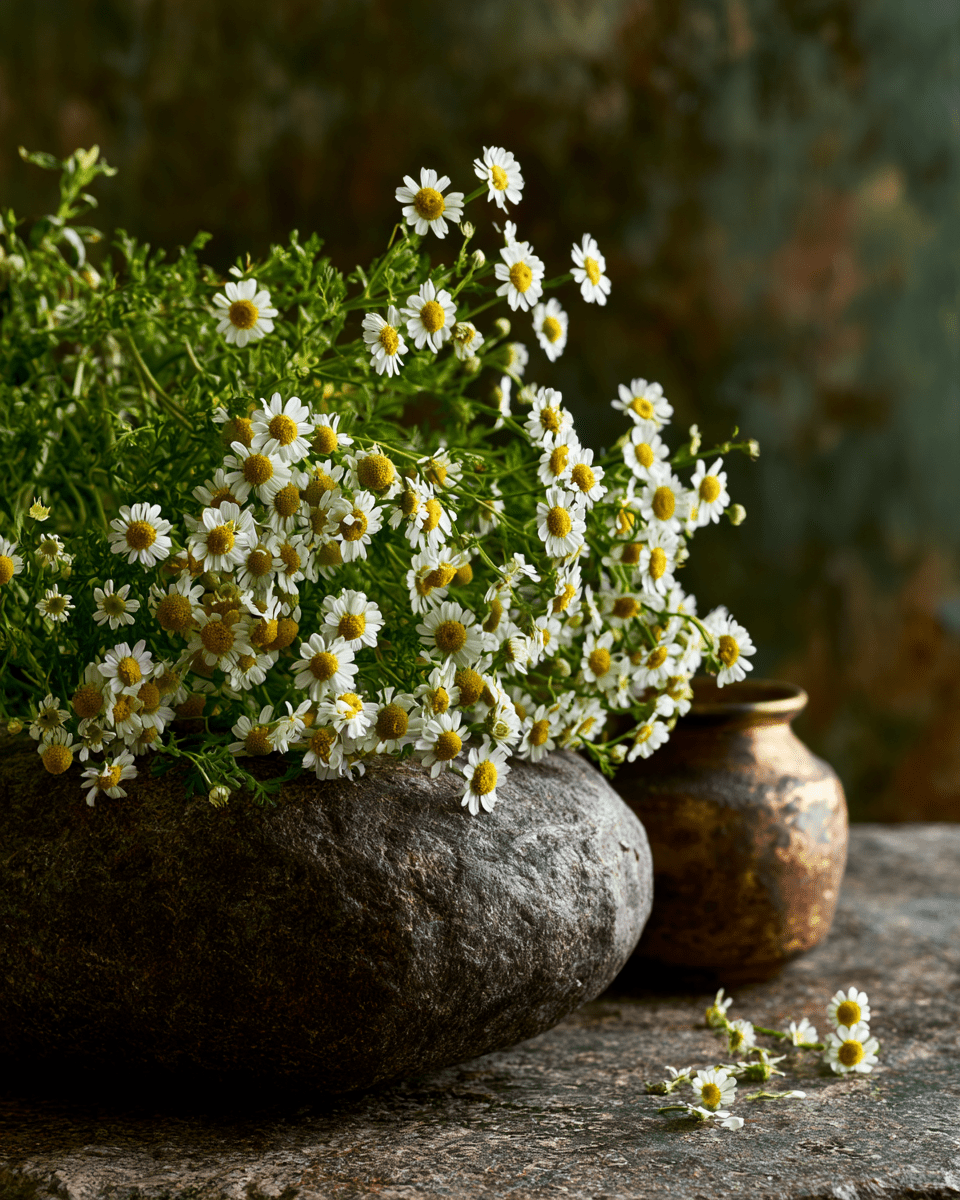
Chamomile is one of the oldest botanical plants used by humanity, both in care traditions and in cosmetology. Its history dates back to ancient Egypt, where it was dedicated to the sun and used in ointments for its soothing properties. Today, it holds a prominent place in modern cosmetics, especially in formulas dedicated to sensitive, reactive, and redness-prone skin.
In cosmetics, two main species are exploited. Matricaria chamomilla (or German chamomile, true chamomile) is the most widely used in cosmetics. Its essential oil, obtained by steam distillation of the flower heads, is characterized by its deep blue color due to the presence of azulene — a terpene compound renowned for its soothing properties, which forms during the distillation process. Anthemis nobilis (Roman chamomile) is more commonly used in aromatherapy and perfumery but also has a soothing reputation, with a softer and fruitier scent.
Beyond essential oil, chamomile is also incorporated into cosmetic formulas as aqueous or hydroglycerin extracts rich in bisabolol and apigenin. Bisabolol is a sesquiterpene alcohol naturally present in the plant, valued for its soothing properties and comfortable feel. Apigenin is a flavonoid known for its antioxidant qualities and comfort. These two molecules form the core of chamomile's cosmetic interest and are frequently studied.
Properties of Chamomile in Skincare
Chamomile's benefits for the skin are multiple and complementary. Its most appreciated quality is its soothing effect: bisabolol helps provide visible comfort to reactive skin. This results in a more uniform appearance, a visible reduction in redness and discomfort sensations characteristic of reactive skin or skin exposed to external aggressions. Azulene, on the other hand, is traditionally valued in formulas for reactive or uncomfortable skin.
Chamomile is also valued for its antioxidant quality thanks to its flavonoids — apigenin, luteolin, quercetin — which help protect the skin from daily external aggressions. This antioxidant quality is particularly valuable in brightening and visible firmness formulas for sensitive skin, which may not tolerate more aggressive active ingredients like high-concentration retinols or AHAs. Chamomile thus offers gentle protection against environmental oxidative stress.
Chamomile helps preserve the comfort of skin that easily feels uncomfortable. By supporting skin comfort, it helps maintain the skin's supple and hydrated appearance — a valuable point for sensitive skin that can easily appear reactive.
How to Integrate Chamomile into Your Beauty Routine
Chamomile is a remarkably versatile active ingredient that adapts to all moments of a cosmetic routine. In the morning, a chamomile tonic or floral water applied after cleansing prepares the skin by calming it and helping to reduce the appearance of morning redness (often related to pillow friction or temperature changes). In the evening, serums or night creams rich in chamomile extract and bisabolol allow you to take advantage of the nighttime to soothe and provide comfort to the skin.
In terms of galenics, chamomile comes in many forms: floral waters (hydrolats), extracts in serums and creams, enriched vegetable oils, soothing masks, and essential oils for professional diluted use. For daily facial care, aqueous or hydroglycerin extracts of Matricaria chamomilla at 0.5-2% offer an excellent comfort and tolerance profile. Essential oil should always be diluted (maximum 1-2% in a vegetable oil) and is not recommended pure on the face, especially on very reactive skin.
Chamomile pairs particularly well with complementary soothing active ingredients: allantoin, panthenol (provitamin B5), niacinamide, and hyaluronic acid (moisturizer). These combinations are found in the best soothing formulas on the market. To further personalize your routine, our complete skin guide accompanies you according to your skin type.
Mistakes to Avoid with Chamomile
The first mistake is to believe that chamomile is completely allergen-free. While it is generally very well tolerated, Matricaria chamomilla can occasionally cause contact reactions in individuals hypersensitive to Asteraceae (a botanical family that also includes arnica, calendula, echinacea). If you are reactive to any of these plants, test any product containing chamomile on the crook of your elbow for 48 hours before facial application.
The second mistake is to confuse chamomile hydrolat and essential oil in homemade formulas. German chamomile essential oil is extremely concentrated and should never be applied neat — it could paradoxically cause significant discomfort, contrary to the desired soothing effect. Always dilute it in a suitable vegetable oil, at a rate of a maximum of 2 drops per 10 ml of carrier oil.
Third common mistake: using chamomile alone as the sole solution for persistent redness.
Fourth mistake: storing chamomile-based products in unsuitable conditions. Chamomile extracts, rich in phenolic compounds, can oxidize and lose their qualities if exposed to light or high temperatures. Opt for opaque packaging, store your products away from heat, and respect the opening dates indicated by the manufacturer.
Chamomile and Specific Skin Types
Chamomile is par excellence the active ingredient for sensitive and reactive skin. These skin types, characterized by an easily uncomfortable appearance and increased reactivity to environmental stimuli and active ingredients, find in chamomile an ally of choice. Its direct, gentle soothing effect helps provide comfort while helping to preserve the skin's supple appearance — a virtuous cycle appreciated for this skin type.
Oily skin prone to imperfections also benefits from chamomile due to its soothing effect on areas marked after imperfections and its gentleness, which does not add additional discomfort.
Combined with niacinamide in soothing formulas, chamomile creates a particularly appreciated combination for skin whose appearance is easily uncomfortable: niacinamide is known to help preserve skin comfort, while chamomile provides a soothing sensation. To determine if your skin is truly sensitive or if another condition explains your reactions, consult our Nopal Life Skin Intelligence™ diagnostic.
Chamomile in Nopal Life Formulas
The integration of chamomile into Nopal Life formulations responds to a logic of complementarity with the brand's signature active ingredients. Prickly pear seed oil is naturally rich in essential fatty acids (linoleic acid, oleic acid) and vitamin E, two components valued for skin comfort and suppleness. Combined with chamomile extracts, it creates a doubly soothing formula: the oil nourishes and provides comfort, while chamomile provides a soothing sensation.
This association is particularly valuable for sensitive skin in the Maghreb and Mediterranean basin, which often combine climatic sensitivity (intense sun exposure, hot wind, temperature variations) and reactivity to active ingredients. Our formulations aim to respect the skin's natural balance while providing it with comfort support. All Nopal Life facial care products are designed with this perspective of gentleness and respect, particularly suitable for sensitive skin seeking lasting soothing.
Frequently Asked Questions
Dermatological advice remains essential for appropriate care, with chamomile serving as a complementary comfort treatment.
Q: Can chamomile be used on the eyes to reduce the appearance of puffiness or dark circles?
A: Applying compresses of chilled chamomile hydrolat to closed eyes is a traditional practice valued for reducing the appearance of swelling and providing comfort to tired eyes. For vascular dark circles (purplish), the effect on appearance is limited, but the decongestant sensation is appreciated. Pigmented dark circles require specific active ingredients (vitamin C, retinol, caffeine).
Q: Is chamomile suitable for black and mixed-race skin?
A: Absolutely. Black and mixed-race skin can also present sensitivity and skin reactivity, and benefit from the soothing properties of chamomile. These skin types are often prone to residual marks; by helping to soothe, chamomile supports skin comfort and contributes to maintaining a uniform complexion.
Q: How can I distinguish a product with real chamomile from a simple chamomile fragrance?
A: Read the INCI list on the packaging. Real chamomile appears under the names "Matricaria Recutita (Chamomile) Flower Extract", "Chamomilla Recutita Flower Water", or "Bisabolol". If you only see "parfum" or "fragrance" without these terms, the product only contains chamomile scent, without the plant extracts.
Q: Can chamomile be used on skin with active blemishes?
A: Yes, and it's even recommended. It doesn't clog pores or add shine, making it a very suitable active ingredient for caring for oily skin prone to blemishes that want to bring comfort to their skin without accentuating discomfort.
Q: What is the difference between natural bisabolol and synthetic bisabolol?
A: Natural bisabolol (alpha-bisabolol) is extracted from chamomile or Candeia wood (Eremanthus erythropappus). Synthetic bisabolol has the same molecular profile and equivalent skin tolerance. Both forms have similar soothing qualities. The mention "natural bisabolol" or "alpha-bisabolol" in the INCI list indicates the natural form.
Read more
Information provided for cosmetic and educational purposes; it does not constitute medical advice.


Go further than this article
Get our skincare guides by email — and start with your free skin diagnostic: 2 minutes, advice tailored to your skin. We ship to the US, UK, Canada, Australia and 27 European countries; somewhere else? Sign up and you will be the first to know when we deliver to your country.
By signing up, you agree to our privacy policy. Unsubscribe in one click.