Natural betaine trimethylglycine from beetroot: osmoprotection, water clusters, and dry, mature skin
Natural betaine — or trimethylglycine (TMG), with the formula N,N,N-trimethylglycine — is one of the most underrated cosmetic active ingredients, yet it is among the best-known humectants in cosmetic research. Primarily extracted from sugar beet (Beta vulgaris), this small zwitterionic molecule has a dual particularity: it helps preserve the comfort of the skin's aqueous layers, and it forms organized water clusters in the skin that help maintain long-lasting hydration. Far from being a simple texture agent, betaine acts where the skin needs it most — at the aqueous layers — without causing the discomfort characteristic of classic polyols like propylene glycol.
For dry and mature skin, which sees its natural water retention capacity decrease with age, betaine represents a choice based on solid cosmetic experience. This article explores its properties, comparative advantages, and optimal integration into a daily routine.
What is natural betaine and where does it come from?
Betaine gets its name from sugar beet (Beta vulgaris) from which it is industrially isolated by crystallization of mother liquors from sucrose production. In the plant, it acts as an osmoprotectant: during periods of drought or salt stress, it accumulates in plant cells to balance osmotic pressure without interfering with normal metabolism. This mechanism, known as the "compatible solute strategy", is well-known in plant and marine biology before being applied to cosmetology.
Chemically, betaine is a quaternary amino acid (zwitterion) — which gives it remarkable electrical neutrality. Unlike glycerol or propylene glycol, it does not alter the activity of skin electrolytes: it does not cause salt release in formulations, meaning it can coexist with salts, minerals, and mild surfactants without destabilizing the emulsion or the appearance of the skin barrier.
Secondary plant sources include sugarcane, wheat, and some algae. The cosmetic purity obtained by aqueous extraction generally exceeds 98%, classifying it as a "natural" ingredient according to ISO 16128 standards.
Humectant mechanism: the formation of water clusters
Betaine's mode of action in the skin goes far beyond the simple "attracts water" associated with classic humectants. Betaine is observed to form organized supramolecular structures — water clusters or aggregates — thanks to its trimethylammonium and carboxylate groups which simultaneously create high and low energy hydrogen bonds.
Specifically, each betaine molecule can coordinate between 6 and 8 water molecules in a stable three-dimensional architecture. This organization helps slow down water evaporation on the surface, even in low relative humidity (RH < 40%) conditions, where glycerol or low molecular weight hyaluronic acid lose some of their comfort.
Cosmetic research suggests an improvement in the flexibility of the stratum corneum — i.e., the stratum corneum itself — after repeated application of betaine for several weeks. The skin regains a plasticity that results in a reduction in the appearance of dehydration fine lines and an improvement in skin texture perceptible to the touch.
This clustering mechanism is particularly valuable for mature skin, where the decrease in NMF (Natural Moisturizing Factor) and the slowing of natural corneocyte renewal weaken the intrinsic water retention capacity. Betaine helps supplement this deficit without overloading the skin with aggressive humectants.
Betaine vs. classic polyols: why it's better tolerated
Propylene glycol has been the reference humectant for decades in cosmetic formulation — and also one of the most frequently reported ingredients causing contact discomfort. Its potential discomfort is linked to its ability to disrupt intercellular lipids and promote the penetration of other molecules.
Betaine, structurally different, does not interact with lipid bilayers in the same way. Its net zero charge (zwitterion) allows it to insert into the aqueous layers of the stratum corneum without destabilizing ceramides or free fatty acids. A very gentle tolerance profile is observed on sensitive and reactive skin. For formulations intended for dry and reactive skin, this is a decisive advantage.
Compared to sorbitol or mannitol (other common polyols), betaine also offers better thermal stability and lower surface hygroscopicity — it does not "stick" to the skin and does not leave an unpleasant residual film, even at high concentrations (5-8%).
Stratum corneum flexibility and skin comfort
One of the most telling indicators of skin hydration is the skin's ability to deform and return to its original state. Dehydrated skin appears stiff, resulting in "cardboard-like," dull, and less plump skin.
Cosmetic research suggests that moisturizing formulas containing betaine, used by women with mild to moderate dry skin, provide an improvement in stratum corneum flexibility parameters and a reduction in surface water loss after several weeks of regular application compared to formulas without betaine. Thus, betaine acts not only on surface water but also helps improve the mechanical properties of the stratum corneum in appearance.
A synergy between betaine and high molecular weight hyaluronic acid is also observed: the two humectants operate at different levels of the stratum corneum (betaine = deep layers via osmoprotection; HA = superficial layers via aqueous film), creating a "double reservoir" effect particularly effective for mature skin with chronic dehydration.
Protocol: betaine + vitamin C serum for mature dry skin
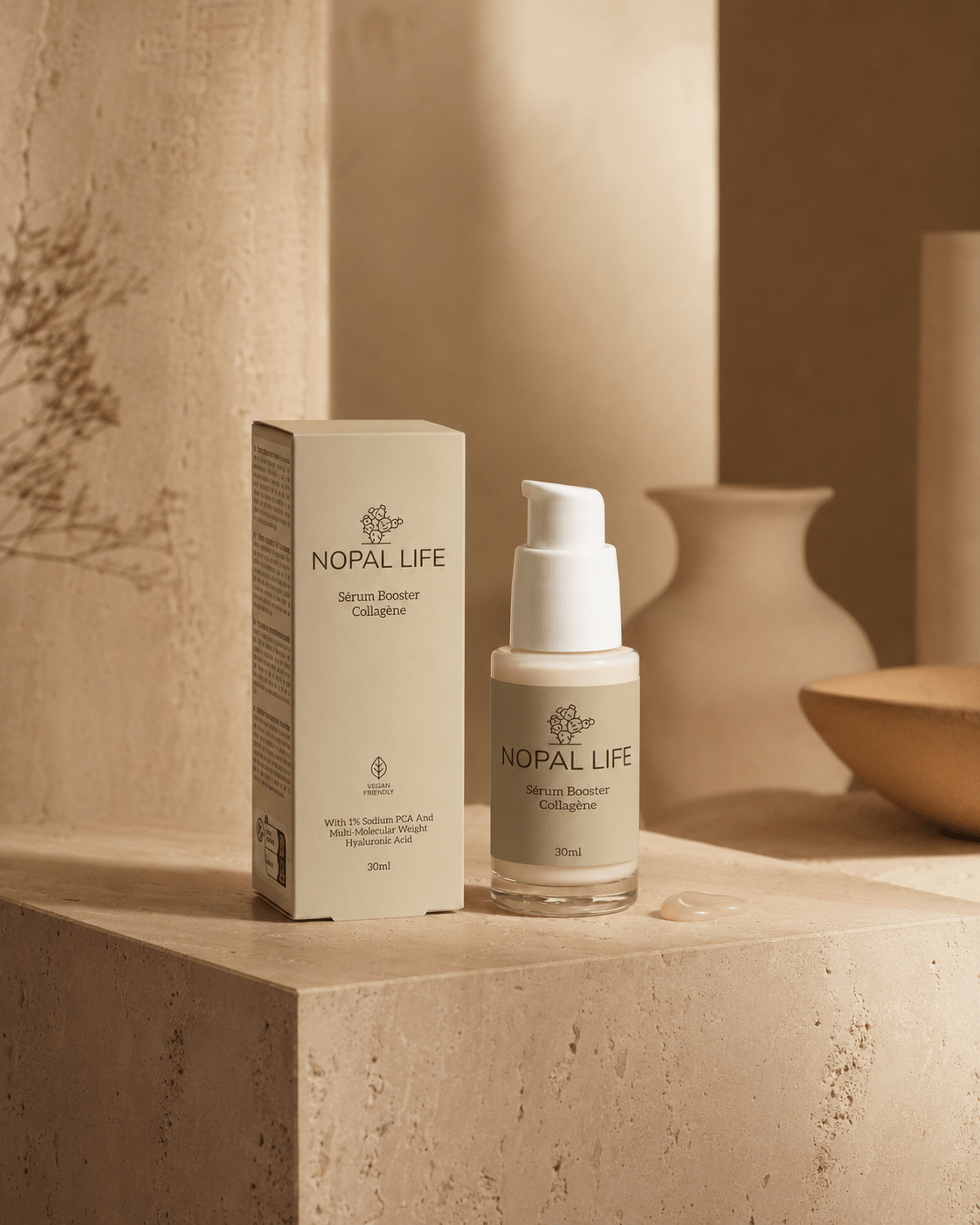
The combination of betaine + vitamin C forms one of the most rational synergies in active cosmetology. Vitamin C (L-ascorbic acid or stabilized derivatives) is an antioxidant agent that helps revive radiance and even out skin tone, and whose penetration and stability are strongly influenced by the skin's hydration state. A well-hydrated stratum corneum = better bioavailability of fat-soluble and water-soluble active ingredients.
Betaine contributes in two ways here: it maintains an organized aqueous environment that promotes the diffusion of vitamin C to the superficial layers of the epidermis, and it buffers local pH variations that can degrade unstable forms of vitamin C. For mature dry skin that presents both a complexion marked by spots and a loss of apparent firmness, this duo helps address several issues simultaneously.
To integrate betaine into your routine:
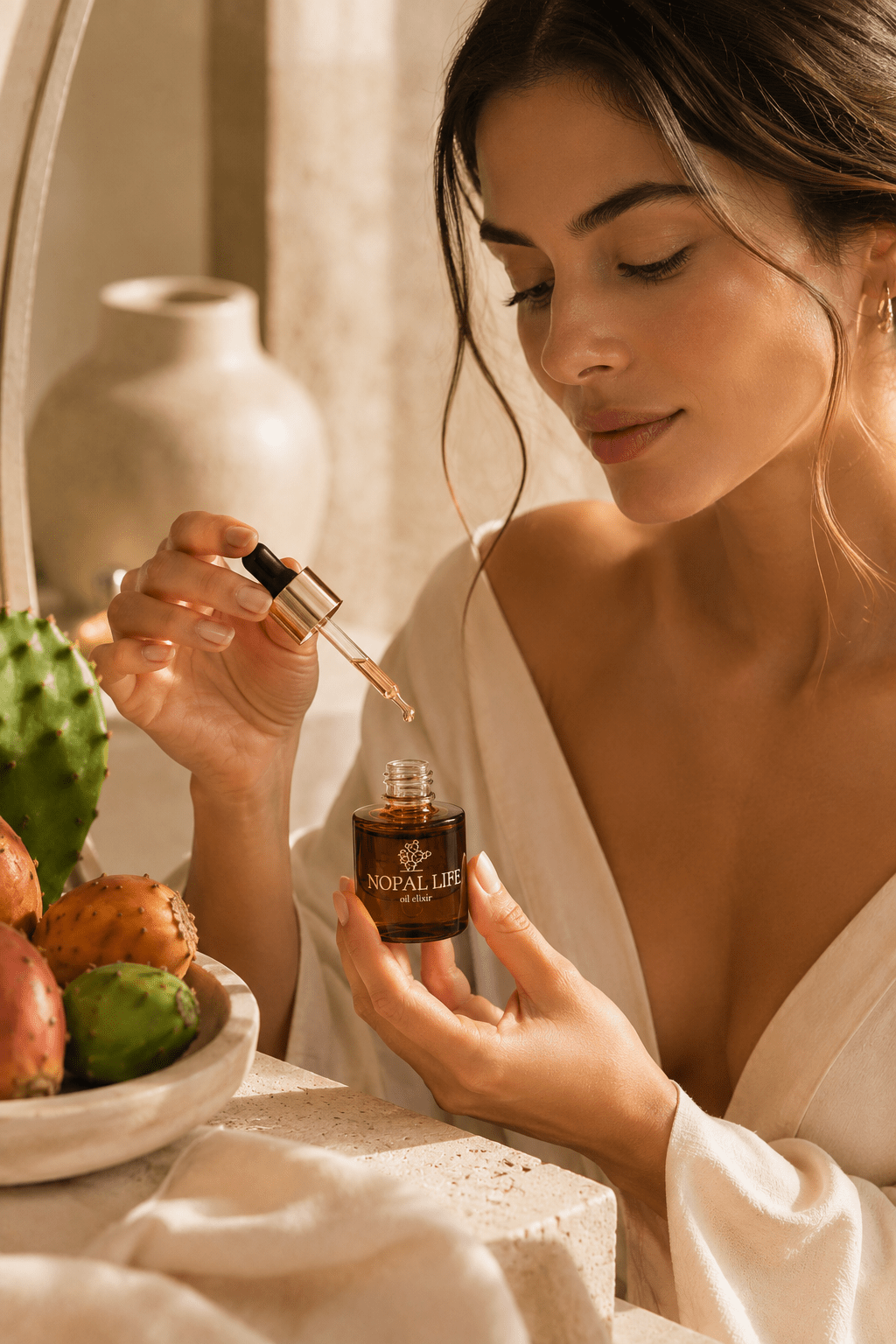
- Morning: gentle cleanser → vitamin C serum formulated with betaine → SPF 30+ cream → light oil as a final seal (a few drops of prickly pear seed oil are enough to seal in the active ingredients)
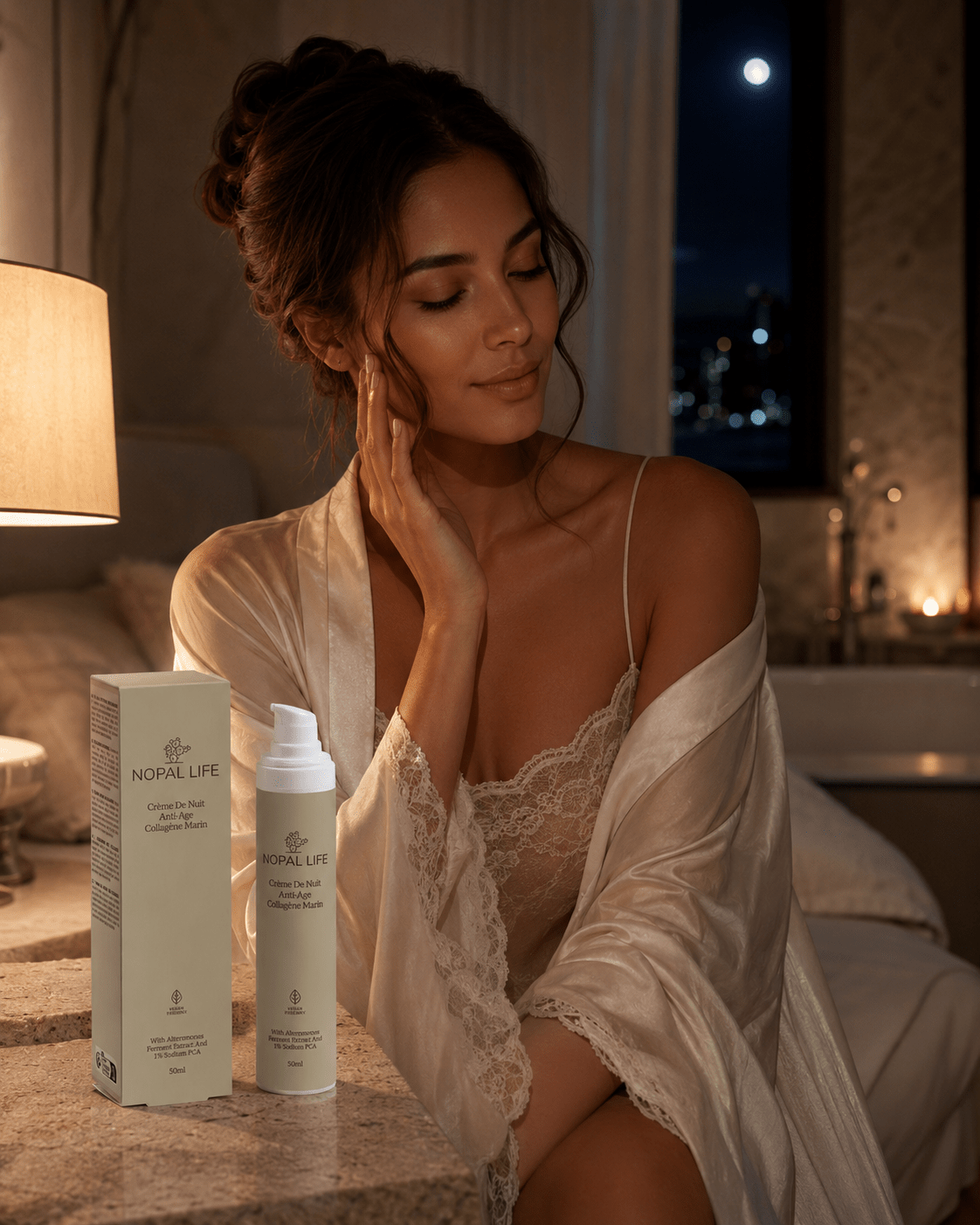
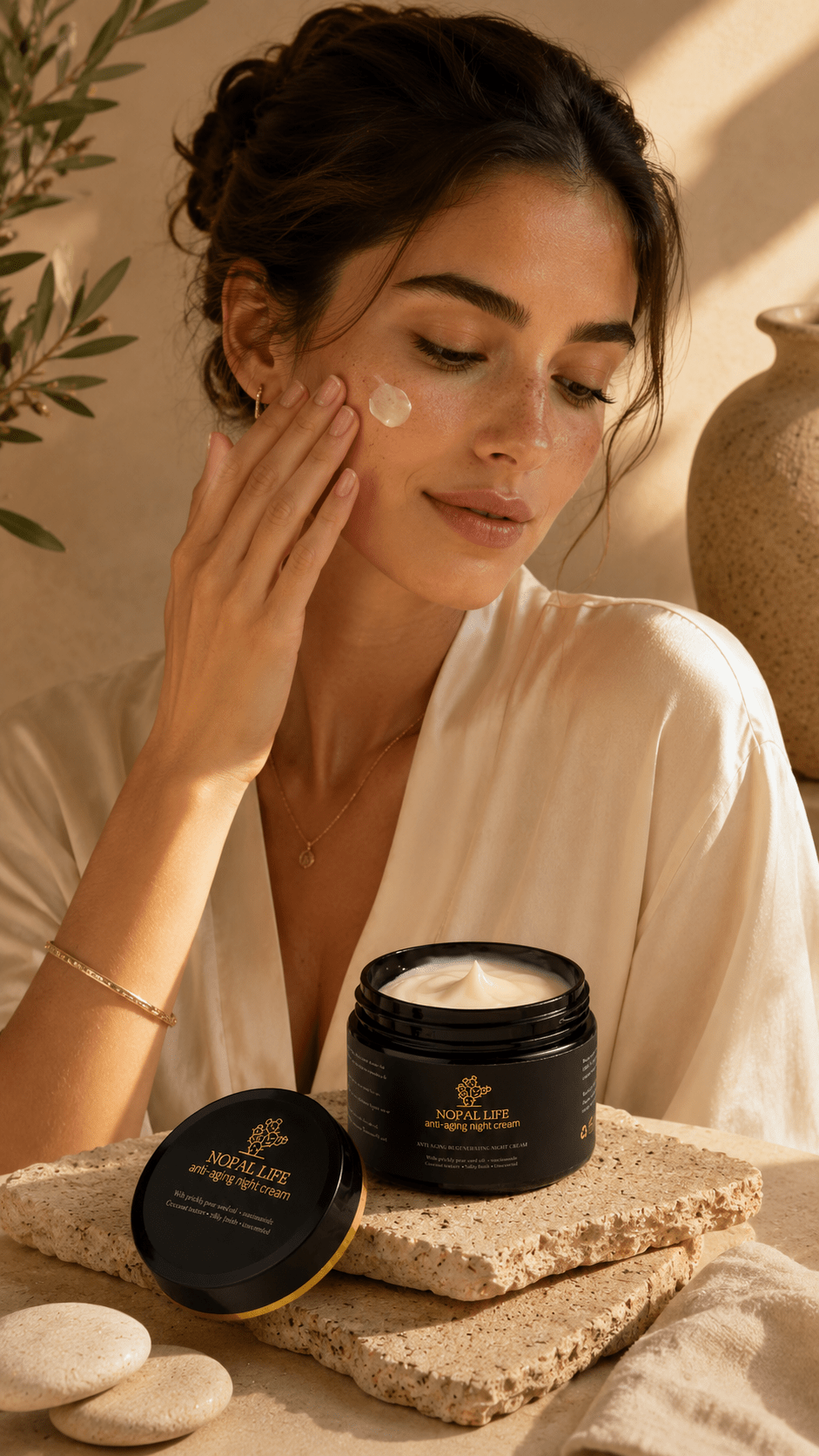
- Evening: double cleansing → betaine humectant serum → rich fatty acid night cream → prickly pear seed oil as a "sleeping oil" (2-3 drops on slightly damp skin)
Prickly pear seed oil (Opuntia ficus-indica) is particularly suitable for this protocol: its richness in linoleic acid (60-70%) and tocopherols (the highest known content among vegetable oils) makes it the ideal partner to lock in the hydration provided by betaine. It helps to simultaneously comfort the lipid barrier without clogging pores, even on combination to dry skin. You can find complete routines adapted to each Nopal Life Skin Intelligence™ or in our dry and mature skin guides.
Mistakes to avoid with natural betaine
1. Applying it to completely dry skin. Betaine is a humectant — it needs a water source to form its clusters. On completely anhydrous skin, it can produce the opposite effect by drawing water from the deep layers. Always apply betaine serum or treatment to slightly damp skin (just after rinsing cleanser, patted dry without rubbing).
2. Confusing betaine with cocamidopropyl betaine. These two molecules have nothing in common except the root "betaine". Cocamidopropyl betaine is an amphoteric surfactant derived from coconut oil, used in shampoos and cleansing gels. Trimethylglycine is a pure humectant active ingredient. Always check the full INCI name on your product.
3. Neglecting occlusive sealing. Betaine retains water but does not create an occlusive film. Without a protective layer (cream, vegetable oil), the fixed water can evaporate in dry environments (air-conditioned office, airplane). Always finish your routine with a fatty substance or a barrier cream.
4. Under-dosing. Betaine is effective from 3% in finished formulations. Products containing trace amounts (< 1%) will not produce a noticeable effect on suppleness. Prefer formulas where betaine appears within the first 5 ingredients of the INCI list.
5. Ignoring compatibility with AHAs/BHAs. At acidic pH (< 3.5), betaine can lose its zwitterionic charge and its humectant comfort decreases. If you use an acid peel, separate the application by at least 20 minutes or reserve betaine for evening care after a morning peel.
Find our complete tips for radiance and comfort, radiance and evenness, and explore our humectant and moisturizer collection for effectively dosed formulas.
Conclusion
Extracted from beetroot, natural betaine helps attract and retain water in dry and mature skin. As an osmoprotectant, it soothes and comforts the skin barrier's appearance. Its high tolerance makes it valuable. Integrated into the routine, betaine leaves skin supple, soothed, and comfortably hydrated.
Frequently asked questions about natural betaine
Q: Is natural betaine suitable for oily skin?
A: Yes. Betaine is non-comedogenic and helps mattify the appearance without being greasy. Dehydrated oily skin (a common combination) particularly benefits from its humectant action. It is also found in many mattifying formulas as a hydration compensator.
Q: Can betaine be used during pregnancy?
A: Topical betaine is well tolerated and no particular contraindication for topical use during pregnancy or breastfeeding has been reported. Its natural presence in food (beets, spinach) reinforces this tolerance profile. If in doubt, consult your healthcare professional.
Q: What is the difference between betaine and hyaluronic acid?
A: Both are humectants but act differently. Hyaluronic acid (especially high molecular weight HA) forms a hydrated film on the surface and has low penetration. Betaine penetrates the stratum corneum and acts on the osmoprotection of the aqueous layers. When combined, they create a "double reservoir" of hydration particularly effective for mature skin.
Q: How often should a betaine product be used?
A: Daily, morning and evening. The humectant effect of betaine is cumulative: the most noticeable benefits are generally observed after three to four weeks of regular use. It is a fundamental active ingredient, not an occasional "instant glow" treatment.
Q: Can betaine completely replace glycerol?
A: No, they are complementary. Glycerol remains the best-known humectant and its cost/effectiveness ratio is unbeatable. Betaine provides an osmoprotective dimension and better tolerance for sensitive skin that glycerol does not cover. The combination of 3-5% betaine + 3-5% glycerol is the reference formula for dry mature skin care.
Q: Where can natural betaine be found in INCI lists?
A: It appears under the INCI name Betaine (without further specification). Do not confuse it with Cocamidopropyl Betaine (surfactant) or Lauryl Betaine (surfactant). Simply look for "Betaine" alone in the list.
Q: Is betaine effective in winter, in cold and dry weather?
A: This is precisely where it excels. Unlike glycerol, which can become less effective when relative humidity drops below 30%, betaine maintains its humectant action thanks to pre-formed water clusters that are less dependent on ambient humidity. A major asset for skin that suffers in winter and in air-conditioned environments. Discover all our articles dedicated to natural betaine in the Skin Guide.
Your dry skin deserves a serum formulated with betaine and vitamin C
Effectively dosed, tested on sensitive skin, without propylene glycol.
Natural betaine is a recognized and appreciated humectant in cosmetics for its comfort and gentleness on dry and mature skin.
This information is provided for educational purposes and does not replace the advice of a healthcare professional.
Why choose Nopal Life for mature skin
Caring for mature skin requires active ingredients whose tolerance and comfort are appreciated in cosmetics. Nopal Life prickly pear seed oil, rich in essential omega-6 and omega-9 fatty acids, vitamin E, and plant sterols, acts on the suppleness and appearance of the skin film. It helps preserve a firm and plump appearance, reduces the look of dehydration fine lines, and helps comfort the epidermal barrier for a visible smoothing effect from the first few weeks.
Pair it with our night cream and radiance serum for a complete, day and night synergy. Your skin regains suppleness, radiance, and lasting comfort in appearance. Discover the Nopal Life formulation designed for your skin profile with our free Skin Intelligence diagnostic.
PERSONALIZED ROUTINE
Nopal Life Skin Intelligence™
Free diagnostic · 2 minutes
DISCOVER MY ROUTINE →Information provided for cosmetic and educational purposes; it does not constitute medical advice.
Our anti-aging treatments