



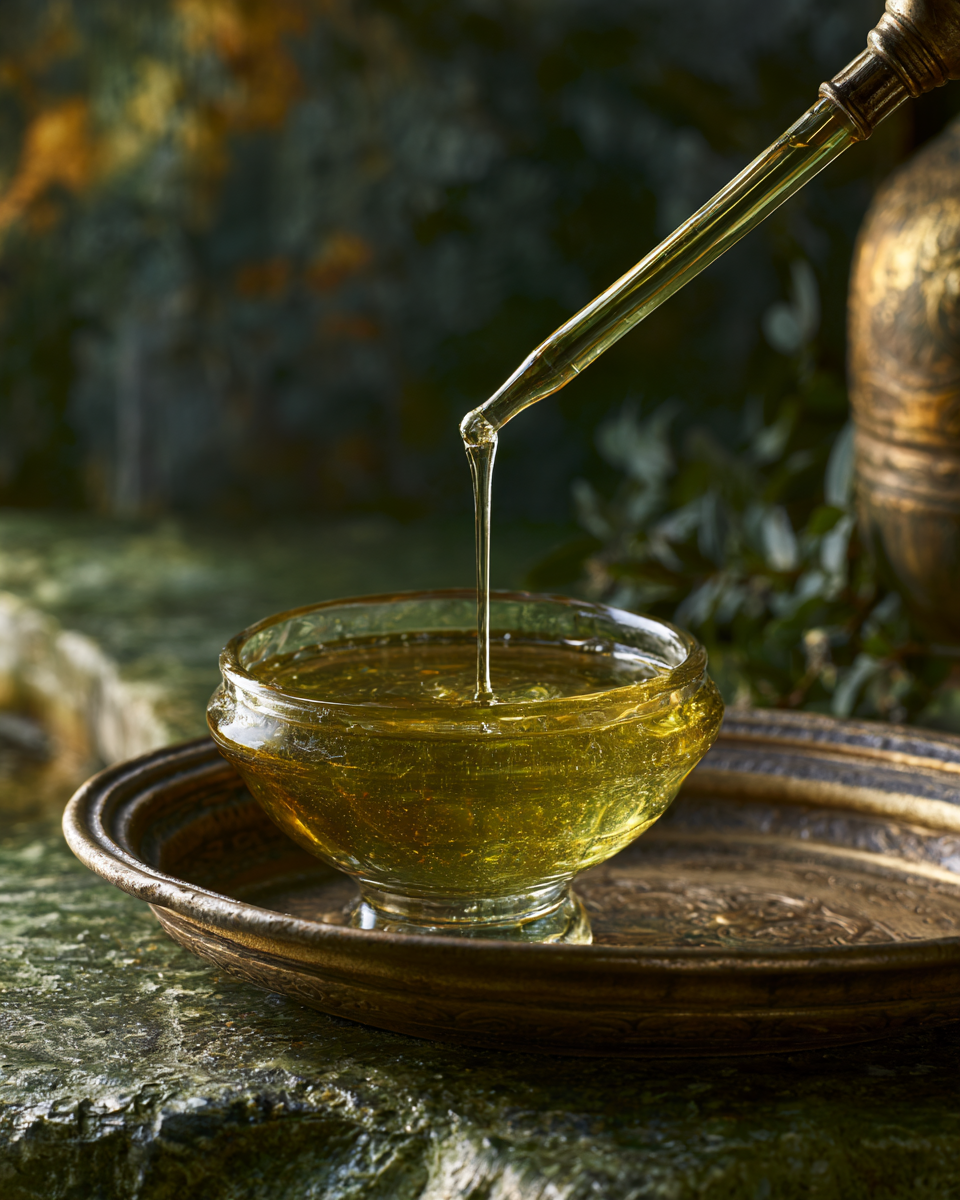
Combining ceramides and licorice: the barrier for a radiant complexion
Uneven skin tone is rarely due to pigment alone. A damaged barrier is enough to make the skin appear dull. This is what connects two active ingredients that seemingly have nothing in common.
Licorice in Cosmetics
The extract used comes from the root of Glycyrrhiza glabra. Its interesting fraction contains glabridin and flavonoids, plant-derived compounds studied for their action on skin tone uniformity.
The concentrations used in cosmetics are low, as the extract is effective at reduced doses. Its efficacy is judged over several months, as with all active ingredients that address the appearance of dark spots.
Why the Barrier Plays a Role
Skin with a degraded intercellular cement loses water, reflects light less effectively, and appears dull. Ceramides restore this structure, and the complexion gains radiance without any brightening active ingredient being involved.
This part of the result is often wrongly attributed to the active ingredient. In reality, for many skin types, half of the improvement simply comes from a better-maintained surface — and this is the first lever to activate.
On Skin Aging
Skin aging combines two causes. The first, chronological, affects everyone and results in a decrease in lipid production. The second comes from the sun, and it is responsible for most visible spots and irregularities.
Ceramides address the first, while licorice addresses certain effects of the second. Neither replaces daily protection, which remains the only action addressing the cause. Anti-aging treatments have never done better than this.
Building the Routine
The licorice serum first, on clean skin, morning and evening. The ceramide cream over it. Sun protection in the morning, without exception — an active ingredient that works on spots without protection is wasting its time.
These active ingredients can be combined without difficulty with most common cosmetic ingredients. Licorice is particularly well-tolerated where acids cause problems, making it an option for reactive skin.