
Combining aloe vera and rose water: the method
Two water-based products that layer well—provided you know that neither retains the water it brings. Rose water preps, aloe vera forms a film. Without a third step, the whole thing lasts half an hour at best.
Key Points
- Order: Rose water first, then aloe vera.
- Quantities: A few sprays, then a thin layer.
- Don't forget: A cream or oil as the final step.
- Frequency: Twice a day, without restriction.
- Storage: Both in the refrigerator once opened.
Choosing pure aloe vera starts with the ingredient list: the gel should be listed first, before water. A product where water precedes the gel mainly contains water, which is not illegal but changes what you are buying.
The useful properties for topical application are modest and well-identified: retaining surface water, providing a sensation of freshness, and preparing the skin for subsequent products. Aloe covers these needs well. It doesn't do more, and advice that attributes more to it often confuses external use with an entirely different subject.
The balance of the routine matters more than the choice of brand. Two layered water-based products are not as effective as a water-based product followed by an oil-based one: it is the third step, the one that seals, that determines the result. Without it, the first two evaporate together.
Why this order
Rose water is more fluid and leaves no film. Aloe vera, on the other hand, deposits a film of complex sugars which, if applied first, would hinder the subsequent spray application.
The rule of applying from thinnest to thickest therefore applies, even between two water-based products. This is the only order point to respect here.
The mistake that negates the essential
Soaking the skin. Excess rose water dilutes the subsequently applied aloe vera, and the film it should form does not develop.
Two to three sprays are sufficient, or an application with a lightly saturated cotton pad. The skin should be damp to the touch, not dripping wet.
What aloe vera provides
More than 98% water, and complex sugars that form a hydrophilic film. This film is what distinguishes aloe vera from a simple floral water, and explains its soothing effect on heated skin.
Its vitamins and antioxidants exist but remain in too small quantities to act alone. Aloe vera is a comfort treatment, and it does that very well.
An aloe vera leaf yields three very different materials, and confusing them explains most disappointments. In the center, the translucent parenchyma provides the aloe vera gel. Just under the rind circulates a yellow, bitter latex, full of compounds that are carefully removed. The rind itself is not used.
Aloe vera juice is obtained by pressing and filtering this same parenchyma: more fluid than the gel, it is distinguished by texture much more than by composition. The benefits of aloe vera in topical application are primarily due to its aqueous fraction and the complex sugars that retain it.
Reading the ingredient list avoids the most common mistake. Commercial aloe vera gel often contains less than 20% real gel, supplemented with water, a thickener, and a preservative—which is not inherently objectionable, but changes what you are paying for.
The gel also contains complex sugars, minerals, and amino acids in small quantities. It is these polysaccharides, particularly, that retain water on the skin's surface and give the gel its consistency.
These natural components act on the surface and are not intended to penetrate the epidermis. The properties that can be expected from them relate to immediate comfort and hydration of the superficial layer—a modest scope, but real and verifiable by touch.
To meet broader needs, the entire routine matters, not the isolated ingredient. A good balance between the aqueous phase and the oily phase makes more difference than the choice of gel.
What rose water provides
Primarily, preparation. It refreshes, leaves the skin damp, and advantageously replaces a rinse with tap water, which is often hard.
Its inherent action is modest, and to claim otherwise would be dishonest. Its value lies in what it enables for subsequent steps.
A genuine rose water is a hydrolate, meaning the distillation water collected during the production of essential oil. It carries with it an infinitesimal fraction of aromatic compounds: enough for the scent, too little to claim a marked action. It is a simple product, and that is its main quality.
Many bottles sold under this name are actually perfumed water, recognizable by their list: water, a fragrance, sometimes a colorant. An authentic hydrolate displays the Latin name of the plant and almost nothing else.
The properties attributed to it are modest and it is better to state that. Its practical value lies in the hydration of the skin it initiates and the preparation of the skin surface before what follows—provided, always, that it is covered.
The third step, without which nothing holds
This is the point most aloe vera-based routines forget. Two aqueous phases have no occlusive power: water evaporates, and the skin ends up as dry as before.
Therefore, always add a cream, a vegetable oil, or a few drops of squalane on top. It is this layer that transforms a twenty-minute refreshment into several hours of comfort.
For oily skin
This is where the combination works best: two oil-free products that hydrate without overburdening.
Don't conclude that the last step is superfluous. Oily skin can lack water, and omitting the occlusive maintains the imbalance. A light gel-cream is sufficient.
After sun exposure
This is the most justified use of this combination. On clean, cool skin, a few sprays of rose water, then a generous layer of aloe vera left on for two to three minutes.
A painful sunburn or one accompanied by blisters is not a cosmetic issue. It requires medical advice, regardless of the product.
On homemade recipes
Mixing the two in a bottle to prepare a lotion is a false good idea. An aqueous phase without preservative becomes contaminated in a few days, and the mixture loses its effectiveness.
Layer instead of mixing. It's safer, more effective, and doesn't take any more time.
Choosing your two products well
For aloe vera: juice at the top of the ingredient list, no alcohol, no fragrance if your skin reacts. The outer layer of the leaf contains aloin, which is irritating, and which formulated products remove.
For rose water: a composition limited to distilled rose petal water. Nothing else should be included.
For the hydrolate, two mentions are sufficient: the Latin name of the plant and the absence of any other ingredient except, possibly, a preservative. For the gel, the position of aloe in the list. These two checks take ten seconds and avoid almost all bad purchases.
The packaging also matters. These products are very aqueous and quickly become contaminated once opened: a pump bottle protects better than a jar, and the period after opening should be strictly respected. A changing smell signals the end, unequivocally.
A final scope tip. What these two products provide is cutaneous and superficial. Internal uses, their indications and precautions, form a distinct subject that belongs to a healthcare professional and has no place here.
What you need to know
This routine is cosmetic and improves the comfort and appearance of the skin, without treating any condition. A burn or persistent irritation requires medical advice.
What lactic acid changes in the pair
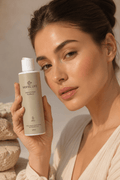
Rose water alone only refreshes; combined with a gentle exfoliant, it truly prepares the skin to receive aloe vera. This is what our rose water radiance toner does, with its lactic acid clearing the surface before the moisturizing step.


Go further than this article
Get our skincare guides by email — and start with your free skin diagnostic: 2 minutes, advice tailored to your skin. We ship to the US, UK, Canada, Australia and 27 European countries; somewhere else? Sign up and you will be the first to know when we deliver to your country.
By signing up, you agree to our privacy policy. Unsubscribe in one click.