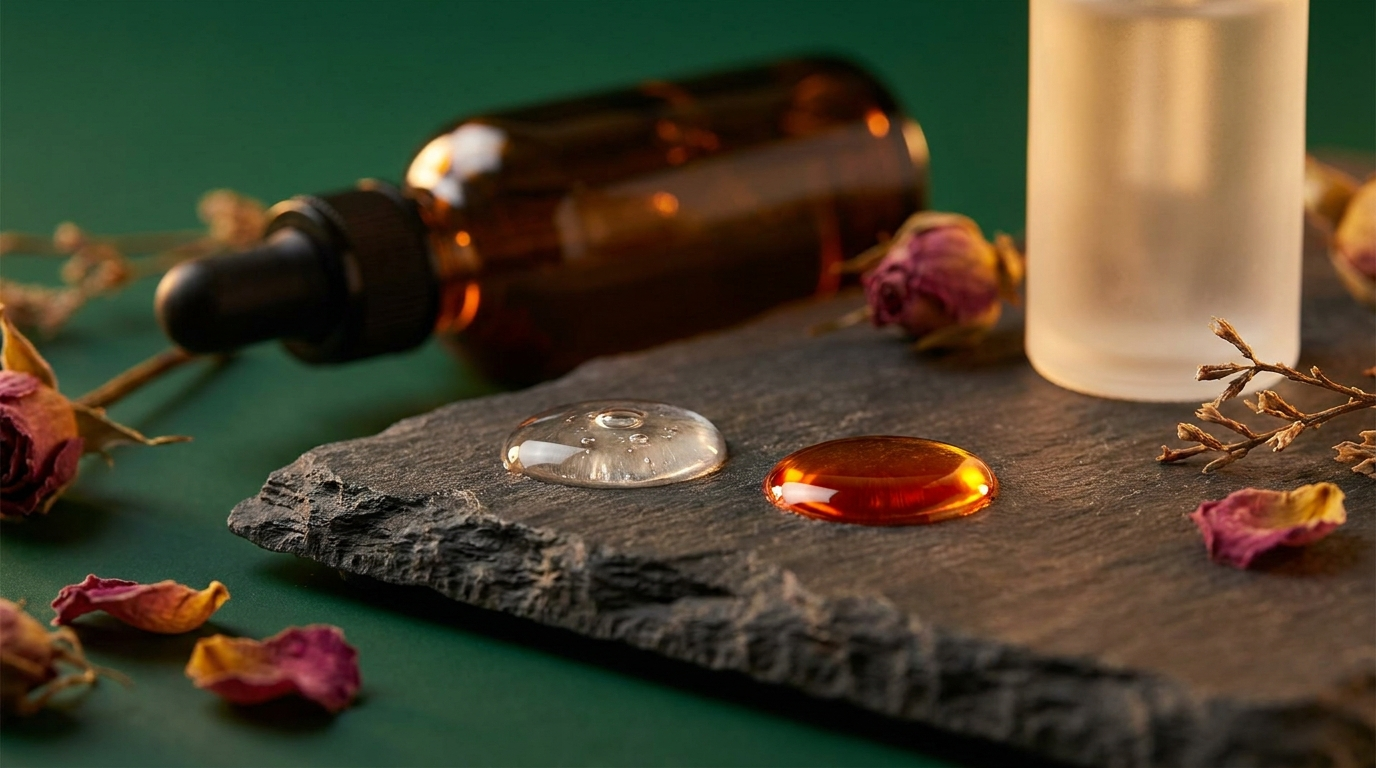
Combine hyaluronic acid and rosehip oil
This is one of the most consistent associations in facial care. Hyaluronic acid serum attracts and retains water, while rosehip oil seals it in. The order is dictated by physics: aqueous first, then oil.
At a glance
- Order: serum, then oil. Never the other way around.
- Waiting time: one minute.
- Quantities: 3 to 4 drops of serum, 2 to 3 drops of oil.
- Skin types concerned: dry, dehydrated, mature. Adjust doses for combination skin.
- Time: evenings primarily, mornings possible in small quantities.
Why this duo is consistent
Hyaluronic acid retains up to several hundred times its weight in water, but only where it is located. This water evaporates if nothing covers it — this is the weakness of all humectants used alone.
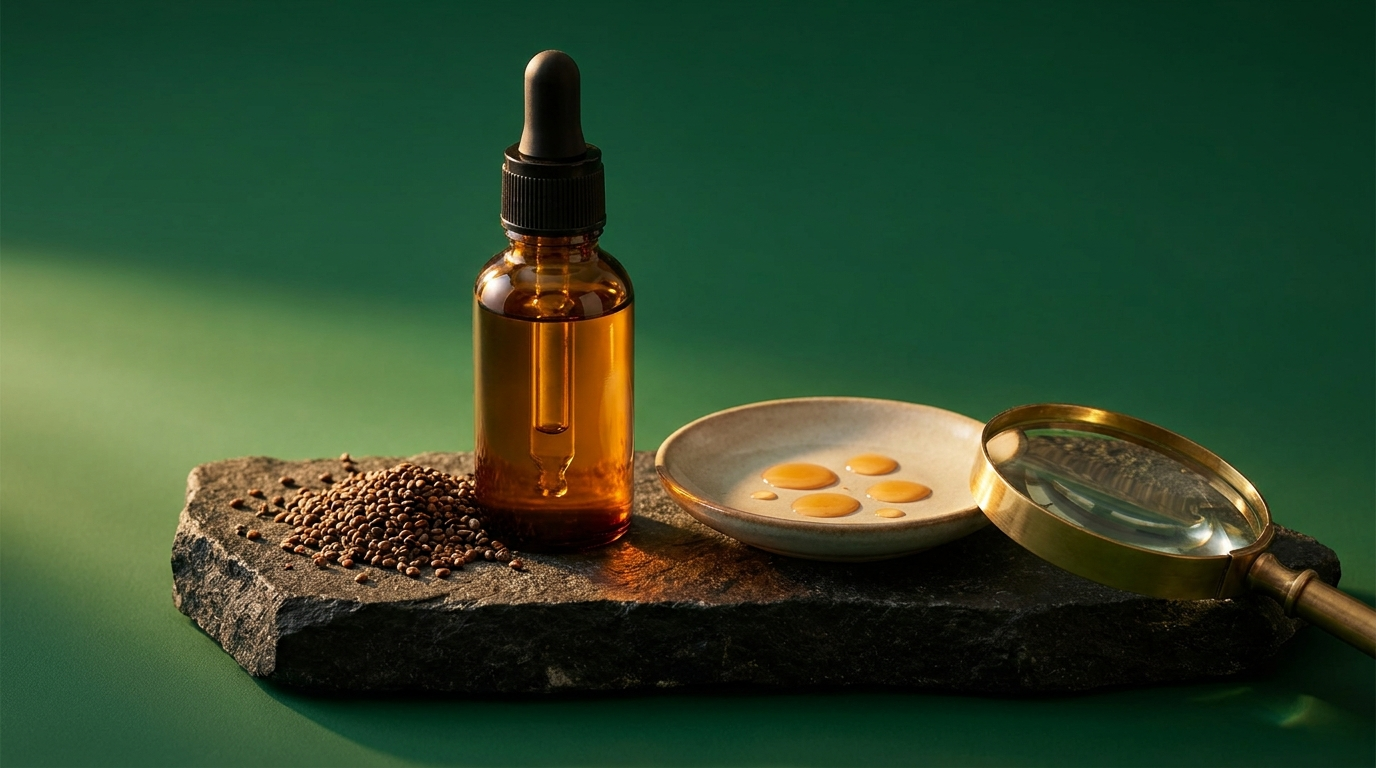
Rosehip oil, extracted from seeds by pressing, is rich in essential fatty acids and natural antioxidants that help protect the skin from free radicals. Its fine texture penetrates well while leaving a film that limits water loss.
One needs to be sealed, the other seals. There is no better definition of a successful association.
The two active ingredients perform distinct functions: hyaluronic acid retains water in the superficial layer, and oil prevents this water from evaporating. Neither replaces the other, and this is what makes the association clear.
The vitamin E in rosehip oil adds protection against oxidation. For skin radiance, the effect primarily comes from surface renewal, which this routine supports without forcing it.
The protocol
1. Clean and slightly damp skin. Do not completely dry after cleansing: hyaluronic acid needs available water.
2. The serum. Three to four drops, spread and smoothed without rubbing. Wait one minute.
3. The rosehip oil. Two to three drops warmed between the palms, applied with pressing motions. Pressing distributes without pulling on the skin.
According to skin types
Dry skin: the most obvious indication. You can add a cream on top in winter.
Mature skin: the duo addresses the dual need for water and lipids often characteristic of these skin types.
Combination skin: keep the serum on the entire face and reserve the oil for areas that feel tight.
Reactive skin: introduce one product at a time, a week apart, to identify the source of any potential reaction. Tolerance is built up.
Morning or evening
Evenings are the most suitable time: nothing goes on top, the oil's scent doesn't matter, and the skin remains in contact with the treatments for a long time.
Mornings are still possible with just one drop of oil, provided you wait for it to penetrate before applying any makeup or sun care.
Oil storage
Oils rich in essential fatty acids oxidize faster than others. Opaque bottle, tightly closed cap, away from heat. An oil that has developed a rancid odor should no longer be used on the face.
Properties and composition of the oil
Rosehip oil is extracted from the seeds of the wild rose, a plant whose dried berries are also used in infusions. Its composition explains its properties: mainly essential fatty acids, tocopherols, and beneficial compounds traditionally associated with skin texture regeneration.
It is this richness that makes it interesting for marks left by old imperfections and for spots, provided it is used regularly and with daily sun protection. For sensitive skin, its introduction should be gradual.
As a day cream or evening care
Two drops of oil mixed with your usual day cream create a richer texture, useful in winter. In the evening, the oil is applied alone after the serum. Both uses are valid; the second allows for better assessment of its effectiveness, as nothing else interferes.
What this association does not do
It provides comfort and suppleness. It does not replace sun protection. The scope remains cosmetic, with the limitations that implies. Any lesion or unusual development requires dermatological advice.
Frequently asked questions
Can the serum and oil be mixed before application?
The mixture is unstable; water and oil separate. Layering in two steps provides a much more consistent result.
How long should I wait between the two?
One minute is sufficient for the serum to penetrate. For very dry skin, two minutes is better.
Is this combination suitable in summer?
Yes, by reducing the oil to a single drop, or by reserving it for the evening. The serum alone is often sufficient in the morning during warm seasons.
Do I need an additional cream?
Not necessarily. The oil acts as the final layer. A cream can be added in winter for the driest skin, a few minutes after the oil.
Our anti-aging treatments