Aloe vera or chamomile: which one truly soothes your skin
Two legends of soothing, two temperaments: aloe vera provides the immediate freshness of plant gel, while chamomile offers the enveloping softness of the flower. For skin that feels tight, red, or hot, here's how to choose — and, most often, how to combine them. We've broken down their composition, INCI names, usage doses, and exact place in a routine, so that decisions can be made based on concrete criteria rather than shelf intuition.
Key takeaways about this duo
- Two galenic forms, not two competitors: aloe comes in a hydrating aqueous base (INCI Aloe Barbadensis Leaf Juice), and chamomile in a toning floral water (Chamomilla Recutita Flower Water). They are layered in this order: floral water, then gel, then fatty substance.
- Aloe vera is composed of approximately 99% water structured by polysaccharides: it provides water and a sensation of freshness, never the lipids of a cream or oil.
- Quality depends on the leaf: only the central fillet is of interest for cosmetics; the outer latex of the leaves, rich in bitter compounds, has no place in a facial treatment.
- Usage guidelines: 4 to 6 sprays of hydrolat, then about 1 g of gel (a pea-sized amount), then 3 to 4 drops of prickly pear oil in the evening.
- A 21-day dated protocol is detailed below to test both active ingredients without confusing their effects.
The verdict in brief
Your skin feels hot, tight, or lacks water: overheating, discomfort after sun exposure, dehydration. The freshness of the gel is your first reflex.
Your complexion reddens easily and reacts to aggressions: the floral softness of bisabolol soothes the appearance of diffuse redness and is suitable for the most delicate skin.
And if you're still hesitating: in nine out of ten routines, the right answer isn't "one or the other" but "both, in the right order." The rest of this article explains why, and especially how.
What an aloe leaf really contains
Before comparing anything, you have to open the leaf. This is where the essential difference between a remarkable aloe vera and a disappointing aloe vera lies — much more than in the price or the design of the bottle.
The aloe used in cosmetics is almost always Aloe barbadensis Miller, a succulent native to the Arabian Peninsula, now cultivated in hot, dry areas worldwide: Mexico, Spain, Morocco, India, the Caribbean. Its fleshy leaf is not homogeneous: it consists of three superimposed layers, and only one of them is of interest to us.
| Leaf layer | What is found there | Cosmetic use |
|---|---|---|
| Cuticle (outer green layer) | Cellulose, waxes, pigments | Removed during trimming |
| Outer latex (yellow sap, just under the cuticle) | Aloïn and hydroxyanthracene derivatives, bitter | To be eliminated — bitter fraction, historically reserved for other uses, of no cosmetic interest |
| Central fillet (translucent parenchyma) | ≈ 99% water, polysaccharides (including acemannan), amino acids, trace elements | This is the aloe vera gel used in cosmetics |
This anatomy explains a very common confusion. The outer latex of the leaves and the pulp of the fillet are two radically different raw materials: the first is bitter, colored, rich in hydroxyanthracene compounds, and belongs to a completely different field than skincare; the second is translucent, almost neutral in taste and smell, and it is this that gives aloe its aqueous nature and its cooling action.
A fillet poorly separated from the latex results in a texture that quickly browns, smells of fermented plant matter, and can sting. A properly trimmed fillet, stabilized quickly after harvest, yields a clear, almost odorless, barely amber gel. When buying, color and smell are therefore your first two indicators — even before reading the label.
Finally, a point often overlooked: many market products do not contain pressed juice but a rehydrated concentrate. The fillet juice is dehydrated into powder (concentrations called 40×, 100× or 200×) then reconstituted with water by the manufacturer. This is neither fraud nor a defect in itself — it's what makes these formulas stable and transportable — but it changes how you read a label, as we will see.
Where aloe comes from: species, terroirs and quality
The genus Aloe includes several hundred species, only a handful of which are of cosmetic interest. The reference species, the one you'll encounter in almost all skincare products on the market, is Aloe barbadensis Miller — the name you'll find on INCI lists as Aloe Barbadensis Leaf Juice. Other species do exist commercially, such as Aloe arborescens or Aloe ferox, the latter very common in Southern Africa, but their fillet offers neither the same richness nor the same composition. In Africa, Aloe ferox is also still harvested partly from wild populations, leading to more heterogeneous batches from season to season.
This species clarification is not an erudite detail: it determines the quality of what you apply. The Latin names on the label are your only reliable guide, because commercial designations — "pure aloe," "Caribbean aloe," "premium aloe" — do not correspond to any regulatory definition.
Geographically, cultivation is spread across the world's warm belt: Mexico and the Dominican Republic in the lead, followed by Costa Rica, the United States, Spain, Morocco, Egypt, India, Thailand. Morocco and Egypt supply more modest but regular volumes, often earmarked for organic certified products. Everywhere, aloe grows in open fields, on poor and well-drained soils, with very little water: a sober cultivation, which partly explains its omnipresence in cosmetics.
| What the packaging states | What this really tells you |
|---|---|
| “Aloe vera” without species name | Nothing. Look for Aloe barbadensis in the INCI list. |
| Origin mentioned (Mexico, Andalusia, Morocco…) | Sign of traceability, but no guarantee of quality in itself. |
| Harvest at 3-4 years | Classic maturity: a fillet that is too young remains poorer. |
| “Cold pressed within 4 hours” | The real indicator: the juice oxidizes quickly after cutting. |
A final word on the freshness of the raw material. Leaves oxidize quickly once cut: the time between harvest and juice stabilization remains, in the general opinion of formulators, the determining factor — well before the geographical origin or the price displayed on the container.
Aloe vera: the thirst-quenching freshness
Aloe vera gel is, first and foremost, a supply of intelligently retained water. Its polysaccharides form a flexible, breathable film that limits evaporation; the water it carries therefore remains available longer than with a simple mist. Hence the characteristic sensation: immediate freshness, in less than a minute, followed by an increasing comfort.
This action is well-documented. In a study on skin bioengineering published in Skin Research and Technology, Dal'Belo, Gaspar, and Maia Campos (2006) measured the hydration of the stratum corneum by corneometry after applying formulations containing low-dose aloe vera extract. The study showed an increase in superficial water content after one to two weeks of daily application, without significant occlusive effect. In other words, aloe is not a lipid bandage: it works in the aqueous domain, which is exactly what is expected of it.
The uses in which it excels are therefore very identifiable:
- After sun exposure — the sensation of heat diminishes and discomfort is soothed, which explains the almost systematic presence of aloe in after-sun care products worldwide.
- Dehydrated epidermis — skin that feels tight at the end of the day and shows dehydration lines, regardless of its underlying type.
- Combination to oily skin — the texture does not add any fatty substances: it hydrates the skin without weighing it down or making it shiny.
- After a slightly aggressive action — shaving, gentle exfoliation, hair removal: aloe vera restores skin comfort in a few minutes.
Its limitations are just as clear. Used alone, it does not replace the lipids of a moisturizer on dry skin, and its aqueous film is depleted in a few hours if not sealed. This is why it works so well as an intermediate layer, between floral water and oil, rather than as a sole treatment.
Water, polysaccharides, micronutrients: the nature of the fillet
The composition is often presented as a dizzying list: vitamins A, C, E, and B-group, minerals (calcium, magnesium, zinc, potassium), twenty amino acids, enzymes, plant sterols. All of this is accurate — yet misleading if one stops there.
Because the true nature of the material is primarily water: about 99%. The micronutrients it contains are present in trace amounts. Their cosmetic interest lies less in their quantity than in the ensemble they form with polysaccharides — that viscous fraction that holds water on the skin's surface and gives aloe its uniquely recognizable texture.
Beware, therefore, of arguments that list vitamins like a catalog. The cosmetic virtues of aloe vera are based on three simple, verifiable things: its water content, its polysaccharide fraction, and the cleanliness of its extraction. The rest is ornamentation.
How to read a cosmetic study on aloe vera
On the cosmetic side — the only one that concerns us here — available tests focus on measurable surface parameters: water content of the stratum corneum using a corneometer, transepidermal water loss, flexibility. The reference work cited above was conducted at the University of São Paulo, on formulas applied under use conditions: this is the classic format for cosmetic clinical trials, not to be confused with medical research, which follows different rules. These cosmetic clinical studies are conducted either by independent laboratories or — as here — by a university; they do not fall within the scope of healthcare.
Three questions are enough to gauge the solidity of such a study, and they apply to any active ingredient, not just aloe vera:
- Is there a placebo? That is, an identical formula, deprived of the single active ingredient being studied, applied to the opposite hemiface or forearm. Without a placebo comparator, one primarily measures the effect of the vehicle — and any aqueous base provides some hydration.
- What is the sample size, what is the duration? Typical cosmetic trials involve 20 to 40 volunteers over 2 to 8 weeks, under standardized clinical conditions. Below that, the study shows a trend, not a demonstration: the risk of drawing conclusions too quickly is real, and the most cited studies are not always the best constructed.
- What is the raw material treatment? Freshly pressed juice and reconstituted powder do not behave the same way. Two protocols can diverge for this reason alone, without either being at fault: the industrial treatment of the material changes everything, and residual aloin with it.
A well-conducted literature review — a review, in publication terminology — remains more informative than an isolated study, provided it specifies these three points for each selected study. When a brand cites "a review" without providing a reference, a placebo comparator, or the duration, consider the argument null: it is the best anti-marketing filter there is, and it costs nothing.
A small nuance in vocabulary, useful for avoiding errors in the aisle: cosmetic clinical studies evaluate the comfort and appearance of the skin in healthy volunteers; they do not have the same objective or requirements as health-related work. An aloe vera gel remains a beauty product, even when tested under placebo.
As for everything else you read about aloe in terms of health, it falls outside the scope of a cosmetic article: these questions are the responsibility of a health professional, not a beauty product. On this page, we stick to what a cosmetic can legitimately claim: the appearance, comfort, and hydration of the skin.
Chamomile: the softness that calms the appearance of redness
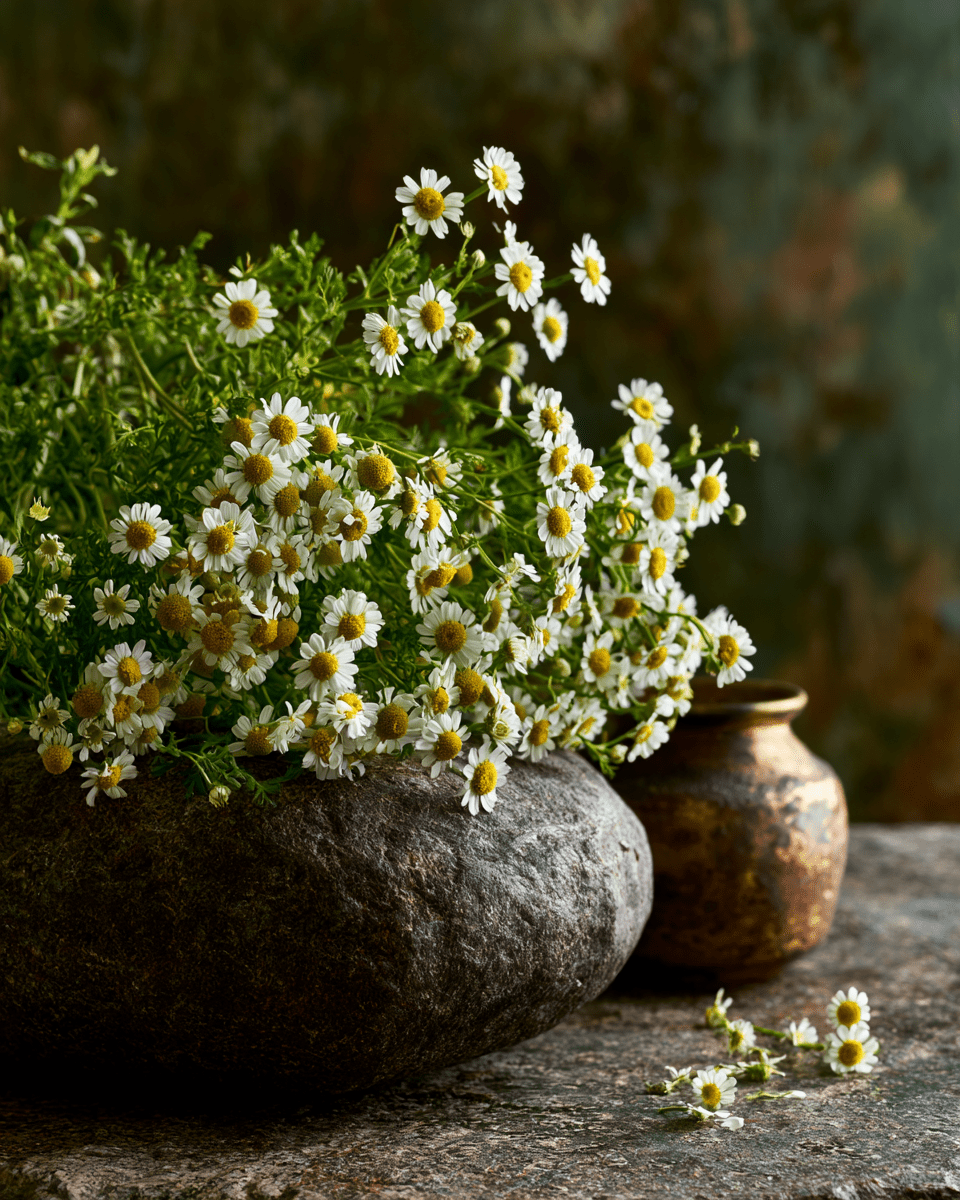
Matricaria chamomile (Chamomilla recutita, also known as German chamomile) is one of the great classics of natural cosmetics, and one of the rare flowers whose virtues are attributed to two perfectly identified molecules: bisabolol, appreciated for its extreme gentleness, and chamazulene, the compound that gives the essential oil its deep blue color and forms during distillation.
When applied, chamomile hydrolat — the floral water obtained from the distillation of the flower heads — works in a different way than aloe. It doesn't truly hydrate: it prepares, tones, and soothes the sensation of reactivity. Sprayed after cleansing, it immediately restores comfort to a complexion that easily reddens, heats up with the slightest change in temperature, or reacts poorly to hard water.
It is also the gentlest form in which this flower can be offered: alcohol-free, without concentrated essential oil, and without added fragrance. For the most delicate skin, hydrolat is almost always the right starting point, with the formulated extract then coming in a formulated product or serum.
A clear point of caution should be noted: chamomile belongs to the Asteraceae family, like arnica, daisy, or yarrow. Individuals who know they are sensitive to this botanical family should test the product on a small area of the elbow crease for 48 hours before applying it more widely. This is not a general contraindication, but a common-sense precaution, and it limits the risk of an unpleasant surprise.
Head-to-head comparison
Here's a comparison in concrete data rather than adjectives. Each row corresponds to a decidable criterion: what you read on the label, what you apply, and what you expect from it.
| Criterion | Aloe vera (gel) | Chamomile (hydrosol / extract) |
|---|---|---|
| Common INCI name | Aloe Barbadensis Leaf Juice | Chamomilla Recutita Flower Water / Flower Extract |
| Part used | Central fillet of the leaves | Flower head |
| Key molecules | Polysaccharides (acemannan), ≈ 99% water | Bisabolol, chamazulene |
| Resulting texture | Aqueous gel, flexible film, slightly tightening finish | Fluid floral water, no oil, bare finish |
| Place in routine | Step 2: after floral water, before oil or cream | Step 1: right after cleansing, on damp skin |
| Reference dose for face | 1 pea-sized amount ≈ 1 g | 4 to 6 sprays |
| Feeling time | Freshness in less than 1 minute | Comfort in 1 to 3 minutes |
| Drying time before next step | 60 to 90 seconds | 20 to 30 seconds |
| Storage after opening | 3 to 6 months, in a cool, dark place | 3 to 6 months, ideally in the refrigerator |
| Best use case | Heat, tightness, dehydration, after-sun | Diffuse redness, reactivity, hard water |
| Point of caution | Residual aloin if artisan extraction is poorly trimmed | Known sensitivity to Asteraceae → 48h test |
| On hair | Pre-shampoo mask, 2 to 3 pea-sized amounts on the scalp | Post-wash mist, 6 to 8 sprays at the roots |
| What it doesn't do | Doesn't provide any lipids: doesn't replace a cream on dry skin | Doesn't provide lasting hydration alone: it's a primer, not a final treatment |
Summary of the match, if you had to remember only six lines: immediate effect, aloe wins; appearance of redness, chamomile; water supply, aloe clearly; very reactive skin, chamomile; after-sun, aloe; long-term daily use, perfect equality. Two fundamental active ingredients, both remarkably well tolerated.
Decoding an aloe vera label
This is where the difference between a good purchase and a disappointment is made. The mention "99% aloe vera" in large print on the front of the bottle says almost nothing: it most often refers to the aqueous base, not the final composition. The INCI list, however, doesn't lie. Here's how to read it in thirty seconds.
| What you read | What it means | Signal |
|---|---|---|
| Aloe Barbadensis Leaf Juice in 1st position | Leaf juice is the base, before water | Very good |
| Aqua in 1st position, Leaf Juice Powder in 3rd or 4th | Dehydrated concentrate reconstituted on-site — common and perfectly legitimate | Correct |
| Mention decolorized or purified | Filtration, often with activated charcoal, to reduce the bitter fraction of the latex | Reassuring |
| Aloe appears after preservatives (phenoxyethanol, sorbate, etc.) | Content less than 1%: an ingredient for display rather than effectiveness | Disappointing |
| Bright green tint, strong fragrance | Added colorant and fragrance: two ingredients that reactive skin gladly does without | To be avoided |
| No durability indicated after opening (PAO) | Aqueous formula with no preservation indicator: rapid degradation likely | To be avoided |
A remark about "homemade" preparations from a leaf bought in a grocery store: the gesture is appealing, but it is precisely there that latex trimming is most hazardous, and fresh juice without a preservation system degrades in a few days in the refrigerator. If you insist on home extraction, rinse the fillet thoroughly with clear water until all yellow traces disappear, and prepare only enough for three or four days.
Pulp, juice, powder: three raw materials
Behind the word "aloe vera" are actually three different industrial materials, and knowing how to distinguish them makes a big difference when reading a label.
- The pulp in pieces — parenchyma cut into cubes, barely processed. This is what remains closest to the original material, but also the most fragile: it requires rapid stabilization.
- Filtered juice — pulp pressed and then clarified. The most common form in cosmetics, the one that gives the famous Aloe Barbadensis Leaf Juice.
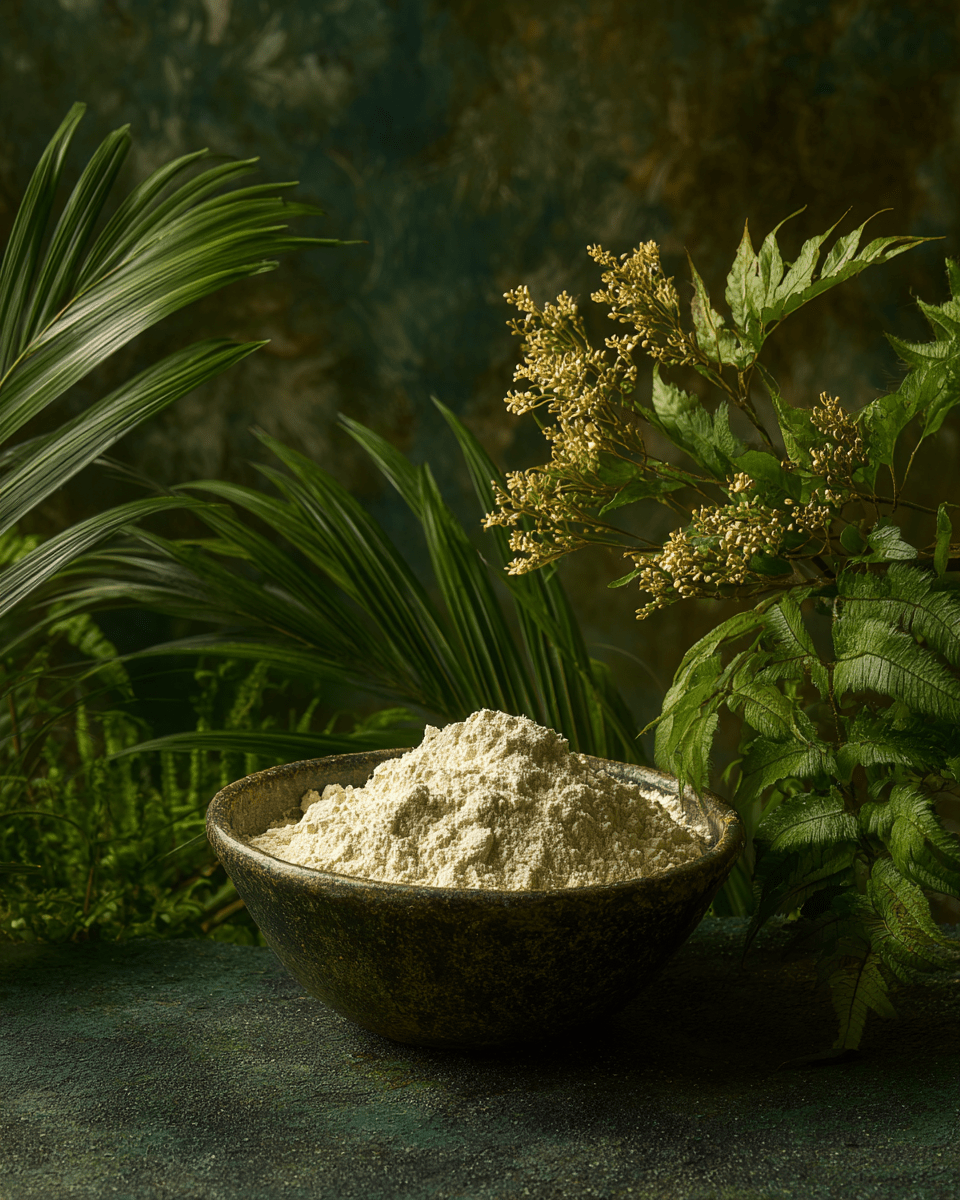
- Concentrated powder — dehydrated juice, then rehydrated by the manufacturer. Practical, stable, economical in transport; its value depends entirely on the treatment applied during dehydration, and the absence of residual latex.
None of these three methods are inherently disqualifying. A mediocre juice remains mediocre; a well-treated powder yields an excellent gel. What matters is the overall consistency: identified species, latex completely removed, no bitterness, and preservation suitable for an aqueous formula. Four criteria, and the essential is judged.
Daily use: six concrete situations
Let's move from theory to practice. Here are six common situations and the corresponding actions, with precise usage guidelines. These are the ones that come up most often in questions from our readers.
| Situation | The action | Guide |
|---|---|---|
| Back from the beach, feeling hot | Gel straight from the refrigerator, in a thick layer, without massaging | 2 to 3 applications in the evening |
| Tightness on a plane or in an air-conditioned office | Chamomile hydrosol mist, then a dab of aloe | Every 3 to 4 hours |
| Diffuse redness after a hot shower | Hydrosol alone, on still damp skin | 4 to 6 sprays |
| After shaving | Pure aloe vera gel, no alcohol-based lotion | 1 pea-sized amount, patted in |
| Itchy scalp | Pre-shampoo mask, part by part | 15 to 20 min, once a week |
| Dryness in the middle of winter | Aloe vera then balm or oil on top — never aloe alone | 3 to 4 drops of oil to seal |
A usage note that applies to both active ingredients: regularity takes precedence over quantity. Two daily actions maintained for three weeks produce much more noticeable effects than a massive application every three days — and this is exactly what the protocol below allows to verify.
The 21-day protocol: testing both without confusing their effects
The most common mistake is to introduce everything on the same morning, and then no longer know what to attribute what you observe to. Here is the protocol we recommend to distinguish — or combine — aloe and chamomile over three weeks. It is based on a stable evening routine and modifies only one variable at a time.
| Phase | Morning | Evening | What you note |
|---|---|---|---|
|
D1 – D2 Tolerance |
Nothing new on the face. A pea-sized amount of aloe and 2 sprays of hydrosol in the crook of the elbow, left for 48 hours. | Usual routine unchanged. | No reaction on the test area at 48 hours → green light. |
|
D3 – D9 Aloe alone |
Cleanse, then 1 pea-sized amount (≈ 1 g) of gel on still damp skin. 90 seconds drying. | Cleanse, then 3 to 4 drops of prickly pear oil warmed between palms. | Tightness sensation at 6 PM: present or gone? This is the marker of water intake. |
|
D10 – D16 Chamomile added |
Cleanse, 4 to 6 sprays of hydrosol, 30 seconds wait, then the gel as in D3 – D9. | Same as D3 – D9: the evening is untouched. | Appearance of redness on cheeks and sides of nose, upon waking and after showering. |
|
D17 – D21 Arbitration |
Remove the hydrosol 3 mornings out of 5, at random, without deciding in advance. | Unchanged. | If mornings without hydrosol are missed, chamomile stays. Otherwise, aloe alone is sufficient. |
Three rules for the protocol to be valuable: only one photo per week, always in the same place and at the same time, in indirect daylight; no other new products during the 21 days; and a two-line written note every evening. It's tedious for the first three days, then it becomes a reflex — and it's the only way to know what works for you rather than for a panel.
The complete soothing duo
Chamomile floral water as a toner after cleansing, aloe vera as a day moisturizer: this is the complete soothing routine for sensitive skin, and it only takes two steps. In the evening, a few drops of prickly pear oil nourish the skin barrier — because long-lasting soothed skin relies first and foremost on a well-maintained barrier. This is the NOPAL LIFE philosophy of comfort in three stages: soothe, hydrate, nourish.
The order is not decorative; it stems from a simple physical logic: we go from the most aqueous to the most oily. Hydrosol, almost entirely composed of water, would not penetrate an oil film; gel needs a moist surface to spread its polysaccharide film; oil, finally, seals the whole. Reversing two steps means losing most of the benefit of the first.
The timed sequence
- 0:00 — Gentle cleansing with lukewarm water, pat dry. The surface remains slightly damp.
- 0:30 — 4 to 6 sprays of chamomile hydrosol 20 cm from the face, eyes closed. Do not rinse, do not rub.
- 1:00 — A pea-sized amount of aloe vera gel, spread from the center outwards. Wait 60 to 90 seconds for the film to set.
- 2:30 — In the morning: sun protection. In the evening: 3 to 4 drops of prickly pear oil, pressed rather than spread.
Total duration: less than three minutes. If your skin is very dry, double the oil dose rather than the gel dose.
Gel, hydrosol, macerate: in what form to use them?
Aloe vera is used as a gel: pressed from the fresh leaf fillet, it can be applied pure to the face and body, or incorporated into light creams and aqueous serums. In formulation, its juice frequently replaces all or part of the water: the base gains comfort without the texture becoming heavier by a single gram.
Chamomile, on the other hand, comes in three distinct forms:
- Hydrosol (floral water) — the gentlest, as a mist or on a cotton pad. Ideal for daily use, including on delicate areas and around the eyes.
- Extract — concentrated and integrated into formulated skincare products: creams, serums, balms. This is the form in which it is found in most soothing cosmetics on the market.
- Oily macerate — the flower heads infused in a vegetable oil, for comforting body massages and areas that feel tight in winter.
Two galenics, two actions: the aqueous freshness of aloe to provide water, the floral softness of the hydrosol to tone without aggressing. And a third category, that of fatty substances, which neither of the first two covers — hence the central role of oil in the routine.
Beyond the face: body and hair
The benefits of aloe vera and chamomile extend far beyond facial care, and it is often on the body that their differing temperaments are best measured.
The body. Aloe soothes the sensation of heat after prolonged exposure, on the shoulders, décolleté, and tops of the feet — the areas often forgotten. A generous application, with the product kept in the refrigerator, provides a much more marked freshness than at room temperature. Chamomile macerate, meanwhile, is used for massage on the legs and back, in a thin layer, preferably after showering.
The hair. This is an underestimated use. Aloe vera gel comforts an itchy scalp: two to three pea-sized amounts distributed section by section, massaged for one minute, left for 15 to 20 minutes before shampooing. It also provides flexibility to dry lengths, in very small quantities on damp hair — beyond a pea-sized amount for medium-length hair, the effect becomes stiff when dry. Chamomile hydrosol, famous for revitalizing the radiance of blonde hair, is used as a post-wash mist: 6 to 8 sprays at the roots for a reactive scalp, or over the entire hair for its subtle scent.
In both cases, prioritize simple and readable formulas: the clarity of the INCI list before the length of the marketing promise. This is the guiding principle of NOPAL LIFE cosmetic treatments.
Aloe vera and prickly pear: the house combination
At NOPAL LIFE, we work with prickly pear oil, not aloe gel. This is not a rivalry: the two operate on opposing and complementary registers, and that is precisely what makes their combination interesting for the skin.
Aloe vera provides water; prickly pear oil provides lipids. The former hydrates the upper layer, the latter limits evaporation and nourishes the barrier. Used alone, each leaves a void: a gel without fatty substances will run out in a few hours, an oil on dehydrated skin nourishes a water reserve that doesn't exist. Layered in the correct order, they complement each other.
- Morning — hydrosol, then aloe vera, then sun protection. Aqueous register, light finish, no greasy film before exposure.
- Evening — cleansing, then 3 to 4 drops of prickly pear oil. Lipid register, the barrier works during the night.
- Week of extreme cold or wind — both in the evening: aloe vera first, then oil, 90 seconds apart.
This is also why we do not seek to multiply cosmetic products in a routine. Two well-chosen textures, one container of each, applied regularly, are worth more than six half-used bottles. A treatment is judged after three weeks of actual use, not on the length of its ingredient list: what is visible comes from consistency, never from accumulation.
Five common misconceptions about aloe vera
Few ingredients are surrounded by as many myths. Here are five, corrected one by one — it's often by dispelling these misunderstandings that you stop being disappointed by an aloe gel.
| The misconception | What to remember |
|---|---|
| "Aloe vera deeply moisturizes" | No: cosmetic studies measure an effect on the stratum corneum, i.e., on the skin's surface. This is already the essence of what you feel, but no gel penetrates deeper. |
| "The greener the gel, the purer it is" | Almost always the opposite: the juice of the leaves is translucent. A bright green indicates a colorant. |
| "Aloe vera is suitable for everyone, without testing" | It is very well tolerated, but poorly separated latex can sting. The 48-hour patch test remains the rule, as with any new treatment. |
| "A homemade gel is better than a formulated product" | Not if the latex from the leaves is poorly removed and preservation is lacking. The industrial process has a real advantage here. |
| "It's a health product" | No. A cosmetic acts on appearance and comfort. Any medical question should be addressed to a healthcare professional, not a bottle. |
Buying Guide: Six Points to Check on the Container
Let's summarize in a checklist format. Six checks, thirty seconds on the shelf, and you eliminate most unpleasant surprises.
- The species — Aloe Barbadensis Leaf Juice explicitly appears in the INCI list, not a vague formula.
- The position — aloe vera appears among the first three ingredients, not after preservatives.
- The color — translucent, barely amber. Neither bright green nor brown.
- The smell — almost neutral. A sour note indicates a spoiled juice.
- The container — opaque or tinted, with an indicated shelf life after opening. A transparent container left in direct light accelerates degradation.
- The consistency of the rest — no unnecessary fragrance, no alcohol at the top of the list: reactive skin fares better without them.
These six points apply to pure gels as well as to formulated products that claim to contain aloe. They do not guarantee a perfect product, but they rule out the most costly mistakes — and they apply equally to a pharmacy purchase or an online order.
Storage, Combinations, Frequent Mistakes
Two aqueous active ingredients, therefore two fragile bottles. Here are some guidelines to avoid waste:
- Cold is your ally. Both keep significantly better in the refrigerator, and their freshness benefits from it. Expect 3 to 6 months after opening.
- A texture that browns or smells sour should be discarded. A vegetable juice that has turned cannot be salvaged, and reactive skin is the first to signal it.
- Never spray hydrosol directly into the eyes, even if it is gentle: close your eyelids, spray at 20 cm.
- Trouble-free combinations: niacinamide, hyaluronic acid, panthenol, vegetable oils. Aloe makes an excellent base layer for an aqueous serum.
- Combinations to space out: on the evening of an acid exfoliant or retinoid, apply the gel alone and keep the hydrosol for the morning — fewer layers, fewer variables.
- Classic mistake: applying the gel after the oil. It slides off, doesn't absorb, and you wrongly conclude it's not suitable.
What format to buy, and for how long?
A final calculation, rarely made in-store, yet decisive for an aqueous formula: your bottle must be emptied before the end of its shelf life after opening, not stored at the back of a shelf. Let's revisit the doses from this article and do the math.
- Aloe vera gel, 1g per day (a pea-sized amount, face): a 100 mL container lasts approximately 3 months — exactly the lower end of the storage range. The 100 mL format is therefore the right size for daily facial use; a 250 mL is only justified if you also apply it to the body or scalp.
- Chamomile hydrosol, 4 to 6 sprays per day: a pump delivers approximately 0.1 mL, or half a milliliter per application. A 100 mL bottle therefore lasts about six months: the exact upper end of the storage range. Beyond that — 200 mL and more — you will discard the end of the bottle. Buy small and replenish.
This reasoning applies to any oil-free treatment: it is the quantity actually consumed, not the price per liter, that determines the right format. A large, half-wasted container is more expensive than a small, finished one.
Finally, a word on vocabulary. We sometimes read, concerning aloe, mentions of therapeutic properties inherited from its traditional uses. Let's be precise: in cosmetics, we speak of appearance, comfort, and hydration, and this is what cutaneous bioengineering best documents. The water supply from aloe is observed on the surface, with regular use; the softness of chamomile is due to two well-characterized molecules, which remains rare. Neither dispenses with an oil or cream when the barrier lacks lipids — stacking aqueous textures without ever nourishing is the most common mistake, and the easiest to correct.
Frequently Asked Questions
Can aloe vera and chamomile be used together?
Yes, and it is even the most logical combination: chamomile as a hydrosol immediately after cleansing, aloe as a moisturizing gel 30 seconds later. There are no known interactions; their roles are complementary — one tones, the other provides water.
Which one to choose for a complexion that blushes at the slightest stress?
Chamomile primarily: its bisabolol is the reference compound for the appearance of reactive redness. Aloe vera provides support, on the next layer, for water supply. Use 4 to 6 sprays of hydrosol, then 1g of gel.
Can aloe vera replace a moisturizer?
For combination to oily skin, in summer, yes: it is often sufficient on its own in the morning. For dry skin or in winter, no — it lacks lipids. In that case, supplement with a rich cream or 3 to 4 drops of vegetable oil applied over it.
Is chamomile suitable for those sensitive to Asteraceae?
As a precaution, first test 2 sprays in the crook of your elbow for 48 hours. If doubts persist, opt for aloe and colloidal oatmeal, which do not belong to this botanical family.
What is aloin, and should one be wary of it in a cosmetic?
It is the bitter compound of the external latex of the leaves, this yellow sap located just under the cuticle — the fraction that the cosmetic industry systematically removes, as it has no benefit in application and can sting. Serious industrial references are filtered to significantly lower its content; this is indicated by the mention decolorized or purified on the technical sheet.
What is the best format for each?
Aloe vera: a pure organic gel with Aloe Barbadensis Leaf Juice at the top of the INCI list, or a formulated product rich in aloe juice. Chamomile: hydrosol mist for daily use, extract in a balm for dry skin, oily macerate for the body.
How long before seeing results?
Freshness is felt in less than a minute, but surface hydration is typically measured after 7 to 14 days of daily application. This is precisely what the D3 – D9 and then D10 – D16 phases of the 21-day protocol detailed above cover: do not judge before D17.
Can the gel be applied around the eyes?
Yes, in a very thin layer and without approaching the mucous membrane. It is even one of the rare refreshing gestures well tolerated in this area. Chamomile hydrosol is also suitable, applied with a cotton pad rather than direct spraying.
Organic or non-organic aloe vera: does it make a difference?
Organic certification relates to the cultivation method, not to the latex trimming or the freshness of the fillet. It is a plus, never a guarantee on its own. A well-processed conventional juice is better than a poorly stabilized organic juice with poorly separated latex: always refer to the INCI list, color, and smell.
Aloe, aloe vera, aloe barbadensis: do these names refer to the same thing?
Yes, in almost all cases. "Aloès" is the French name for the botanical genus, "aloe vera" is the common name, and Aloe barbadensis is the scientific name adopted by the INCI nomenclature. These three names coexist on packaging without difficulty: it is the same material. Vigilance lies elsewhere — on the part of the leaves used and on the nature of the extraction process.
It remains to be seen what you primarily need: water, calm, or lipids. Start my free diagnosis — two minutes, and you'll leave with the exact order of your steps.
Read more
Source: Dal'Belo SE, Rigo Gaspar L, Berardo Gonçalves Maia Campos PM. "Moisturizing effect of cosmetic formulations containing Aloe vera extract in different concentrations assessed by skin bioengineering techniques". Skin Research and Technology, 2006;12(4):241-246. Ingredient names according to the INCI inventory of the European Commission (CosIng).
Information provided for cosmetic and educational purposes; it does not constitute medical advice.
To learn more about this specific point, see our guide Aloe vera dangers for skin.
Our anti-aging treatments