Tea Tree: purifying composition and blemish-prone skin
Behind every fine ingredient lies a botanical story and specific uses. This guide dedicated to Tea tree gives you the essentials: what it is, for which skin types, how to use it — and what to combine it with in a NOPAL LIFE routine.
Tea tree (Melaleuca alternifolia): composition and purifying reputation
Tea tree essential oil, extracted by steam distillation from the leaves of Melaleuca alternifolia, is one of the most well-known essential oils in cosmetics for its purifying appearance. Its composition is dominated by terpinen-4-ol (T4OL), a terpenic compound that represents a significant portion of the oil according to analyses, and which is associated with its purifying reputation. Tea tree is traditionally valued in care for blemish-prone skin and areas marked by oiliness. The international ISO 4731 standard regulates the composition of certified tea tree essential oil, aiming for a high T4OL content and a limited cineole content (potentially irritating). This standardization is useful for ensuring the quality and tolerance of the purchased product. Tea tree, a botanical plant with ancient uses, has thus become a reference active ingredient in skincare targeting a clear skin appearance.
A purifying active ingredient: versatile cosmetic use
Beyond its purifying appearance, tea tree is valued for its cosmetic versatility, making it useful in many skincare situations. It is traditionally integrated into multi-purpose formulas, particularly scalp care aimed at preserving comfort and a clear appearance. Its reputation makes it a choice active ingredient in formulas designed for skin and scalps requiring purifying care.
Tea tree and skin imperfections: what we observe regarding appearance
Blemish-prone skin is one of the most common uses associated with tea tree in topical application. It is appreciated for helping to maintain a clearer appearance and a more uniform complexion, with a generally well-accepted tolerance profile when properly diluted (less discomfort, tightness, and flaking sensation than pure oil). Tea tree thus supports the comfort of blemish-prone skin: it helps to mattify the appearance of shiny areas and maintain a clearer-looking skin texture.
Mistakes to avoid with tea tree essential oil
Despite its reputation as a safe natural active ingredient, tea tree presents several risks of errors that can cause irritation or reactive reactions. The first and most frequent mistake is the direct application of pure tea tree essential oil to the skin. This practice, often recommended on social media to "dry" a pimple, can cause discomfort, irritant contact dermatitis, and, in the long term, permanent reactive sensitization. Tea tree essential oil should always be diluted in a vegetable oil (maximum 2-3% for the face, 5% for the body) or used in a finished cosmetic formula. The second mistake is ignoring the tolerance test: even when diluted, tea tree is one of the most allergenic essential oils. A test on the inside of the wrist for 24 hours is mandatory before any facial use. Thirdly, using oxidized tea tree oil: tea tree oxidizes quickly after opening, forming highly allergenic compounds. Keep the bottle tightly closed away from light and heat, and replace it after 6 to 12 months of opening. Fourthly, using tea tree around the eyes: tea tree essential oil is not recommended in the periocular area, even when diluted.
How to integrate tea tree into an effective anti-blemish routine
Tea tree can be integrated into an anti-blemish routine in several ways depending on the intensity of the problem. For targeted care, a 2-5% tea tree solution applied as a spot treatment directly to each imperfection with a cotton swab is the most practical and least risky method. For overall care for blemish-prone skin, a cleansing gel or toner with 1-2% tea tree used daily provides fundamental care. For a weekly mask treatment, a green clay or kaolin mask enriched with 0.5-1% tea tree combines purifying effects with a mattified appearance. Integrating active ingredients with antioxidant cosmetic properties like tea tree into the anti-blemish routine helps maintain the skin's radiant appearance while supporting the comfort of blemish-prone skin. For a complete routine, the recommended regimen is: tea tree cleanser in the morning, purifying niacinamide toner, light moisturizing care, SPF 30. In the evening: gentle makeup remover, targeted tea tree application on imperfections, soothing serum, light finisher. The key is never to use tea tree on the entire face in a pure application, even diluted, if dry or sensitive areas are present.
The Nopal Life approach: tea tree and prickly pear oil for imperfections
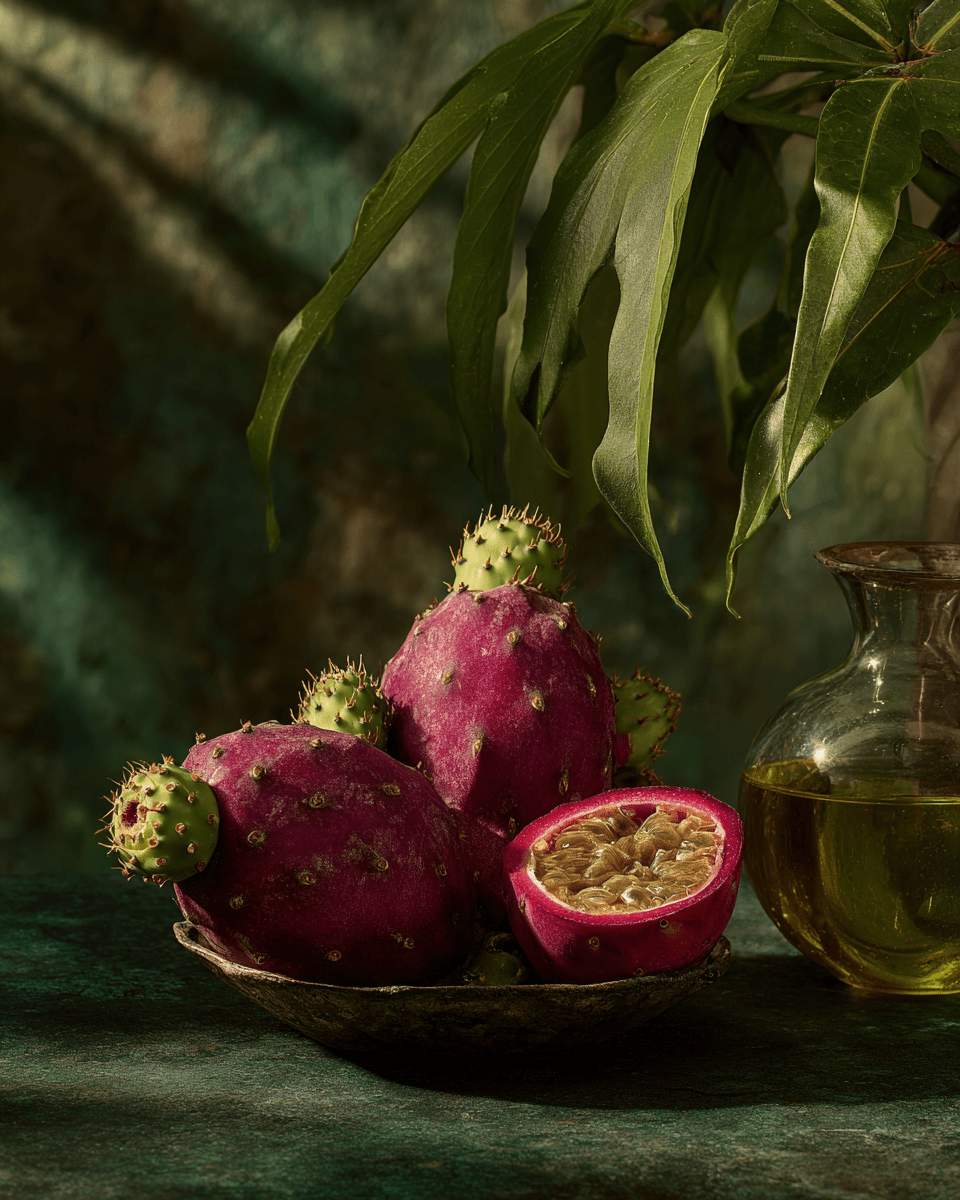
The combination of tea tree and prickly pear oil may seem counter-intuitive for those who believe that vegetable oils worsen imperfections. In reality, prickly pear oil (Opuntia ficus-indica) is one of the rare vegetable oils whose lipid composition (dominated by linoleic acid, omega-6) is appreciated for blemish-prone skin. Prickly pear oil, rich in linoleic acid (omega-6), is traditionally valued for helping to preserve the comfort and balance of the appearance of blemish-prone skin. Tea tree provides its purifying and soothing appearance; prickly pear oil helps preserve the comfort of the skin barrier and mattify the appearance of shiny areas. These two complementary active ingredients constitute Nopal Life's natural anti-blemish duo of choice. Our Skin Intelligence skin diagnostic evaluates your skin's profile (perceived imperfection type, intensity, triggering factors) to guide you towards a personalized routine combining tea tree, prickly pear oil, and complementary active ingredients in proportions adapted to your case.
Frequently asked questions
Tea tree is therefore not the first-choice active ingredient; gentle exfoliants (AHAs, urea) are more indicated, but tea tree can help maintain the comfort of perifollicular areas.
Q: Can tea tree be used on sensitive skin?
A: With caution and at very low concentrations (0.5-1%). Some sensitive skin reacts unfavorably even to these amounts. Prior testing is imperative, and formulas with soothing co-active ingredients (aloe vera, bisabolol) reduce the risk of discomfort.
Q: What is the optimal concentration of tea tree in an imperfection treatment?
A: For daily facial care (serum, gel), 1 to 2% is the appreciated and well-tolerated range. For targeted spot treatment, 5% is a commonly used concentration. Beyond that, the comfort/tolerance ratio deteriorates.
Q: How can I recognize quality tea tree essential oil?
A: Look for "Melaleuca alternifolia" on the label, an ISO 4731 certification, a terpinen-4-ol ≥ 30% and cineole ≤ 15% (verifiable on the chromatographic analysis sheet), brown tinted glass packaging, and origin traceability (preferably Australia).
Q: Can tea tree be used every day?
A: For local application on an imperfection, yes, for one to two consecutive days. For extended use, prefer formulated care that doses it correctly to preserve skin balance.
Q: Does tea tree dry out the skin?
A: Pure, it can be drying: that's why it is used diluted or for very targeted application, always accompanied by good light hydration.
Our star oil
Nopal Life pure prickly pear oil: rich in omega-6 and vitamin E for soothed and luminous skin.
Discover the oilFree diagnosis
Find the personalized routine adapted to your skin type in less than 3 minutes.
Take the diagnosisRead more
Information provided for cosmetic and educational purposes; it does not constitute medical advice.


Go further than this article
Get our skincare guides by email — and start with your free skin diagnostic: 2 minutes, advice tailored to your skin. We ship to the US, UK, Canada, Australia and 27 European countries; somewhere else? Sign up and you will be the first to know when we deliver to your country.
By signing up, you agree to our privacy policy. Unsubscribe in one click.