Tea Tree: The Complete Nopal Life Guide
A blemish appearing, a shiny area, irregular skin texture: tea tree is the targeted ally for blemish-prone skin. This guide explains how to use Australian tea tree appropriately—with precise, never aggressive application—and how to balance it with the softness of prickly pear oil.
Tea tree: definition, origin, and composition of the essential oil
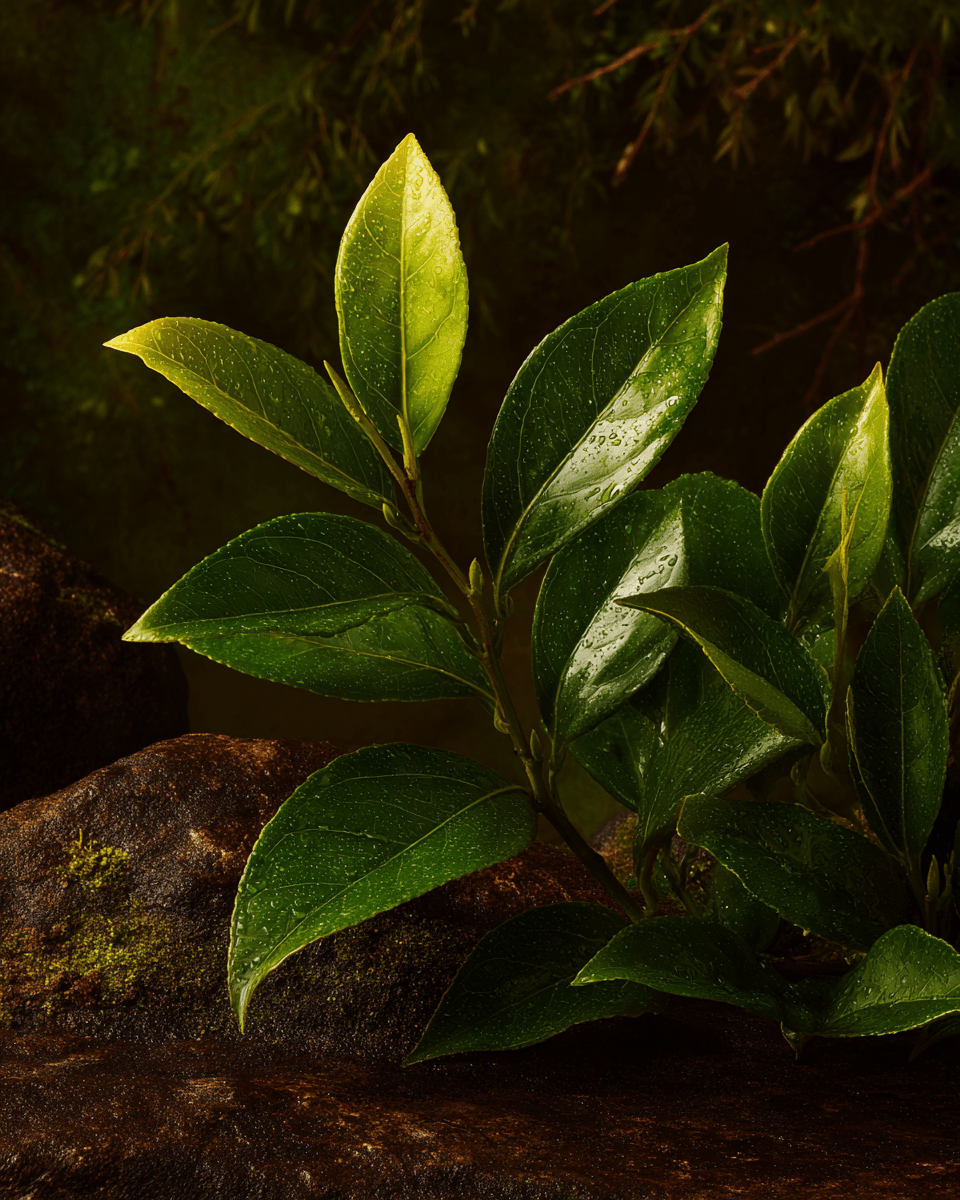
Tea tree essential oil is steam-distilled from the leaves and small branches of Melaleuca alternifolia, a tree of the Myrtaceae family endemic to the humid coastal areas of Queensland and New South Wales in Australia. The term “tea tree” comes from Captain Cook's sailors who, in the 18th century, brewed infusions from the aromatic leaves of the tree—unrelated to Asian tea (Camellia sinensis). The essential oil consists of about sixty volatile compounds, the most well-known in cosmetics being terpinen-4-ol (the most abundant component, associated with a purifying and soothing sensation, between 35 and 48% according to ISO 4730 standards), gamma-terpinene (12 to 22%), alpha-terpinene (5 to 13%), terpinolene, p-cymene, and 1,8-cineole (eucalyptol, which must remain below 15% to limit the risk of irritation). ISO 4730:2017 precisely sets the concentration ranges of major components to guarantee the authenticity and quality of the oil. In terms of galenic formulation, tea tree essential oil is a clear, colorless to pale yellow liquid, with a characteristic camphor-spicy odor, miscible in vegetable oils and alcohols, and poorly miscible in pure water. Its liposolubility allows it to diffuse well in oil-based products, where it is valued for blemish-prone areas. It is one of the most documented and widely used essential oils in the world of cosmetics.
The tree, Melaleuca alternifolia, grows exclusively in a coastal region of northern New South Wales, Australia. Its fine leaves are steam-distilled, and a considerable quantity is needed for one bottle.
The ISO 4730 standard sets the expected composition: at least 30% terpinen-4-ol, less than 15% 1,8-cineole. This second figure is as important as the first — it determines skin tolerance; a high level makes the oil more irritating.
An oil that does not display either the Latin name or this standard may be a blend. This is the only control accessible when purchasing, and it is worth more than any marketing claim.
The properties of tea tree in cosmetics
In cosmetics, tea tree is traditionally appreciated for its purifying and soothing sensation on blemish-prone areas and oily or combination skin. It is often used on skin whose comfort is challenged by imperfections; its combination with comforting active ingredients like niacinamide helps maintain skin comfort and appearance without harshness. This complementarity makes it a valued duo for maintaining a clear and balanced look for combination skin daily.
Tea tree essential oil is measured in drops and never otherwise. The common rule is one to two drops per ten milliliters of carrier—gel, vegetable oil, neutral cream—i.e., a concentration of less than 1%. Using the pure essential oil on the skin is the most common mistake made with this ingredient.
On blemish-prone skin, apply locally, once a day to start. Twice a day does not double the results and increases the risk of drying out the treated spot.
Three precautions are worth remembering: never use on young children, never on broken skin, and perform a patch test on the crook of the elbow before the first application. Essential oils are concentrates, and this one is no exception.
How to incorporate tea tree into your skincare routine
Tea tree essential oil should never be applied pure to the skin—an absolute rule in cosmetic aromatherapy. It must always be diluted in an appropriate excipient before topical use. Recommended dilutions vary by use: 1% (1 to 2 drops per 5 ml of product) for daily use on sensitive areas, 2 to 5% for targeted application on an isolated blemish, never exceeding 5% for prolonged use. Many compatible excipients exist: aloe vera gel, non-comedogenic vegetable oil (jojoba, hazelnut, prickly pear), light cream, hydro-alcoholic lotion. For the shiny and blemish-prone T-zone of combination skin, tea tree can be incorporated into a light serum or aqueous gel applied in the evening after cleansing. For targeted spot treatment, a 2 to 3% dilution in aloe vera gel applied directly to the blemish with a cotton swab helps improve its visible appearance. As part of a complete anti-blemish protocol, tea tree ideally fits into step 3 of a 5-step routine: cleansing → toner → targeted tea tree serum → hydrating serum → light cream. The Nopal Life Skin Intelligence™ diagnostic takes into account skin appearance and blemishes to precisely recommend the protocol adapted to your skin type and history. Never use tea tree without sun protection in the morning: monoterpenes can be slightly photosensitizing at high concentrations.
Three carriers are suitable: an aqueous gel for combination skin, a light vegetable oil for dry skin, a neutral cream for the rest. The choice of carrier matters as much as the dilution — a well-dosed active in an unsuitable carrier provides a poor experience.
Storage requires rigor. Away from light, bottle tightly closed, and not beyond the date after opening: an oxidized essential oil becomes significantly more irritating than on day one, without any noticeable change in smell.
Mistakes to avoid with tea tree essential oil
The first and most serious mistake: applying pure, undiluted oil to the skin. Dilution is not optional: it is a fundamental safety rule. Second mistake: using poor quality oil without checking the terpinèn-4-ol content. Cheap tea tree oils may have a terpinèn-4-ol content below 30% (ISO standard: minimum 35%), with an excess of p-cymene which increases irritant potential without improving the purifying sensation. Check for ISO 4730 certification or request the certificate of analysis (CoA) from the supplier. Third mistake: using it around the eyes. The periorbital area is extremely sensitive to essential oils. Fourth common mistake: in prolonged and intensive use, ignoring signs of contact sensitivity. Fifth mistake: combining tea tree with strong acids on the same evening. This combination over-exfoliates and over-irritates without additional benefit.
One mistake recurs more than others: increasing the dose when results are slow to appear. This active ingredient does not work that way — beyond 1% in the carrier, one primarily gains dryness and local redness, prolonging the problem one intended to treat.
Second mistake: using it over the entire face. A local touch, on the specific spot concerned, is sufficient. Treating an entire area for a few blemishes amounts to sacrificing comfort without gaining effectiveness.
Tea tree and sensitive or mature skin
In these cases, we work with low dilutions (0.5 to 1%) in rich and protective excipients to avoid any skin dryness. As mature skin is often more prone to sensitivity, greater caution is needed, not less. A patch test for 48 hours is imperative before any use on skin of this profile. For non-reactive sensitive skin with isolated blemishes, 1% tea tree in a soothing aloe vera gel is generally well tolerated and pleasant. For oily skin of all ages, it remains a top choice active, framed by good non-comedogenic hydration. Find our detailed recommendations in the complete skin guide.
On reactive skin, the dilution is reduced to one drop per twenty milliliters, and application remains occasional. 1,8-cineole is the compound responsible for most reported reactions: a standard-compliant oil contains little, an untraced oil can contain a lot.
On mature skin, the benefit is limited. This active addresses blemishes, a condition that becomes rarer with age, and its drying effect counteracts what skin already lacking in lipids seeks.
Tea tree at Nopal Life — the active in the formula
At Nopal Life, the selected tea tree essential oil complies with ISO 4730:2017, with a certified terpinen-4-ol content between 38 and 45% and 1,8-cineole below 5% to promote a purifying sensation while limiting irritant potential. It comes from a short steam distillation to preserve the light volatile fraction and is stored in amber glass bottles at controlled temperature to prevent the oxidation of monoterpenes—a process that increases the allergenic potential of aging oil. In our targeted facial care formulas, tea tree is incorporated at 0.3 to 0.8% in light emulsions combining prickly pear oil as a non-comedogenic lipid carrier. This alliance combines the purifying sensation of tea tree with the essential fatty acids and sterols of prickly pear, which help maintain skin comfort challenged by conventional anti-blemish treatments. Nopal Life facial care products integrate tea tree as a targeted functional active, never merely as an image or fragrance ingredient.
Frequently Asked Questions
Q: What dilution should I use tea tree on my face?
A: For daily use on targeted areas: 1 to 2% in a vegetable oil or aloe vera gel. For intensive spot treatment on isolated blemishes: 2 to 5% for punctual application. Never exceed 5% for prolonged use on the face. Never pure on the skin, without exception.
Q: How should I store tea tree essential oil to preserve its quality?
A: Tea tree oil oxidizes quickly in light, heat, and in the presence of oxygen—oxidation increases the irritating p-cymene content and reduces terpinen-4-ol. Always store it in an amber glass bottle, tightly capped, in a cool, dark place. Optimal shelf life after opening: 12 to 18 months maximum. Oil that has yellowed or changed odor should no longer be used.
Q: Can tea tree and niacinamide be used together?
A: Yes, it's even an interesting combination: niacinamide helps maintain skin comfort and appearance, which nicely complements the slightly drying effect of tea tree. Both active ingredients also provide complementary care for blemish-prone skin: tea tree for its targeted purifying sensation, niacinamide to help even out skin tone. Apply the niacinamide serum first (light aqueous phase), then the tea tree treatment diluted in oil.
Q: Can tea tree replace an entire anti-blemish routine?
A: No: it's a targeted action, not a routine. It complements gentle cleansing, light non-comedogenic hydration, and a weekly purifying mask—overall balance is key.
Q: How long before I see a difference on a blemish?
A: With local application, the appearance of a blemish usually improves in 2 to 4 days. Consistency of application matters more than the quantity applied.
However, it is recommended not to use it continuously and exclusively — 4 to 8-week courses interspersed with breaks help maintain long-term pleasantness of use.
RECOMMENDED TREATMENT
Pure Prickly Pear Seed Oil
Natural formula · Origin Algeria
DISCOVER THIS TREATMENT →PERSONALIZED ROUTINE
Nopal Life Skin Intelligence™
Free diagnostic · 2 minutes
DISCOVER MY ROUTINE → Tea tree - NOPAL LIFE" style="width:88px;height:88px;object-fit:cover;border-radius:8px;flex-shrink:0;" loading="lazy">
Ingredient Reference
Tea tree
natural purifying, targeted purification & balance for combination skin.
Discover the fact sheet →Read more
- Prickly Pear: The Green Gold of the Desert with Exceptional Anti-Aging Virtues
- How to Adopt the Right Anti-Aging Habits Daily
- At What Age Should You Start a Natural Anti-Aging Routine?
Information provided for cosmetic and educational purposes; it does not constitute medical advice.


Go further than this article
Get our skincare guides by email — and start with your free skin diagnostic: 2 minutes, advice tailored to your skin. We ship to the US, UK, Canada, Australia and 27 European countries; somewhere else? Sign up and you will be the first to know when we deliver to your country.
By signing up, you agree to our privacy policy. Unsubscribe in one click.