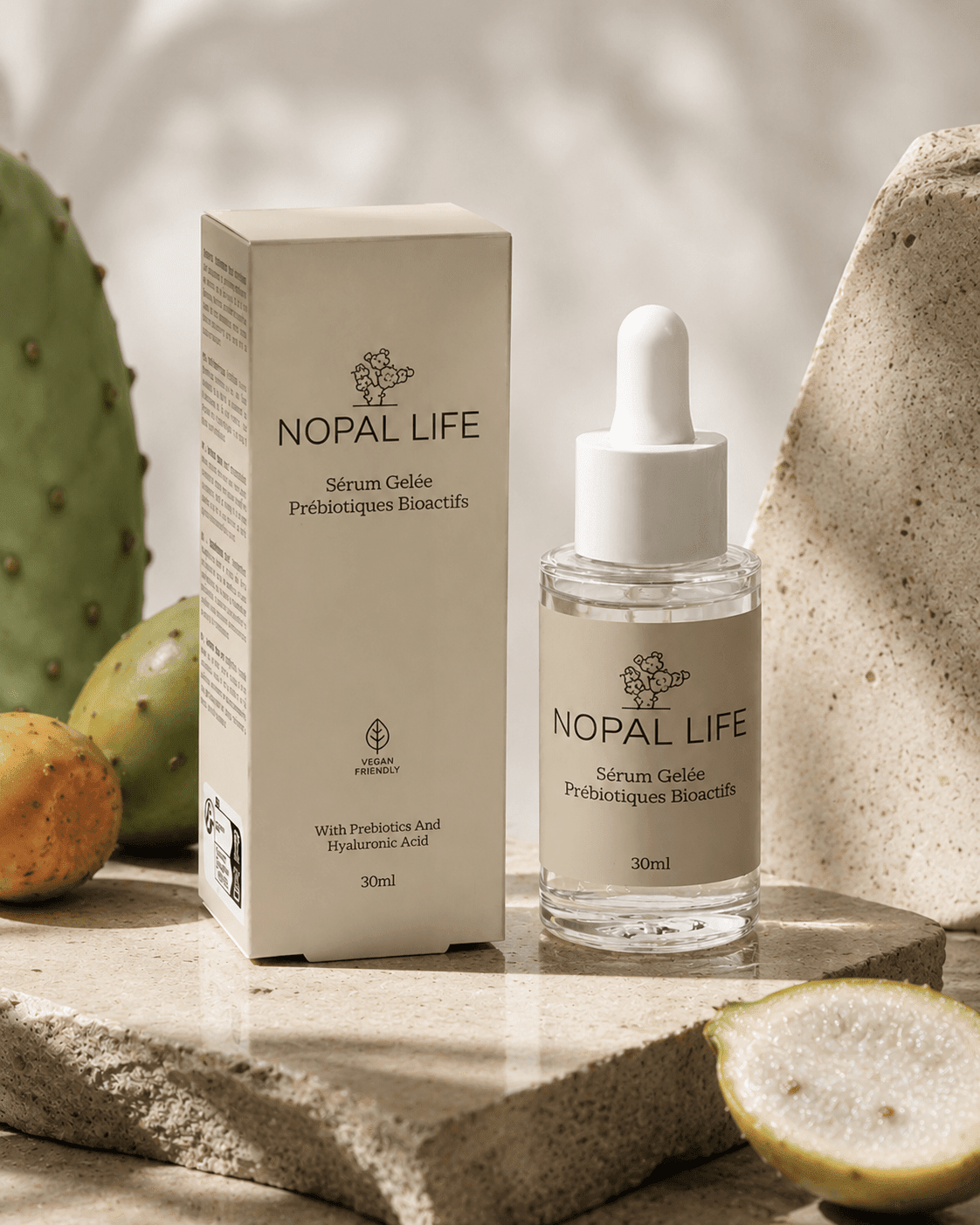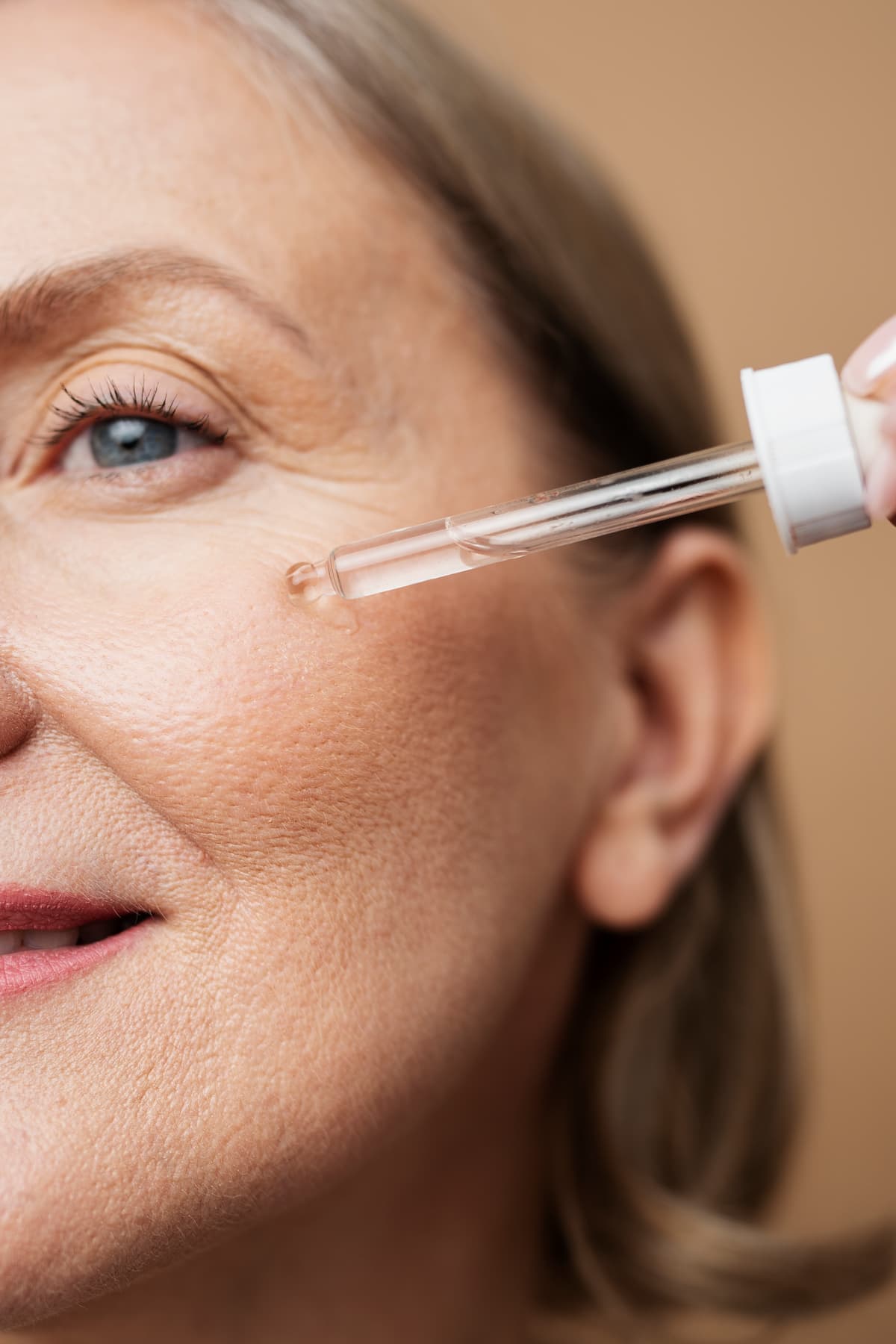
Face serum is often presented as the heart of a skincare routine. A few drops are enough, but these drops can concentrate powerful active ingredients capable of acting on hydration, complexion radiance, dilated pores, or signs of ageing.
However, with hundreds of serums available — hydrating, anti-ageing, brightening, organic, natural, vegan — it becomes difficult to know which one to choose.
The first mistake is to look for the best serum on the market.
The real question is rather: Which serum truly corresponds to my skin's needs today?
Skin is never entirely stable. It changes according to seasons, stress, sleep, diet, environment, and hormones.
One day it might lack water, another day it might become sensitive, and sometimes it might simply lack radiance.
That's why a good serum choice always starts with identifying the dominant need of the skin, even before looking at the active ingredients.
In this article, we will see:
-
how to identify your skin's main need
-
how to choose the right serum according to this need
-
how to understand key active ingredients like sodium hyaluronate, niacinamide, and ascorbyl glucoside
-
how to build a simple, organic, natural, and vegan routine if you wish
Understanding the role of serum in a skincare routine
Before choosing a serum, it's important to understand its place in a routine.
A serum is a concentrated active ingredient treatment, designed to target a specific skin concern.
Unlike a cream, it generally has a lighter texture that absorbs quickly into the skin.
Serum vs. cream
The main role of a cream is to:
-
nourish the skin
-
strengthen the skin barrier
-
limit water loss
The serum, on the other hand, acts more as a targeted treatment.
In a classic routine, the order of application is generally:
-
Face cleanser
-
Serum
-
Moisturiser
-
Sunscreen (in the morning)
Serum vs. face oil
Vegetable oils, often used in natural or organic skincare, primarily provide lipids that nourish the skin and improve its suppleness.
A hydrating or brightening serum acts more through hydrophilic active ingredients such as:
-
sodium hyaluronate
-
niacinamide
-
vitamin C and derivatives
Both can be complementary in a routine.
 |
 
|
Identify your skin's dominant need
Before choosing a face serum, it is essential to identify your skin's main need.
Here are some simple signs that can guide you.
Lack of hydration
Skin feels tight after cleansing, looks creased, or shows lines easily.
This skin type often benefits from a hydrating serum based on sodium hyaluronate.
Fragile skin barrier
Skin easily becomes red, stings, or reacts to many products.
In this case, a serum containing niacinamide can help strengthen the skin barrier.
Dull complexion and lack of radiance
The complexion appears tired, uneven, or less luminous.
Serums containing vitamin C derivatives like ascorbyl glucoside can help improve radiance.
Blemishes and enlarged pores
Pores are visible and the skin produces more sebum.
Serums containing niacinamide are often used to help regulate this aspect.
Signs of ageing
Wrinkles, loss of firmness, or lack of elasticity.
Serums combining hydration, antioxidants, and plumping active ingredients can support an anti-ageing routine.
Simple table to choose your face serum
| Skin need | Objective | Key active ingredients | Time of use |
|---|---|---|---|
| Dehydration | Hydrate and plump | sodium hyaluronate | morning and evening |
| Fragile barrier | Soothe and strengthen | niacinamide | daily |
| Dull complexion | Brighten and even out | ascorbyl glucoside | morning + SPF |
| Blemishes | Regulate pores | niacinamide | morning or evening |
| Anti-ageing | Prevent and smooth | sodium hyaluronate + antioxidants | morning and evening |
The three key active ingredients to know
To understand modern serums, three active ingredients appear very often.
Sodium hyaluronate: intense hydration
Sodium hyaluronate is a form of hyaluronic acid widely used in skincare.
It acts as a humectant, meaning it helps the skin retain water.
The most commonly observed benefits are:
-
more supple skin
-
feeling of comfort
-
plumped appearance
Hydrating serums containing this active ingredient are often used morning and evening.
Niacinamide: the versatile active ingredient
Niacinamide, also known as vitamin B3, is one of the most versatile active ingredients in cosmetics.
It can help to:
-
support the skin barrier
-
improve pore appearance
-
help even out skin tone
It is often used in serums for sensitive skin, combination skin, or blemish-prone skin.
Ascorbyl glucoside: a vitamin C derivative
Ascorbyl glucoside is a stable derivative of vitamin C.
It is often chosen in routines aiming to:
-
improve complexion radiance
-
support the skin's antioxidant protection
-
help reduce the appearance of pigment spots
Serums containing this active ingredient are generally used in the morning, followed by sunscreen.
How to choose an organic, natural, or vegan serum
Many people today are looking for skincare that is more respectful of the skin and the environment.
The terms organic, natural, or vegan therefore appear very often in cosmetic products.
However, it is important to understand that these terms do not automatically guarantee the tolerance or effectiveness of a product.
Here are some points to check.
Read the composition
Looking at the ingredient list (INCI) often helps identify the main active ingredients.
Check for fragrance
Sensitive skin may prefer fragrance-free formulas.
Observe the packaging
Antioxidant active ingredients, such as vitamin C derivatives, are often better protected in opaque or airless bottles.
Prioritize simplicity
An effective skincare routine generally contains few but well-chosen products.
 |
 |
Examples of simple routines with serum
An effective routine doesn't have to be complicated.
Hydration routine
Morning:
-
gentle cleanser
-
hydrating serum with sodium hyaluronate
-
moisturiser
-
sunscreen
Evening:
-
cleansing
-
hydrating serum
-
nourishing cream
Radiance Routine
Morning:
-
cleanser
-
vitamin C serum (ascorbyl glucoside)
-
cream
-
SPF
Evening:
-
cleansing
-
hydrating serum
-
cream
Sensitive Skin Routine
Morning:
-
very gentle cleanser
-
niacinamide serum
-
barrier cream
-
SPF
Evening:
-
cleansing
-
hydrating serum
-
soothing cream
Common mistakes with serums
Here are some very common mistakes.
Using too many products
Multiplying active ingredients can unbalance the skin.
Changing serums too quickly
Skin often needs several weeks to show improvement.
Applying too much product
Two to four drops are usually enough.
Forgetting sun protection
Routines aimed at radiance or anti-ageing almost always require an SPF.
Conclusion
Choosing a facial serum becomes much simpler when following clear logic.
It usually suffices to:
-
Identify the skin's primary need
-
Choose a suitable active ingredient (sodium hyaluronate, niacinamide, or ascorbyl glucoside)
-
Build a simple and regular routine
The best skincare results don't necessarily come from complicated routines, but rather from consistency and coherence.
FAQ
Which facial serum to choose at 30?
At 30, many people primarily seek to maintain good hydration and preserve skin radiance. A hydrating serum with sodium hyaluronate can be a good base.
Which facial serum to choose at 40?
From 40, routines often combine hydration and antioxidant protection. A hydrating serum in the evening and a radiance serum in the morning can be complementary.
Which facial serum to choose at 50?
At 50, skin comfort and density often become priorities. Hydrating and antioxidant serums are frequently integrated into anti-ageing routines.
Can you use several serums?
Yes, but it's best to introduce products gradually and keep the routine simple.
How long does it take to see results?
Hydrating effects can be felt quickly, while changes related to radiance or skin tone uniformity may take several weeks.
Should you apply a serum every day?
Most serums can be used daily, morning and evening, according to product instructions.
Cosmetic safety reminder:
It is advisable to perform a patch test on a small area of skin before using a new product. Introduce active ingredients gradually and consult a healthcare professional in case of persistent reaction.