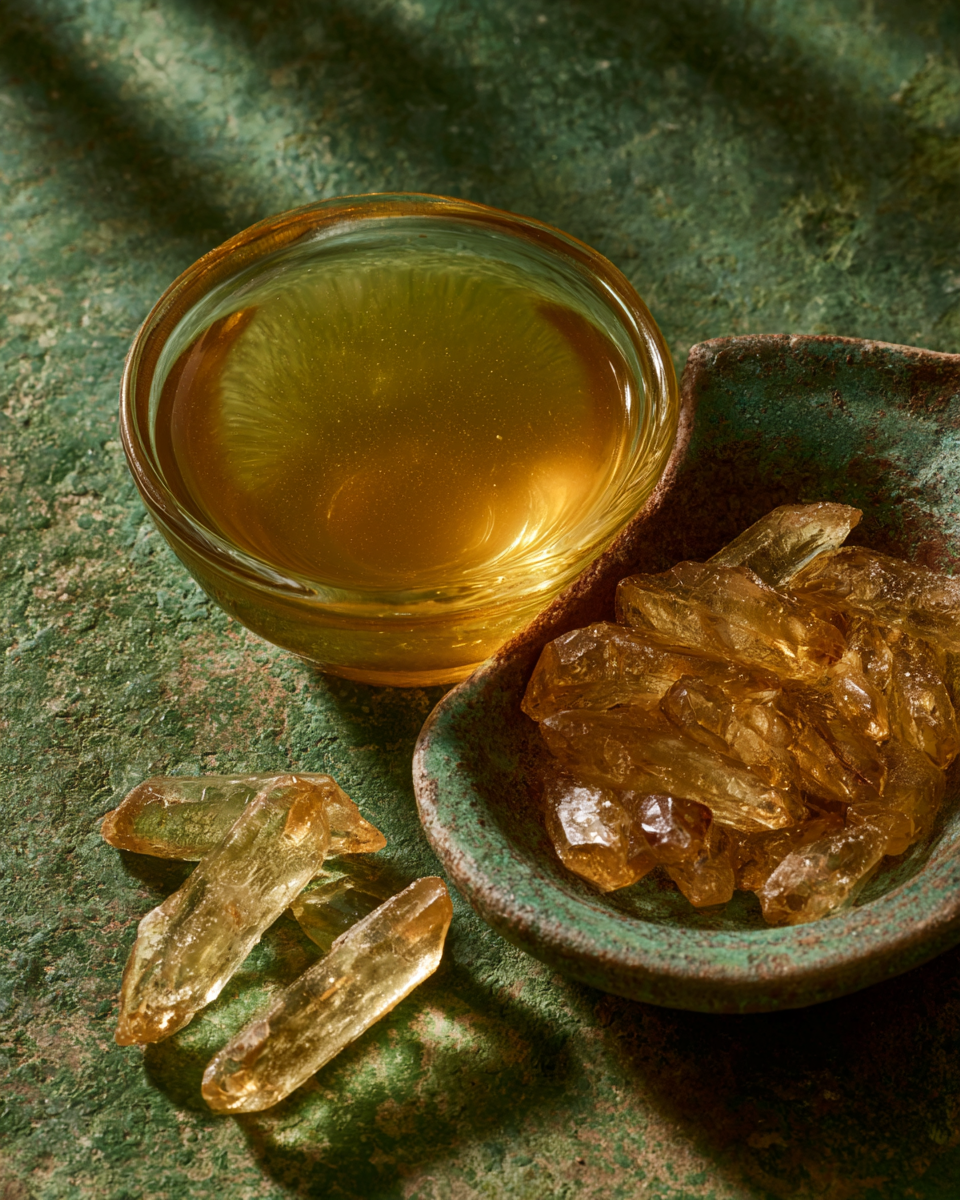
Rosehip oil: morning or night?
In the evening, in the vast majority of cases. Three reasons converge, and none of them relate to a supposed incompatibility with daylight.
The short answer
Apply rosehip oil in the evening, as the last layer, on still supple skin. Two to three drops of oil are enough for the entire face.
Morning application is still possible on very dry skin, in a very small amount and under sun protection. But this is not the best use of this oil.
Rosehip oil is applied after everything that needs to penetrate. Its use in an evening routine therefore follows the usual order: cleansing, hydration, any active ingredient, then rosehip oil last.
This vegetable oil contains vitamin A in the form of trans-retinol, carotenoids, and essential fatty acids. Its benefits stem from this combination.
On wrinkles and old scars, rosehip oil works slowly. Three months of regular use is the minimum to judge its effectiveness.
This oil is extracted from the seeds of the rosehip plant, cultivated mainly in Chile. The seeds yield an oil rich in unsaturated fatty acids and carotenoids, hence its orange hue.
Evening application is therefore essential for a simple reason: the sun degrades what these seeds provide. An oil rich in light-sensitive natural compounds is reserved for nighttime use.
First reason: oxidation
Rosehip oil is very rich in polyunsaturated fatty acids, which makes it fragile. Light and heat accelerate its oxidation, even once applied to the skin.
Oil applied in the morning spends the day exposed. This is not dangerous, but its useful fraction degrades faster than if it had worked overnight.
The unsaturated fatty acids in rosehip oil are fragile. They are what give it its properties, and they are what are damaged most quickly by light and heat.
An oxidized oil does not just lose its effectiveness: it can become irritating to the skin surface. A rancid smell is a signal that the bottle should be discarded.
Second reason: color
This oil has an amber to orange tint, due to its carotenoids. This is a sign of quality, but it slightly stains fair skin tones.
Under makeup, the result becomes uneven. Rosehip oil does not mix well with foundation, and this is a very concrete reason to reserve it for evening use.
This tint also stains clothes and pillowcases. This is a practical inconvenience, not a quality defect: a pale oil has often been refined, and therefore impoverished.
On scars, the desired effect depends more on regularity than quantity. Recent acne scars respond better than old scars.
Third reason: texture
Rosehip oil is a so-called dry oil: it penetrates well and leaves no greasy film. However, it does not mix well under sun protection, which needs a stable base to form its film.
In the evening, this constraint disappears. Rosehip oil becomes the last layer of a routine, which is exactly its place.
Its place in an evening routine
Cleansing, then a product that provides water — hydrating serum, lotion, or simply still damp skin. Any active ingredient if you use one. Then rosehip oil, last.
A cream can come before the oil on very dry skin, or be replaced by it on normal skin. Rosehip oil seals, it does not hydrate.
With a retinoid, rosehip oil is applied afterwards, on perfectly dry skin. It then cushions the initial irritation without significantly hindering the active ingredient.
This evening use allows the oil all night to work. On old marks and scars, daily application for three months gives better results than irregular, more generous use.
The essential fatty acids in this oil — linoleic acid, alpha-linolenic acid — contribute to skin comfort. Its vitamin A fraction and carotenoids complement these benefits, without transforming anything.
On established wrinkles, no vegetable oil produces erasure. This oil improves suppleness and appearance, and it's better to know this before expecting anything else from it.
Application is done last, after the serum and before — or instead of — the cream. Two to three drops are enough for the entire face; a few more drops if you also treat the neck.
Warming the drops between the palms before application improves distribution. This gesture avoids pressing on the skin, which is important on an area already marked by wrinkles.
On stretch marks, use by massaging, once or twice a day. Recent, still red stretch marks respond better than old ones that have turned white.
Cases where morning application is justified
On very dry skin in winter, a drop of rosehip oil in the morning provides real comfort. Apply it under sun protection, in minimal quantity, and accept the slight golden glow.
Also on the body: hands, elbows, legs. The question of color and makeup no longer arises, and rosehip oil finds an unreserved morning use there.
Morning use is still possible on the body without any reservation: hands, elbows, legs. The question of color no longer arises, and the benefits are the same.
On the face, if you insist on morning application, a single drop is enough, well spread, under sun protection.
What the timing does not change
Evening use does not improve the effectiveness of rosehip oil on marks or suppleness. It simply avoids three practical inconveniences.
What matters more: applying it daily rather than intermittently, on still supple skin, and finishing the bottle within six months before it oxidizes.
The use of this oil always follows the same principle, regardless of the time: last, on still supple skin, in a small quantity. Rosehip oil seals what has been applied before.
The benefits of rosehip oil stem from its fatty acid composition and its vitamin A fraction. The application time does not modify this composition; it only avoids three practical inconveniences.
Skin regeneration follows its own rhythm, about twenty-eight days in young adults, slower thereafter. No application time modifies this regeneration.
What modifies it are regular care, sleep, and sun protection. Rosehip oil is part of this care; it is not its pivot.
Results on fine wrinkles and skin texture require eight to twelve weeks of continuous use. For stretch marks, count on more.
What this oil does not replace
Sun protection, regardless of the application time. No vegetable oil offers a usable SPF. Daily sun protection remains essential, and it acts on signs of aging more than this oil.
It does not replace sun protection. Nothing in its properties filters the sun, and applying it in the morning thinking it will protect you is a common mistake.
Nor does it replace a source of hydration. An oil slows down water loss; it does not provide it. Hydration comes from the aqueous phase of the treatment, applied beforehand.
What it does promote, however, is the comfort of the skin surface and the appearance of the skin texture. This is real, visually measurable, and that is enough to justify its place.
A useful clarification
This product is cosmetic and improves the appearance of the skin without treating any condition. A reaction that persists after stopping the product requires dermatological advice.
So-called natural products are not exempt from reactions. The natural components of a vegetable oil can cause sensitivity, and a patch test on the inside of the elbow before the first application remains the simplest precaution.
Choose a virgin, first cold-pressed oil, in a dark bottle. The advertised properties depend much more on the extraction than on the displayed price.
Oxidation determines the timing
If rosehip is applied at the end of the day, it is primarily because its unsaturated fatty acids do not tolerate light and air well. A face oil with vitamin E addresses the same problem through its formulation rather than its timing — the antioxidant is already in the bottle.
The "Morning or Evening: When to Apply" series
For each ingredient, the important time and the reason that dictates it.


Go further than this article
Get our skincare guides by email — and start with your free skin diagnostic: 2 minutes, advice tailored to your skin. We ship to the US, UK, Canada, Australia and 27 European countries; somewhere else? Sign up and you will be the first to know when we deliver to your country.
By signing up, you agree to our privacy policy. Unsubscribe in one click.