Why is prickly pear seed oil more expensive?
Why is prickly pear seed oil much more expensive than most vegetable oils? The answer lies in a single figure: it takes nearly a ton of fruit to produce just one liter of oil. With its minuscule yield, manual harvesting, and cold-pressing, its high price reflects a production reality—and a guarantee of quality.
A Minuscule Yield
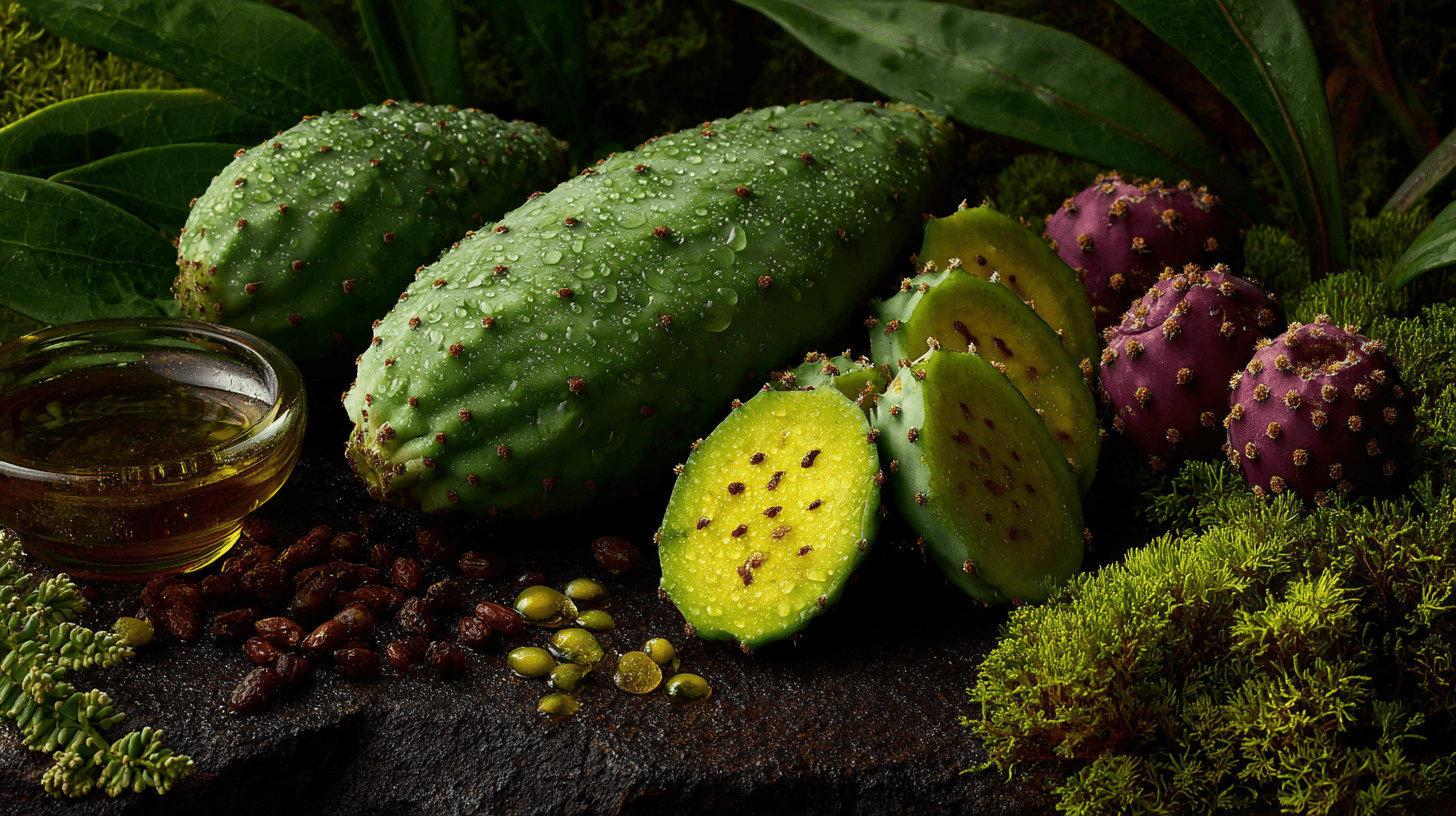
The primary price factor is the yield. The prickly pear fruit contains only a small quantity of seeds, and each seed holds only a tiny fraction of oil. Specifically, it takes about one ton of fruit, or several tens of thousands of figs, to obtain one liter of oil. By comparison, argan or olive oil offers a much higher yield (see Prickly Pear Seed Oil: All Its Skin Benefits).
Manual Harvesting and Extraction
Prickly pears are harvested by hand, from cacti bristling with thorns, often in arid regions. The pulp then needs to be extracted, the seeds collected, washed, dried, and then pressed. Each step requires time and labor. This artisanal production chain, which is difficult to mechanize, heavily impacts the final cost (see Prickly Pear: From Fruit to Oil, the Extraction Process).
Cold-Pressing, More Costly but Essential
To preserve vitamin E and delicate fatty acids, quality oil is cold-pressed, without heat or solvents. This method preserves active ingredients but further reduces the yield: less oil is extracted than with hot or chemical extraction. This is a choice for quality that comes at a cost (see Composition of Prickly Pear Seed Oil: What Makes It Unique).
A Rare Composition Justifying Its Value
Beyond the difficulty of production, the oil is also valuable for what it contains: one of the highest vitamin E contents in the plant kingdom, a majority of essential linoleic acid, and soothing sterols. This richness, combined with a light texture, makes it a premium active ingredient sought after by high-end cosmetics (see Vitamin E and Prickly Pear: an Antioxidant Duo).
The price of prickly pear oil is judged by the bottle, but evaluated by the dose. Two drops are enough for a face: a 30 ml bottle lasts six to eight months with daily use, bringing the monthly cost below that of a mid-range cream.
Comparing prices per liter between two brands says nothing until you know what each bottle contains. An oil from cold-pressed, unrefined, and uncut seeds does not have the same content as a 100% advertised but mixed diluted oil. This is the point that determines efficacy, and it is read on the INCI list, not on the price tag.
Beware of Prices That Are Too Low
An abnormally low price should raise a red flag. It often hides:
- oil diluted with cheaper oils;
- hot-extracted or refined oil, depleted in active ingredients;
- questionable quality or purity.
Paying the right price ensures a pure, cold-pressed, and truly active oil (see How to Recognize Quality Prickly Pear Seed Oil?).
How to Make Your Purchase Cost-Effective
The high price is relative when considering that:
- a few drops are sufficient for each application;
- the oil is multi-purpose: face, eye contour, body, hair (see How to Use Prickly Pear Seed Oil on the Face?);
- properly stored, it keeps for a long time thanks to its richness in vitamin E (see Preservation of Prickly Pear Seed Oil: Our Tips).
A bottle therefore lasts much longer than it seems.
Frequently Asked Questions
Why is it so expensive?
Mainly because of its minuscule yield (one ton of fruit for one liter) and its manual production.
Is a low price necessarily a bad sign?
It should raise a red flag: the oil may be diluted, refined, or of poor quality.
Is it worth the price?
For those looking for an exceptional natural anti-aging and radiance treatment, yes; and a few drops are sufficient per application.
How to pay less without sacrificing quality?
Choose an appropriate format, use it sparingly, and store it properly to avoid waste.
In Summary
The high price of prickly pear seed oil is explained by a minuscule yield, manual harvesting and extraction, and demanding cold-pressing. This is the cost of a rare, pure, and truly active oil—where just a few drops are enough to show its value.
Discover NOPAL LIFE Prickly Pear Seed Oil, cold-pressed and organic, at a fair price for its quality. Get your skin diagnosis to find out how to get the most out of it.
This article is provided for informational purposes only and does not replace the advice of a healthcare professional.
Information provided for cosmetic and educational purposes; it does not constitute medical advice.
The products mentioned in this article


Mature skin · Dry skin

Go further than this article
Get our skincare guides by email — and start with your free skin diagnostic: 2 minutes, advice tailored to your skin. We ship to the US, UK, Canada, Australia and 27 European countries; somewhere else? Sign up and you will be the first to know when we deliver to your country.
By signing up, you agree to our privacy policy. Unsubscribe in one click.