Postbiotics and the microbiome: where does cosmetic research stand in 2026?
In 2026, the skin microbiome remains one of the most active areas of cosmetic research. And one family of active ingredients is making its mark: postbiotics — non-living, stable, and well-tolerated bacterial derivatives. Here's a sourced overview of what we really know, and what it changes (or doesn't change) for your skin — without overselling.
Skin microbiome: what are we talking about?
The skin harbors a true ecosystem of microorganisms — bacteria, yeasts, archaea — that coexist on its surface: this is the skin microbiome. A balance of this flora is now associated, in the literature, with a more functional skin barrier and more comfortable skin. "Microbiome-friendly" cosmetics therefore seek to respect and support this balance rather than strip it away.
Several billion microorganisms occupy each square centimeter of skin, and their composition varies depending on the area: oily foreheads do not host the same species as dry forearms. Healthy skin therefore does not have a unique signature, but rather that of its environment.
The beneficial bacteria in this ecosystem occupy the terrain and maintain a slightly acidic pH, which limits the establishment of undesirable species. It is this occupation, more than a direct action, that contributes to surface defense.
Too frequent or too harsh cleansing disrupts this balance for several hours. Maintaining a stable flora is more important than adding ingredients: this is the point that recent research most regularly emphasizes.
Pre-, pro-, postbiotics: three families to distinguish
- Prebiotics: "nutrients" that promote good skin bacteria.
- Probiotics: living microorganisms — attractive on paper, but difficult to stabilize in a cosmetic product.
- Postbiotics: non-living derivatives (metabolites, fragments, inactivated ferments) with biological activity. More stable, simpler to formulate and store, they explain a large part of the current enthusiasm.
Prebiotics nourish the beneficial bacteria already present: these are sugars that some species can degrade and others cannot. Probiotics are living bacteria introduced from outside. Postbiotics, finally, are what these bacteria produce.
Three strategies, three formulation constraints. Only the first and third are easily suitable for a cosmetic product: maintaining live bacteria in a jar requires a cold chain that the market does not follow.
These compounds help maintain a healthy flora and contribute to surface defense. The different ingredients in this family act through distinct pathways, which is what makes comparisons between products so difficult.
Prebiotics nourish the beneficial bacteria already present. Probiotics are living bacteria introduced from outside. Postbiotics are what these bacteria produce – cell wall fragments, organic acids, antimicrobial peptides.
Unlike live probiotics, this third family requires neither a cold chain nor special packaging. This explains its rapid spread in ranges designed to strengthen the skin barrier.
These different ingredients act through distinct pathways, making comparisons between products difficult. The most reliable indicator when buying remains the word "ferment" in the ingredient list, often alongside the name of the strain used.
What the research shows
Several studies indicate that certain postbiotics can support ceramide synthesis, strengthen barrier function, and promote hydration, particularly by helping to limit transepidermal water loss (TEWL). Bacterial metabolites — such as short-chain fatty acids (SCFAs) derived from skin bacteria like Staphylococcus epidermidis — are being studied for their role in the production of barrier lipids (ceramides, filaggrin) and the maintenance of a slightly acidic skin pH, unfavorable to imbalances.
In terms of trials, studies on specific ferments or strains report encouraging signs regarding skin elasticity and the appearance of fine lines. But beware: we are talking here about cosmetic effects (appearance, comfort), never treatment.
Most of the inflammation studied in this field has been at the intestinal level, where the discipline originated. The cutaneous transposition is recent: sample sizes are small, durations short, and protocols vary from one team to another.
What emerges most regularly is an improvement in comfort and better water retention, useful for strengthening the skin barrier in reactive areas. This is a modest result, and it is essential to present it as such.
An order of magnitude to put the subject in perspective: approximately one million microorganisms per square centimeter of skin. This population varies according to the body area and regenerates within a few hours after washing, from reservoirs located in the follicles.
Limitations to be aware of (and they matter)
Research remains heterogeneous: sometimes small sample sizes, variable protocols, and especially "microbiome-friendly" claims that are still poorly defined from a regulatory standpoint. Formulation itself is a challenge (stability, dosage, preservation). In other words: credible promises and real potential, but proof to be consolidated — and a lot of marketing to filter.
Three methodological limitations consistently arise. Sample sizes are small, rarely more than a few dozen people. Durations are short, eight to twelve weeks. And measurements often focus on laboratory markers rather than on what the person observes.
None of these limitations invalidate the field; all require caution in conclusions. A solid lead in the laboratory is not yet an established result on living skin, and repeating this is not pessimism but accuracy.
Towards customized microbiome cosmetics
The underlying trend is towards personalization: better understanding each individual's skin profile, then proposing synbiotic (pre + post) formulas that support the skin's balance without aggressing it. "Gentle" cosmetics — respectful cleansers, soothing active ingredients, non-stripping care — are becoming a standard, and respect for the microbiome a central argument.
These ingredients are now appearing in formulas for reactive skin, where the goal is to maintain a stable environment rather than to correct it. Various fermentation-derived compounds are used, often under commercial names that mask their true nature.
A practical tip for buyers: look for the word "ferment" in the ingredient list. This is the most reliable marker for this family, much more so than the claims highlighted on the packaging.
What they help maintain is healthy skin rather than transformed skin. Strengthening the skin barrier through this pathway takes weeks and is measured by comfort, not appearance.
The NOPAL LIFE angle
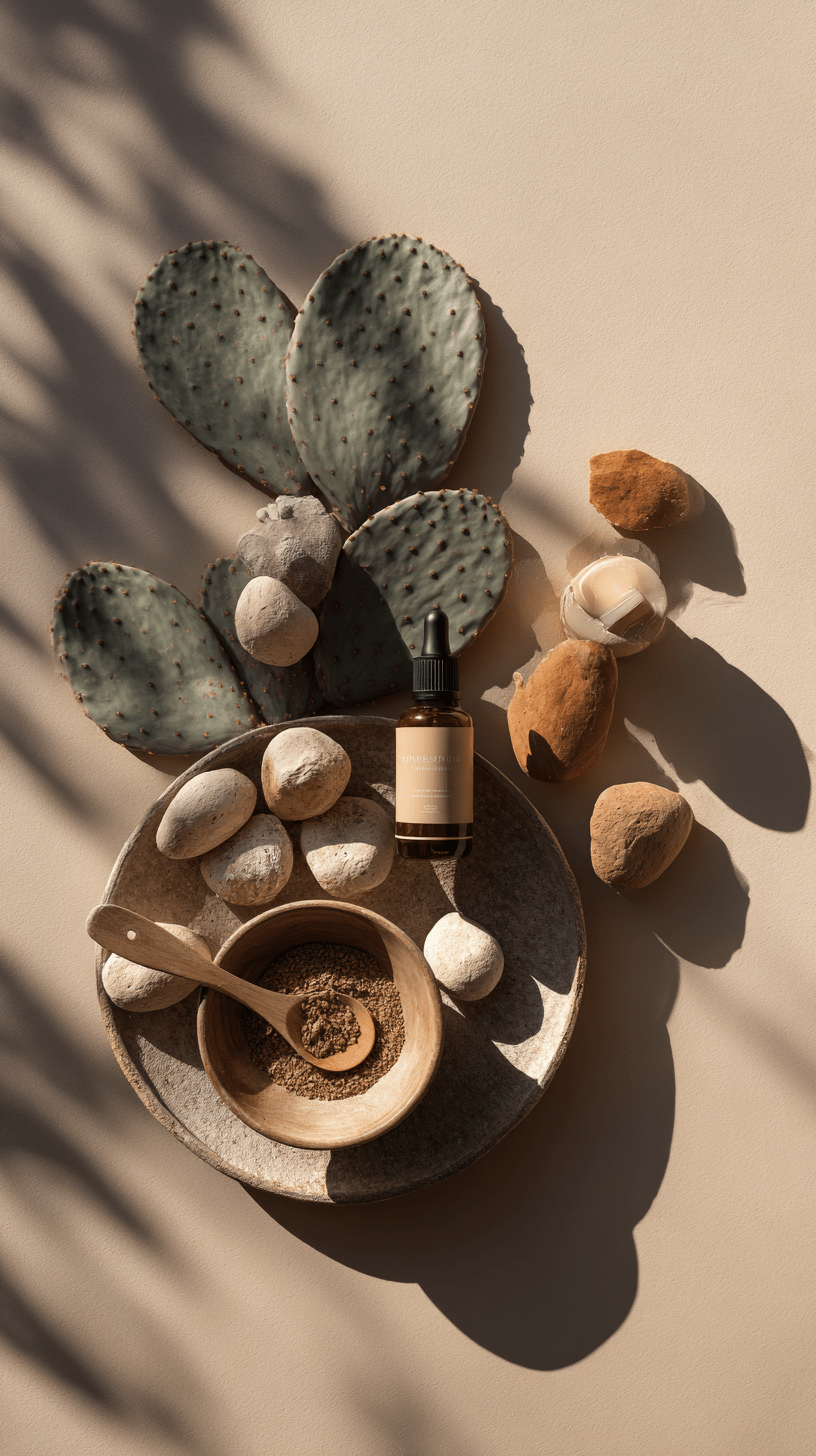
This logic aligns with NOPAL's DNA: natural and gentle skincare that seeks to respect the skin's balance rather than force it. This is also why prickly pear mucilage — this viscous and moisturizing fraction of the cactus — is studied for its prebiotic potential and its moisturizing film effect. To find out which actions truly suit YOUR skin (and avoid unintentionally stripping it), the safest option remains our free diagnosis: /pages/diagnostic.
Our position in this field is cautious and deliberate. Fermentation-derived compounds are interesting ingredients whose described action consists of maintaining a healthy flora rather than transforming it. This is useful, and it is unspectacular.
What is essential in our eyes lies upstream: not to aggress. Gentle cleansing, a short routine, and regular protection do more to strengthen the skin barrier than any ingredient added on top of a stripping habit.
The different compounds in this family act through distinct pathways, and none of them negate this foundation. This is what we tell anyone who asks if these products are worth their price: they are worth what the routine they are integrated into is worth.
Frequently asked questions
Is postbiotic the same as probiotic?
No. Probiotics are living; postbiotics are non-living derivatives (metabolites, inactivated ferments), more stable and easier to integrate into a skincare product.
Is it scientifically proven?
There are positive signals (barrier, hydration, comfort), but the evidence still needs to be consolidated: we are talking about cosmetic aid for the appearance of the skin, not a treatment.
Should all cleansers be banned to "protect" your microbiome?
No: it's mainly about avoiding overly stripping actions and opting for gentle, well-formulated skincare.
Sources: "The Skin Microbiome Revolution: The Science and Challenges of Prebiotics, Probiotics, and Postbiotics in Skincare," Cosmetics (MDPI), 2026 — mdpi.com/2079-9284/13/1/43; A. Santos et al., "A review of skin microbiome and new challenges to cosmetic microbiome-friendly formulations," International Journal of Cosmetic Science (Wiley) — doi 10.1111/ics.70073; "Microbiome and Postbiotics in Skin Health" (NIH/PMC) — pmc.ncbi.nlm.nih.gov/articles/PMC12025169. Informational article, not medical advice.
Information provided for cosmetic and educational purposes; it does not constitute medical advice.
The "2026 Watch" series
What natural cosmetics have brought new this year, and what to remember from it.
- Skin longevity: why prevention dethrones anti-aging in 2026
- Serums 2026: PDRN, exosomes, and the microbiome, the bio-regenerative wave
- Sea fennel: the anti-pollution active ingredient on the rise in 2026
- Neurocosmetics 2026: when stress shows on the skin
- Prickly pear seed oil: a booming global market (2026)
- AI skin diagnosis: where is the technology in 2026?


Go further than this article
Get our skincare guides by email — and start with your free skin diagnostic: 2 minutes, advice tailored to your skin. We ship to the US, UK, Canada, Australia and 27 European countries; somewhere else? Sign up and you will be the first to know when we deliver to your country.
By signing up, you agree to our privacy policy. Unsubscribe in one click.