Radiant mature skin: the 21-day quantified ritual
As the years pass, skin tells a beautiful story—but sometimes it needs a boost to regain its former clarity. Here are numerical benchmarks rather than promises: an 18-point self-observation grid, a timed routine, a dated 21-day program, a five-vegetable oil test bench, and the calculation of actual cost-per-use.
Key takeaways
- Three mechanisms combine: thinned hydrolipidic film, slowed natural renewal (stratum corneum: ~20 days in young adults, over 30 days after 50), and a less smooth surface that poorly reflects light.
- Nourish a lot, exfoliate little: once every 7 to 10 days is enough.
- The decisive step takes 60 seconds: moisturizer on still-damp skin, then 3 to 5 drops of vegetable oil as the final layer.
- Comfort returns in 3 to 5 days, luminosity is confirmed over 21 days.
- A 30 ml bottle = approximately 210 applications of 4 drops, or nearly 7 months: this is the figure to compare, not the usual displayed price.
What really changes with age
The protective film thins. Sebum secretion gradually declines, significantly after age 50, especially in women (Pochi, Strauss & Downing, Journal of Investigative Dermatology, 1979). Water evaporates faster, leading to discomfort. The moisturizer that sufficed at 30 leaves a tight feeling two hours after application at 55.
Natural skin renewal slows down. The renewal time of the stratum corneum increases from about 20 days in young adults to over 30 days after age 50 (Grove & Kligman, Journal of Gerontology, 1983). Surface cells linger for about ten extra days, accumulating and dulling the complexion—hence that gray appearance even after a full night's sleep.
The skin's texture becomes rougher. A smooth surface reflects light directionally: this is what the eye perceives as radiance. An irregular texture diffuses it. This is a purely optical phenomenon, therefore quickly reversible by smoothing and plumping.
| Mechanism | Numerical benchmark | In the mirror | The responsive action | Timeline |
|---|---|---|---|---|
| Thinned hydrolipidic film | Significant decrease in sebum after 50 | Tightness 1 to 2 hours later, roughness | 3 to 5 drops of vegetable oil in the evening | 3 to 5 days |
| Slowed renewal | ~20 → over 30 days | Gray veil, makeup clings | Gentle exfoliation, every 7 to 10 days | 1 to 2 applications |
| Irregular surface | Worsened below 30% humidity (heated air in winter) | No reflection on the cheekbone | Hyaluronic acid + glycerin on damp skin | 7 to 14 days |
The 6-point self-observation grid
Rate from 0 to 3, in daylight, without makeup, two hours after your last skincare. Repeat on D21 under the same conditions: the difference is what matters.
| Criterion | 0 | 1 | 2 | 3 |
|---|---|---|---|---|
| Radiance | Clear reflection on cheekbone | Dimmed reflection | Uniform matte appearance | Grayish even after rest |
| Firmness | Instant return after pinching | Return < 1 second | Slower return | Persistent mark |
| Dryness | No discomfort | Temporary tightness | Tightness 1 to 2 hours later | Roughness, fine flakes |
| Uniformity | Homogeneous color | More colored areas | Spots visible at 50 cm | Marked contrasts |
| Texture | Fine and regular | Open pores in the center of the face | Irregular texture | Dehydration lines |
| Foundation hold | Smooth finish all day | Powdery effect in the evening | Highlights fine lines by midday | Cracked appearance |
Reading your score out of 18. 0 to 5: occasional need, maintenance is enough. 6 to 11: real nutritional need, this is where the ritual below makes the biggest difference. 12 to 18: prioritize comfort — nutrition alone for seven days, then exfoliation.
The grazing light test. Facing a window, slowly turn your head until the light is almost parallel to your cheek. What frontal lighting erases, grazing light reveals: a fine grid pattern on the cheekbone almost always indicates surface dehydration—the most reversible sign of all.
Free diagnosis · 2 minutes
Your score out of 18 translated into a concrete, step-by-step routine.
Start my free diagnosis →
The 5-step, timed routine
Four minutes in the morning, six in the evening.
1 · Cleanse, 60 seconds, lukewarm water (around 30 °C, never hot). If it feels tight within two minutes, the cleanser is too harsh, regardless of its price. In the morning, a simple rinse with lukewarm water is often enough after age 50.
2 · Exfoliate every 7 to 10 days. Since renewal takes over 30 days, exfoliating twice a week removes a layer that hasn't had time to rebuild. Dryness score 0-1: every 7 days; 2: every 10; 3: suspend for two weeks. Always in the evening.
3 · Hydrate on still-damp skin, within 60 seconds. Residual water is then captured by the humectants in the formula instead of evaporating. Just the right dose: approximately 0.5 ml for the face and neck—a generous pea-sized amount. Below that, the layer is too thin; above, it leaves a sticky film.
4 · Nourish, 3 to 5 drops. Warm them in the palms of your hands—when warm, the oil spreads in a thinner layer—then press without rubbing, from chin to temples, including the neck. Finish with 20 seconds of pressing on the cheekbones. Always over the cream, never underneath.
5 · Protect every morning. Sun protection offers the best effort-to-benefit ratio of the entire routine, even in the city and on cloudy days. ANSES reminds us that cumulative exposure is the primary modifiable factor in visible aging.
The Radiance & Unified Complexion collection and the mature skin routine bring together the products designed for this purpose.
The 21-day program, dated
Three weeks do not complete a full renewal cycle after age 50—it exceeds 30 days. However, it is the period after which surface effects become visible: the honest minimum time before judging, and the first milestone of the program. Actions are introduced one by one, to identify what might be causing discomfort.
| Period | Morning | Evening | Weekly action | What we observe |
|---|---|---|---|---|
|
D1 → D7 Establish comfort |
Lukewarm water 30 s · 0.5 ml moisturizer · sun protection | Cleansing 60 s · 0.5 ml · 3 drops | None | End of tightness from D3-D4 |
|
D8 → D14 Awaken the surface |
Same + 2 drops on cheekbones | Same, 4 drops face and neck | D8: first exfoliation | Finer texture, foundation clings less |
|
D15 → D21 Consolidate |
Same + eye contour, 2 rice grains | Same · massage 60 s | D18: second exfoliation | Visible reflection on the cheekbone |
| D21 | Redo the 6-point grid, same conditions as D0. | −3 to −5 points out of 18 = consistent result | ||
Nothing changed on D21? Most often, the quantities are insufficient: 0.5 ml is visible in the palm. Otherwise, the dominant need is not nutrition but uniformity, and the routine needs to be reoriented.
Five vegetable oils on the test bench
The fatty acid composition determines feel, penetration, and stability. Orders of magnitude, variable depending on botanical origin and pressing.
| Plant | Linoleic acid | Tocopherols (Vitamin E) | Feel | Timing | Drops |
|---|---|---|---|---|---|
|
Prickly pear seed Opuntia ficus-indica |
≈ 55 to 65% | Very high (γ-tocopherol) | Dry, rapid penetration, no film | Evening; morning on cheekbones | 3 to 5 |
|
Argan Argania spinosa |
≈ 30 to 36% | High | Moderately dry | Evening | 3 to 4 |
|
Rosehip Rosa rubiginosa |
≈ 45% + 30-35% omega-3 | Moderate, susceptible to oxidation | Dry, distinct odor | Evening, bottle refrigerated | 2 to 3 |
|
Jojoba Simmondsia chinensis |
Very low (liquid wax) | Moderate, exceptional stability | Very dry, immediate smoothing | Morning, under foundation | 2 to 3 |
|
Sweet almond Prunus amygdalus |
≈ 20%, dominated by oleic | Moderate | Oily, slow penetration | Body, or overnight layer | 4 to 6 |
Why prickly pear comes out on top. Firstly, the linoleic acid content, among the highest of common cosmetic plants: approximately 55 to 65% according to published analyses (Ramadan & Mörsel, Food Chemistry, 2003)—this is precisely the fatty acid whose proportion in surface lipids declines with age. Secondly, the unsaponifiable fraction, rich in tocopherols, known for their antioxidant role, and phytosterols that contribute to comfort. Finally, the feel: an oil that leaves a film will never be applied in sufficient quantity, neither in the morning nor under makeup. Rapid penetration is what makes adherence possible.
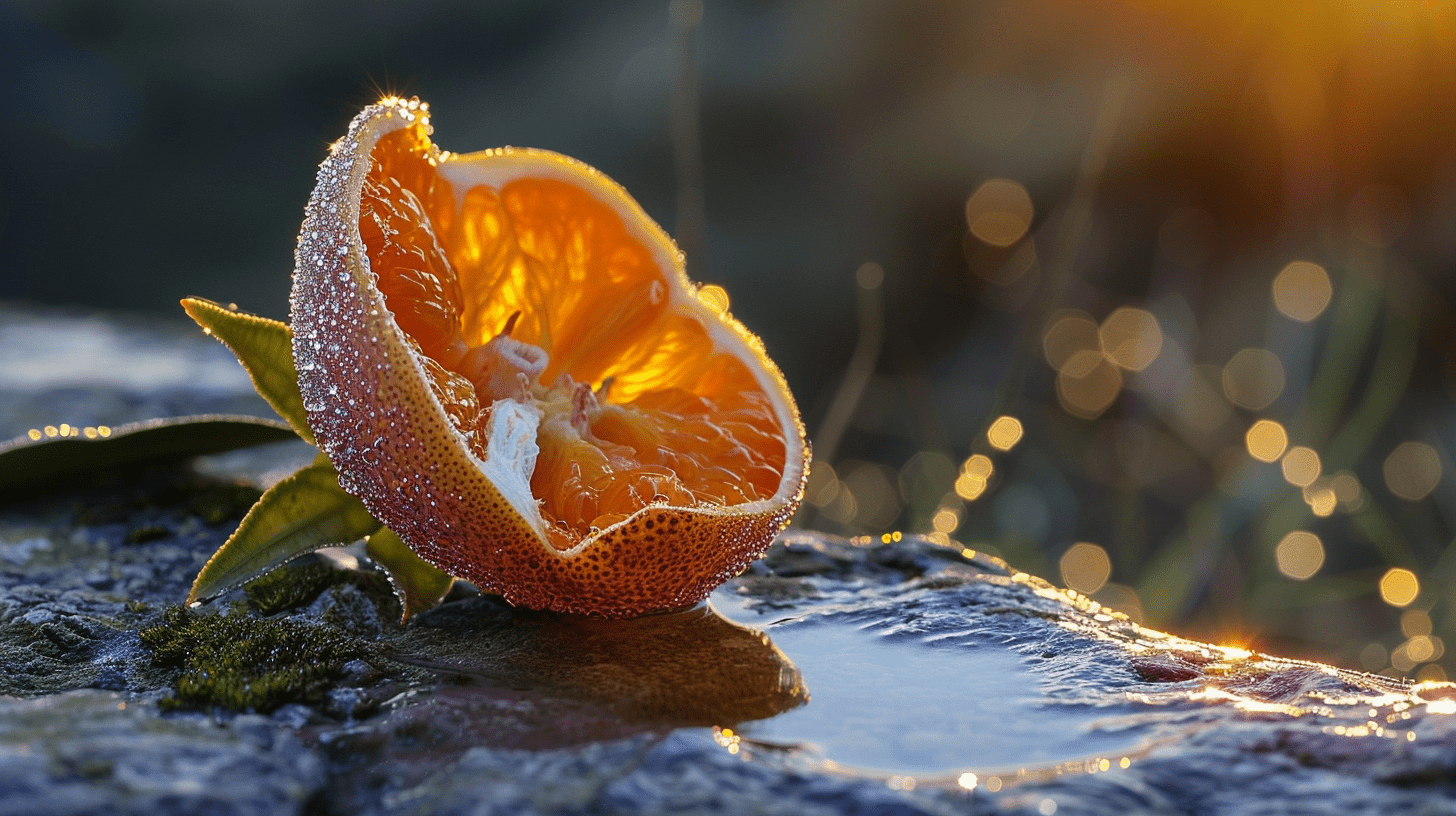
Cold-pressed prickly pear seed oil thus provides suppleness and comfort, and leaves the face smoother, plumper, and more radiant.
Four quality benchmarks: the full INCI name (Opuntia ficus-indica seed oil); the mentions "virgin" and "cold-pressed"; the origin and year of harvest; tinted glass with a pump. It takes about one ton of fruit for one liter of oil: it is this agricultural reality, and not marketing, that explains the price per milliliter.
Key active ingredients
- Hyaluronic acid — retains water on the surface and plumps the skin. Apply to damp skin and seal with a richer texture: alone, in a dry room, it can worsen tightness. This is the most common mistake with this active.
- Glycerin — discreet but effective; in the first five ingredients of an INCI list, a good sign.
- Squalane — similar to a natural component of surface lipids, very stable, very dry feel.
- Vitamin C and antioxidant botanical extracts — help protect against external aggressions and even out skin tone. In the morning, before moisturizer, with sun protection. See the Anti-aging & Wrinkles collection.
- Niacinamide — well-tolerated, it contributes to comfort and an even appearance.
- To avoid — harsh cleansers, denatured alcohol at the top of the ingredient list, scrubs with angular particles. Anything that strips the skin works against radiance.
Eye contour, day and night
The thinnest area of the face, almost devoid of sebaceous glands: the one that reveals the first signs of aging earliest. A grain of rice per eye, no more—an excess migrates and leaves a puffy feeling upon waking, often mistakenly attributed to fatigue. Using your ring finger, gently tap about ten times on the orbital bone, from the outer corner to the inner corner, never on the mobile eyelid.
An extra night cream? Optional: in the morning, the texture must remain compatible with sun protection and makeup (≈ 0.5 ml); in the evening, this constraint disappears, and you can go richer (≈ 0.7 ml).
Age-related spots: what to aim for
A cosmetic acts on the appearance and visual uniformity, not on the disappearance of marks. What is truly achievable: visually attenuated contrasts, and especially limiting their future accentuation—which depends almost entirely on daily sun protection. A more colored area exposed without protection will darken; protected, it remains stable. This is the only real lever, and it is effortlessly free once the habit is formed.
Consult a healthcare professional for: a mark that changes in size, color, or contour, a rapid appearance, an area that bleeds or itches.
Cost calculation in thirty seconds
The displayed amount says nothing about the real cost: what matters is the cost per application, which depends on the dose and not the volume. Basis: one dropper drop ≈ 0.035 ml.
| Reference | Format | Dose | Applications | Duration |
|---|---|---|---|---|
| Vegetable oil | 30 ml | 4 drops ≈ 0.14 ml | ≈ 210 | ≈ 7 months, in the evening |
| Vegetable oil | 50 ml | 4 drops ≈ 0.14 ml | ≈ 355 | ≈ 6 months, morning and evening |
| Moisturizing cream | 50 ml | ≈ 0.5 ml | ≈ 100 | ≈ 7 weeks, morning and evening |
| Night cream | 50 ml | ≈ 0.7 ml | ≈ 71 | ≈ 10 weeks, in the evening |
| Eye contour | 15 ml | ≈ 0.1 ml | ≈ 150 | ≈ 2.5 months, morning and evening |
Divide the retail price by the "applications" column: that's the only meaningful comparison. Check that a promotional price refers to the usual price charged over the last thirty days, as required by European law on discount displays. A large format is only useful if you finish it before its post-opening durability date. Free samples remain the most rational way to try: seven days are enough to judge a product's feel, the primary criterion for adherence.
Four mistakes that diminish radiance
- Applying oil under cream: occlusive by nature, its place is as the final layer.
- Exfoliating when skin is tight: uncomfortable skin needs nourishment, not the removal of a protective layer.
- Changing routine every week: before 21 days, nothing truly visible has settled on the surface. Stick to the program until D21, then decide based on the grid.
- Underdosing: half a dose does not produce half an effect, often no measurable effect at all.
Frequently Asked Questions
Q: Why does my complexion dull with age?
A: Sebum secretion decreases, natural renewal slows down—from about 20 days to over 30 after age 50—and the surface, being less smooth, reflects light less effectively.
Q: Which oil should I choose after age 50, and how many drops?
A: Those rich in essential fatty acids and antioxidants. Prickly pear seed oil, with approximately 55-65% linoleic acid, is particularly suitable. Use 3 to 5 drops in the evening as the last layer, and 2 to 3 in the morning on the cheekbones if dryness is significant.
Q: Should I exfoliate to revive radiance?
A: Yes, but only once every 7 to 10 days, and in the evening. More frequent exfoliation weakens an already thinner barrier and produces the opposite effect.
Q: Is hydration enough, or do I also need to nourish?
A: Both are complementary. Hyaluronic acid and glycerin provide water and plump; fatty substances seal it in. After age 50, nourishing is essential, otherwise hydration evaporates.
Q: How long does it take to see a difference?
A: Comfort often improves within 3 to 5 days; luminosity and uniformity become noticeable over 21 days. A drop of 3 to 5 points out of 18 on the scale is consistent.
Q: How can I honestly compare two prices?
A: By cost per application: 30 ml represents approximately 210 applications of 4 drops, which is nearly 7 months; a 50 ml cream dosed at 0.5 ml lasts about 7 weeks morning and evening.
Q: Does an online diagnosis replace a dermatologist's advice?
A: No. Skin Intelligence™ is a cosmetic guidance tool. In case of an evolving mark, persistent redness, or established patches, professional medical advice is essential.
To go further
Nourished, hydrated, and plumped, a smooth surface recaptures light: this is where natural radiance plays out, much more so than with makeup tricks.
RECOMMENDED CARE
Cold-pressed prickly pear seed oil · Organic · 30 ml, approx. 210 applications
DISCOVER THIS CARE →
PERSONALIZED ROUTINE
Skin Intelligence™ · 11 questions · 2 minutes
Start my free diagnosis →
Read more
- Skin Guide — all our tips
- Mature Skin Routine
- Radiance & Unified Complexion
- Anti-aging & Wrinkles
- Cold-pressed prickly pear seed oil
Sources
Pochi PE, Strauss JS, Downing DT. Age-related changes in sebaceous gland activity. Journal of Investigative Dermatology, 1979.
Grove GL, Kligman AM. Age-associated changes in human epidermal cell renewal. Journal of Gerontology, 1983.
Ramadan MF, Mörsel JT. Oil cactus pear (Opuntia ficus-indica L.). Food Chemistry, 2003.
Regulation (EC) No 1223/2009 on cosmetic products — INCI nomenclature.
ANSES — benchmarks for sun exposure.
Information provided for cosmetic and educational purposes; it does not constitute medical advice.


Go further than this article
Get our skincare guides by email — and start with your free skin diagnostic: 2 minutes, advice tailored to your skin. We ship to the US, UK, Canada, Australia and 27 European countries; somewhere else? Sign up and you will be the first to know when we deliver to your country.
By signing up, you agree to our privacy policy. Unsubscribe in one click.