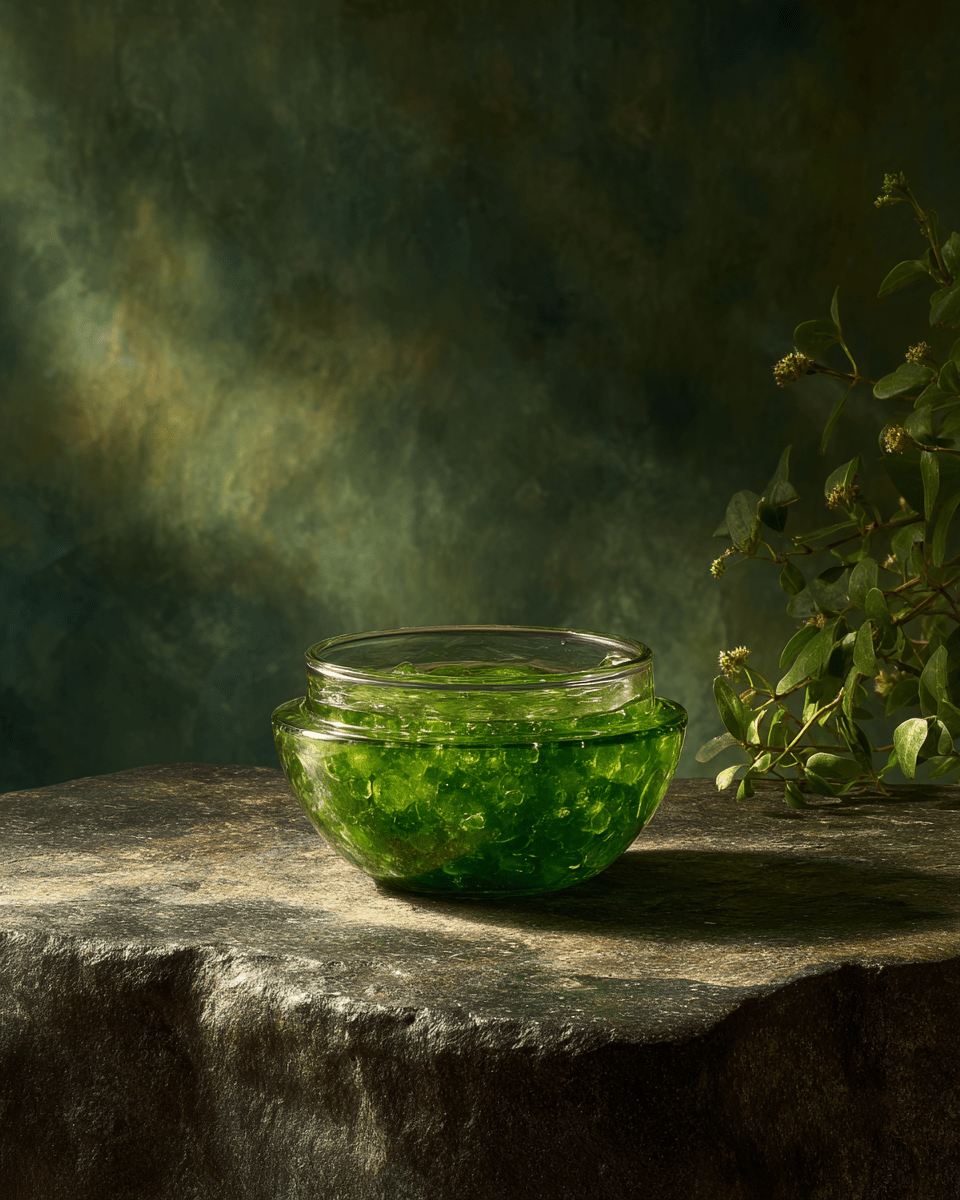
Mature skin firmness: collagen, elastin, method
Facial tone never fades overnight. The signs are subtle: a slightly less defined facial oval in the morning, foundation that "settles" into creases, skin that takes longer to bounce back after a smile. They all tell the same story—that of the dermis, its collagen, its elastin, and its hyaluronic acid, and how time, sun, and daily habits alter their balance.
This page is a comprehensive and practical guide. You will find what the concept of firmness truly encompasses, how to observe yourself with a reproducible method, which organic ingredients and vegetable oils make sense after 40, and especially a dated 90-day protocol, week by week, designed to be followed without complicating your life. All within a strict cosmetic framework: we are talking about appearance, suppleness, and comfort, never treatment.
Key takeaways from this page
- Visible firmness depends on a dermal trio: collagen (framework), elastin (elastic recoil), and hyaluronic acid (water retention). Each evolves at a different rate—hence the benefit of a multi-tiered routine rather than a single product.
- Natural dermal collagen production declines by approximately 1% per year after age 20 (Shuster, Black & McVitie, British Journal of Dermatology, 1975), with a distinct inflection around menopause.
- Sun is the #1 extrinsic lever: a minimum SPF 30 sunscreen, every day, contributes more to visible results than any anti-aging serum.
- The timed pinch test on 3 zones (detailed below) provides a personal, measurable reference in seconds, to track changes in apparent elasticity every 30 days.
- Prickly pear seed oil contains ≈ 60% linoleic acid and a high tocopherol content (Ramadan & Mörsel, Food Chemistry, 2003)—the most interesting profile among vegetable oils after age 40.
Skin firmness: what is it really?
Skin firmness refers to the skin's ability to maintain its toned appearance and return to its initial state after mechanical stress. It's not just a matter of momentary aesthetics: it's one of the most telling signs of daily comfort. When we talk about mature or dull skin, the apparent loss of tone is often the first signal of a need for more sustained care.
It is important to distinguish between two concepts that are constantly confused in everyday language.
- Firmness is resistance: does the tissue easily indent under the finger? It primarily depends on the density of the dermal framework and its hydration level.
- Elasticity is recoil: once released, how quickly does it return to flat? It depends more on the elastin network, which is much more fragile and renewed much less frequently.
One can therefore remain firm to the touch while having lost some elasticity—this is typically what happens between 35 and 45 years old, when the face appears "tired" without anything truly being marked. Conversely, a simple lack of water gives the illusion of sagging in a few days while the deep structure is intact: a hydrating serum and a rich cream are often enough to restore everything in one to two weeks.
The dermis, the intermediate layer located beneath the epidermis, is the seat of all this. It concentrates the two most widely known structural proteins—collagen and elastin—to which hyaluronic acid is added, a molecule that is not a protein but a polysaccharide capable of binding a large amount of water. It is the balance of this trio that we associate with visible surface firmness.
Understanding these concepts is not a theoretical exercise: it is what allows us to choose the right natural skincare products rather than randomly stacking products. Supporting a face over time means doing so comprehensively—not just on the surface.
Why dull complexion almost always accompanies loss of firmness
Dull complexion and apparent sagging are two symptoms of the same phenomenon. An epidermis whose renewal slows down accumulates older, less well-aligned corneocytes on its surface. This irregular surface diffuses light instead of reflecting it: the face appears grey, without relief. Yet it is precisely this light reflection that gives the illusion of plumpness and tone.
A very practical and concrete consequence: part of the visible gain obtained by a good routine is actually an optical gain. Well-hydrated skin with a smooth and even surface reflects light better and immediately appears more toned. This is why a visible effect is often observed in two to three weeks, long before any structural change—and there is nothing dishonest about taking advantage of it, provided this effect is not confused with a profound modification.
Collagen, Elastin, Hyaluronic Acid: What Each Really Does
Collagen is the most abundant protein in the dermis: it is the framework. Elastin, present in much smaller quantities, is primarily noted for flexibility and recoil. Hyaluronic acid, on the other hand, fills the space between the fibers and retains water, giving that famous "plump" appearance.
The point that few articles clarify, and which changes everything in how to build a routine: these three components do not renew at all at the same rate. The table below compares what is known about each.
| Component | Role in appearance | Natural renewal | Evolution with age | Realistic cosmetic lever |
|---|---|---|---|---|
| Collagen (types I and III) | Density, resistance, perceived "thickness" of the face | Slow — several years at the dermal level | Declines by ≈ 1% per year after age 20 | Daily photoprotection (SPF 30+), antioxidants, regularity over 3 to 6 months |
| Elastin | Elastic recoil, skin elasticity, facial oval | Almost nil in adulthood — stock is built early | Fragments under UV exposure (solar elastosis) | Prevention first and foremost: sunscreen, quitting smoking. This is where you can't catch up. |
| Hyaluronic Acid | Volume, plump appearance, complexion fullness | Rapid — only a few days | Decreases, but remains the most "mobile" of the three | Hydrating serum + occlusive cream: visible effect in 7 to 14 days |
| Hydrolipidic film | Radiance, comfort, absence of tightness | Very rapid — 24 to 72 h | Becomes sparse, especially after age 50 | Vegetable oils rich in linoleic acid, gentle cleansing |
Table reading: the further down you go, the quicker the visible result—and the less durable it is. An effective routine works on all four lines simultaneously, with different expected timelines for each.
What the data says about collagen decline
The most cited figure in cosmetic dermatology comes from old but never refuted research: the collagen content of the skin decreases by an average of about 1% per year starting from the age of twenty (Shuster, Black & McVitie, British Journal of Dermatology, 1975). This is not a sudden collapse, but a slow erosion: at 45, it's about a quarter less than at 20, which is still perfectly compatible with beautiful skin if other parameters are well managed.
The turning point occurs at menopause. The work of Brincat and his team (British Journal of Obstetrics and Gynaecology, 1987) documented a particularly rapid loss of cutaneous collagen in the first five years following menopause, before the rate returned to a level comparable to the previous period. In other words: women who describe "skin that suddenly changed" are not wrong, and it is neither imagination nor a failure of their routine.
What this concretely implies: the peri-menopausal window—schematically the two years before and five years after—is when routine rigor pays off the most. This is when one must be impeccable with sunscreen, skin barrier nutrition, and consistency, rather than multiplying new products.
Factors that mark the appearance of skin aging
Visible skin aging is classically described as twofold: intrinsic (genetic, hormonal, related to the passage of time) and extrinsic (environmental and behavioral). The first is part of the natural course of life. The second, however, is largely influenced by daily habits—and this is where the essential action lies.
The most robust estimate available comes from the study by Flament and his co-authors (Clinical, Cosmetic and Investigational Dermatology, 2013), which attributes the majority of visible age markers on the face to UV. This is not a routine detail: it is the primary lever, far ahead of all others.
| Factor | Proposed Mechanism | Typical Visible Sign | Scope for Action |
|---|---|---|---|
| UVA / UVB | Oxidative stress, fragmentation of the elastic network (elastosis) | Thickened and yellowed skin, deep wrinkles, spots | Very strong — daily sunscreen |
| Smoking | Oxidative stress + reduction of microcirculation | Gray complexion, pronounced perioral folds | Very strong — quitting improves radiance in a few weeks |
| Glycation | Sugar-protein bonding (AGEs), less flexible fibers | Dull complexion, stiff-feeling skin | Moderate — diet, glycemic index |
| Dehydration | Transepidermal water loss, weakened skin barrier | Dehydration lines, tightness | Very strong and rapid — 7 to 14 days |
| Air pollution | Fine particles, surface oxidative stress | Cloudy complexion, pronounced pores | Moderate — evening cleansing, antioxidants |
| Lack of sleep | Disruption of nocturnal repair rhythm | Dark circles, dull complexion, "sagging" face upon waking | Strong — visible effect after just a few nights |
| Hormonal variations | Perimenopausal inflection | Overall loss of density, dryness | Indirect — compensate with skin nutrition |
Oxidative stress, explained
Oxidative stress is the mechanism most often cited to explain changes in skin tone. Free radicals—promoted by sun, air pollution, smoking, and an unbalanced diet—are associated with a tired and less toned skin appearance. The body has its own neutralization systems, but their effectiveness declines with age, while cumulative exposure increases.
This is precisely why protective plant-derived molecules—tocopherols (vitamin E), polyphenols, carotenoids—play a central role in natural cosmetics. Not because they "repair" anything, but because they are traditionally valued for helping to preserve the skin's radiance and comfort from daily exposure.
Glycation, the overlooked factor
Glycation is a phenomenon less known to the general public: excess sugars in the body bind to structural proteins and "caramelize" them—this is the phenomenon of AGEs, or Advanced Glycation End-products. This process is linked to less supple fibers and thus to skin that appears stiffer and duller over time.
Unlike sun exposure, no topical treatment acts on glycation. The leverage is dietary: limit fast sugars, very high-temperature cooking, and ultra-processed foods, which are themselves sources of AGEs. This is one of the few areas where diet weighs more heavily than the bathroom cabinet.
Chronic dehydration
Chronic dehydration directly influences perceived firmness. Properly hydrated tissue maintains a taut and plump appearance. A weakened skin barrier—which allows water to evaporate more easily—can accentuate the appearance of age markers, even at thirty. This is the good news: it is also the factor that responds the fastest, often within one to two weeks.
Be careful not to confuse dryness and dehydration. The former is a lack of lipids — you need a fatty substance. The latter is a lack of water — you need humectants (hyaluronic acid, glycerin) then a fatty substance to retain it. After 45, it is common to have both, which explains why the combination of hydrating serum + cream or oil works better than either one alone.
The Discomfort That Sets In
The skin discomfort that sets in over time is often described as a subtle phenomenon that accompanies changes in skin appearance. It can be accentuated by irritating cosmetics, overly aggressive gestures, or a poorly sequenced layering of active ingredients. A face that tingles after cleansing, reddens easily, or "can't tolerate anything anymore" doesn't need more care: it needs a return to basics for two to three weeks.
Assessing Your Skin: The Timed Pinch Test on 3 Areas
Here is the benchmark we use at Nopal Life to give everyone a personal measurement rather than a vague impression. It obviously does not replace any professional measuring device: it is a self-monitoring indicator, whose value lies in its reproducibility — same gesture, same areas, same time, every 30 days.
Protocol — 3 minutes, to be done in the morning before any skincare
- Conditions. Clean, dry face, no skincare applied, at room temperature (18–22 °C). Always in the morning, never after a hot shower or after exercise.
- Zone 1 — back of the hand. Pinch the skin between thumb and forefinger for 5 seconds, release, count the seconds until it returns to flat.
- Zone 2 — cheekbone, two fingers below the outer corner of the eye. Same gesture, 5 seconds of gentle pinching, then counting.
- Zone 3 — jawline, along the jaw. Same gesture.
- Record the three durations in your phone with the date. Repeat the exercise on Day 30, Day 60, and Day 90.
- Never compare your numbers to someone else's. The absolute value means nothing — only your own curve over time matters.
| Observed return time | Interpretation in terms of appearance | Priority |
|---|---|---|
| Less than 1 second | Comfortable apparent elasticity | Prevention: sunscreen, nothing more |
| 1 to 2 seconds | First markers, often related to hydration | Hydrating serum morning and evening + evening nourishment |
| 2 to 4 seconds | Established apparent loss of tone | Complete 4-step routine + 2 min daily massage |
| More than 4 seconds | Marked dehydration and/or compromised barrier | 3-week comfort phase before any exfoliating active ingredients |
The most useful lesson from this test lies in the difference between Zone 1 and Zones 2–3. If the back of the hand returns much faster than the cheekbone, facial sun exposure is most likely the cause, and the absolute priority becomes daily sunscreen. If all three zones are uniformly slow, it's more likely a global hydration and nourishment issue.
Active Ingredients That Matter for Mature Skin
The anti-aging skincare market is saturated with promises. In reality, the list of active ingredients that systematically appear in serious formulations is short. Here they are, with what can reasonably be expected from them — and the precautions that come with them.
| Active Ingredient | Usual Concentration | Time | What to Expect | Precaution |
|---|---|---|---|---|
| Vitamin C (ascorbic acid or derivatives) | 5 to 15% | Morning | Radiance, evening skin tone; appreciated for helping protect skin from oxidative stress | Sensitive to light and air: opaque bottle, airless pump |
| Hyaluronic Acid | 0.1 to 2%, ideally multi-molecular weights | Morning and evening | Plump appearance, reduction of dehydration lines in 7 to 14 days | Always seal with a cream or oil, otherwise inverse effect in dry air |
| Bakuchiol | 0.5 to 2% | Evening | Smoothes skin texture, appearance of fine lines; better tolerated than retinol | Introduce 2 evenings/week then gradually increase |
| Niacinamide (Vitamin B3) | 2 to 5% | Morning or evening | Skin barrier comfort, more even skin tone | Above 5%, risk of redness without additional benefit |
| Biomimetic Peptides | Variable, often < 5% active solution | Evening | Smoothed appearance, progressive effects over 8 to 12 weeks | Avoid layering them with very acidic pH (pure Vitamin C) |
| Vitamin E (tocopherols) | 0.2 to 1% (or naturally present in oil) | Evening | Appreciated antioxidant; also contributes to formula stability | Very well tolerated; rich texture, to be dosed on combination skin |
| Plant Squalane | 2 to 10%, or pure | Morning or evening | Silky touch, immediate comfort, zero greasy effect | Check for plant origin (olive, cane) and not animal |
| Linoleic Acid | Via vegetable oils | Evening | Traditionally associated with skin barrier comfort | Choose a cold-pressed oil, stored away from light |
Rule of sobriety we recommend: never more than three distinct active ingredients on the same face on the same day. Beyond that, the risks of interaction and discomfort increase without demonstrated gain, and above all, it becomes impossible to identify what works when things improve — or what causes problems when things worsen.
Comparison of Vegetable Oils for Mature Skin
Vegetable oils hold a special place: they don't act as targeted active ingredients, but restore the comfort of the surface film, which visibly improves radiance and suppleness. Not all are equal, and the criterion that most distinguishes them is their fatty acid profile.
| Vegetable Oil | Linoleic Acid (Omega-6) | Tocopherol Content | Reported Comedogenicity Index | Texture / Penetration | Recommended Use |
|---|---|---|---|---|---|
|
Prickly Pear Opuntia ficus-indica |
≈ 60% | High (dominant γ-tocopherol) | 0 to 1 | Dry, fast absorption | Evening, in massage; also suitable in the morning under sunscreen |
| Hemp | ≈ 55% (+ ≈ 20% Omega-3) | Good | 0 | Very fluid | Combination to sensitive skin |
| Rosehip | ≈ 45% (+ ≈ 33% Omega-3) | Moderate | 1 | Fluid, oxidizes quickly | Evening only, store bottle in the refrigerator |
| Argan | ≈ 35% | Good | 0 | Moderately rich | Dry skin, also body and hair |
| Jojoba | Negligible (liquid ester wax) | Low | 2 | Non-greasy, very stable | Blending base, makeup removal |
Fatty acid percentages are indicative values from literature on oil composition; they vary according to geographical origin, harvest year, and pressing method. Comedogenicity indices are those commonly reported in cosmetic formulation references.
Prickly Pear Seed Oil, the Nopal Life Signature
Prickly pear seed oil (Opuntia ficus-indica) is Nopal Life's signature ingredient, and its place in this article is not a mere coincidence: its profile best suits the needs of mature or dull complexions.
Its uniqueness stems from two measurable characteristics. Firstly, a linoleic acid content measured at 48.4% on our 2026 batch, one of the highest among common cosmetic oils — and it is precisely this fatty acid that is traditionally associated with skin barrier comfort. Secondly, a remarkably high content of tocopherols, the Vitamin E family, with a dominance of γ-tocopherol. These two points are documented in Ramadan and Mörsel's work on the composition of prickly pear seed oil (Food Chemistry, 2003).
Specifically, this creates a nourishing and antioxidant oil appreciated for helping to preserve radiance, with a dry finish that makes it suitable for daily use without leaving a greasy residue. This feel, more than the composition itself, is what determines the regularity of use: an oil applied every evening without a second thought is more effective than a richer oil that is only opened once a week.
What explains the cost, and why it's a quality criterion
It is one of the most expensive cosmetic oils in the world. The reason is purely agricultural: the seeds represent a tiny part of the fruit, and their oil content is low. Therefore, a considerable quantity of fruit must be processed, depulped and rinsed by hand in traditional methods, to obtain one bottle.
This economic reality has a direct consequence for you: an unusually cheap bottle is very likely cut, most often with sunflower or grapeseed oil — two oils also rich in linoleic acid, thus difficult to detect by feel. Key purchasing guidelines:
- The mention "100% Opuntia ficus-indica seed oil" alone in the INCI list. Only one line. If there are two, it is no longer a pure oil.
- First cold pressing and mechanical extraction, without solvent.
- An amber or opaque glass bottle: tocopherols are sensitive to light, and oil in a clear bottle loses its antioxidant properties even before being opened.
- A straw yellow to light amber color and a discreet, slightly vegetal scent. A completely colorless and odorless oil has been refined.
- A modest capacity (15 to 30 ml). A large bottle will oxidize before being finished.
At Nopal Life, part of our signature production is handled in-house, which allows us to know the supply chain from end to end rather than relying on an analysis report. This traceability, more than a marketing argument, explains the price of a truly pure oil bottle.
How to use it: the question of drops
The most common mistake is overdosing. An excessive amount of oil does not penetrate better: it stays on the surface, stains the pillow, and gives the misleading impression that "it's not suitable." Dosage guidelines, on slightly damp skin:
| Skin type | Quantity per application | Frequency | Action |
|---|---|---|---|
| Mature, dry skin | 4 to 5 drops | Every evening | Massage for 2 minutes, then apply cream on top |
| Mature, normal to combination skin | 2 to 3 drops | Every evening | Massage for 2 minutes, alone or mixed with cream |
| Reactive skin / comforting phase | 2 drops | Every other evening for the first 10 days | Gentle pressure, do not rub |
| Lip and eye contour | 1 drop for both areas | Every evening | Tap with ring finger, orbital bone only |
The Nopal Life 90-day protocol
Here's the key information we truly wanted to provide: a dated plan, to be started the day you read this page. Its logic is simple — only one variable is changed at a time, and no addition is judged before at least two weeks have passed. This is what allows you, after 90 days, to know what truly made a difference for your skin.
| Period | What you add | What you remove | Checkpoint |
|---|---|---|---|
| Day 0 | 3-zone pinch test + 1 photo, daylight, no makeup | — | Your 3 durations noted with the date |
|
Weeks 1–2 Comfort |
Gentle cleanser without SLS + simple moisturizer + SPF 30 every morning | All exfoliants, scrubs, strong actives | No more tightness after cleansing |
|
Weeks 3–4 Hydration |
Hyaluronic acid serum, morning and evening, right after cleansing | Nothing else | Dehydration fine lines less visible upon waking |
| Day 30 | Repeat test + photo, same conditions | — | Quantified comparison with Day 0 |
|
Weeks 5–6 Nourishment |
Prickly pear seed oil in the evening (2 to 5 drops) + 2-minute massage | — | Skin feels softer in the morning |
|
Weeks 7–8 Antioxidant |
Vitamin C serum in the morning, before sunscreen | — | Brighter complexion by end of day |
| Day 60 | Repeat test + photo | — | This is where the difference usually becomes clear |
|
Weeks 9–10 Renewal |
Bakuchiol, 2 evenings per week only | The oil on bakuchiol evenings if skin reacts | No persistent redness the next day |
|
Weeks 11–12 Consolidation |
Bakuchiol increased to 3–4 evenings per week if well tolerated | Any product whose purpose you can't describe what it's for | Stabilized routine, maximum 5 bottles |
| Day 90 | Final test + photo, comparison of all 4 readings | — | You know what worked for you |
Two rules that make a difference. First, the photo should always be taken in the same place, at the same time, with the same light — preferably near a window, never under bathroom lighting. Second, if any step causes the slightest discomfort, do not move on to the next: return to the previous week and stay there for ten more days. A 90-day protocol that takes 120 days is still an excellent protocol; a rushed 45-day protocol will teach you nothing.
Building your daily routine
An effective routine doesn't have to be complex. It must be consistent, gentle, and targeted. The order of application is always the same: from thinnest to thickest, from water-based to oil-based.
Morning
| Step | Product | Quantity | Duration / Wait time |
|---|---|---|---|
| 1 | Gentle cleansing (or simple rinse with lukewarm water) | Pea-sized amount | 30 seconds |
| 2 | Antioxidant serum (Vitamin C) | 3 to 4 drops | Wait 1 minute |
| 3 | Hyaluronic acid serum | 2 to 3 drops, on still damp skin | Immediately |
| 4 | Barrier moisturizing cream | Pea-sized amount | Wait 2 minutes |
| 5 | Sunscreen SPF 30 minimum | 2 fingers (index + middle) for face and neck | 20 minutes before going out |
Evening
| Step | Product | Quantity | Duration / Wait time |
|---|---|---|---|
| 1 | Oil or balm cleansing | Walnut-sized amount | 60 seconds of dry massage |
| 2 | Gentle cleanser | Pea-sized amount | 30 seconds |
| 3 | Evening serum or active (bakuchiol, peptides) | 2 to 3 drops | Wait 1 minute |
| 4 | Prickly pear seed oil for massage | 2 to 5 drops depending on skin type | 2 minutes of massage |
| 5 | Richer cream to seal for the night | Pea-sized amount | Immediately |
Once or twice a week: nourishing mask or very gentle exfoliation depending on skin type — always followed by a comforting skin barrier treatment. Never both on the same evening, and never on the evening of a renewal active.
If you're unsure about the right sequence for your profile, remember this principle: start with the four morning steps, and only add the evening steps once the first ones have been established for a week.
The 5-minute facial massage protocol
Facial massage is the most underestimated gesture on this entire page. It costs nothing, requires no additional products, and provides an immediate feeling of vitality to the complexion. After 45, it offers an additional benefit: it forces you to apply skincare slowly, and thus better.
5 minutes, in the evening, on oiled skin
- 0:00 – 0:45 — Warm-up. Place the oil in the palms of your hands, rub them together, then place them flat over your entire face. Three slow breaths. This time is used to release tension from the face.
- 0:45 – 1:45 — Neck drainage. Flat hands, downward, very light movements from the jaw to the collarbones. 10 passes on each side. Always downwards, never upwards.
- 1:45 – 3:00 — Facial oval. Closed fists, flat knuckles, move up from the chin to the ear, following the jawline. 8 passes on each side, with light pressure held for 2 seconds when reaching the ear.
- 3:00 – 4:00 — Cheekbones. From the corner of the nose to the temple, thumbs under the malar bone, firm and slow pressure. 8 passes.
- 4:00 – 4:40 — Forehead. Horizontal movements from side to side with flat fingers, then vertical smoothing from eyebrows to hairline. 10 passes.
- 4:40 – 5:00 — Eye contour. Ring finger only, light tapping on the orbital bone, from inside to outside. Never stretch the eyelid.
Two minutes are enough if you're in a hurry — this is the format used in the evening routine above. The full five minutes are especially worthwhile for evenings when the face is tense, after a long day of screen time. What matters, here as everywhere, is regularity: a daily two-minute massage far outweighs a twenty-minute massage once a month.
The most costly mistakes
Prevention is often compromised by seemingly innocuous habits. Here are the most frequently observed mistakes in routines, ranked by decreasing impact.
1. Neglecting sun protection
UVA rays reach us all year round, penetrate clouds and window glass, and are considered the number one extrinsic factor in the evolution of apparent skin tone. Daily sunscreen with a minimum SPF 30, even in winter, even in the office, is non-negotiable — and if you only remember one line from this page, it should be this one.
The second problem is quantity. The two-finger rule — a line of cream along the entire length of the index and middle fingers — corresponds to the dose needed to approach the SPF indicated on the bottle for the face and neck. Most people apply three to four times less, which reduces the actual photoprotection by the same amount.
2. Using overly stripping cleansers
An over-foaming cleanser can alter the hydrolipidic film and weaken the comfort of the skin barrier — which accentuates feelings of discomfort. The test is simple: if your skin feels tight within three minutes of rinsing, your cleanser is too strong. Opt for gentle textures, without SLS or SLES.
3. Overdoing exfoliating actives without preserving the barrier
AHAs and BHAs are useful but can become irritating at high concentrations or with too frequent use. Without a recovery phase for the skin barrier, they weaken the tissue and can paradoxically accentuate the appearance of age markers. After 45, gentle weekly exfoliation is sufficient in the vast majority of cases.
4. Changing routines too often
Results require regularity and become apparent over several weeks. Testing a product for three days does not allow for any real evaluation. Consistency is the sine qua non condition for any visible result — this is precisely the purpose of the 90-day protocol proposed above.
5. Applying skincare without massage
Applying a serum without conscious application technique deprives the skin of the mechanical stimulation that provides a vital glow. Two minutes of daily massage make a noticeable difference in perceived firmness within a few weeks, without buying any additional products.
6. Forgetting the neck and décolletage
Yet these are the areas that betray age the earliest. The tissue there is thinner, less rich in sebaceous glands, and much more exposed than one might think. Everything you apply higher up — serum, oil, cream, and especially sunscreen — should extend down to the base of the neck and onto the upper décolletage. It's a free gesture, and one of the most cost-effective in this guide.
7. Ignoring internal hydration and sleep
Insufficient daily hydration affects the plumpness and visible fullness of the face, just as too little sleep disrupts the nightly recovery rhythm. These are two parameters that no skincare product can compensate for — and two parameters whose effect can be seen in just a few days, for better or worse.
Mature skin and menopause: what really changes
The peri-menopausal period deserves a separate section, because generic advice becomes insufficient. Three developments combine:
- Increasing dryness. Sebum production decreases, and the hydrolipidic film becomes scarcer. A routine that worked perfectly at 40 may become insufficient at 52 without anything else changing.
- Increased sensitivity. Products used for years may start to tingle. This is not a sudden allergy: it is a skin barrier that has become less tolerant.
- Overall loss of density. This is the visible translation of the inflection documented by Brincat and his team. The facial oval reshapes, and the cheekbones become slightly hollow.
The most sensible adjustments, in order:
- Switch to richer textures, especially in the evening. This is when a virgin vegetable oil rich in linoleic acid becomes particularly beneficial as a final layer.
- Reduce the frequency of exfoliants rather than eliminating them. Once every ten days instead of twice a week.
- Increase hyaluronic acid intake: hyaluronic acid remains the component of the dermal trio that responds fastest, making it the most immediate lever for comfort.
- Do not compromise on sunscreen. In a window where the dermis is more fragile, cumulative exposure weighs even more heavily.
- Systematically extend to the neck and décolletage, which often show signs of aging before the face during this period.
A common-sense word to conclude on this point: if dryness, itching, or discomfort become debilitating daily, it's a conversation to have with a healthcare professional, not a problem to solve by changing creams.
What happens outside the bathroom
No routine, even perfect, fully compensates for lifestyle. Three non-cosmetic levers consistently stand out.
Sleep. The face upon waking after a short night is not an illusion: dull complexion, dark circles, less defined facial oval. This is the parameter whose effect is most quickly reversible — two or three full nights are often enough to regain a rested complexion.
Diet. This is the only real lever against glycation. Specifically: limit fast sugars and ultra-processed foods, favor gentle cooking methods, and include foods rich in antioxidants (red fruits, colorful vegetables, quality vegetable oils, nuts). Daily water intake also counts, without needing to set a rigid numerical goal.
Smoking. This is, after sun, the most documented extrinsic factor. The good news is that skin radiance is one of the first visible benefits of quitting, often within a few weeks.
Summary: realistic timelines
One of the main sources of discouragement is the gap between promised advertising timelines and real timelines. Here are honest estimates.
| What you observe | Typical delay | What produces it |
|---|---|---|
| Comfort, end of tightness | 2 to 5 days | Gentle cleansing + appropriate fatty substance |
| Reduced dehydration lines | 7 to 14 days | Hyaluronic acid serum + occlusion |
| Brighter, less dull complexion | 3 to 6 weeks | Antioxidants + surface renewal |
| More even skin texture | 8 to 12 weeks | Bakuchiol or peptides, with regular use |
| Lastingly modified firm appearance | Several months, with continuous maintenance | Daily photoprotection + regularity |
Conclusion
The apparent firmness of mature skin is associated with collagen and elastin, whose state naturally evolves with age, and hyaluronic acid, which remains the fastest lever to mobilize. Three things truly matter: daily sunscreen, a comfortable skin barrier, and regularity — the latter being more valuable than any single product.
The rest is a matter of method. Measure your starting point with the pinch test, advance one variable at a time over 90 days, and you will know what truly matters to you rather than what you are told. Starting early multiplies the visible benefits; starting later is still largely preferable to not starting at all.
FAQ — Skin Firmness: Your frequently asked questions
At what age does skin firmness begin to decline?
Natural collagen production declines from the age of twenty, by about 1% per year. The first visible markers — fine lines, slight loss of apparent tone — usually appear between 30 and 35 years old. Menopause is when these markers become significantly more pronounced, with a documented inflection over the first five years.
Which active ingredient is most useful for mature skin lacking firmness?
Hyaluronic acid, without hesitation, because it is the one with the fastest visible effect: 7 to 14 days to reduce fine dehydration lines and restore a plump appearance. Used at 0.1–2%, morning and evening on damp skin, and always sealed with a cream or oil. Vitamin C (5 to 15%, in the morning) and bakuchiol (0.5 to 2%, in the evening) come next, with timelines of 6 to 12 weeks.
Is prickly pear seed oil really beneficial for firmness?
It is one of the most appreciated oils in natural cosmetics for this profile. It contains about 60% linoleic acid and a high content of tocopherols, making it a prized oil to help preserve the skin's firm appearance and the comfort of the skin barrier. Use 2 to 5 drops in the evening depending on your skin type, massaging for 2 minutes.
How many drops of oil should be applied to the face?
2 to 3 drops for normal to combination skin, 4 to 5 drops if dry, 2 drops every other evening for the first ten days if reactive. And 1 drop for the lip and eye contour combined. Beyond that, the oil remains on the surface without additional benefit.
What SPF is needed to preserve skin firmness?
SPF 30 minimum, every day of the year, including winter and indoors near a window. Quantity matters as much as the index: the two-finger rule (index + middle finger) corresponds to the necessary dose for the face and neck. Apply 20 minutes before going out, as the last step of the morning routine.
How long does it take to see effects on firmness?
Comfort returns in 2 to 5 days, fine dehydration lines diminish in 7 to 14 days, radiance in 3 to 6 weeks, skin texture in 8 to 12 weeks. Firmness, however, is built over several months and maintained with continuous care. This is why the proposed protocol spans 90 days with checkpoints at D30, D60, and D90.
Does facial massage really make a difference?
It provides a sense of vitality to the complexion and contributes to a more rested-looking skin, while helping with overall facial comfort. 2 minutes per evening are sufficient for a daily routine; the full 5-minute protocol detailed above is reserved for evenings when the face feels tense.
Can several anti-aging serums be used at the same time?
Yes, but no more than three distinct active ingredients per day, and at separate times: vitamin C in the morning, bakuchiol or peptides in the evening. Layering an active ingredient with a very acidic pH and peptides in the same application should be avoided. Beyond three active ingredients, you will no longer be able to attribute a result — or discomfort — to the correct product.
How do I know if my current skincare products are suitable for my skin?
The timed 3-zone pinch test, repeated every 30 days under identical conditions, provides the most reliable benchmark. Three warning signs are added: tightness that persists for more than three minutes after rinsing, redness that takes more than an hour to fade after application, or a recovery time that lengthens from one reading to the next while the routine has not changed. Any one of these three signs is enough to justify returning to the comfort phase of weeks 1-2.
Sources
- Shuster S., Black M. M., McVitie E. — « The influence of age and sex on skin thickness, skin collagen and density », British Journal of Dermatology, 1975.
- Brincat M. et coll. — studies on the evolution of cutaneous collagen after menopause, British Journal of Obstetrics and Gynaecology, 1987.
- Flament F. et coll. — « Effect of the sun on visible clinical signs of aging in Caucasian skin », Clinical, Cosmetic and Investigational Dermatology, 2013.
- Ramadan M. F., Mörsel J.-T. — « Oil cactus pear (Opuntia ficus-indica L.) », Food Chemistry, 2003 (fatty acid and tocopherol composition).
- Regulation (EC) No 1223/2009 on cosmetic products — framework applicable to cosmetic claims in the European Union.
This content is informative and educational; it does not replace medical advice, diagnosis, or dermatological consultation. In case of doubt or persistent skin problems, consult a qualified healthcare professional.
Why choose Nopal Life to support skin appearance over time
Supporting a face over time encourages the choice of active ingredients appreciated in natural cosmetics. Nopal Life prickly pear seed oil, rich in essential Omega-6 and Omega-9 fatty acids, tocopherols, and plant sterols, is valued for providing suppleness and comfort to the skin's film. It helps preserve elasticity, reduce the appearance of fine dehydration lines, and support the comfort of the epidermal barrier, for visibly smoother skin from the first few weeks.
Combined with a hyaluronic acid serum in the morning and a richer cream in the evening, it completes a consistent day and night ritual: firm appearance, radiance, and lasting comfort. Free shipping on orders over €80.
SIGNATURE CARE
Pure Prickly Pear Seed Oil
48.4% linoleic acid (lot 2026) · 2 to 5 drops in the evening
DISCOVER THIS CARE →


Go further than this article
Get our skincare guides by email — and start with your free skin diagnostic: 2 minutes, advice tailored to your skin. We ship to the US, UK, Canada, Australia and 27 European countries; somewhere else? Sign up and you will be the first to know when we deliver to your country.
By signing up, you agree to our privacy policy. Unsubscribe in one click.