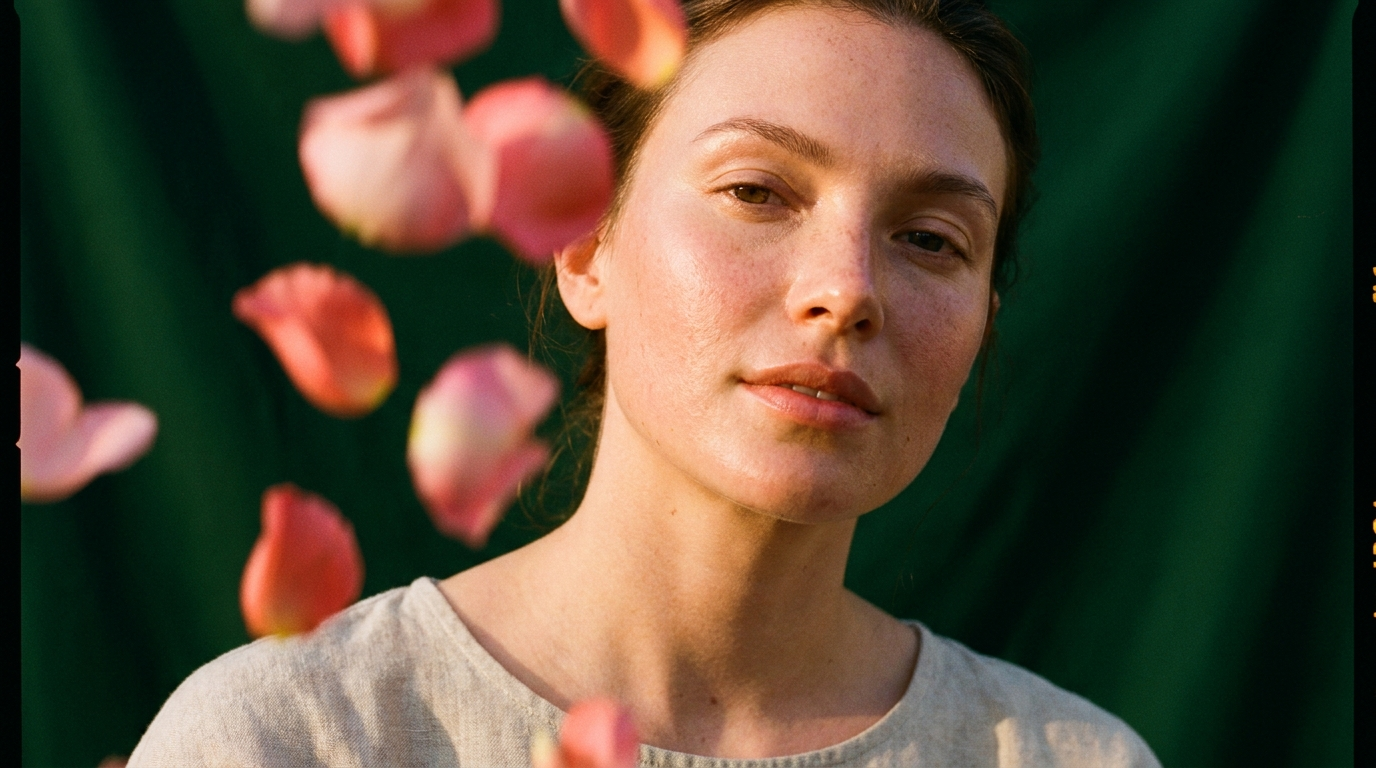
Rose face cream: fragrance, radiance, and formula to decipher
Rose holds a special place in cosmetics because it combines sensory imagery, fragrance, and botanical tradition. A rose face cream can be very pleasant, but its effectiveness doesn't depend on the poetic nature of the ingredient. One must distinguish between floral water, extract, essential oil, fragrance, and potential pigments to understand what the formula truly provides.
What kind of "rose" is found in a cream?
Rose floral water is obtained during distillation and primarily contains water with a small fraction of aromatic compounds. A Rosa damascena extract can be prepared differently and present a distinct profile. An essential oil is much more concentrated in fragrant molecules.
On an INCI list, the mention of Rosa Damascena Flower Water therefore does not have the same meaning as an added fragrance. This nuance is particularly important for sensitive skin, as a strong aromatic presence may not be suitable for everyone.
Hydration and radiance: what comes from the formula
When a rose cream makes the complexion more supple and luminous, the effect often comes from the complete combination: glycerin, emollients, oils, film-forming agents, and possibly antioxidant extracts. Rose alone is not enough to explain hydration.
Natural radiance largely depends on surface regularity. Well-hydrated skin reflects light more evenly, which can give a healthy glow effect. Some creams also add pigments or mother-of-pearl for an immediate result; this mechanism is optical, not biological.
Damask Rose and scientific data
The Damask rose is the subject of research on several properties, but much of the data concerns specific extracts or models that do not exactly reproduce the use of a daily cream. It is therefore important to avoid transforming this research into universal anti-aging promises.
In a consumer guide, the most robust formulation is to consider rose as a botanical and sensory ingredient that can contribute to the identity of a skincare product, while hydrating performance is found in the overall composition.
Dry and mature skin
A rose cream for dry skin should contain enough emollients to reduce roughness and support comfort. Vegetable oils are useful in this logic, especially in the evening.
For mature skin, a formula can combine rose, humectants, and anti-aging actives. The expected benefit remains the appearance of suppleness, radiance, and comfort, not the erasure of deep wrinkles.
An oily skin can use a rose cream if the texture is light. The botanical origin does not indicate the richness level: only the formula can tell.
Fragrance: pleasure or point of caution
Fragrance is an important dimension of the ritual. Some people appreciate a floral signature, others quickly feel discomfort. If your skin reacts easily, choose a lightly fragranced formula and perform a tolerance test.
One should not confuse a natural scent with an absence of fragrant molecules. Essential oils also contain aromatic compounds that can cause problems for some people.
How to use a rose cream
In the morning, apply a small amount after a serum if applicable. Allow the texture to set before makeup. If the product contains particles that give a rosy complexion, observe the result in natural light to avoid an overly visible effect.
In the evening, a more nourishing formula can be massaged for thirty seconds on the face. If the skin remains dry, add a few drops of vegetable oil. The choice of quantity depends more on comfort than on the season on the calendar.
Should you look at the price?
A high price range guarantees neither better tolerance nor better hydration. The cost can reflect packaging, the concentration of certain extracts, fragrance, distribution, or the positioning of the formula.
It is therefore more useful to compare the composition, volume, texture, and actual use. A cream that one applies daily with pleasure can have more practical value than a luxurious pot that is too perfumed for one's skin.
We do not recommend choosing based on competing brands or a commercial ranking. The goal of the guide is to learn to read the product, not to replicate a shop page.
Place of rose in a NOPAL LIFE routine
Rose can bring an interesting sensory dimension alongside more functional active ingredients. In a radiance-oriented routine, it can coexist with humectants, antioxidants, and prickly pear seed oil.
This association must remain clear. If five products are all heavily fragranced, the routine becomes unnecessarily complex. It is better to reserve olfactory pleasure for one or two well-tolerated steps.
What this cream does not do
A rose cream does not permanently alter skin color, does not create a biological rosy complexion, and does not correct established pigmentation. Nor does it become a tool for preventing visible aging simply because it contains a supposedly precious flower.
Its role is cosmetic: to hydrate if the formula allows, to improve comfort, to support a luminous appearance, and to offer a sensory experience. This is already a lot when the promise remains at this scale.
The best choice is therefore to look beyond the name. Ask yourself what form of rose is used, what other ingredients are present, if the fragrance suits you, and if the texture meets your skin type. A good formula is recognized less by its marketing story than by its coherence.
Our anti-aging treatments
Go further than this article
Get our skincare guides by email — and start with your free skin diagnostic: 2 minutes, advice tailored to your skin. We ship to the US, UK, Canada, Australia and 27 European countries; somewhere else? Sign up and you will be the first to know when we deliver to your country.
By signing up, you agree to our privacy policy. Unsubscribe in one click.