



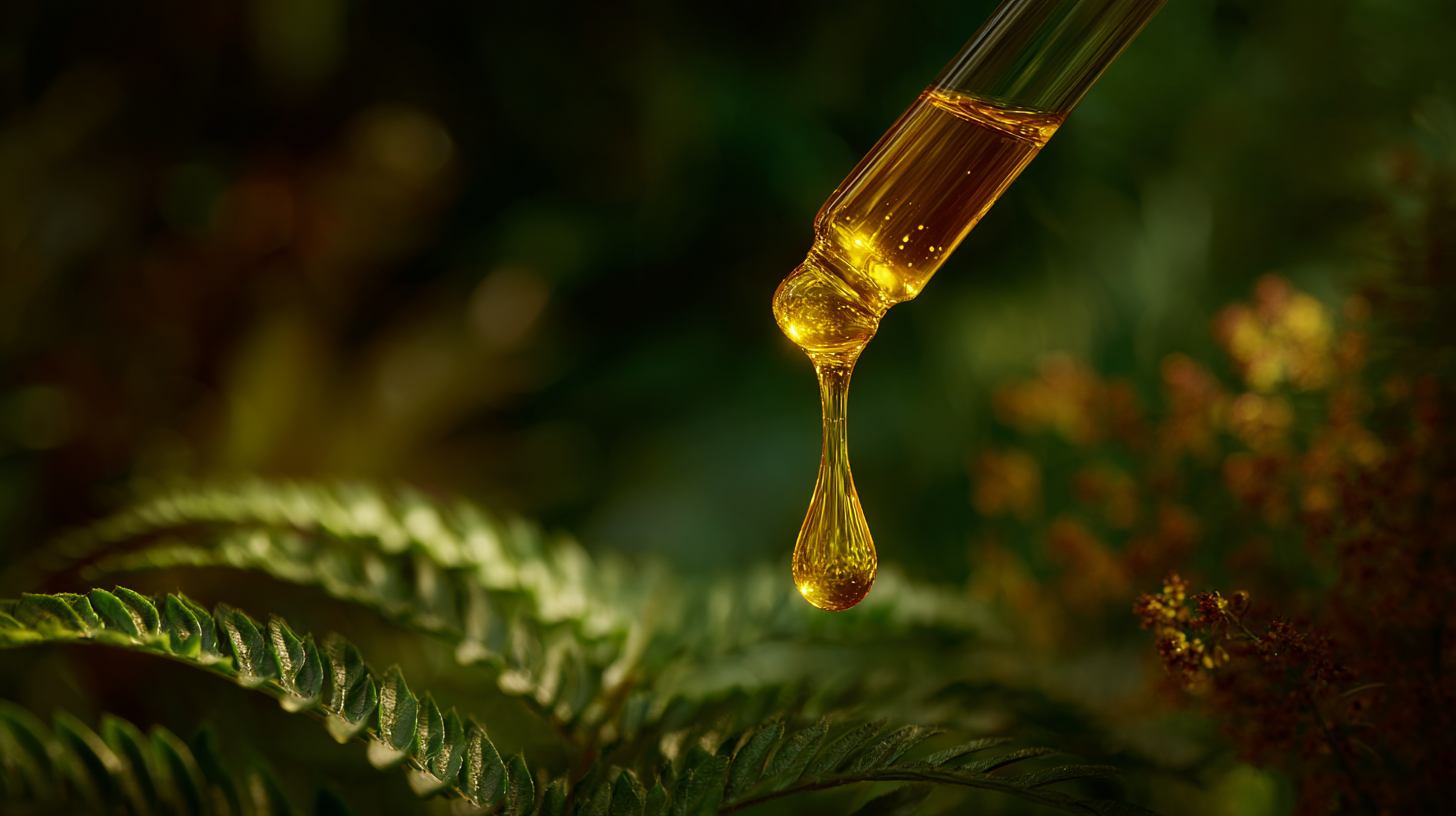
Prickly pear seed oil and sea buckthorn oil pairing
Two fruit oils, two very different profiles. Prickly pear oil provides a significant amount of linoleic acid; sea buckthorn provides abundant carotenoids and a rare fatty acid, omega-7. The combination makes sense, provided the color is managed.
Key points
- Proportions: three drops of prickly pear oil to one of sea buckthorn.
- Mixing: in the palm of your hand, just before applying.
- Time: in the evening, without fail.
- Color: sea buckthorn stains, prickly pear does not.
- Storage: both away from light.
What sea buckthorn brings
Its oil is one of the most colorful in cosmetics: the carotenoids it contains give it a deep orange, almost red color depending on the extraction. This is a real asset, and a usage constraint.
It also contains palmitoleic acid — omega-7 — present in very few vegetable oils and naturally present in human sebum. This similarity explains its good tolerance despite its richness.
What prickly pear oil brings
Extracted from the seeds of the Opuntia ficus indica fruit, prickly pear oil boasts a linoleic acid content that often exceeds 60%. This essential fatty acid directly contributes to the composition of the lipids in the skin barrier.
It also provides tocopherols, whose antioxidant action works in the fatty phase. Its color is light, golden to amber, and it does not stain the skin.
Its rarity is due to the yield: almost a ton of prickly pears for one liter of oil. At NOPAL LIFE, the fruits come from family farms in the arid plateaus of eastern Algeria and Kabylia, cold-pressed.
The color issue
This is the decisive practical point. Pure sea buckthorn leaves a visible orange tint on fair skin, which takes several hours to fade.
Hence the recommended proportion: one drop of sea buckthorn for three of prickly pear oil. At this dosage, the tint remains discreet, and the benefits of sea buckthorn persist.
Evening is therefore the right time. In the morning, use prickly pear oil alone.
The protocol
After cleansing, pat dry without rubbing. Place the drops in the palm of your hand, warm for a few seconds, then apply by pressing from the center outwards.
A single drop of the mixture on the eye contour, patted with the tip of the ring finger. Be careful in this area: the sea buckthorn tint is more noticeable there.
For which skin types
Mature skin: the complete association, in the evening. Both oils are beneficial here.
Dry skin: same as above, increasing the proportion of prickly pear oil.
Combination skin: prickly pear oil alone most of the time, sea buckthorn once or twice a week.
Fair skin: reduce sea buckthorn to half a drop, or reserve it for the neck and décolleté.
On free radicals
Both oils provide antioxidants, through different pathways. Sea buckthorn's carotenoids and prickly pear oil's tocopherols all work in the fatty phase, where oxidation begins.
This is the main argument for this association on mature skin. The effect is slow and is judged over several months, not weeks.
Storage
Both are sensitive to light. Tinted glass, away from heat, outside the bathroom.
Sea buckthorn stains textiles permanently: avoid applying it just before bed on a light pillowcase. This is a prosaic detail and avoids many inconveniences.
What this association does not do
It does not hydrate in the strict sense: two fatty substances retain existing water without adding any. On dehydrated skin, add a humectant underneath.
It does not act on spots or established wrinkles. Its domain is suppleness, comfort, and surface antioxidant protection.
Two fruit oils, two extractions
Prickly pear oil is pressed from the tiny, numerous seeds within the fruit of Opuntia ficus indica. Sea buckthorn yields two distinct oils: that from the seeds and that from the pulp, the latter being the most colorful.
In both cases, the first cold pressing preserves fragile compounds. Refining would remove the carotenoids from sea buckthorn and the tocopherols from prickly pear oil — i.e., the essence of what justifies the purchase.
Essential fatty acids in prickly pear oil
Its linoleic acid content often exceeds 60% of its profile, placing it among the best-endowed vegetable oils. This essential fatty acid directly contributes to the constitution of the lipids in the skin barrier.
The skin cannot produce it: it must be supplied. This is the simplest and best understood mechanism in all plant cosmetics, and it is the one on which prickly pear oil is based.
On mature skin
This is the area where this association yields the most. Natural lipid production decreases with age, and the barrier becomes more permeable.
Prickly pear oil compensates for this daily deficit; sea buckthorn adds antioxidant protection through its carotenoids. The two effects accumulate over several months.
The eye contour
Only one drop of the mixture, patted with the tip of the ring finger, without ever pulling the skin. This is the thinnest area of the face and the one that tolerates excess product the least.
However, be careful: the sea buckthorn tint is more noticeable here than elsewhere. On fair skin, it is better to apply prickly pear oil alone.
Anti-aging: what to expect
More supple skin, a more even texture, and attenuated dehydration lines. These effects appear within three to four weeks of regular use.
Neither prickly pear oil nor sea buckthorn fills an established wrinkle. In this area, radiation protection remains far above everything else.
How long does the mixture keep?
Do not prepare it in advance. These two oils oxidize, and a mixture exposed to air for weeks loses some of its interest.
A 30 ml bottle of prickly pear oil used daily lasts approximately two months. Sea buckthorn, used at one drop, lasts much longer.
The benefits of prickly pear oil in this duo
The benefits of prickly pear oil relate to suppleness, comfort, and evenness of skin texture. It provides the substance; sea buckthorn mainly provides antioxidants.
Organic prickly pear oil guarantees the absence of inputs in cultivation. For a prickly pear tree that grows without irrigation or treatment, this requirement is easy to meet.
Using prickly pear oil on the body
The mixture also works on the neck, décolleté, and hands, after showering on still damp skin. This is when it retains moisture best.
Given the price of prickly pear oil, however, reserve this use for exposed areas rather than the entire body. A more affordable oil will do just as well there.
Dry and sensitive skin
On dry skin, increase the proportion of prickly pear oil: it's the essential fatty acid intake that's missing, not the carotenoids.
On sensitive skin, introduce the two oils two weeks apart. Start with prickly pear oil, whose composition is simpler of the two.
What you need to know
These oils are cosmetic and improve skin appearance and comfort, without curative intent. A persistent reaction warrants stopping and seeking advice.
The products mentioned in this article


Mature skin · Dry skin

Go further than this article
Get our skincare guides by email — and start with your free skin diagnostic: 2 minutes, advice tailored to your skin. We ship to the US, UK, Canada, Australia and 27 European countries; somewhere else? Sign up and you will be the first to know when we deliver to your country.
By signing up, you agree to our privacy policy. Unsubscribe in one click.

