Glycolic Acid for the Body: Areas, Doses, and Schedule
Body skin is thicker than facial skin, but not everywhere—and this variation should guide concentrations. An elbow tolerates 10%. An armpit shaved the day before tolerates nothing. Applying the same lotion from the back to the folds, as most body routines do, is the most common cause of irritation.
Map the areas before choosing the formula
Four families of areas, four distinct treatments.
The arms and thighs often present a grainy texture around the follicles—an excess of keratin that clogs the hair follicle. This is the most common indication and the one that responds best.
The elbows, knees, and heels have a significantly thicker stratum corneum, with slowed desquamation. They can withstand concentrations that the rest of the body would reject.
The armpits and bikini line are thin, occluded, and regularly shaved or depilated. These are the most fragile areas of the body, often treated as the most robust.
The back and décolletage are rich in sebaceous glands and prone to imperfections, with intermediate skin.
Concentrations by area
| Area | Concentration | Frequency | Format |
|---|---|---|---|
| Arms, thighs | 5 to 8% | 3 evenings/week | fluid lotion |
| Elbows, knees | 10 to 15% | 2 to 3 evenings/week | thick cream |
| Back, décolletage | 5 to 8% | 2 evenings/week | spray or lotion |
| Armpits, bikini line | 3 to 5% | 1 to 2 evenings/week | lotion, cotton |
The rule derived from the table: never transfer a concentration from one area to another. A 15% cream designed for elbows will cause a chemical burn on a fold.
Given the large body surface area, the total amount of acid applied becomes significant. Treating the entire body on the same evening is not a good idea: alternate areas.
Glycolic acid is an alpha-hydroxy acid, originally derived from sugarcane. It is the smallest of the AHAs, which explains why it penetrates faster than others—and why its use on the body requires different concentrations than on the face.
Five to eight percent is suitable for arms and thighs. It can be used up to twelve percent on elbows, knees, and heels, where the skin is significantly thicker. Beyond that, skin care belongs in the office, not the bathroom.
Grainy arms: the protocol
This is the most common use, and it yields visible results.
After showering, dry completely—damp skin alters pH and makes penetration unpredictable. Wait five minutes if necessary.
Pour the equivalent of a two-euro coin's worth of 5% lotion into your palm, for each arm. Spread without rubbing for twenty seconds, in a thin, even layer.
Let dry for two minutes, then apply a moisturizing milk. This second step is not optional: the acid breaks down, the emollient repairs.
Three evenings a week for four weeks, then adjust according to tolerance. The first results on skin texture appear around the third week.
Elbows, knees, and heels
These areas combine a thick stratum corneum, permanent friction, and few sebaceous glands.
A 10 or 15% cream is justified here, applied in a thick layer in the evening, two to three times a week. On the heels, occlusion under a cotton sock overnight significantly improves the result.
The combination with urea—at 10 or 20%—is most effective on these areas: the acid breaks down cell bonds, urea softens and retains water. Many body formulas combine them.
A point often forgotten: a cracked heel should not receive acid. It must first heal, with a simple repairing treatment.
Ingrown hairs: what works and what makes it worse
An ingrown hair forms when the follicle is clogged by dead cells and the hair, unable to find an exit, grows back under the skin.
Glycolic acid acts on the cause: it clears the opening. This is a relevant use, provided the following delay is respected.
Twenty-four hours after shaving, forty-eight hours after hair removal. These two actions remove part of the stratum corneum and leave micro-cuts: an acid applied to them penetrates much deeper than expected, and the result is a burn.
Conversely, one also waits twenty-four hours after the acid before shaving.
For an already ingrown and inflamed hair, acid is not the answer: the area should be left alone, and never attempt to extract it with tweezers.
On body spots and marks
The body carries two types of marks that glycolic acid addresses differently.
Post-inflammatory hyperpigmentation—marks from old pimples on the back, darkening of armpits due to friction and shaving—respond well, because the pigment remains superficial.
Solar lentigines on the décolletage and backs of hands, however, are old and deep: the acid lightens them without erasing them.
In both cases, the condition is the same as on the face: daily sun protection on exposed areas. Without it, you perpetuate what you are trying to correct. See our guide to dark spots.
For armpit darkening in particular, reducing friction and spacing out shaves is more effective than any acid.
Stretch marks: what you need to know
The question comes up systematically, and the honest answer is nuanced.
A stretch mark is a rupture of dermal fibers, not a surface defect. No exfoliant applied to the skin can repair a ruptured fiber.
What glycolic acid can do: slightly improve the texture and appearance of a recent stretch mark, still red or purplish, by acting on the surface. On an old, white, and pearly stretch mark, the effect is very limited.
The approaches that show the most results combine several active ingredients over several months, and often require professional guidance.
Body-specific precautions
- Only in the evening, and sun protection on exposed areas on subsequent days.
- Never on damaged skin: shaving cuts, existing irritation, chafing patches.
- One area at a time. The body surface is large; treating the entire body on the same evening multiplies the absorbed quantity.
- Always an emollient after drying.
- No combination with mechanical exfoliation, a loofah, or a brush.
- Suspend for one week before prolonged exposure—holidays, mountains, outdoor sports.
A simple stop signal: if the sensation of heat exceeds a few minutes or if redness persists the next day, the concentration or frequency is too high for that area.
Photosensitivity also applies to the body: treated arms and legs require sun protection for several days. This is the most often overlooked point, because sunscreen is thought of for the face only.
Glycolic acid can be used once or twice a week, never after shaving or on irritated skin. Regular use gives better results than intensive application followed by a break.
What glycolic acid does not do for the body
It does not treat cellulite, which is related to the organization of subcutaneous adipose tissue and not the stratum corneum.
It does not repair an established stretch mark, for the reason given above.
It does not reduce sweating. On the armpits, it can modify the environment of odor-causing bacteria, without affecting sweat flow. See our page on glycolic acid and sweating.
And it does not exempt from moisturizing. On the body even more than on the face, exfoliation without an emollient afterwards produces smooth skin on day one and rough skin on day ten. See our glycolic acid sheet.
Before acid, on grainy arms
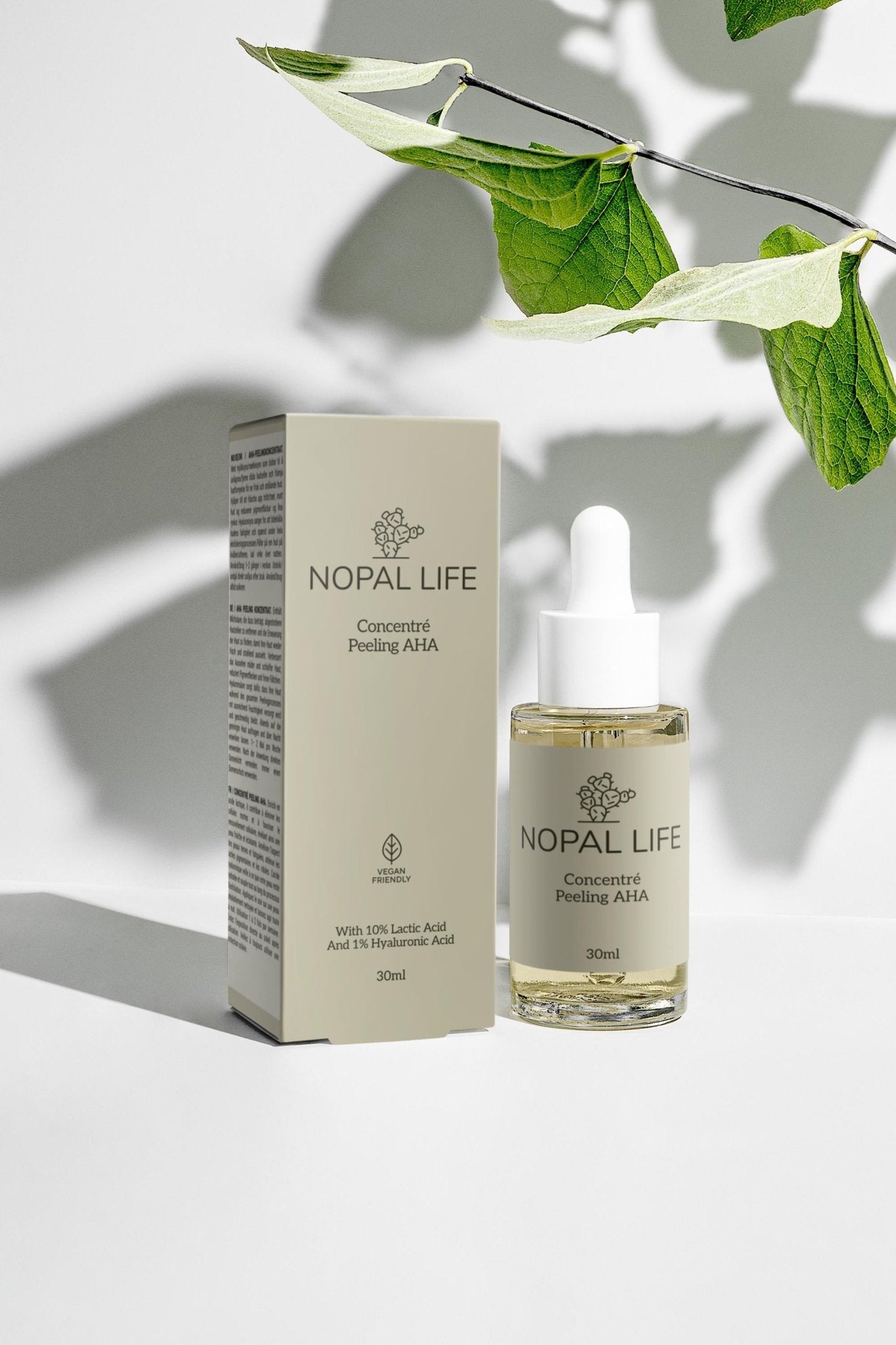
The roughness of the arms often yields to a gentle mechanical action, without needing to introduce an acid and its tolerance schedule. An organic exfoliating soap with prickly pear in the shower makes for a good first try—if the surface remains uneven after a few weeks, then acid is justified.
Our anti-aging treatments