Vitamin C or centella asiatica: which to choose?
Centella asiatica doesn't correct anything, and that's exactly what makes it useful here. Vitamin C works on skin tone, spots, and free radicals, with a requirement for tolerance. Centella asiatica soothes, which often makes the former tolerable.
Two distinct registers
| Criterion | Vitamin C | Centella asiatica |
|---|---|---|
| Nature | Water-soluble antioxidant | Plant extract |
| Action | Radiance, spots, protection | Soothes |
| Timeframe | 4 to 8 weeks | 1 to 2 weeks |
| Tolerance | Good to average | Very good |
| Documentation | Extensive | More limited |
| Skin concern | Dull complexion, spots | Redness, reactivity |
What centella asiatica is
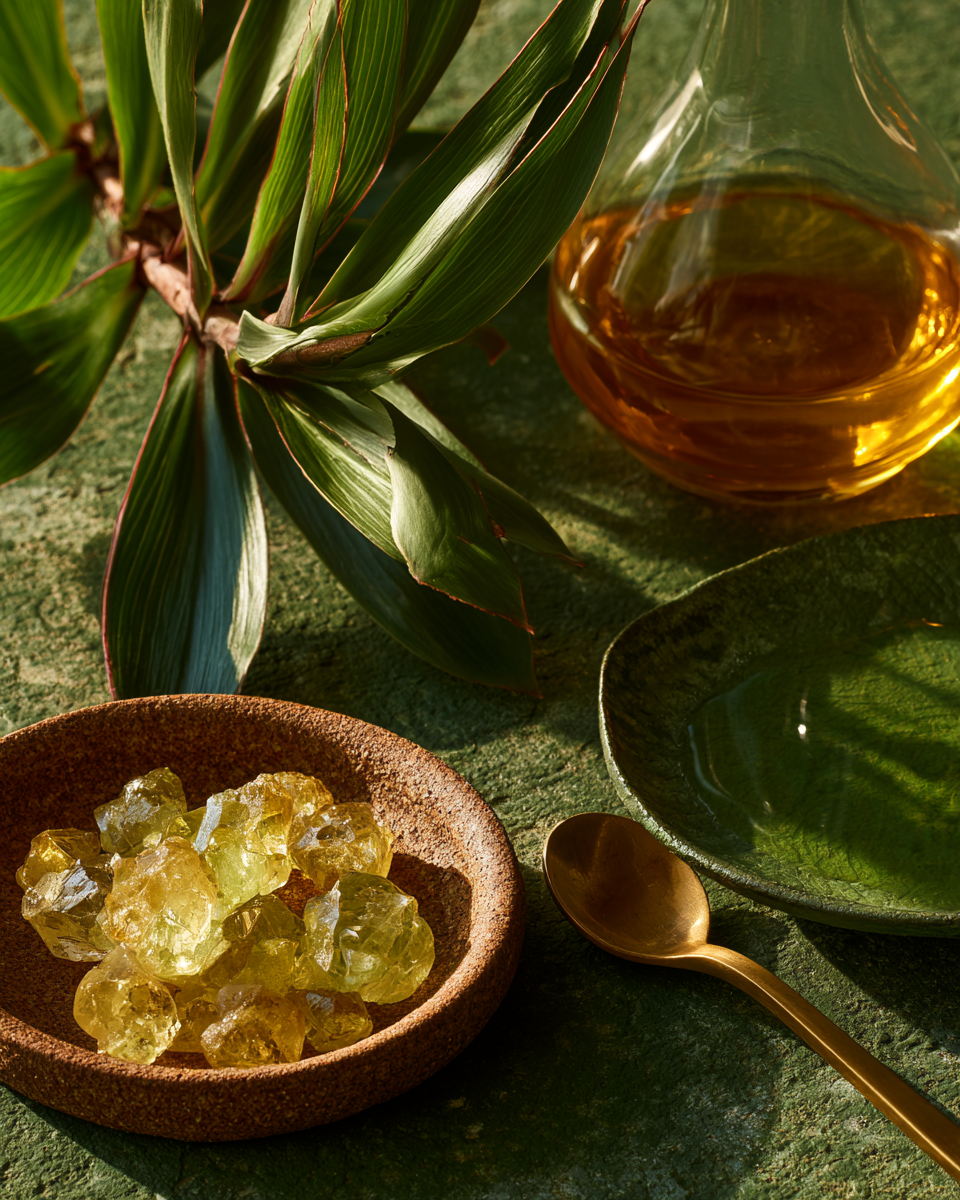
A plant long used in traditional Asian medicine, whose extract has become popular in Korean and then European cosmetics. It is most often found under the name cica.
Its compounds — asiaticoside, madecassoside, asiatic acid — make it suitable for use on skin that easily reddens. Centella asiatica does not provide water or lipids and does not affect pigmentation.
Its scope is narrow: soothing. It is useful in this regard, and the claims attached to it often exceed what is established.
What vitamin C does
It neutralizes some of the free radicals produced by exposure and pollution, acts on brown spots and skin tone uniformity, and is involved in collagen production.
Its difficulty is twofold: it oxidizes quickly on contact with air, and it can tingle on skin whose barrier is compromised. This is where centella asiatica becomes useful.
Choose based on your needs
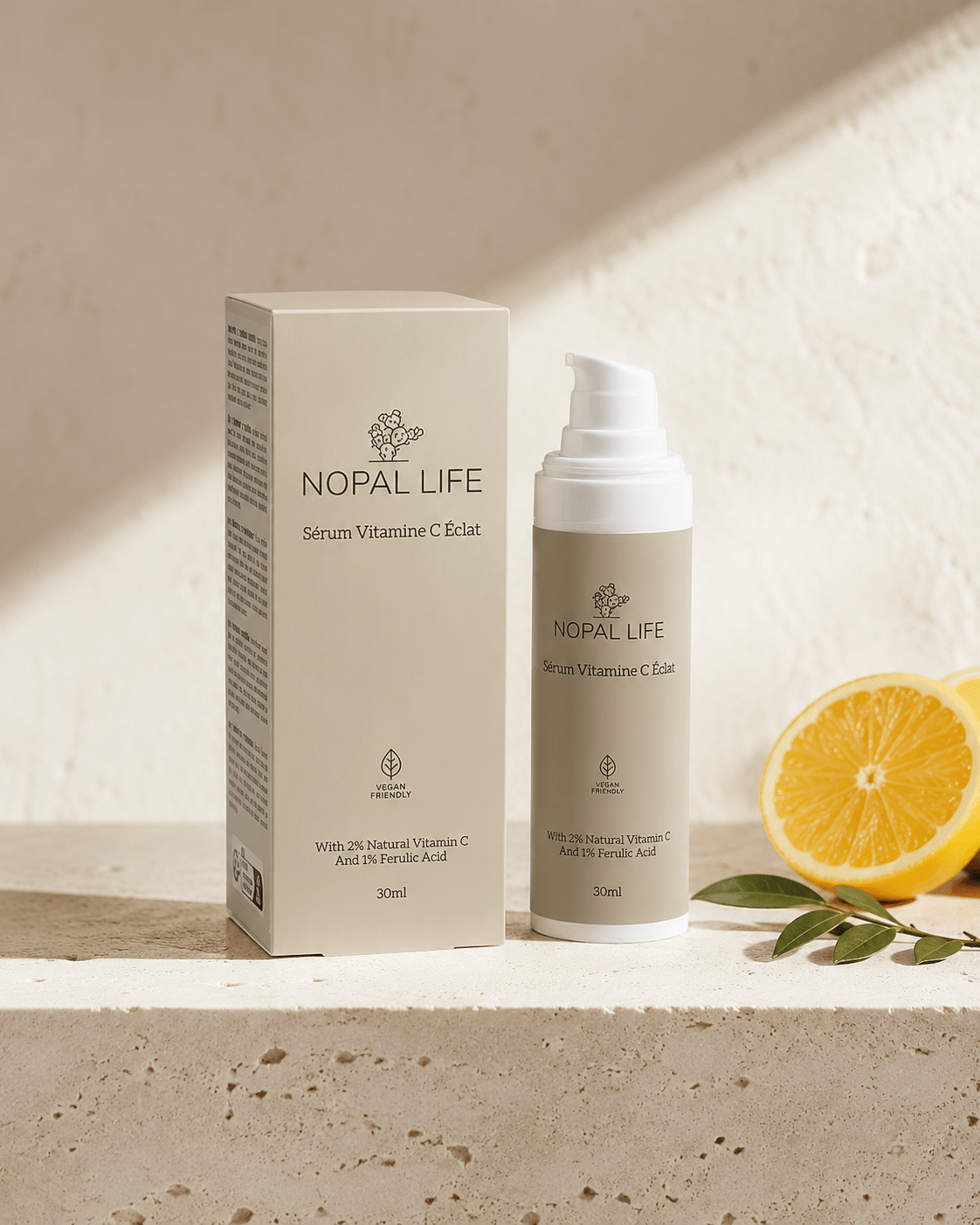
Dull complexion, spots, lack of radiance: vitamin C, the only one of the two for this purpose.
Skin that reddens, reacts to products: centella asiatica.
Reactive skin that would like vitamin C: centella asiatica first, then vitamin C.
If you could only keep one: vitamin C, whose effect is corrective and level of evidence is higher.
Layering
Both are water-soluble and applied early in the routine. Vitamin C first, then centella asiatica, followed by a cream.
Many Korean formulas combine both, precisely because centella asiatica softens the experience of a demanding active ingredient.
Order of introduction on reactive skin
Weeks 1 and 2: centella asiatica alone. It almost never causes problems.
Week 3: add vitamin C every other day, in a stabilized derivative.
Thereafter: every day if tolerance allows.
This progression makes it possible to attribute a reaction to the correct product, which simultaneous introduction makes impossible.
On available documentation
This is a difference worth mentioning. Vitamin C is the subject of numerous and converging studies; centella asiatica relies on more limited documentation, especially in cosmetic use.
This does not disqualify it — its soothing effect is observed with use. But it's important to know what you're buying, and not to expect from a plant extract what a corrective active ingredient produces.
What neither of them does
They do not provide any lipids. For rough skin, a cream containing ceramides or a vegetable oil will be needed as a supplement.
Nor do they replace sun protection. For spots in particular, unprotected exposure can undo in a few weeks what three months of vitamin C have built.
How to recognize a good formula
For vitamin C: 10 to 15% ascorbic acid, opaque pump bottle, small volume. A serum that has turned orange should be replaced.
For centella asiatica: the extract at the beginning of the ingredient list, a short formula, fragrance-free if your skin reacts. Ranges that display the word "cica" cover very uneven qualities.
How to use vitamin C daily
A few drops on clean, slightly damp skin, preferably in the morning, followed by a cream and sun protection. Vitamin C is applied early in the routine.
For skin that has never received it, start every other day for a week. Initial tingling is common and usually subsides.
What vitamin C brings to the complexion
Radiance comes from a smooth surface that reflects light better, and from more even pigmentation. Vitamin C acts on both, with different timelines.
Allow four to six weeks for radiance, two to three months for spots. Without sun protection, the benefit on spots will be lost as quickly as it was gained.
Cica, a word to question
Ranges that display this term cover very unequal realities. Some contain a well-dosed centella asiatica extract; others include only a trace, at the end of the ingredient list.
The word is not a label and does not commit to anything. Look at the position of the extract, not the packaging.
What you need to know
These ingredients are cosmetic: they act on the appearance and comfort of the skin, without treating conditions. Persistent redness requires dermatological advice.
Skin that reddens is not looking for the same thing
Centella is for reactive skin, which primarily seeks calm; vitamin C is for uneven complexions. If the primary concern is spots and not redness, then a vitamin C concentrated serum is what you need, even if you keep centella for the evening.
Our anti-aging treatments