White Willow: The complete guide from Nopal Life
A well-understood ingredient is a well-used ingredient. Through White Willow, discover its benefits for the skin, its uses, and its combinations — with NOPAL LIFE's guiding principle: demanding nature.
White Willow: Definition and Origin of this Natural Exfoliating Active
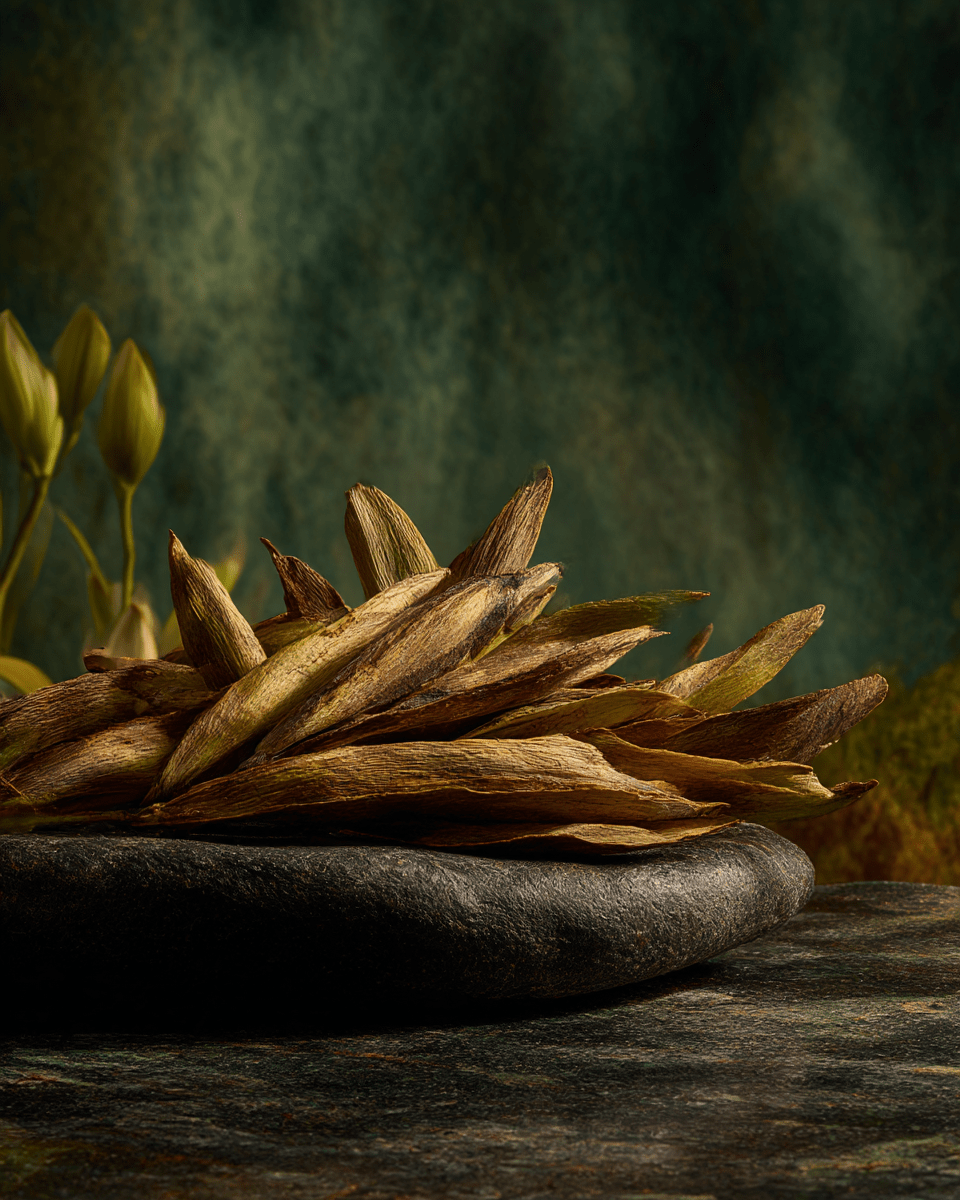
White willow (Salix alba) is a deciduous tree belonging to the Salicaceae family, widespread in temperate, humid regions of Europe, Central Asia, and North Africa. Its bark—the part used in cosmetology—is traditionally valued for its rich content of phenolic compounds, the most well-known of which is salicin, related to the family of salicylic acids widely used in exfoliating cosmetics. This kinship makes white willow a valued botanical source for gentle exfoliation, without the sensation of a pure acid on the skin. The bark also contains tannins (catechins, gallotannins), flavonoids (luteolin, apigenin), phenolic acids (caffeic acid, p-coumaric acid), and other plant compounds recognized for their soothing properties. This polyphenolic richness extends far beyond a simple exfoliating function, placing white willow in the category of broad-spectrum actives: smoothed appearance, comfort, and a sensation of freshness. In modern cosmetics, white willow extract meets a strong demand: a gentle, naturally derived exfoliant compatible with organic certification.
Properties of White Willow in Cosmetics
The cosmetic interest of white willow primarily lies in salicin, which is related to beta-hydroxy acid (BHA) type salicylic acids. This affinity allows it to reach pores and areas where treatments concentrate, places less easily accessed by hydrophilic actives. At this level, it helps visually clear the appearance of congested pores, refine skin texture, and reduce the appearance of blackheads on the surface. Unlike pure synthetic salicylic acid, white willow extract delivers salicin in a naturally buffered form, offering a gentle approach particularly appreciated by delicate skin. The flavonoids and tannins present in the extract simultaneously provide a soothing sensation, helping to reduce the appearance of redness and the look of reactive areas around the pores. Gentle and regular exfoliation supports the skin's natural renewal, helping to revive radiance and refine the texture of dull, combination skin—with great comfort in use. The astringent properties of tannins complement this action by helping to visually tighten the appearance of enlarged pores and mattify the look of shiny T-zones.
How to Integrate White Willow into Your Skincare Routine
White willow extract can be integrated into several steps of your routine, depending on the galenic form chosen. As an exfoliating toner (salicin water), it is applied to clean skin after cleansing, using a cotton pad or by patting it directly onto the skin with your hands. Its progressive action makes it suitable for daily use in the evening, or morning and evening for oily skin with persistent imperfections. In a concentrated serum, white willow extract with a high salicin content is used 3 to 4 times a week, always in the evening. In this case, it precedes the hydrating serum and night cream. In a purifying mask, white willow combined with clay forms an intensive weekly treatment for congested areas. For combination skin—a very common case—application only to the T-zone for the first few months is recommended to gradually accustom the skin. Introduction should be progressive: three evenings a week for the first two weeks, then daily if tolerance is good. Consult the Nopal Life Skin Intelligence™ for a personalized protocol based on your skin type and degree of sensitivity. Do not forget essential sun protection: any exfoliating active, even a gentle one, supports the skin's natural renewal and temporarily leaves the epidermis more sensitive to UV rays. A minimum SPF 30 is recommended in the morning when using a white willow extract treatment.
Mistakes to Avoid with White Willow Extract
First major mistake: combining white willow extract with retinol on the same evening. Both actives provide a marked exfoliating effect. Their combination can intensify feelings of discomfort, tightness, and excessive flaking. The rule is: alternate, do not combine. Second mistake: using it on already flaking or very uncomfortable skin. Salicin on skin whose comfort is already compromised can increase feelings of dehydration and discomfort. Wait until comfort is restored before reintroducing exfoliation. Third mistake: neglecting sun protection in the morning. Exfoliation temporarily leaves the skin more sensitive to UV rays; without sun protection, the brightening benefits of exfoliation are counteracted. Fourth very common DIY mistake: using unstandardized ground white willow bark powder as a substitute for a calibrated extract. The salicin content of raw bark varies from 1 to 11% depending on the batch, making precise dosing impossible. Only standardized extracts (INCI: Salix Alba Bark Extract) with guaranteed salicin content allow for reliable cosmetic use. Fifth mistake: believing that "natural = risk-free" and overusing white willow extract. Even at moderate concentrations, overly frequent exfoliation can weaken the skin and impair its comfort. One to two applications per day maximum, no more.
White Willow and Sensitive or Mature Skin
White willow holds a privileged position in cosmetics for mature skin because it addresses two simultaneous appearance concerns: the accumulation of dead cells on the surface that dulls the complexion and thickens the texture's appearance, and the tired look associated with the passage of time. Its soothing sensation, due to tannins and flavonoids, is particularly appreciated in this context. With age, skin appears more prone to signs of external stress; the polyphenols in white willow bark provide antioxidant support through direct topical application, helping to preserve radiance. For mature skin, white willow extract is recommended 2 to 3 times a week as an evening treatment, at moderate concentrations (1 to 3% of standardized extract), always followed by a lipid-rich nourishing cream. For sensitive, reactive skin, tolerance is generally good because the gradual delivery of salicin favors a gentle approach, far from the sensation of pure salicylic acid. On dark phototypes (III to VI), exfoliation with white willow is valuable in helping to reduce the visible appearance of residual marks, provided sun protection is systematically doubled. Find suitable protocols for all phototypes in our complete skin guide.
White Willow at Nopal Life — The Active Ingredient in the Formula
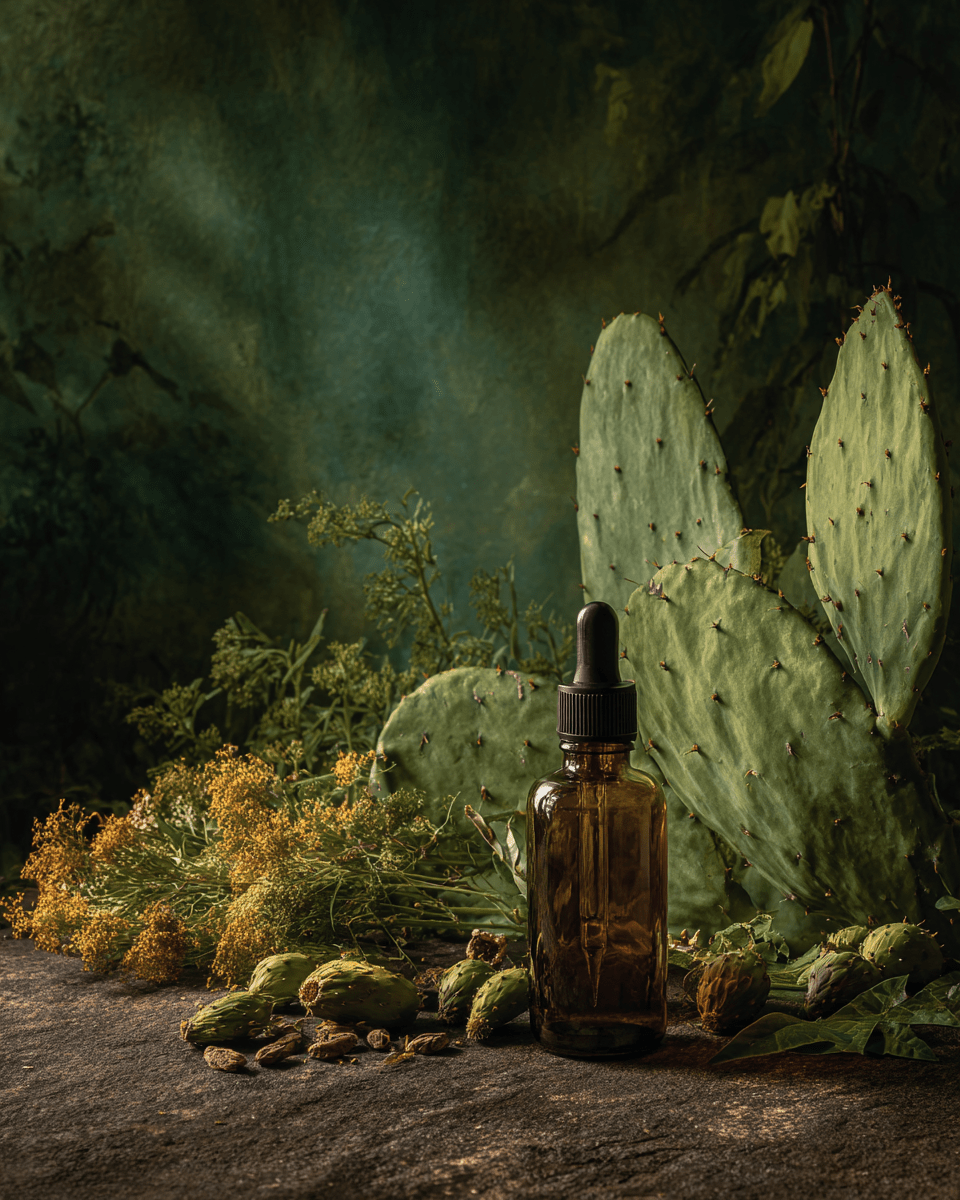
At Nopal Life, white willow extract is selected in its standardized INCI form, Salix Alba Bark Extract, with a guaranteed salicin content of at least 5% and a total polyphenolic profile measured by spectrophotometry. We prioritize extracts obtained by low-temperature aqueous extraction to preserve the integrity of thermosensitive tannins and flavonoids. In our formulas, white willow is always combined with soothing and nourishing active ingredients—notably prickly pear seed oil—to support skin comfort against the slightly drying effect of the exfoliating fraction. This philosophy of balanced active ingredients is fundamental to our approach: we never use a strong functional active without its soothing counterpart. White willow in our targeted "pores and imperfections" skincare is dosed between 1.5% and 2.5% extract for a visible result without aggression. These formulas are dermatologically tested on sensitive skin and formulated without allergenic fragrances. Discover all of our Nopal Life facial care products based on traceable botanical active ingredients for combination, oily, and imperfection-prone skin.
Frequently Asked Questions
Q: Is white willow the same as salicylic acid?
A: No, they are related but distinct. The salicin in white willow is related to the salicylic acid family, in a botanically derived form. This gradual delivery is generally gentler and better tolerated than pure synthetic acid applied directly. The sensation is more delicate, more progressive, and significantly more comfortable.
Q: Is white willow extract compatible with organic cosmetic certification?
A: Yes, Salix alba extract can be organically certified if it is obtained from bark cultivated or harvested according to AB/Ecocert/COSMOS standards. It is one of the few exfoliating active ingredients allowed in organic formulations, making it an essential choice for natural and clean cosmetic brands.
Q: Can I use white willow if I am reactive to aspirin?
A: This is a legitimate question because aspirin (acetylsalicylic acid) and salicylic acid belong to the same chemical family. In topical use, the risk of cross-reaction is low but not zero. If you have a known aspirin sensitivity, consult a healthcare professional before using a product containing white willow extract.
Q: How often should I use a product containing white willow extract?
A: For oily, blemish-prone skin: daily in the evening after two weeks of gradual introduction. For combination skin: 3 to 4 evenings a week. For normal skin aiming to maintain radiance: 2 to 3 times a week. During periods of high heat or after significant sun exposure, reduce the frequency to allow the skin to regain its comfort.
Q: Is white willow suitable for teenagers prone to imperfections?
A: Yes, and it is even one of the ideal targets. White willow extract is well tolerated by young, blemish-prone skin because it helps to clear the appearance of visible blockages on the surface of pores without excessively weakening the skin. It is preferable to pure salicylic acid for self-medication in adolescents, for whom the risk of overuse and discomfort is high. A dermatologically tested and dosed cosmetic formula is always preferable to homemade solutions.
Q: How do I know if my product actually contains active white willow extract?
A: Check the INCI name: Salix Alba Bark Extract. The higher it appears on the ingredient list, the higher the concentration. Be wary of formulas where it appears after preservatives (at the end of the list), which indicates a purely declarative presence. A well-dosed extract should be among the first 10 ingredients in an active aqueous formula.
Q: Does white willow really help reduce visible pores?
A: It helps reduce their appearance, but without "closing" them in the anatomical sense—pore size is genetically determined. What white willow actually does: it helps to clear the appearance of blockages that visually enlarge pores, refines the skin texture on the surface, and provides a soothing sensation. The result is a clearer-looking pore, visually less prominent, with more defined edges. The effect is real but progressive: allow 4 to 6 weeks of regular use.
RECOMMENDED TREATMENT
Pure Prickly Pear Seed Oil
Natural formula · Origin Algeria
DISCOVER THIS TREATMENT →PERSONALIZED ROUTINE
Nopal Life Skin Intelligence™
Free diagnostic · 2 minutes
DISCOVER MY ROUTINE →
Ingredient Reference
Willow bark
Salicin, gentle exfoliation & refined texture — the botanical BHA.
Discover the sheet →Read More
Information provided for cosmetic and educational purposes only; it does not constitute medical advice.


Go further than this article
Get our skincare guides by email — and start with your free skin diagnostic: 2 minutes, advice tailored to your skin. We ship to the US, UK, Canada, Australia and 27 European countries; somewhere else? Sign up and you will be the first to know when we deliver to your country.
By signing up, you agree to our privacy policy. Unsubscribe in one click.