Prickly Pear Polyphenols: What We Know About These Active Compounds
Taking care of your skin starts with understanding what it's going through. This guide provides clear benchmarks and concrete actions, with NOPAL LIFE as the guiding principle: the demanding nature, from prickly pear to your routine.
Prickly pear polyphenols: what we know about these exceptional active ingredients
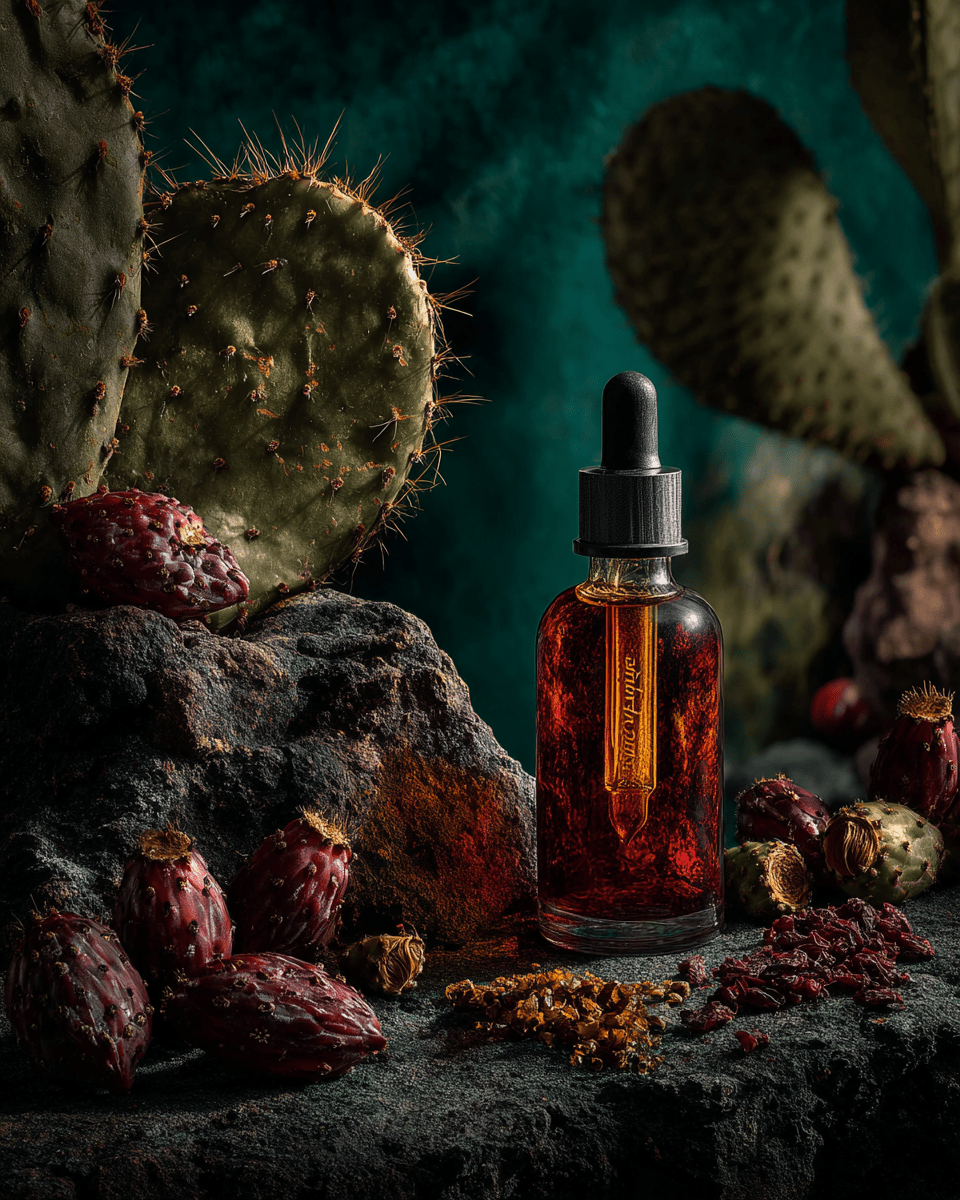
The prickly pear (Opuntia ficus-indica) is much more than a desert fruit. Its cladodes, flowers, and seeds contain a remarkable concentration of polyphenols — molecules known for their antioxidant properties, which cosmetics are increasingly interested in. Among them, we distinguish flavonoids (quercetin, isorhamnetin, kaempferol), phenolic acids (ferulic, coumaric, hydroxycinnamic acids), and betalains, pigments exclusive to cactaceae appreciated for their antioxidant and soothing properties. This polymolecular profile is rare: few botanical plants simultaneously offer so many phenolic classes beneficial for skin care.
On the skin's surface, these polyphenols are appreciated along two main axes. Firstly, they help neutralize free radicals generated by pollution, UV, and daily oxidative stress, thus helping to preserve the appearance of skin protected from external aggressions. Secondly, they are recognized for their soothing properties, which results in a more uniform appearance and improved visible comfort on reactive skin. It is this dual approach that makes Opuntia a key active ingredient for formulations designed for dehydrated and sensitive skin.
What we appreciate about Opuntia ficus-indica in cosmetics
Interest in these properties has accelerated in recent years. Different parts of Opuntia are rich in phenolic compounds, often highlighted for their antioxidant properties. Opuntia cladode extracts are also appreciated in cosmetics for their soothing contribution to the comfort of reactive skin.
Regarding the skin barrier, flavonoid-type polyphenols are readily associated with supporting the hydrolipidic film, this surface film that helps the skin retain its hydration and comfort. When this film is weakened, the skin appears more sensitive and uncomfortable. Isorhamnetin, a major flavonoid in Opuntia flowers, is particularly valued in skincare designed for sensitized skin, thus offering an interesting cosmetic avenue.
These elements place prickly pear polyphenols among the active ingredients with multiple uses in cosmetics: antioxidant, soothing, surface barrier comfort — which few single plant extracts are capable of offering with such versatility.
Integrating polyphenols into your daily cleansing routine
Cleansing is the most underestimated step in any hydration and comfort routine. However, it is the most strategic window of action for polyphenol active ingredients: freshly cleansed skin has a slightly acidic pH (between 4.5 and 5.5), a state where polyphenols are better distributed on the skin's surface.
To best benefit from prickly pear polyphenols, here is the recommended protocol:
- Gentle cleansing, lukewarm water (30-33°C). Hot water alters the lipid film and reduces the presence of polyphenols on the skin's surface. Opt for a pH-neutral cleanser, without harsh sulfates.
- Pat dry, do not rub. Mechanical friction creates an immediate sensation of discomfort that will counteract the soothing effect of subsequently applied polyphenols.
- Apply product to slightly damp skin. A residual moisture content of 10 to 20% on the surface facilitates the distribution of phenolic molecules — especially flavonoids, which are appreciated at skin pH.
- Apply a thin layer of polyphenol-rich product, by stroking. No strong massage: the goal is to form a continuous protective film, not to activate microcirculation (which can redden reactive skin).
This protocol applies morning and evening. In the morning, polyphenols act as an antioxidant shield against pollution and UV. In the evening, they support the skin's nocturnal comfort, a period during which the epidermis is particularly receptive to care.
Mistakes that neutralize the action of polyphenols on sensitive skin
Even the best active ingredients are ineffective if their application is poorly performed. Here are the most common mistakes that negate the benefits of polyphenols:
- Layering with low-pH exfoliating acids. Polyphenols are unstable below pH 3.5. Applying a concentrated AHA or BHA immediately before or after a polyphenol-rich product degrades the active molecules. If you use chemical exfoliants, apply them only in the evening and wait 20 minutes before any other care.
- Combining with strong oxidants (unstable vitamin C, peroxide). Paradoxically, some pro-oxidant forms of ascorbic acid can denature polyphenols. Prefer formulas based on stable vitamin C (ascorbyl glucoside, MAP) or separate morning/evening applications.
- Storing the product in excessive light or heat. Polyphenols are photo-oxidizable. A bottle left in direct sunlight loses a significant part of its antioxidant benefits in a few days.
- Neglecting to rinse the cleanser completely. Surfactant residues create an alkaline film that hinders the deposition of flavonoids.
Prickly pear polyphenols: the essential ally for sensitive and dehydrated skin
Dehydrated skin and sensitive skin share a common point: a weakened surface barrier that causes the skin to lose comfort and appear more reactive. Opuntia polyphenols are appreciated on three levels:
1. Soothing sensations of discomfort. In sensitive skin, sensations of tightness or redness can perpetuate a cycle of discomfort. Prickly pear betalains and flavonoids help to soothe this visible discomfort, for a calmer-looking complexion.
2. Supporting surface barrier comfort. By supporting the hydrolipidic film, polyphenols help the skin better retain its surface hydration. Result: better retained hydration, more comfortable skin from the first applications.
3. Protection against external aggressions. Pollution, UV, tobacco, and screens generate free radicals that dull the skin's appearance. Polyphenols form an antioxidant network that helps neutralize these aggressions on the surface. For a complete range of natural skincare, combining a polyphenol-rich product with your personalized routine significantly amplifies visible results.
For combination skin with localized dehydration (dry U-zones, enlarged pores in the T-zone), polyphenols offer a targeted benefit without risk of over-occlusion: their polar molecular structure allows them to act on the surface without suffocating pores.
FAQ — Prickly Pear Polyphenols and Skincare
Are prickly pear polyphenols suitable for blemish-prone skin?
Yes, with caution. The soothing properties of flavonoids can help reduce the appearance of redness associated with blemishes. However, check that the product formula does not contain additional comedogenic oils. A personalized skin diagnosis remains the best way to adapt your routine.
How often should a prickly pear polyphenol product be used?
Morning and evening, as part of a regular routine. Consistency is key: visible effects on skin comfort are appreciated after 3 to 4 weeks of continuous daily application.
Do prickly pear polyphenols help maintain a firm appearance?
Yes. By neutralizing free radicals linked to daily oxidative stress, they help maintain the skin's firm and plump appearance and a visibly more radiant complexion, while supporting the comfort of dehydrated skin.
Can polyphenols be combined with retinol?
This combination is possible but should be gradual. Retinol can temporarily discomfort the skin; polyphenols specifically help preserve its comfort. Apply retinol in the evening and polyphenols in the morning to avoid any absorption competition.
What is the difference between prickly pear polyphenols and green tea polyphenols?
Both sources are rich in flavonoids, but Opuntia is distinguished by the unique presence of betalains, absent in green tea, and a particularly concentrated isorhamnetin profile, specifically valued in care for sensitive skin.
How long before visible results?
Antioxidant effects and comfort on redness can be perceived within 7 to 10 days. Improvement in surface barrier comfort and hydration is appreciated over 4 to 6 weeks of regular use.
Why build your facial routine with Nopal Life
An effective skincare routine is not just a simple accumulation of products: it is a sequence of complementary active ingredients applied in the correct order, on clean skin, for visible and lasting results. Nopal Life has designed each product to work equally well alone or in synergy with other products in the range. Prickly pear oil is the common thread: present in several formulas, it ensures coherence and tolerance for all skin types.
Start with our free Skin Intelligence diagnostic. In 3 minutes, it identifies your skin type, your primary concerns, and suggests a personalized routine from our 6 skincare rituals.
PERSONALIZED ROUTINE
Nopal Life Skin Intelligence™
Free diagnostic · 2 minutes
DISCOVER MY ROUTINE →Information provided for cosmetic and educational purposes only; it does not constitute medical advice.
Read more


Go further than this article
Get our skincare guides by email — and start with your free skin diagnostic: 2 minutes, advice tailored to your skin. We ship to the US, UK, Canada, Australia and 27 European countries; somewhere else? Sign up and you will be the first to know when we deliver to your country.
By signing up, you agree to our privacy policy. Unsubscribe in one click.