Niacinamide or rosehip oil: which one to choose?
They don't occupy the same place in the routine, and that's what settles the matter. Niacinamide is a water-soluble active ingredient that comes early in the routine; rosehip oil is a fatty substance that comes at the end. Pitting them against each other makes little sense: they layer on top of each other.
What separates them, point by point
| Criterion | Niacinamide | Rosehip oil |
|---|---|---|
| Family | vitamin B3, aqueous phase | vegetable oil, oily phase |
| Place | beginning of routine | end of routine |
| Concerns | pores, uneven complexion, shine | dry skin, skin texture, marks |
| Timeframe | 6 to 8 weeks | several weeks as well |
| Tolerance | good, possible tingling | good, strong smell |
| Storage | stable | oxidizes, keep protected |
Choose niacinamide if…
Your concerns are about visible pores, an uneven complexion, or skin that gets shiny during the day. Vitamin B3 has been studied for a long time in these areas, with gradual results and good tolerance.
It has another advantage: its texture leaves no greasy film, making it usable in the morning under makeup.
Choose rosehip oil if…
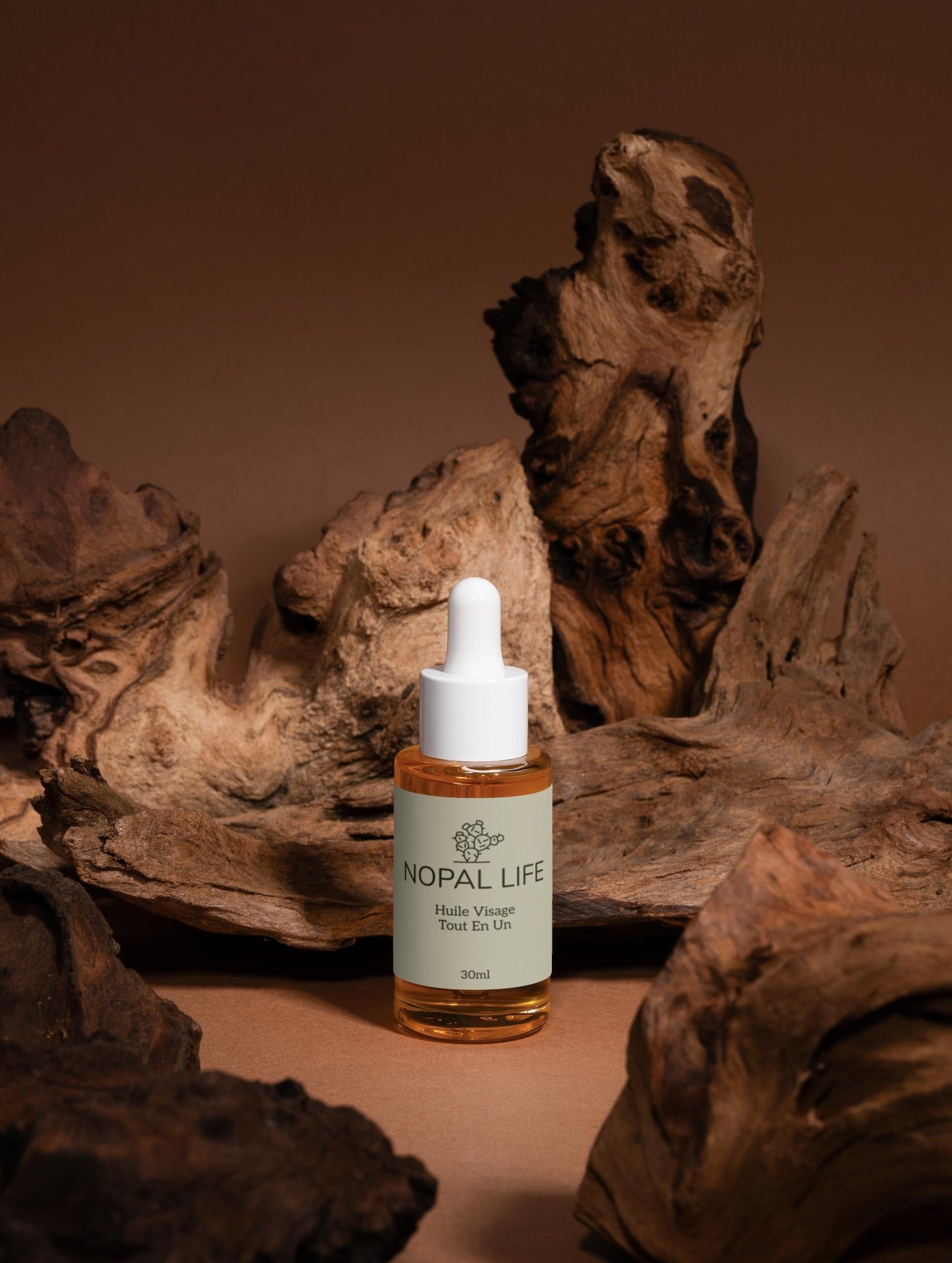
Your skin remains rough despite a cream, or you are working on skin texture and marks left by old imperfections. The oil is extracted from rosehip seeds and is distinguished by its richness in essential fatty acids and vitamin A-related compounds.
Two practical caveats: its smell is strong, and it oxidizes faster than other vegetable oils. Opaque bottle, cap tightly closed.
Layering them, most often
This is the answer that suits most skin types, and the order is dictated by physics.
1. Niacinamide serum on clean, slightly damp skin.
2. One minute wait.
3. Two to three drops of rosehip oil, pressed rather than massaged.
The oil here acts as the final layer, the one a cream would fill. On combination skin, reserve it for areas that feel tight.
If you have to keep only one
Observe what your skin does at the end of the day. If it's shiny and pores are visible, keep the niacinamide. If it feels tight and rough to the touch, keep the oil.
Skin can lack water, fats, or both — it's this diagnosis that guides, not the active ingredient's reputation.
Morning or evening
Niacinamide is suitable for both times. Rosehip oil is more comfortable in the evening, where its smell and richness matter less and nothing else is applied over it.
Composition and properties of the oil
Rosehip oil is extracted from rosehip seeds. Its richness in essential fatty acids and natural antioxidants explains its traditional use on dry and mature skin. It nourishes and protects the skin from external aggressions, without ever filtering ultraviolet rays.
Niacinamide, on the other hand, is a unique molecule whose effectiveness relies on regularity. Two different logics: a complete ingredient on one side, a targeted active ingredient on the other.
Rich in polyunsaturated fatty acids — linoleic and alpha-linolenic — and carotenoids, rosehip oil acts on surface regeneration. It is thanks to this composition that it is credited with benefits for skin texture and marks, and not a deep action.
What it diminishes relates to appearance: a better-nourished surface reflects light better. On skin aging, it supports without correcting, and improving comfort remains its most reliable contribution.
Vitamins, antioxidants, and elasticity
Rosehip oil contains vitamin A-related compounds as well as antioxidants that help protect the skin from free radicals. It is traditionally associated with the elasticity of mature skin and with working on dark spots and marks left by old imperfections.
Niacinamide, a form of vitamin B3, acts on another level: sebum regulation, evenness of complexion, barrier strengthening. Both improve skin appearance through different pathways, which explains why they are often found in the same routine rather than in competition.
Sensitive skin, mature skin
On sensitive skin, oil is generally well tolerated; niacinamide requires a gradual introduction. On mature skin, both have their place: oil for nourishment and elasticity, niacinamide for skin texture. Neither treats anything; they improve appearance, which is already the main thing one can expect from a cosmetic.
What not to expect from them
They do not erase established wrinkles and do not replace sun protection. Their scope is cosmetic and stops there: no medical care, no promise of results. A recent scar or an evolving lesion requires medical advice.
Frequently Asked Questions
Can they be used together?
Yes, and it is often the best choice. Niacinamide serum first, rosehip oil one minute later. No incompatibility between them.
Is rosehip oil suitable for oily skin?
In small quantities and only on dry areas. One drop is enough. Niacinamide alone is often more suitable for this skin type.
Why does rosehip oil smell strong?
Its composition of polyunsaturated fatty acids gives it a strong vegetable odor, which intensifies with oxidation. A rancid odor indicates an oil that should no longer be used on the face.
How long before judging the result?
Six to eight weeks for niacinamide, several weeks for the oil as well. Alternate rather than layer if you want to know which one is working.
Our anti-aging treatments