Jojoba oil: myth or real effect on the skin
The myth: it acts on sebum production. The real effect is elsewhere, and it stems from a chemical peculiarity that no other vegetable oil shares.
It's not an oil
Jojoba oil is a liquid wax. Vegetable oils are triglycerides — three fatty acids attached to a glycerol molecule. Jojoba is a wax ester, a different structure, found in human sebum.
This kinship is the central fact. It explains its exceptional tolerance, its stability — it practically doesn't go rancid and lasts two years — and its dry feel, very different from that of classic oils.
What "regulates" means, and what it doesn't mean
It's widely claimed that jojoba oil regulates sebum production, sometimes that it "fools" the skin into thinking it has enough. This explanation is appealing and has no demonstrated basis: no topically applied treatment modifies the functioning of the sebaceous glands.
What is observed is real but of a different nature. On oily skin, jojoba is better accepted than other fatty substances; the skin shines less after a few weeks and the feel remains dry. This is an effect of appearance and comfort, not a physiological action — and that's already what most people are looking for.
On which skin types
All, which is rare for a fatty substance. Oily skin tolerates it thanks to its composition; sensitive skin accepts it where other oils trigger reactions; dry skin uses it as a finishing layer. It is classified as non-comedogenic on most scales, meaning it is unlikely to clog pores.
This classification remains indicative: it comes from old tests and the response varies from person to person. A one-week trial on a limited area provides a more reliable answer than any published scale.
How to use jojoba oil
As a treatment: two to three drops after the aqueous phase, as the last layer, morning or evening. For makeup removal: a few drops on dry skin, massage for one minute, emulsify with lukewarm water, rinse. As a dilution base for an essential oil: it is one of the safest bases, precisely because it does not oxidize.
These three uses can be combined in the same day without difficulty. Few natural ingredients support this versatility.
What it doesn't provide
Few essential fatty acids, unlike classic vegetable oils: its wax ester structure doesn't function in the same way. Those looking for an omega boost should turn to hemp, borage, or evening primrose.
It also doesn't hydrate, in the strict sense: it limits losses. Without prior water intake, it lubricates a surface that will remain dry. This is true of all fatty substances and particularly of this one, whose lightness sometimes makes us forget that it contains no water.
Choosing and storing
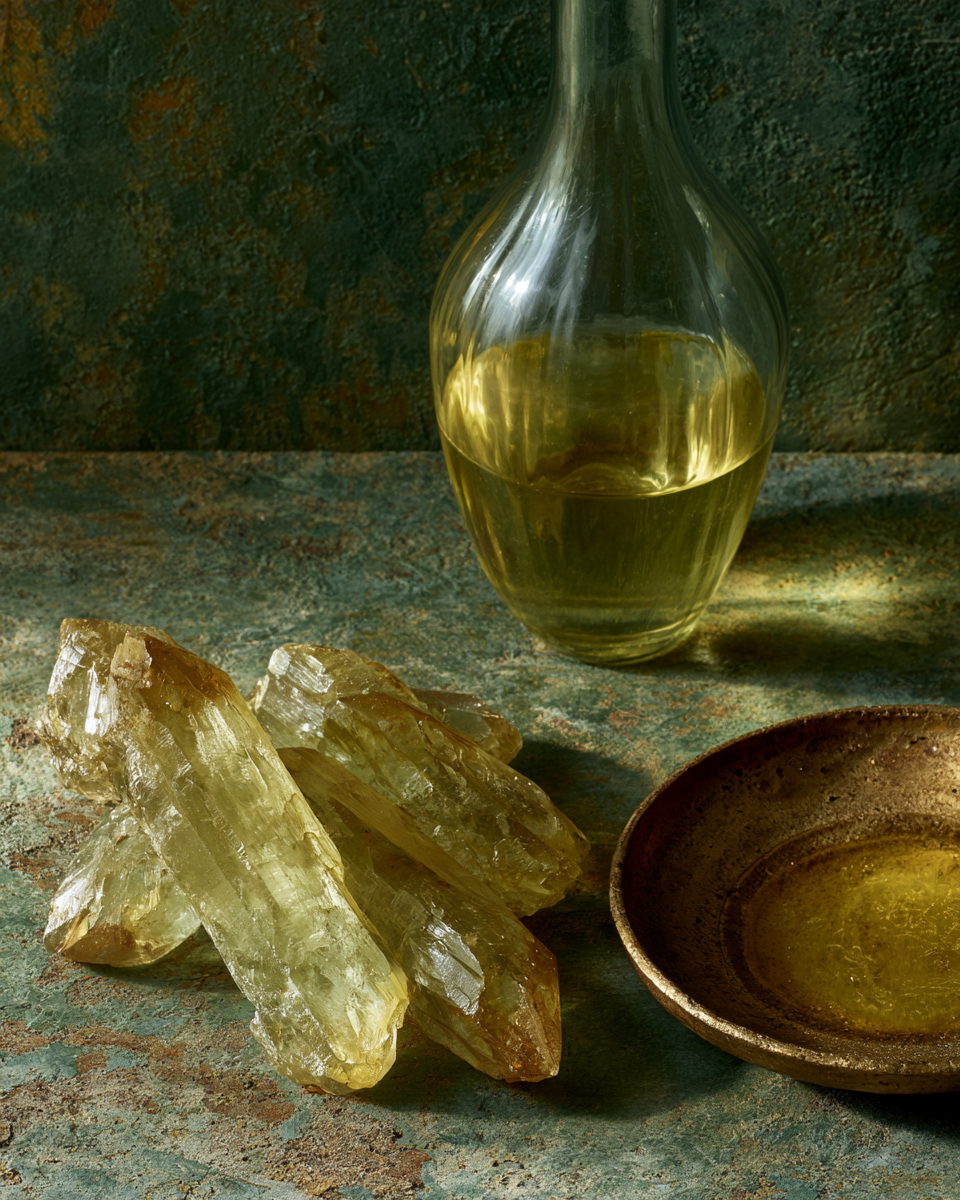
Simmondsia chinensis, cold-pressed, golden, unrefined. Its stability makes it a low-maintenance product: two years at room temperature without special precautions, which no classic vegetable oil allows. This is a concrete argument, unlike the regulation it is credited with. Our comprehensive jojoba oil sheet, and the gentle make-up removing oil with vegetable oils exploit this property exactly.
The hydrolipidic film, and why kinship matters
The surface of the skin is covered with a hydrolipidic film: an emulsion of sweat and sebum. Human sebum contains about 25% wax esters — exactly the chemical family of jojoba.
This kinship explains everything else. The oil integrates into the existing film instead of layering on top of it, which gives it that characteristic dry feel and absence of greasy sensation. It nourishes without leaving a greasy film, which no triglyceride does as well.
On combination and blemish-prone skin
This is where it is most useful and most misunderstood. It suits combination skin, does not clog pores in the vast majority of cases, and generally does not worsen acne — which is already remarkable for a fatty substance.
But it does not treat blemishes. For blackheads or pimples, an appropriate active ingredient is needed; jojoba is the support that makes this treatment tolerable, not the treatment itself. Confusing the two leads to lost weeks.
On hair and scalp
Its composition, close to sebum, makes it a good scalp treatment, where other oils weigh hair down. A few drops massaged before shampooing, or a drop on dry ends daily for dry hair.
It is one of the rare cosmetic products that can be used on both facial skin and hair fiber, with the same properties and the same reduced dosage.
Its benefits, and its limits
Established benefits: exceptional tolerance, stability, dry feel, versatility, lack of odor. Limits: few essential fatty acids, no water intake, no action on wrinkles or spots.
It is an excellent carrier and a first-rate emollient. It is not an active ingredient, and arguments that attribute active properties to it do a disservice to an oil that didn't need them.
The "Myth or Real Effect" series
What each ingredient really does, what it is wrongly credited with, and what the data allows us to say.


Go further than this article
Get our skincare guides by email — and start with your free skin diagnostic: 2 minutes, advice tailored to your skin. We ship to the US, UK, Canada, Australia and 27 European countries; somewhere else? Sign up and you will be the first to know when we deliver to your country.
By signing up, you agree to our privacy policy. Unsubscribe in one click.