Pomegranate extract punicalagins ellagic acid: urolithins, MMP UV and dehydrated mature skin
What is pomegranate extract in natural cosmetics?
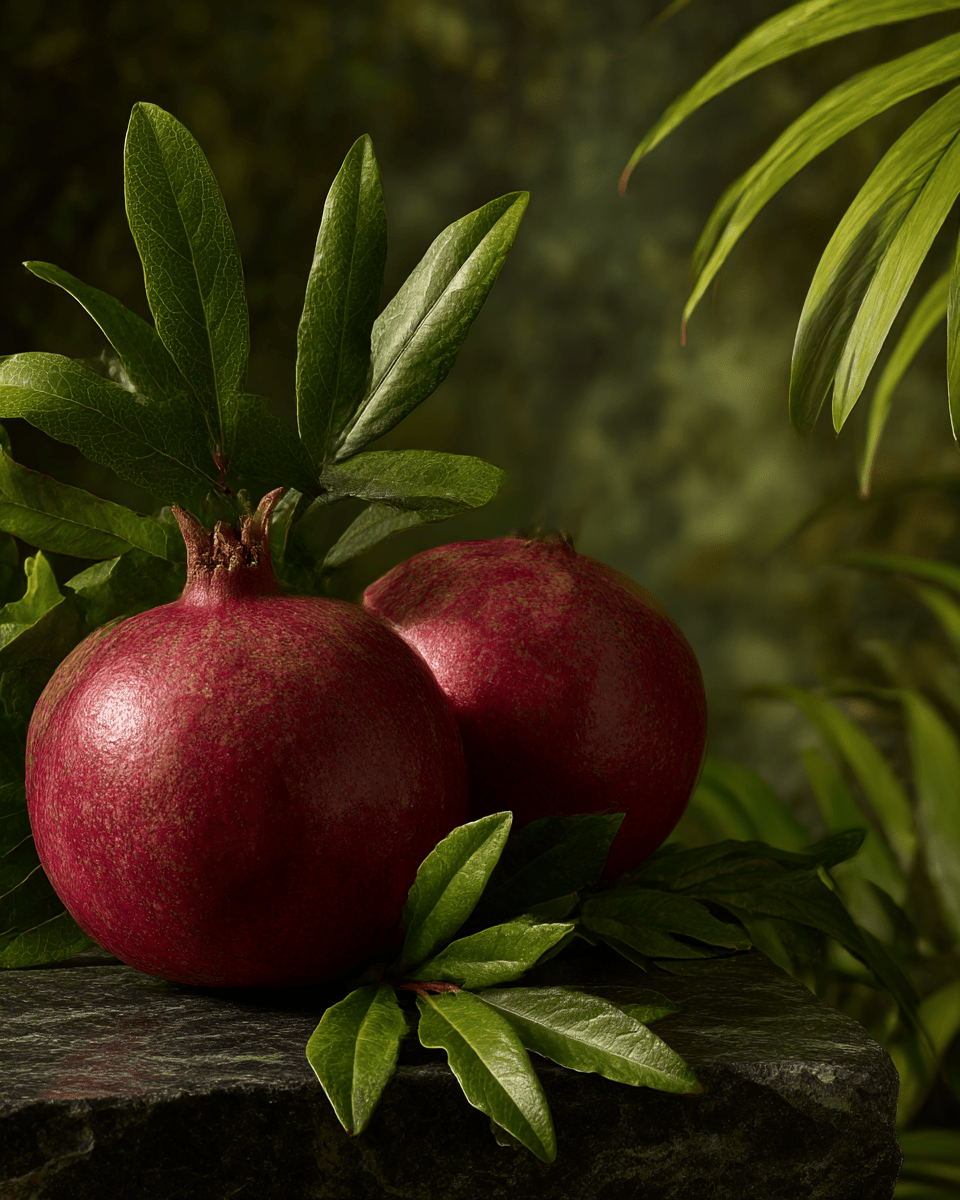
Pomegranate (Punica granatum) has fascinated people since antiquity, and natural cosmetics are now interested in the richness of its constituents for skin care. Pomegranate extract—obtained mainly from the peel, membrane, and seeds—concentrates a family of molecules renowned for their antioxidant properties: punicalagins, polyphenols of the ellagitannin class, traditionally associated with strong antioxidant potential in the plant world.
Concretely, what does this mean for your skin? Exposure to UV rays, pollution, and daily aggressions contribute to the appearance of skin aging: visible loss of firmness, noticeable fine lines, dull complexion, visible pigmentation spots. Ingredients with antioxidant properties, such as pomegranate extract, are valued in cosmetics for helping to preserve the radiance and appearance of more rested-looking skin.
But pomegranate extract is not limited to punicalagins. It also contains ellagic acid, punic acid, and a constellation of secondary polyphenols, traditionally valued in cosmetics for helping to preserve the firm, protected, and densified appearance of the skin. Let's look in detail at what is said about each of these ingredients.
Punicalagins, ellagic acid, and urolithins: the trio explained
Punicalagins are the emblematic molecules of pomegranate. When in contact with the skin, they are associated with the release of ellagic acid, which itself is valued for its antioxidant and soothing properties for skin comfort. Punicalagins are traditionally recognized as antioxidant polyphenols, valued in cosmetics for helping to preserve the skin's surface lipids against daily oxidative stress.
Ellagic acid is a polyphenol particularly valued in cosmetics: it is appreciated for helping to even out the complexion's appearance and to preserve the firm and plump look of the skin. This is precisely where pomegranate takes on a visible radiance and firmness dimension. With age and UV exposure, skin loses its apparent firmness and tone; ellagic acid-based treatments are valued for helping to preserve the appearance of the support network and the visible youthfulness of the skin.
Urolithins constitute the third dimension of this ingredient. These are compounds associated with the skin microbiome from ellagitannins—a process analogous to what is described for oral consumption of pomegranate. Urolithins A and B are currently being studied in cosmetics for their interest in the appearance of mature skin: they are associated with a more radiant-looking complexion and fresher-looking skin. Pomegranate extract is thus one of the rare plant ingredients to combine, in a single active ingredient, surface antioxidation, support for the complexion's appearance, and a link with the skin microbiome.
Punic acid: the unique fatty acid of pomegranate for mature skin
Pomegranate seed oil contains a fatty acid found nowhere else in nature in significant concentrations: punic acid, or conjugated 18:3 acid (18:3, 9c,11t,13c). This unique conjugated structure gives it functional properties radically different from classic fatty acids like linoleic acid or alpha-linolenic acid.
Punic acid is valued in cosmetics for its affinity with the skin and its comfort. For mature and dehydrated skin, whose comfort and suppleness require particular attention, this fatty acid is particularly precious. Punic acid also helps to preserve the smooth and comfortable appearance of the skin's superficial layer, helping to limit the feeling of tightness and the dehydrated appearance often associated with mature skin.
Pomegranate extract (water-soluble polyphenols) should not be confused with pomegranate seed oil (lipids, including punic acid): the two fractions complement each other without substituting. In an ideal cosmetic formulation, they act in tandem—polyphenols on the surface and epidermis, lipids to help preserve the comfort and suppleness of the skin barrier. This is precisely the logic of the mask protocol we describe later in this article.
Appearance of aging and visible firmness: what is said about it
Sun exposure over the years is one of the main factors associated with the appearance of skin aging. It is visibly manifested by an apparent loss of firmness, fine lines, uneven skin texture, and uneven pigment distribution. Fine lines and visible loss of firmness observed from the age of forty are largely linked to this phenomenon.
Pomegranate is valued in cosmetics to support the appearance of the skin against these signs. Rich in antioxidant polyphenols, pomegranate extract is valued for helping to preserve the firm and toned appearance of the face and to support the radiance of skin exposed daily to UV rays and pollution.
Furthermore, punicalagins are appreciated as an antioxidant supplement—without, of course, replacing an approved SPF sunscreen, but adding a layer of comfort against daily stress. For skin concerned by visible signs of aging and apparent firmness, combining pomegranate extract and daily sunscreen is a coherent and well-thought-out strategy.
Pomegranate + Prickly Pear Powder Mask Protocol for Dehydrated Mature Skin
Prickly pear powder (Opuntia ficus-indica) is the STAR ingredient of this protocol. Rich in betalains (antioxidant pigments specific to Cactaceae), amino acids (proline, hydroxyproline), moisturizing mucilages, and gentle natural silica, it constitutes the ideal base for a face mask for dehydrated mature skin. Combined with pomegranate extract, it forms a complete functional duo: prickly pear powder provides comfort and hydration, pomegranate extract provides antioxidant protection and support for visible firmness.
Weekly mask protocol (mature skin 40-65 years):
- Step 1 — Preparation: Cleanse the face with a gentle cleansing milk. Apply thermal or floral water (rose water, neroli water) to still damp skin to optimize the comfort of active ingredient application.
- Step 2 — Mixing: In a ceramic bowl (avoid metal which can oxidize polyphenols), mix 1 teaspoon of prickly pear powder + ½ teaspoon of powdered pomegranate extract (or 5-6 drops of concentrated liquid extract) + 1 teaspoon of floral water or rosehip vegetable oil depending on your skin type.
- Step 3 — Application: Apply a generous layer, avoiding the eye contour. Leave on for 15 to 20 minutes. The texture should remain supple—if it feels tight, add a few drops of floral water.
- Step 4 — Rinsing and care: Rinse with lukewarm water using gentle circular motions (light gentle exfoliation from the powder). Immediately apply your usual serum then your nourishing cream to seal in the active ingredients.
- Frequency: 1 to 2 times a week for a 4-week course. Visible appearance: radiance at D7, apparent firmness at D21, smoothed appearance of superficial fine lines at D28.
For a personalized assessment of your skin type and recommendations adapted to your exact skin profile, Nopal Life's intelligent skin diagnostic guides you to the most suitable routine among the 6 rituals in the collection.
Mistakes to avoid with pomegranate extract in facial care
Pomegranate extract is a valued but sensitive active ingredient. Here are the most common mistakes that reduce its effectiveness or cause discomfort:
1. Using chlorinated tap water as a solvent. Residual chlorine in tap water rapidly degrades punicalagins through oxidation. Always prefer floral water, still mineral water, or a hydrosol to dilute or mix your pomegranate-based preparations.
2. Mixing in a metal bowl. Metal ions (iron, copper) catalyze the oxidation of polyphenols. A ceramic, glass, or food-grade plastic bowl is essential to preserve the properties of punicalagins.
3. Applying to dry skin without prior hydration. On dehydrated skin without pre-hydration, pomegranate tannins can cause a slight uncomfortable astringent sensation. Always apply to damp skin or after spraying with floral water.
4. Exceeding 20% concentration in a homemade serum. Beyond this threshold, ellagitannins can cause a slight feeling of discomfort in reactive skin. Commercial cosmetic formulations generally adhere to concentrations of 0.5 to 5%.
5. Storing the prepared mixture for more than 24 hours. Without a preservative, a homemade mixture based on pomegranate extract oxidizes rapidly (browning) and loses a large part of its antioxidant properties within 48 hours at room temperature. Always prepare in small quantities, just before use.
6. Underestimating the need for complementary sun protection. Pomegranate extract helps provide comfort to UV-exposed skin but is by no means an approved sunscreen. For visible radiance and firmness care, daily sun protection (minimum SPF 30) remains essential, especially for mature skin.
FAQ — Pomegranate Extract and Natural Skincare Routine
Q: Is pomegranate extract suitable for all skin types?
A: Yes, overall. Normal, combination, mature, and dehydrated skin particularly appreciate it. Very sensitive skin should start with a low concentration (1-2%) and test on a small area 24 hours before full application, due to the slight astringency of tannins.
Q: Can pomegranate extract be used with Vitamin C?
A: Yes, the combination is appreciated. Punicalagins and Vitamin C are valued for their complementary antioxidant properties. However, be careful not to combine the two in the same aqueous mixture without a stabilizing antioxidant (tocopherol, ferulic acid) as both ingredients can oxidize each other in an unstable formulation.
Q: Can pomegranate extract help reduce the appearance of dark spots?
A: Ellagic acid is an ingredient valued for helping to even out the complexion's appearance. In cosmetics, it is appreciated for helping to reduce the visible appearance of pigmentation spots with regular use. The effect on the appearance is progressive and must be accompanied by strict sun protection to preserve the visible uniformity of the complexion.
Q: What is the difference between pomegranate extract and pomegranate seed oil?
A: The extract (water-soluble) concentrates polyphenols—punicalagins, ellagic acid, anthocyanins—which act on the surface and epidermis. The oil (oil-soluble) concentrates lipids, including the unique punic acid, valued for skin comfort and suppleness. The two ideally complement each other in a complete routine for mature skin.
Q: How long does it take to see results with the pomegranate + prickly pear mask?
A: Skin radiance is noticeable from the first application (immediate antioxidant effect + gentle exfoliation). Visible firmness gradually improves over 3-4 weeks of regular weekly use. The smoothed appearance of superficial fine lines generally becomes noticeable in 4-6 weeks.
Q: Is pomegranate extract useful for the appearance of established deep wrinkles?
A: Pomegranate extract mainly helps preserve the appearance of the skin (antioxidant comfort) and reduce the appearance of superficial fine lines. For the appearance of established deep wrinkles (gravitational wrinkles, deep expression lines), it can help improve the overall visible quality of the skin but does not replace more intensive treatments or professional support.
Q: Can pomegranate extract be used during pregnancy?
A: Used topically at standard cosmetic concentrations (≤ 5%), pomegranate extract has no recognized contraindications during pregnancy. If in doubt, always consult your doctor or midwife before introducing new cosmetic active ingredients during this period.
Q: Where can I find quality pomegranate extract for homemade care?
A: Choose an extract standardized in punicalagins (minimum 40%) and ellagic acid (minimum 20%), certified free of residual solvents, ideally from certified organic farming. Traceability of the country of origin (Turkey, Iran, Spain) is an additional quality indicator.
Ready to integrate pomegranate into your routine?
Discover Nopal Life prickly pear powder — the ideal base for your pomegranate mask — and get your skin diagnostic for a fully personalized routine.
Conclusion
Rich in punicalagins and ellagic acid, pomegranate extract supports the appearance of mature skin. Valued for its antioxidant properties, it helps revive radiance and preserve visible firmness. Its richness in polyphenols makes it a valuable active ingredient. Used regularly, it contributes to skin with a more toned and luminous appearance.
Why choose Nopal Life for the appearance of skin aging
Preserving the youthful appearance of the skin involves active ingredients valued in natural cosmetics. Nopal Life prickly pear oil, rich in essential omega-6 and omega-9 fatty acids, vitamin E, and plant sterols, is valued for helping to preserve the suppleness and dense appearance of the skin barrier. It helps maintain the skin's firm and plump appearance, reduce the appearance of dehydration lines, and support the comfort of the epidermal barrier for a visibly smoothing effect from the first weeks.
Combine it with our radiance and firmness night cream and our pomegranate serum for a complete synergy, night and day. Your skin regains a firm, radiant, and comfortable appearance long-term. Discover the Nopal Life formulation designed for your skin profile thanks to our free Skin Intelligence diagnostic.
RECOMMENDED TREATMENT
Natural formula · Origin Algeria
DISCOVER THIS TREATMENT →PERSONALIZED ROUTINE
Nopal Life Skin Intelligence™
Free diagnostic · 2 minutes
DISCOVER MY ROUTINE →This content is informative and educational; it does not replace medical advice, a diagnosis, or a dermatological consultation. In case of doubt or persistent skin problems, consult a qualified healthcare professional.


Go further than this article
Get our skincare guides by email — and start with your free skin diagnostic: 2 minutes, advice tailored to your skin. We ship to the US, UK, Canada, Australia and 27 European countries; somewhere else? Sign up and you will be the first to know when we deliver to your country.
By signing up, you agree to our privacy policy. Unsubscribe in one click.