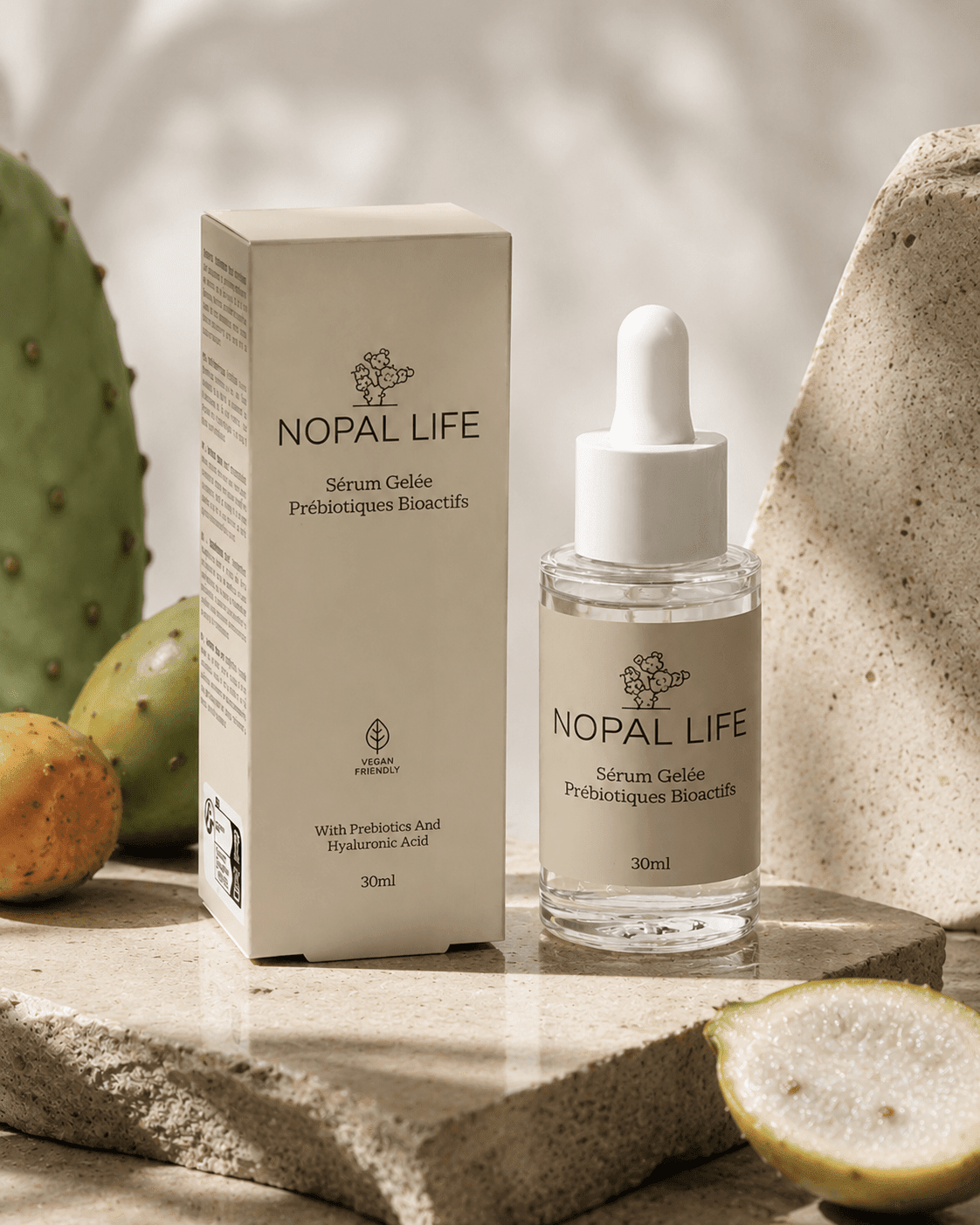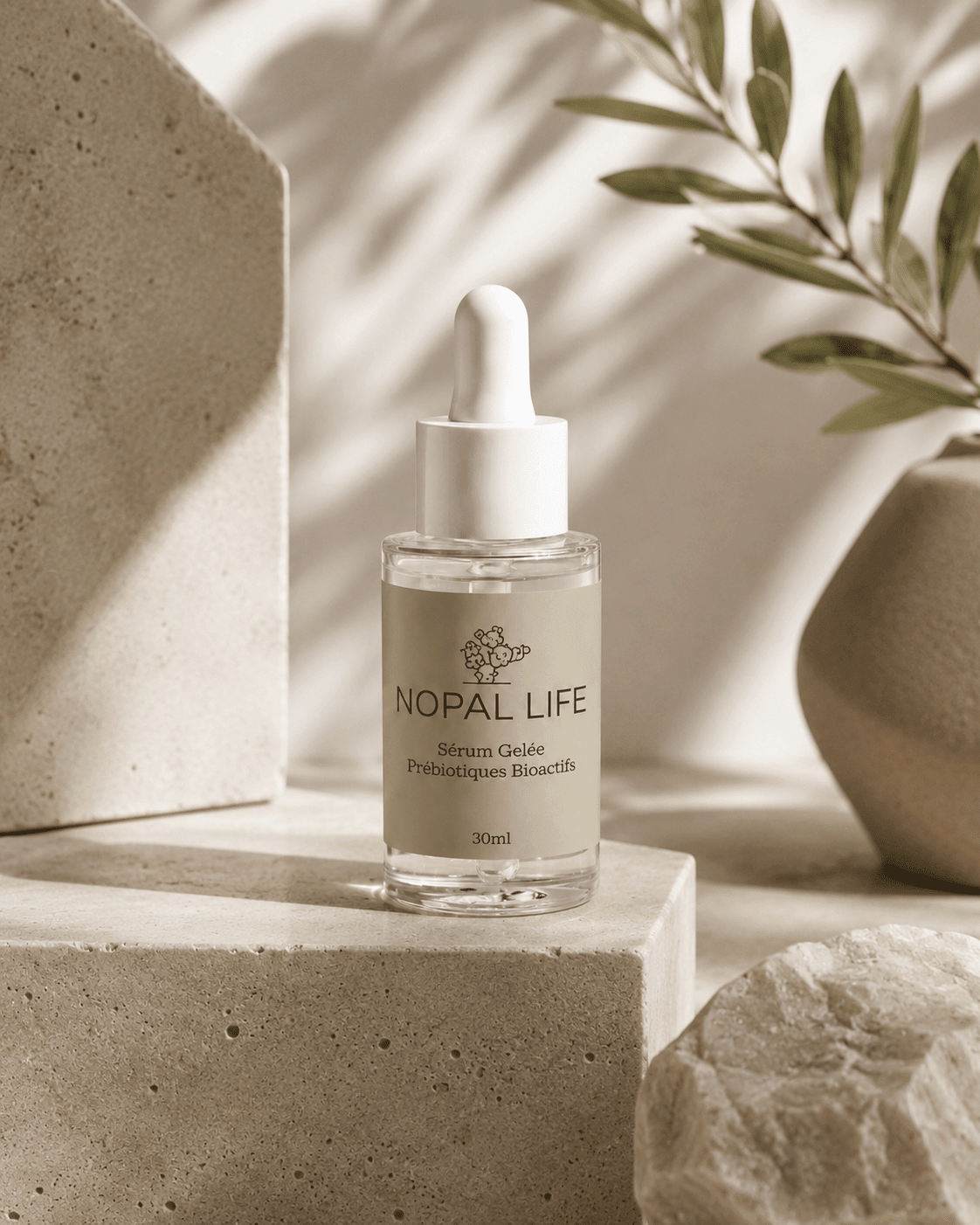
Prebiotics in anti-ageing cosmetics: what are they and what are they really used for?
In this context, prebiotics in cosmetics are generating increasing interest. These ingredients aim to support the balance of the skin microbiome and help the skin better defend itself against external aggressors. But what exactly are prebiotics in cosmetics, and what are their real benefits?
In the world of modern cosmetics, research is increasingly focusing on an element long ignored: the skin microbiome. This ecosystem, composed of billions of microorganisms living on the skin's surface, plays an essential role in its balance, resistance, and ability to defend itself against external aggressions. When this balance is disturbed, the skin can become more sensitive, drier, or more reactive, which can accelerate the appearance of signs of skin ageing.
To support this natural balance, many cosmetic products now incorporate prebiotics. But what exactly are prebiotics in anti-ageing cosmetics, and what do they really do?
Are they merely a marketing trend or a truly useful active ingredient for preserving skin health and balance, especially for mature skin? In this article, we explore the role of prebiotics in cosmetics, their benefits for the skin, and how to integrate them into a natural skincare routine with concentrated active ingredients.
What are prebiotics in cosmetics?
Prebiotics are substances that serve as nutrients for beneficial microorganisms present on the skin.
Unlike probiotics, which directly introduce live bacteria, prebiotics nourish the microorganisms already present in the skin microbiome.
Understanding the skin microbiome
The skin hosts a complex ecosystem composed of:
-
bacteria
-
yeast
-
microfungi
-
other invisible microorganisms.
This ensemble forms the skin microbiome, which plays an essential role in skin protection and balance.
A balanced microbiome helps to:
-
protect the skin against undesirable microorganisms
-
maintain a balanced skin pH
-
support the skin's natural defenses
-
strengthen the skin barrier.
When this balance is disturbed, the skin can become more sensitive or fragile.
The role of prebiotics
Prebiotics help maintain this balance by promoting the growth of beneficial microorganisms.
In cosmetic care, they notably allow to:
-
promote a balanced microbiome
-
improve skin tolerance
-
support the skin's natural defenses.
Why are prebiotics beneficial in anti-ageing cosmetics?
Skin ageing is influenced by several factors:
-
decrease in collagen
-
loss of elasticity
-
reduced hydration
-
oxidative stress
-
alteration of the skin barrier.
These changes can also disturb the balance of the skin microbiome.
Supporting skin balance
Prebiotics help maintain the balance of the microbiome, allowing the skin to better defend itself against external aggressions.
Balanced skin is often:
-
more resistant
-
less reactive
-
more comfortable.
Strengthening the skin barrier
The skin barrier protects the skin against dehydration and external aggressions.
Prebiotics indirectly contribute to maintaining this barrier by supporting the balance of the microbiome.
Improving overall skin quality
When the skin is balanced, it often appears:
-
more radiant
-
more comfortable
-
more supple.
These effects contribute to improving the skin's overall appearance.
 |
 |
Prebiotics and sensitive skin: a significant benefit
Sensitive skin often has an unbalanced microbiome and a weakened skin barrier.
Prebiotics can help improve this situation.
Reducing skin reactions
By promoting beneficial microorganisms, prebiotics can help reduce certain skin reactions such as:
-
redness
-
irritation
-
tightness sensations.
Improving skin comfort
Skin with a balanced microbiome is generally more comfortable and less reactive to external aggressions.
Prebiotics and complementary active ingredients: what synergies?
In cosmetic care, prebiotics are often combined with other active ingredients to improve the overall effectiveness of the products.
Prebiotics and hyaluronic acid
Hyaluronic acid is a moisturising active ingredient capable of retaining a large amount of water in the skin.
Combined with prebiotics, it contributes to:
-
improving skin hydration
-
strengthening the protective barrier
-
improving skin comfort.
Prebiotics and aloe vera
Aloe vera is known for its soothing and moisturising properties.
This combination is particularly beneficial for sensitive skin.
Prebiotics and ceramides
Ceramides help strengthen the skin's lipid barrier.
With prebiotics, they help improve the skin's natural protection.
How to integrate prebiotics into an anti-ageing skincare routine?
Products containing prebiotics can easily be integrated into a facial care routine.
Step 1: Gently cleanse the skin
Gentle cleansing helps preserve the balance of the skin microbiome.
Overly aggressive cleansers can disrupt this balance.
Step 2: Apply a serum or targeted treatment
Serums containing prebiotics provide concentrated active ingredients that support skin balance.
They are often combined with moisturising active ingredients.
Step 3: Hydrate and nourish the skin
A face cream helps maintain hydration and strengthen the skin barrier.
Natural products rich in concentrated active ingredients are particularly suitable for mature skin.
Step 4: Supplement with regenerating treatments
Masks and gentle exfoliants can improve skin texture and promote the penetration of active ingredients.
Common mistakes with microbiome skincare
Using overly aggressive products
Certain ingredients can disrupt the balance of the skin microbiome.
Using too many powerful active ingredients
An overly complex skincare routine can weaken the skin.
Neglecting hydration
Well-hydrated skin is generally more resistant and balanced.
Expert tips for preserving microbiome balance
To care for the skin microbiome:
-
opt for certified organic natural cosmetics
-
choose products rich in gentle and balancing active ingredients
-
adopt a simple and regular skincare routine.
Skincare products combining prebiotics, moisturising active ingredients, and soothing ingredients often sustainably improve skin comfort and balance.

FAQ – Prebiotics in anti-ageing cosmetics
Are prebiotics good for the skin?
Yes, they help support the balance of the skin microbiome and strengthen the skin's protective barrier.
Are prebiotics suitable for sensitive skin?
Yes, they are particularly suitable for sensitive or reactive skin.
Can products containing prebiotics be used daily?
Yes, products containing prebiotics can be used daily.
Do prebiotics have an anti-ageing effect?
Indirectly, yes. By improving skin balance and its resistance to external aggressions, they help preserve skin quality.
Can prebiotics be combined with other active ingredients?
Yes, they combine very well with moisturising active ingredients like hyaluronic acid or soothing ones like aloe vera.
Conclusion
Prebiotics represent an innovative approach in anti-ageing cosmetic care. By nourishing the beneficial microorganisms of the skin microbiome, they help maintain skin balance, strengthen the skin barrier, and improve skin comfort.
In a natural skincare routine with concentrated active ingredients, products enriched with prebiotics can help preserve skin balance and support its vitality, especially for sensitive or mature skin. By caring for the skin microbiome, these products contribute to a holistic and respectful approach to skin health.


Go further than this article
Get our skincare guides by email — and start with your free skin diagnostic: 2 minutes, advice tailored to your skin. We ship to the US, UK, Canada, Australia and 27 European countries; somewhere else? Sign up and you will be the first to know when we deliver to your country.
By signing up, you agree to our privacy policy. Unsubscribe in one click.