Bakuchiol or ceramides: which one for your skin?
Bakuchiol targets signs of aging, ceramides improve skin comfort. Two distinct functions, and two very different levels of evidence that are best known before buying.
What sets them apart
| Criterion | Bakuchiol | Ceramides |
|---|---|---|
| Nature | plant extract | skin lipids |
| Targeted action | wrinkles, texture | comfort, cohesion |
| Timeframe | 3 months | a few days |
| Documentation | limited | solid |
| Tolerance | good | excellent |
| Sun | no known effect | no effect |
What bakuchiol is
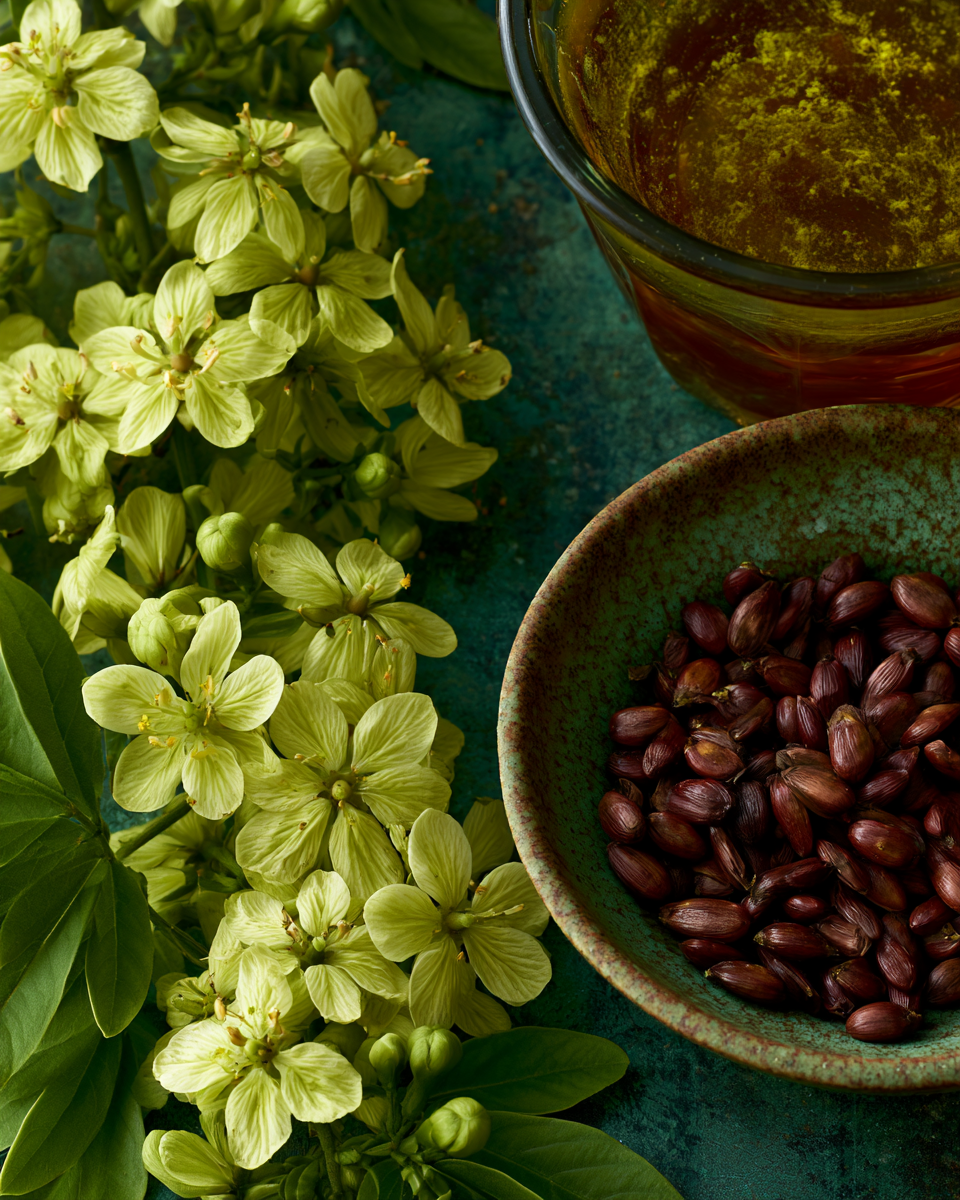
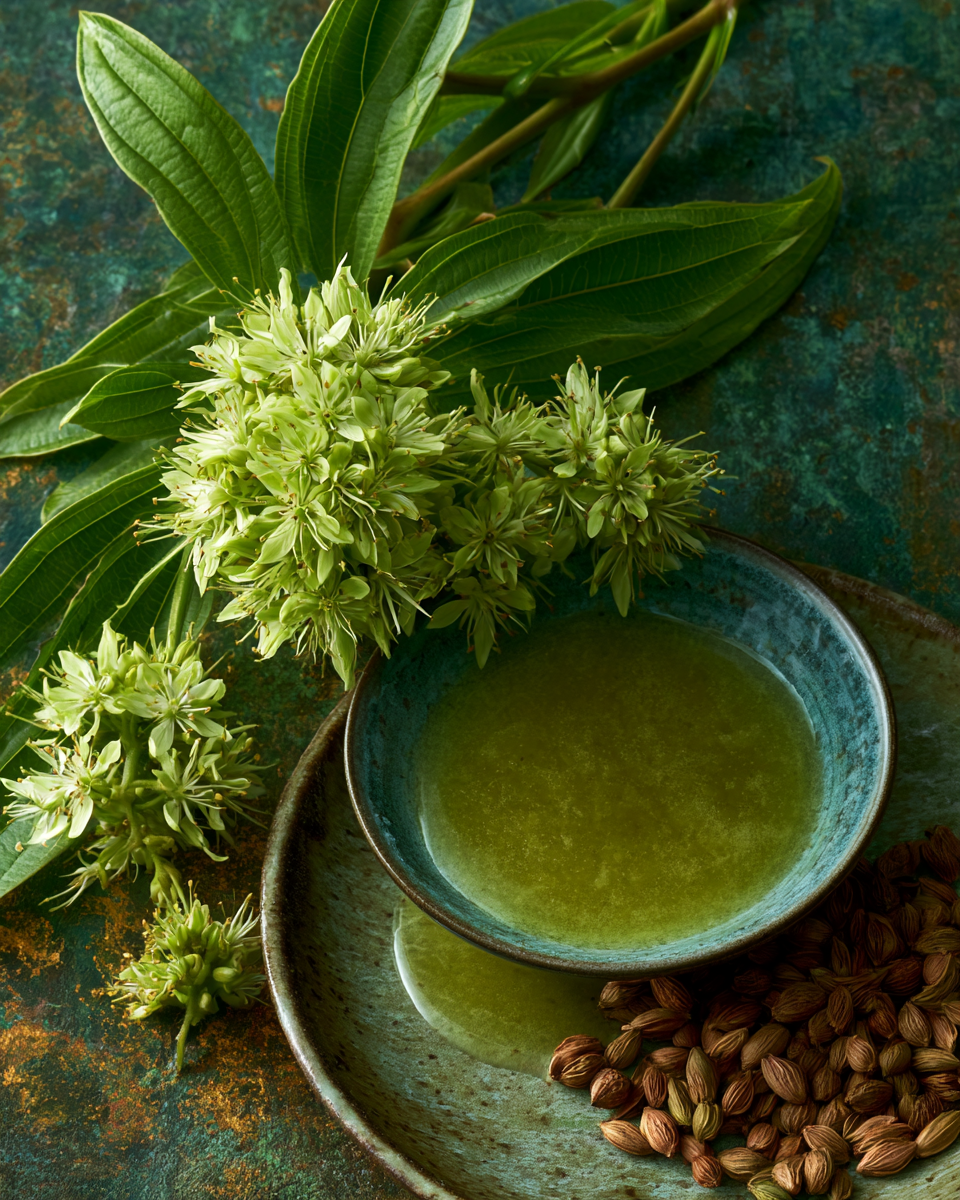
Bakuchiol is an extract from Psoralea corylifolia, a plant used in traditional medicine. It arrived in cosmetics presented as a plant-based alternative to retinol.
This presentation needs to be qualified. Bakuchiol does not belong to the retinoid family and does not have the same chemical structure. What brings them closer is a partially comparable effect profile, observed in a small number of studies.
These studies exist and are rather favorable, but they are few, involve small samples, and are often funded by manufacturers. It is a promising active ingredient, not an established one.
Its real advantage: much better tolerance than retinol, with no irritation phase or known photosensitivity.
It is extracted from the seeds of Psoralea corylifolia, a legume from South Asia known in Ayurvedic medicine as babchi. The plant Psoralea corylifolia has no botanical link with vitamin A: it is a terpenophenol, and the similarity of effects is functional, not structural.
This lack of relationship explains its better tolerance. It does not follow the same cellular pathway and does not cause the characteristic adjustment phase of the other family — which makes it suitable for sensitive skin that cannot tolerate classic active ingredients.
What ceramides are
Ceramides are lipids naturally present in the outermost layer of the skin. They ensure cohesion between cells and retain water.
Their quantity decreases with age, exposure to cold, and harsh cleansers. Skin that feels tight, blushes easily, or reacts to everything often lacks them.
A product that provides them makes up for this deficit, and the effect is noticeable within a few days. The level of evidence here is much more solid than for bakuchiol.
Which to choose
Skin that feels tight, blushes, lacks comfort: ceramides, without hesitation.
Targeting wrinkles, but cannot tolerate retinol: bakuchiol, while being aware of the limitations of the data.
Very reactive skin: ceramides first, for one month, before any active ingredient.
Limited budget: ceramides, whose ratio between price and documented results is much better.
The two do not aim for the same outcome. Bakuchiol acts on the general appearance and skin texture, with an anti-aging objective; ceramides work on the barrier and comfort. Skin that feels tight will benefit more from the latter, even if the former is more interesting.
For a complexion that lacks regularity on otherwise comfortable skin, the order is reversed. And on skin that shows redness, it is better to stabilize with ceramides before introducing any active ingredient.
Using them together
Nothing prevents it, and it's even the most logical combination. Bakuchiol first, as a serum, then a ceramide cream as the last layer.
Bakuchiol is significantly better tolerated than retinol, but it remains an active ingredient: a repairing cream always improves the comfort of a routine that contains one.
Bakuchiol is applied as a serum, ceramides as a cream over it. This sequence is suitable for almost all cases and requires no particular precautions: the tolerance of the former makes the combination simpler than with a classic active ingredient.
Daily application is sufficient, morning or evening depending on the texture. Unlike other families, this one does not require a gradual increase in use — which is its main practical advantage.
Bakuchiol or retinol
If your skin tolerates retinol, there is no reason to replace it: its documentation is incomparable.
Bakuchiol makes sense when retinol is not tolerated — reactive skin, persistent irritation — or during periods when a retinoid is not recommended. It is then better than an active ingredient that had to be given up.
What marketing says
Bakuchiol is often presented as "natural retinol," with promises of equivalent efficacy. This equivalence has not been established.
The word "natural" says nothing about efficacy or tolerance. A plant extract can irritate, a synthetic active ingredient can be perfectly tolerated. What matters is what the data show, and on this point, the two are not at the same level.
Reading a label
Bakuchiol appears under this name or as Psoralea corylifolia seed extract. The concentrations used range from 0.5 to 2%. Without an announced figure, nothing can be concluded.
Ceramides appear as ceramide NP, ceramide AP, ceramide EOP. A formula that combines several, with cholesterol and fatty acids, approaches the actual composition of the skin.
Protection, whatever happens
Neither protects against radiation. For wrinkles and firmness, daily sun protection has more effect than any active ingredient on this page, and its level of evidence is the highest of all.
How to use them daily
Bakuchiol is applied morning or evening, every day, without any particular progression. This is a real advantage over a retinoid, which requires weeks of caution.
Ceramide cream is applied as the last layer, twice a day. For dry skin, a rich texture; for oily skin, a gel-cream, which exists and is sufficient.
What hydration covers
Two distinct mechanisms hide behind this word. A humectant attracts water, lipids prevent it from leaving. Ceramides fall into the second category, and both are needed.
A serum of hyaluronic acid on damp skin, then the cream over it, covers everything. Bakuchiol, however, provides neither: it is an active ingredient, not a moisturizer.
On reactive skin
This is the area where this comparison makes full sense. Skin that cannot tolerate any retinoid can often accommodate bakuchiol, and ceramides make the whole comfortable.
Start with the cream alone for one month. Then add bakuchiol: the skin will be ready to receive it, and you will know what to attribute your observations to.
Available textures
Bakuchiol is mainly found in serums and oils. Ceramides are found in creams, balms, more rarely in serums: they are lipids, and they require an oily phase to be carried.
This difference guides the order of application as much as the nature of the active ingredients. The most fluid always goes first, whatever the routine.
What each costs
A decent ceramide cream can be found at a modest price: these lipids are well-understood and widely used. What matters is their quantity and their association with cholesterol.
Bakuchiol costs more, as its production remains limited. The price says nothing about the concentration: look for the figure, between 0.5 and 2%.
When to change your mind
If three months of bakuchiol yield no visible results, it is not a personal failure. This active ingredient does not work the same for everyone, and the data do not allow predicting who will benefit from it.
Ceramides, on the other hand, produce an effect in almost all cases where the skin feels tight. This is the difference between an active ingredient to try and a treatment you can count on.
Key takeaway
These products are cosmetic and act on the skin's appearance without treating any condition. Skin that remains painful or inflamed despite stopping active ingredients requires dermatological advice.


Go further than this article
Get our skincare guides by email — and start with your free skin diagnostic: 2 minutes, advice tailored to your skin. We ship to the US, UK, Canada, Australia and 27 European countries; somewhere else? Sign up and you will be the first to know when we deliver to your country.
By signing up, you agree to our privacy policy. Unsubscribe in one click.