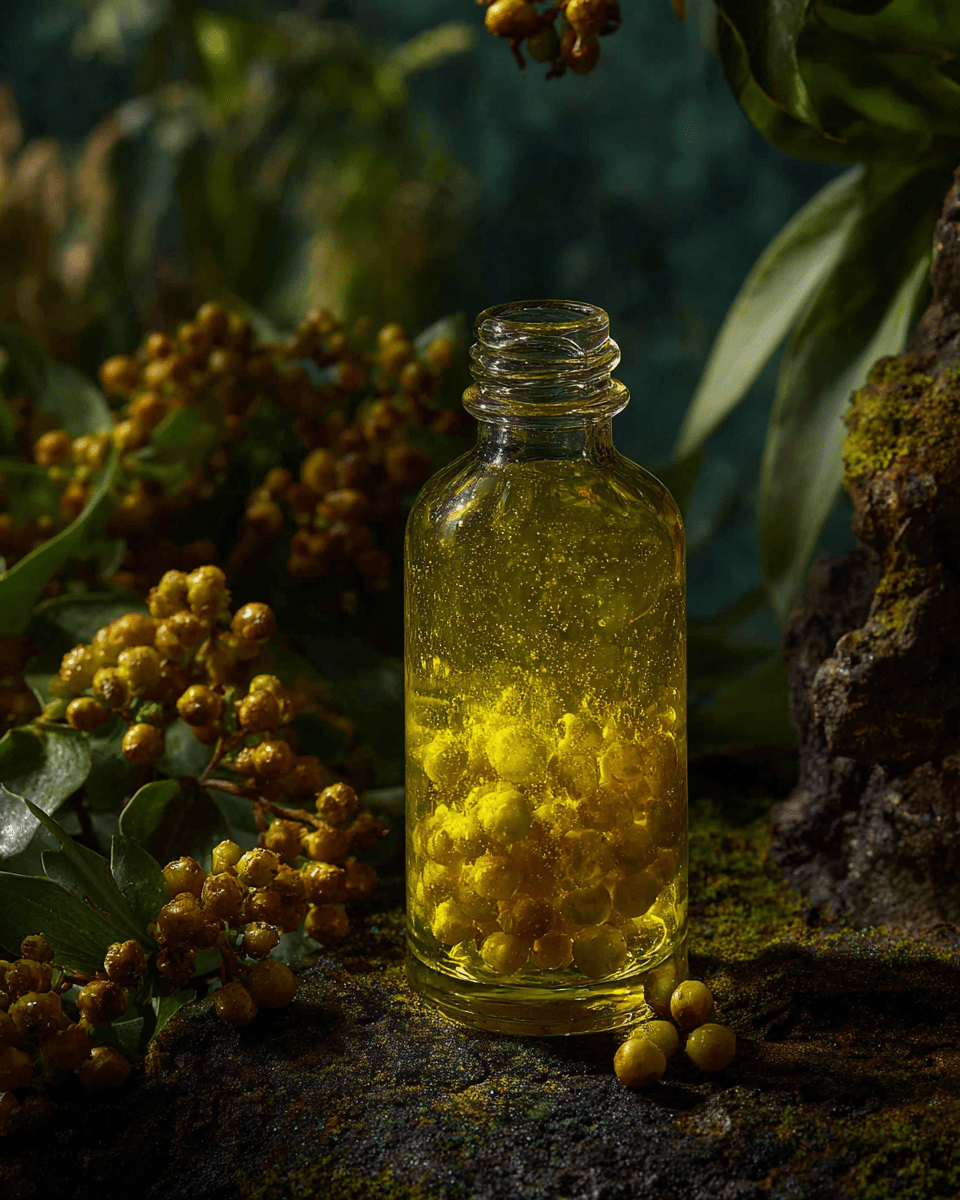
Colloidal Oatmeal: A Complete Guide Nopal Life
Choosing the right active ingredients is already a way to take care of your skin. Colloidal Oatmeal: here is the complete guide to this ingredient — cosmetic properties, application tips, synergies — to integrate it accurately into your ritual.
What is colloidal oatmeal? Definition and manufacturing process
Colloidal oatmeal — designated by its Latin name Avena sativa in INCI lists — is a particular form of oat obtained by ultra-fine grinding of oat grains into a very fine powder, then dispersed in a liquid to form a stable suspension called a colloidal suspension. This micronization technique allows oat particles smaller than 150 micrometers to remain in a homogeneous suspension in water, without settling, ensuring a uniform distribution of active ingredients on the skin during application.
What fundamentally distinguishes colloidal oatmeal from simple oat flour or ordinary oat extract is its richness in cosmetic components and its physical form which optimizes adherence and distribution on the skin surface. Ultra-fine grinding releases components from cell walls — notably avenanthramides, beta-glucans, and lipids — making them directly accessible to the skin surface from the first contact.
Used for centuries in traditional baths to provide a sensation of soothing and comfort to the skin, colloidal oatmeal received formal regulatory recognition in the United States in 2003, when it was retained as a full-fledged skin protectant ingredient — a rare distinction for a natural ingredient. In Europe, cosmetic files that use it are based on solid documentation, making colloidal oatmeal one of the best-documented natural active ingredients in cosmetics.
Cosmetic properties of colloidal oatmeal in skincare
Colloidal oatmeal owes its cosmetic qualities to a remarkable composition profile. Avenanthramides are phenolic compounds specific to oats, absent from all other cereals. They are associated with a sensation of soothing and comfort, particularly appreciated on skin prone to redness and discomfort.
Beta-glucans constitute the second group of major active ingredients. These polysaccharides form a hydrophilic film on the skin's surface, creating a veil that helps limit surface dehydration and preserve hydration comfort. Oat beta-glucans act by forming this surface film, while oat lipids (notably linoleic acid) support the comfort and suppleness of the skin's superficial layer.
The lipid fraction of oats — rich in linoleic acid (essential omega-6 fatty acid) and unsaponifiables — contributes to the comfort and suppleness of the surface barrier, particularly appreciated by dry and uncomfortable skin. Colloidal oatmeal also contains proteins that contribute to the smooth appearance of the superficial layer, saponins with gentle cleansing properties, and flavonoids (rutin, quercetin) recognized for their cosmetic interest.
How to incorporate colloidal oatmeal into your beauty routine
Colloidal oatmeal is a remarkably versatile active ingredient that can be integrated at all stages of a cosmetic routine. The most accessible form is the colloidal bath: dilute 100 to 200 g of colloidal oatmeal powder in lukewarm water (never hot, heat can accentuate sensations of discomfort) and immerse yourself for 15 to 20 minutes.
In daily facial care, colloidal oatmeal is found in moisturizing serums, light creams, soothing masks, and gentle cleansers. For very dry and uncomfortable skin, a rich emollient cream with colloidal oatmeal applied morning and evening after showering (on still slightly damp skin) is the most appreciated application method to "capture" skin hydration. Colloidal oatmeal masks left on for 15-20 minutes weekly provide an immediate soothing sensation of discomfort and a visible improvement in skin texture.
As a cleanser, colloidal oatmeal advantageously replaces traditional soap for very sensitive or reactive skin: its natural saponins allow for gentle cleansing while respecting the hydrolipidic film and skin comfort. To complete and optimize your hydration routine, do not hesitate to consult our complete skin guide and explore Nopal Life facial care products specially formulated.
Mistakes to avoid with colloidal oatmeal
The first mistake is to confuse colloidal oatmeal with ordinary oat flour. Culinary oat flour does not have the same cosmetic properties as cosmetic colloidal oatmeal. It is not micronized to the same degree, its component profile is different, and it can even slightly clog facial pores. Use exclusively cosmetic formulations specifically designed for the skin.
Second mistake: using colloidal oatmeal in too hot baths. The heat of the water can accentuate redness and discomfort — the opposite of the desired effect. The ideal temperature for a cosmetic colloidal bath is 35-37°C, slightly below body temperature. After the bath, gently pat the skin dry without rubbing, and immediately apply an emollient cream to still damp skin.
Third mistake: ignoring the possibility of oat sensitivity. Although rare, contact sensitivity to oats exists and can manifest as increased redness and itching. People reactive to gluten or wheat are not necessarily reactive to oats (different proteins), but a cross-reaction is possible. If in doubt, perform a patch test before use.
Like all soothing active ingredients, it is more appreciated for prevention and maintenance than for treating very uncomfortable skin. Regular maintenance use, even during calm periods, is the best way to support the comfort of sensitive skin and preserve its daily balance.
Colloidal oatmeal and specific skin types
This cosmetic interest is attributed to the combination of a soothing sensation (avenanthramides), support for surface comfort (beta-glucans + lipids), and emollient properties particularly appreciated by this skin type.
For chronically dry skin — whether constitutionally dry or dehydrated by environmental factors (winter, heating, air conditioning, hard water) — colloidal oatmeal represents a leading moisturizing active ingredient. Associated with other moisturizing active ingredients such as hyaluronic acid, which helps preserve hydration comfort and the smooth appearance of the skin, colloidal oatmeal helps retain surface hydration. This combination provides a double-level sensation of hydration — surface and lasting comfort — particularly appreciated for dry, uncomfortable skin.
Sensitive reactive skin, which reacts to temperature changes, certain cosmetics, or pollution, also finds a suitable solution in colloidal oatmeal. Its remarkable tolerance profile allows it to be used even on the most reactive skin. For an accurate diagnosis of your skin type and personalized recommendations, the Nopal Life Skin Intelligence™ diagnosis is available online for free.
Colloidal oatmeal in Nopal Life formulas
Colloidal oatmeal naturally fits into the Nopal Life philosophy of active and gentle skincare. Our formulations exploit the complementarity between colloidal oatmeal and prickly pear seed oil to offer a two-level nourishing and soothing action. Prickly pear seed oil, with its exceptional linoleic acid and vitamin E content, nourishes the skin and provides its lipophilic antioxidant active ingredients, for a feeling of comfort and suppleness. Colloidal oatmeal, on the other hand, acts on the surface to provide a soothing sensation, help retain hydration, and mechanically protect the skin from external aggressions.
This complementarity is particularly valuable for sensitive skin in the Mediterranean basin, subjected to significant environmental constraints: intense sunlight, hot and dry winds, hard water, and sometimes spicy food that can influence skin condition. Our formulas seek to bring comfort to these fragile skins with an approach that respects their natural skin ecosystem. Find all our skincare products formulated with this logic on our page dedicated to Nopal Life facial care.
Frequently Asked Questions
Q: Can colloidal oatmeal be used on a baby's face?
A: Cosmetic formulations with colloidal oatmeal specifically designed for babies (cleansers, creams) are among the most popular care products for sensitive skin from the first months. If in doubt, consult a healthcare professional.
Q: What concentration of colloidal oatmeal is appreciated in a product?
A: Cosmetic formulas often contain it from 1% colloidal oatmeal. Concentrations between 1 and 3% are most common in active serums and creams. For cosmetic colloidal baths, 100-200 g of powder is used for an entire bath, which corresponds to a much higher but brief concentration.
Q: Is colloidal oatmeal suitable for oily skin?
A: Yes, provided you choose light and non-comedogenic formulations. Oily skin can be sensitive and dehydrated simultaneously — a paradoxical but frequent combination. Aqueous serums or light gels with colloidal oatmeal provide the necessary soothing and hydration without weighing down the skin, and help to mattify the appearance of shiny areas.
Q: How long does it take to see results with colloidal oatmeal?
A: The soothing sensation is often felt from the first use — comfort and reduction of discomfort. Visible improvement in the overall appearance of the skin (skin looking less dry, more comfortable surface, calmer appearance) is observed after 4 to 6 weeks of regular use.
Q: Is colloidal oatmeal safe for people with gluten intolerance?
A: Topically, cosmetic colloidal oatmeal is generally well tolerated by celiac or gluten-sensitive individuals, as gluten proteins (wheat gliadins) are different from oat proteins (avenins). If in doubt, seek advice from a healthcare professional.
Q: Can colloidal oatmeal be used after a chemical peel?
A: Yes. Colloidal oatmeal is even one of the most appreciated active ingredients in the post-peel period to provide a soothing sensation, reduce discomfort, and support skin comfort. Choose a simple formulation, without other potentially irritating active ingredients (acids, retinol), and apply generously. If in doubt, consult a healthcare professional.

Ingredient Reference
Colloidal Oatmeal
Soothing, softness & comfort for sensitive skin.
Discover the sheet →Read more
Information provided for cosmetic and educational purposes only; it does not constitute medical advice.


Go further than this article
Get our skincare guides by email — and start with your free skin diagnostic: 2 minutes, advice tailored to your skin. We ship to the US, UK, Canada, Australia and 27 European countries; somewhere else? Sign up and you will be the first to know when we deliver to your country.
By signing up, you agree to our privacy policy. Unsubscribe in one click.