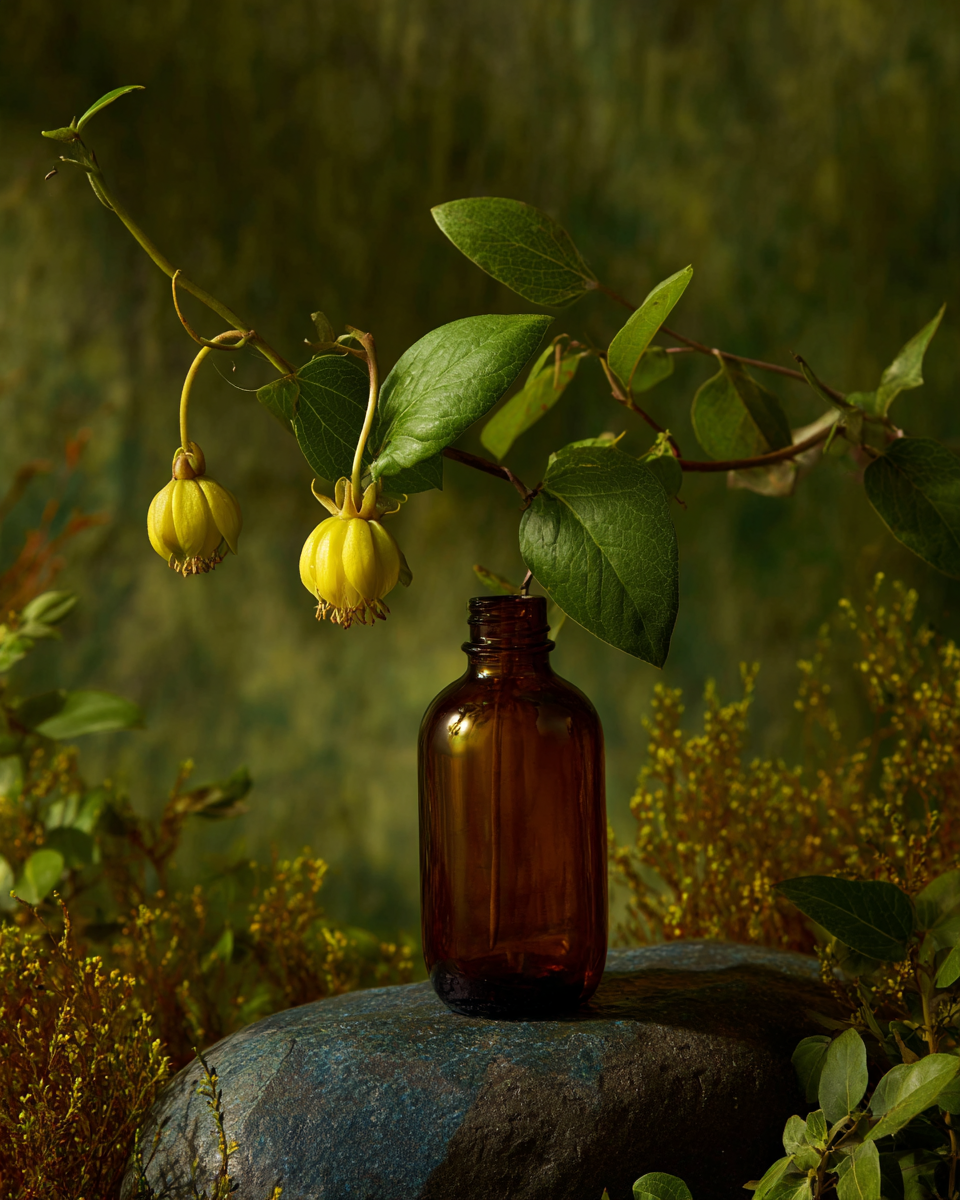
Argan oil or ceramides: which for your skin?
Argan oil nourishes the surface, ceramides are part of its structure. They are both fats, but one is applied and the other fills a deficiency—the difference is not a matter of degree.
Comparison
| Criterion | Argan oil | Ceramides |
|---|---|---|
| Nature | Vegetable oil | Structural lipids |
| Composition | Fatty acids, vitamin E | Skin lipids |
| Role | Nourishes, softens | Cohesion, repair |
| Effect | Immediate | A few days |
| Form | Pure oil | In cream |
| Tolerance | Very good | Excellent |
Argan oil, what it is
Argan oil is extracted from the kernels of the argan tree, a tree from southwestern Morocco whose fruits are harvested by hand. Its production remains largely artisanal across the industry.
Its composition is rich in oleic acid and linoleic acid — two fatty acids, the latter of which is essential — with a notable fraction of vitamin E.
This vegetable oil nourishes and softens. On skin that feels tight, the effect is noticeable immediately upon application, and its moderately rich texture suits most skin types.
Argan oil remains a fat applied to the surface. It limits evaporation and softens, without entering the skin's structure.
Ceramides, what they are
Ceramides are lipids naturally present in the outermost layer of the skin, where they ensure cohesion between cells and retain water.
Their quantity decreases with age, exposure to cold, and aggressive cleansers. Skin that feels tight, reddens easily, or reacts to everything often lacks ceramides.
A product that provides them fills this deficiency, and the effect is noticeable within a few days. This is what distinguishes them from argan oil: they repair rather than cover.
Which to choose
Dry skin lacking in lipids: argan oil, which is more nourishing.
Skin that feels tight, reddens, reacts to everything: ceramides, which treat the cause.
A single versatile product: argan oil, usable on the face, body, and hair.
Skin damaged by winter or overly aggressive treatments: ceramides.
Using them together
This is the best option, and it's simple: ceramides cream first, argan oil as the last layer.
The order follows textures. An oil applied beforehand would form a film that the cream would have to penetrate, and the ceramide contribution would be partially lost.
On the outer layer of the skin
This layer retains water and filters what enters. When it doesn't function properly, active ingredients penetrate too quickly, the skin tingles, and each new product is less well tolerated than the previous one.
Ceramides directly participate in its composition. Argan oil protects it from the outside — a difference that matters when the skin is truly damaged.
Hydration, two mechanisms
A humectant draws water to the surface, fats prevent it from evaporating. Neither argan oil nor ceramides fall into the first category.
A hyaluronic acid serum applied to damp skin, before either of them, completely changes the hydration achieved. It's the most useful and most often overlooked addition.
Choosing a good argan oil
First cold-pressed, un-deodorized, in a dark bottle. Only one name should appear on the label, Argania spinosa kernel oil: any added ingredient dilutes without improving.
Food-grade oil, on the other hand, is recognized by its roasted scent: its kernels are roasted before pressing, which the cosmetic version does not do.
It keeps for twelve to eighteen months after opening. A pungent odor indicates oxidized oil, which should be discarded.
Choosing a good ceramide product
Ceramides appear as ceramide NP, ceramide AP, ceramide EOP. Their position before preservatives indicates a useful quantity.
A formula that combines several, with cholesterol and fatty acids, resembles the actual composition of the skin. This is the best sign of quality for this type of product.
On uses beyond the face
Argan oil is suitable for hands, elbows, and hair ends. This versatility explains its value for money, which is often better than it seems.
Ceramide creams also come in body format, useful for very dry skin. They are applied to damp skin, within three minutes after showering.
Their limitations
Neither acts on established wrinkles nor on spots. They are comfort and repair treatments, which is already a lot.
Neither protects against radiation. Daily sun protection remains essential.
When to consult
These products are cosmetics and act on the appearance of the skin without treating any medical condition. Skin that remains painful or inflamed despite appropriate care requires dermatological advice.
The overnight test
Skin that receives an oil in the evening and still feels tight upon waking does not lack fats: it lacks what retains water inside. This is exactly the case where a ceramide night cream makes a difference where argan oil alone did not succeed.


Go further than this article
Get our skincare guides by email — and start with your free skin diagnostic: 2 minutes, advice tailored to your skin. We ship to the US, UK, Canada, Australia and 27 European countries; somewhere else? Sign up and you will be the first to know when we deliver to your country.
By signing up, you agree to our privacy policy. Unsubscribe in one click.